
Baination(300291)

Search documents
“广电21条”:破40集上限、松绑古装剧,长剧要“翻身”了?
Hu Xiu· 2025-08-19 00:00
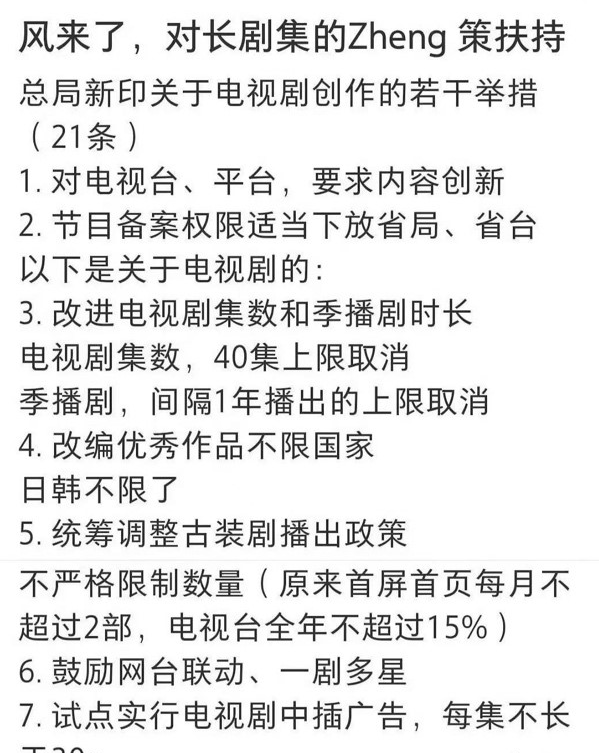
Core Viewpoint - The recent surge in the film and television sector is closely linked to the "21 Measures" issued by the National Radio and Television Administration (NRTA), which aims to revitalize the industry by addressing key pain points such as the limitation on the number of episodes and the scheduling of seasonal dramas [1][10][19]. Industry Impact - The NRTA's "21 Measures" include lifting the 40-episode cap, removing the one-year interval requirement for seasonal dramas, and relaxing restrictions on the broadcast ratio of historical dramas, which are expected to significantly benefit the industry [10][11][19]. - The measures have been described as a "timely rain" for the industry, which has faced challenges such as tightened procurement by platforms and a decline in both production and viewership [3][9][19]. Market Reaction - On August 18, the cultural media index rose by 3.11%, with net inflows exceeding 10.257 billion yuan, indicating strong market confidence in the sector following the announcement of the "21 Measures" [4][7]. - Several companies, including Huazhi Shumedia, Huace Film & TV, and Ciweng Media, saw their stock prices hit the daily limit, reflecting investor optimism [4][7]. Production and Content Creation - The industry is witnessing a resurgence in production activity, with multiple film crews accelerating their preparations for new projects, as indicated by increased restaurant bookings in production hubs like Hengdian [3][20]. - The measures are expected to encourage the development of high-quality IPs, allowing for continuous and high-quality content creation, which is crucial for revitalizing the long-form drama market [13][19]. Long-term Trends - The decline in the number of dramas produced has been alarming, with a drop from 429 dramas in 2014 to only 115 in 2024, a decrease of 73% [9][17]. - The rise of short dramas has created a competitive environment for long dramas, with platforms reallocating resources towards shorter formats [9][19]. Future Outlook - The "21 Measures" are anticipated to stimulate both supply and demand in the market, potentially leading to a more vibrant and profitable industry landscape [8][19]. - Companies are optimistic that the new policies will attract capital back into long-form dramas, which have been neglected in favor of shorter formats [18][19].


“广电21条”发布,影视股批量涨停,长剧要“翻身”了?
Mei Ri Jing Ji Xin Wen· 2025-08-18 23:34
Core Viewpoint - The recent surge in the film and television sector is closely linked to the "21 Measures" issued by the National Radio and Television Administration, which aims to revitalize the industry by addressing key pain points such as the cap on episode counts and restrictions on seasonal broadcasts [1][5]. Group 1: Industry Response - On August 18, the film and television sector saw a significant stock price increase, with the cultural media index rising by 3.11% and a net capital inflow of over 10.257 billion [2][3]. - Major companies like Huazhi Shumedia, Huace Film & TV, and others experienced stock price surges, indicating a positive market reaction to the new policies [2][3]. - The industry has been facing challenges such as reduced production and audience loss, making the new policies a timely relief [1][3]. Group 2: Policy Implications - The "21 Measures" include lifting the 40-episode cap, removing seasonal broadcast intervals, and relaxing restrictions on historical dramas, which are expected to stimulate content creation and market activity [5][6]. - The measures are anticipated to benefit long-form drama production companies, allowing them to explore previously restricted themes [4][6]. - The policies aim to enhance the creative space for producers while providing consumers with more choices, thus stimulating market demand [3][6]. Group 3: Market Dynamics - The television industry has seen a decline in production, with the number of dramas receiving distribution licenses dropping from 429 in 2014 to just 115 in 2024, a decrease of 73% [3][8]. - The rise of micro-dramas has intensified competition for long-form dramas, with micro-drama users reaching 666 million in 2024, reflecting a 14.8% growth [4][8]. - The new policies are expected to encourage a shift back to long-form content, as production companies are now more inclined to invest in high-quality IPs [6][8]. Group 4: Future Outlook - The industry anticipates a revival, with many production teams accelerating their project launches in response to the new policies [9]. - The measures are seen as a catalyst for attracting capital back into the long-form drama sector, which has been struggling with reduced investment [8][9]. - Overall, the "21 Measures" are viewed as a significant step towards revitalizing the film and television industry, fostering a healthier and more dynamic market environment [8][9].

“广电21条”松绑集数、古装剧等限制,影视股批量涨停
Mei Ri Jing Ji Xin Wen· 2025-08-18 22:30
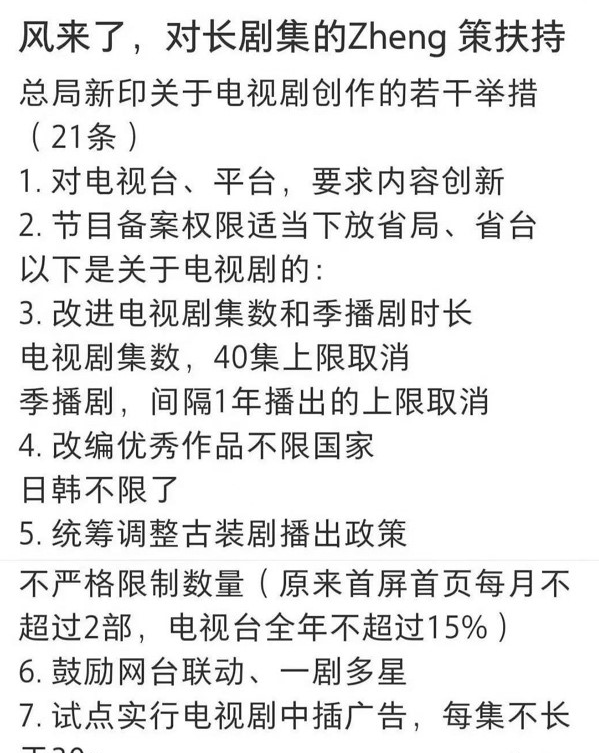
Core Viewpoint - The recent surge in the film and television sector is closely linked to the "21 Measures" issued by the National Radio and Television Administration, which aims to revitalize the industry by addressing key pain points such as the cap on episode counts and restrictions on seasonal broadcasts [1][3][6]. Industry Impact - The "21 Measures" include lifting the 40-episode cap, removing the one-year interval requirement for seasonal dramas, and relaxing the broadcasting ratio for historical dramas, which are expected to significantly benefit long-form drama production companies [8][10]. - The measures have been described as a "timely rain" for the industry, which has faced challenges such as tightened procurement by platforms and a decline in both production and viewership [3][6][11]. Market Response - On August 18, the cultural media index rose by 3.11%, with net inflows exceeding 10.257 billion, indicating strong market confidence in the sector following the announcement of the "21 Measures" [4][6]. - Major companies such as Huazhi Shumedia, Huace Film & TV, and Ciweng Media saw their stock prices hit the daily limit, reflecting investor optimism [4][6]. Production Trends - The industry has been experiencing a decline in production, with the number of dramas receiving distribution licenses dropping from 429 in 2014 to just 115 in 2024, a staggering 73% decrease [6][11]. - The rise of micro-dramas has further squeezed the space for long-form dramas, with micro-drama users reaching 662 million in 2024, growing at a rate of 14.8% [7][11]. Future Outlook - The "21 Measures" are expected to stimulate both supply and demand in the market, allowing for more creative freedom and a broader selection for consumers, which could lead to a revival of the long-form drama market [6][10]. - Industry insiders anticipate that the measures will encourage the production of high-quality content and attract capital back into the long-form drama sector, which has been neglected in favor of shorter formats [10][11].
“广电21条”:破40集上限、松绑古装剧!影视股批量涨停,长剧要“翻身”了,“我们在加速开机”
Mei Ri Jing Ji Xin Wen· 2025-08-18 17:25
Core Viewpoint - The recent surge in the film and television sector is closely linked to the "21 Measures" issued by the National Radio and Television Administration (NRTA), which aims to revitalize the industry by addressing key pain points such as the 40-episode limit and restrictions on seasonal dramas [1][4][10]. Group 1: Industry Impact - The NRTA's "21 Measures" include lifting the 40-episode cap, removing the one-year interval requirement for seasonal dramas, and relaxing the broadcast ratio for historical dramas, which are expected to significantly benefit the industry [1][10]. - The film and television industry has faced multiple challenges, including tightened procurement by platforms and a decline in production, leading to a situation where short dramas are squeezing the space for long dramas [4][8]. - The measures are seen as a "timely rain" for the industry, with many production companies accelerating their project preparations in response to the positive news [4][12]. Group 2: Market Response - On August 18, the cultural media index rose by 3.11%, with a net inflow of over 10.2 billion yuan into the film and television sector, indicating strong market confidence following the announcement [5][8]. - Major stocks in the sector, including Huazhi Shumedia (300426.SZ) and Huace Film & TV (300133.SZ), experienced significant gains, with several stocks hitting the daily limit [5][8]. - The NRTA's measures are expected to stimulate both supply and demand sides of the market, enhancing creative space and consumer choice [8][12]. Group 3: Future Prospects - The adjustments in policy are anticipated to lead to a resurgence in long dramas, particularly benefiting companies focused on high-quality IP development [9][12]. - The industry has seen a significant decline in production, with the number of dramas receiving distribution licenses dropping from 429 in 2014 to just 115 in 2024, a decrease of 73% [8][13]. - The measures are expected to attract capital back into the long drama sector, which has been overshadowed by the rise of short dramas, thus potentially reversing the current downward trend in production [12][13].
破40集上限、松绑古装剧!影视股批量涨停,长剧盼来翻身仗?业内人士透露:正在加速开机
Mei Ri Jing Ji Xin Wen· 2025-08-18 16:22
Core Viewpoint - The recent surge in the film and television sector is closely linked to the "21 Measures" issued by the National Radio and Television Administration (NRTA), which aims to revitalize the industry by addressing key pain points such as the cap on episode counts and restrictions on seasonal broadcasts [1][3][8]. Industry Impact - The NRTA's "21 Measures" include lifting the 40-episode cap, removing the one-year interval requirement for seasonal dramas, and relaxing restrictions on the broadcast ratio of historical dramas, which are expected to significantly benefit the industry [1][8]. - Following the announcement, the film and television stocks experienced a collective surge, with the cultural media index rising by 3.11% and a net inflow of over 10.257 billion yuan into the sector [4][6]. Market Dynamics - The industry has faced challenges such as tightened procurement by platforms, increased restrictions on episode counts, and capital withdrawal, leading to a decline in both production and viewership [3][7]. - The introduction of the "21 Measures" is seen as a timely intervention, with industry insiders expressing optimism about the potential for increased production and creative freedom [3][9]. Company Opportunities - Companies like Baidu Qiancheng and Huanrui Century are expected to be among the first to benefit from the new policies, allowing them to explore previously restricted themes and formats [7][9]. - The measures are anticipated to stimulate the production of high-quality long dramas, which have been under pressure from the rise of short dramas [7][9]. Future Outlook - The NRTA's initiatives are viewed as a means to rejuvenate the long drama market, with expectations of increased investment and production activity in the coming months [9][14]. - Industry experts believe that the adjustments will lead to a more favorable environment for high-quality IP development, potentially reversing the trend of declining production numbers [9][14].
今夜,大利好!
中国基金报· 2025-08-18 16:07
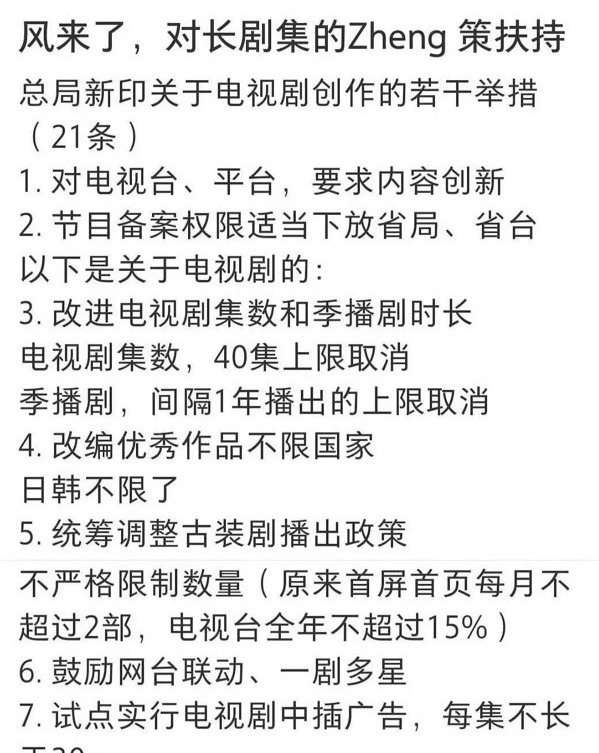
Core Viewpoint - The article highlights the positive impact of the recent measures implemented by the National Radio and Television Administration (NRTA) in China, which aim to enhance the supply of quality audiovisual content, leading to a significant surge in the stock prices of companies in the film and television sector [3][5]. Group 1: Policy Measures - The NRTA has introduced several initiatives to enrich television content, including the "Content Renewal Plan" to boost content innovation and improve management policies for drama series [5]. - The measures also focus on enhancing the production and promotion of ultra-high-definition programs, encouraging the introduction of outstanding foreign programs, and strengthening copyright protection [5]. Group 2: Market Reaction - Following the announcement of the NRTA's measures, the film and television sector in the A-share market experienced a collective surge, with stocks like Huazhi Shumedia and Huace Film & TV reaching their daily limit [5]. - Analysts suggest that the policy changes could signal a turning point for the industry, similar to the lifting of gaming license restrictions in late 2022, potentially leading to improved business models and accelerated project launches [6]. Group 3: Future Outlook - The film and television industry is expected to enter a positive cycle characterized by supply recovery, demand release, performance improvement, and valuation restoration [6]. - The rise of short dramas as mainstream content is anticipated to create a more mature industry chain, driving advertising revenue and new consumption patterns [6].



多股20cm涨停,影视剧市场将复刻游戏行业复苏?
Guan Cha Zhe Wang· 2025-08-18 12:53
Core Viewpoint - The film and television sector has experienced a significant surge, with multiple stocks hitting their daily limit up, driven by rumors of potential regulatory changes in the industry [1][2]. Group 1: Stock Performance - On August 18, four stocks, including Huazhi Shumei, Baiana Qicheng, Huace Film & TV, and Mango Super Media, reached a 20% limit up during midday trading [1]. - By the end of the trading day, Huace Film & TV and Huazhi Shumei maintained their limit up status, while Mango Super Media and Baiana Qicheng opened their limits [1]. Group 2: Regulatory Changes - Recent rumors suggest that the television drama market may see "positive changes," with industry insiders indicating that the National Radio and Television Administration has released several measures to ease restrictions on drama production [2]. - Proposed reforms include the cancellation of the 40-episode limit, adjustments to the restrictions on historical dramas, and a reduction in the review cycle for dramas [2]. Group 3: Industry Trends - The State Council issued a notice earlier this year emphasizing the promotion of high-quality cultural development, particularly in film and television [3]. - Huaxi Securities suggests that the media sector could follow the recovery path of the gaming industry, which saw a significant profit increase after regulatory relaxations [3]. - By the first half of 2025, the domestic television drama market is expected to face intensified competition and a need for content innovation, with major platforms capturing 89% of new drama supply [3]. Group 4: Market Sentiment - Positive market sentiment is bolstered by expectations that this summer's box office could exceed 10 billion yuan, alongside an increase in audience numbers [4]. - The film and television sector typically experiences seasonal spikes during summer and major holidays, contributing to its current momentum [4].

影视ETF涨超5.5%,2025年暑期档票房破百亿
Ge Long Hui A P P· 2025-08-18 08:53
Group 1 - The film production sector is experiencing a significant resurgence, with companies like Huazhi Shumei and Huace Film reaching their daily limit up, and the film ETF rising over 5.5% year-to-date [1] - The film ETF tracks the Zhongzheng Film Index, which includes various film content providers and related companies, with the top ten weighted stocks being Light Media, Perfect World, Mango Super Media, and others [2] - The 2025 summer box office has surpassed 10 billion yuan, with a total of 267 million attendees and an average ticket price of 37.3 yuan, indicating strong consumer interest [2] Group 2 - The domestic animated film "Wang Wang Mountain Little Monster" has grossed over 1 billion yuan, making it one of the top ten animated films in Chinese history and the highest-grossing 2D animated film [3] - The regulatory environment for the film industry is improving, with government policies aimed at promoting high-quality cultural development and supporting the creation of premium content [3] - Huaxi Securities suggests that the film industry may be at the beginning of a new recovery phase, with potential improvements in business models and a gradual restoration of supply, leading to a positive cycle of recovery and valuation [4]



影视院线板块8月18日涨4.42%,华智数媒领涨,主力资金净流入9.31亿元
Zheng Xing Xing Ye Ri Bao· 2025-08-18 08:45
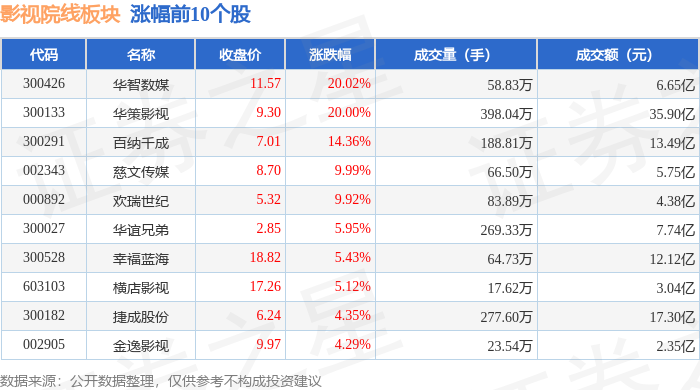
Market Performance - The film and cinema sector saw a rise of 4.42% on August 18, with Huazhi Shumedia leading the gains [1] - The Shanghai Composite Index closed at 3728.03, up 0.85%, while the Shenzhen Component Index closed at 11835.57, up 1.73% [1] Individual Stock Performance - Huazhi Shumedia (300426) closed at 11.57, up 20.02% with a trading volume of 588,300 shares and a transaction value of 665 million [1] - Huace Film & TV (300133) closed at 9.30, up 20.00% with a trading volume of 3,980,400 shares [1] - Other notable performers include: - Baida Qiancheng (300291) at 7.01, up 14.36% [1] - Ciweng Media (002343) at 8.70, up 9.99% [1] - Huanrui Century (000892) at 5.32, up 9.92% [1] Capital Flow Analysis - The film and cinema sector experienced a net inflow of 931 million from institutional investors, while retail investors saw a net outflow of 84.94 million [2] - The main capital inflow and outflow for selected stocks include: - Huace Film & TV had a net inflow of 475 million from institutional investors [3] - Ciweng Media had a net inflow of 231 million from institutional investors [3] - Huanrui Century had a net inflow of 153 million from institutional investors [3]


突然,20%涨停!一则传闻,彻底引爆!
Zheng Quan Shi Bao Wang· 2025-08-18 05:30
Core Viewpoint - The recent rumors regarding the film and television market have triggered a significant surge in stock prices within the media sector, indicating potential positive changes in the industry [1][2]. Group 1: Market Reaction - Four stocks, including Huazhi Shumei and Baina Qiancheng, reached the 20% daily limit increase, reflecting strong market enthusiasm [1][2]. - The Hong Kong-listed company, Reading Group, saw a rise of over 25%, showcasing the widespread impact of the rumors [2]. Group 2: Policy Implications - The State Council's notice on promoting high-quality cultural development emphasizes the need for quality content creation in film and television, which may support the sector's recovery [2]. - Huaxi Securities suggests that the media industry is likely to benefit from a more supportive regulatory environment, similar to the gaming industry, which has seen a significant profit increase following regulatory relaxations [4]. Group 3: Industry Trends - The domestic film and television market is expected to experience intensified competition and innovation in content by the first half of 2025, with major platforms like iQIYI and Tencent Video dominating new content supply [3]. - The first half of 2025 will see a release of innovative themes in long-form dramas, indicating a shift in viewer preferences [3]. Group 4: Driving Forces - The media and entertainment sector is driven by two main factors: policy changes and AI integration [4][5]. - The relaxation of game licensing regulations has led to a doubling of game approvals, which is expected to translate into improved financial performance for the media sector as well [4]. - AI advancements, such as the development of new models and applications, are anticipated to enhance the media landscape, providing new opportunities for growth [5].