
ALI HEALTH(ALBBY)

Search documents
阿里健康AI产品氢离子新功能上线:动态证据定位 让医学结论可验、可信、可用
Zheng Quan Ri Bao· 2026-01-27 14:17
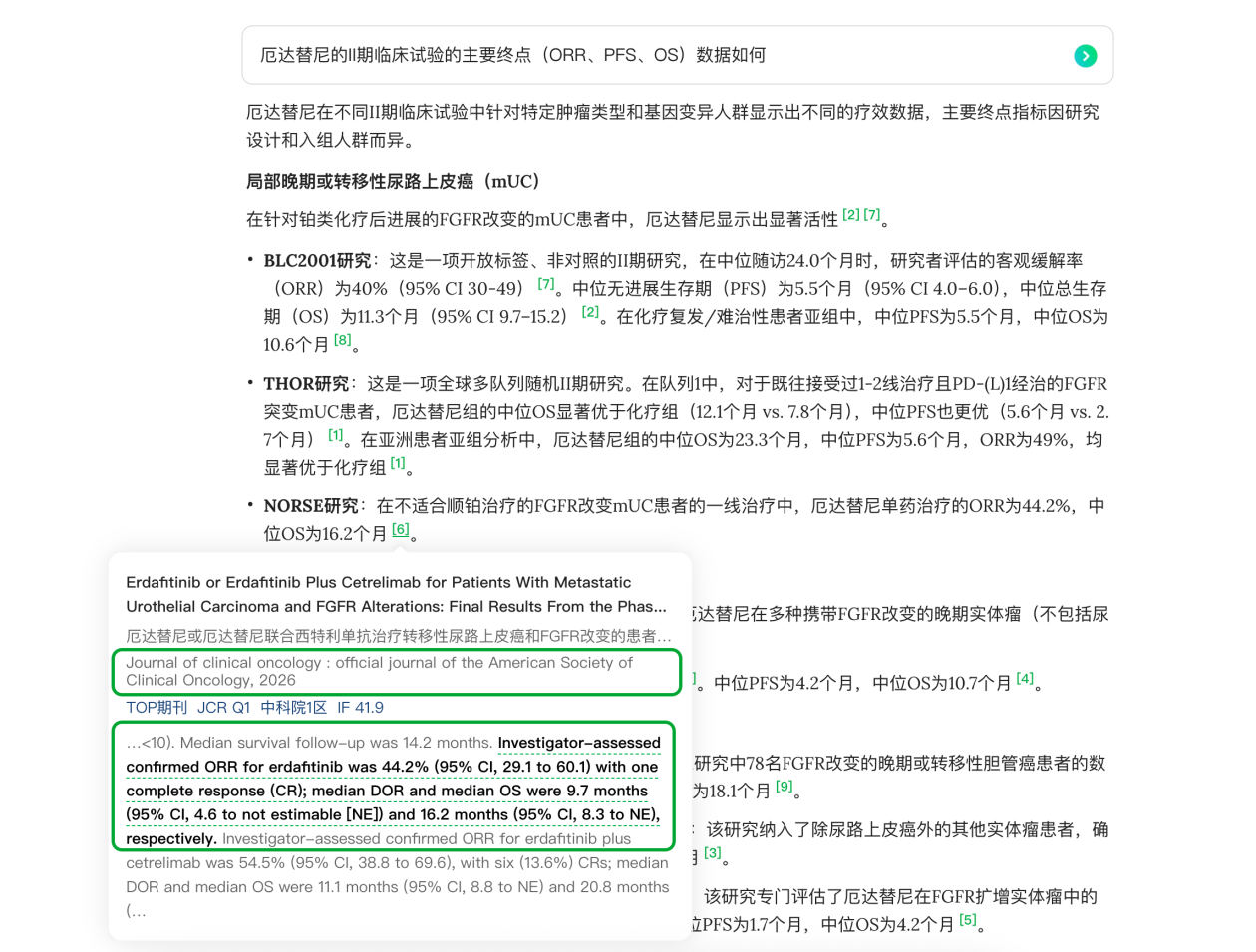
Core Insights - Alibaba Health's medical AI application "Hydrogen Ion" has launched a key version update featuring a new function called "Dynamic Evidence Localization" which allows precise identification of specific statements supporting claims, while also verifying their timeliness, authority, and logical consistency [2] Group 1: Dynamic Evidence Localization - The new function upgrades traditional "static citation" methods to "living evidence," addressing the industry's challenge of determining whether information is still valid and credible [2] - The system integrates timeliness and authority into its citation logic, continuously updating and filtering global guidelines and literature to ensure responses are based on the latest and most reliable medical evidence [2][3] Group 2: User Experience and Impact - When users inquire about specific clinical trial data, the system provides structured medical conclusions with citation tags, allowing seamless tracing back to original literature and supporting statements [3] - This technology significantly reduces the information verification cost for clinical and research work, enabling doctors to make decisions without pausing to check original documents, as the AI performs triple verification of effectiveness, authority, and logical consistency [3]


阿里健康AI产品氢离子新功能上线:动态证据定位 让医学结论可验
Huan Qiu Wang· 2026-01-27 07:58
Core Viewpoint - The key update of Alibaba Health's AI application "Hydrogen Ion" introduces a new feature called "Dynamic Evidence Localization," which enhances the precision of sourcing medical information by verifying its timeliness, authority, and logical consistency [1][3]. Group 1: Feature Overview - The "Dynamic Evidence Localization" feature allows for precise identification of specific statements in original texts, moving from vague citations to exact references that explain their credibility and current validity [1]. - This feature addresses the limitations of traditional static knowledge bases that only provide spatial references without assessing the reliability or timeliness of the information [1][3]. Group 2: Technical Implementation - The technology employs a "Three-Dimensional Evidence Framework" that systematically resolves industry challenges by integrating timeliness and authority into the citation logic [1][3]. - The system updates and filters global authoritative guidelines and literature on a daily basis, ensuring that the content presented is always aligned with current medical consensus [3]. Group 3: User Experience - When users inquire about specific clinical trial data, the system not only provides structured medical conclusions but also allows seamless tracing back to the original literature and supporting statements [2]. - The goal of this technology is to instill confidence in doctors, enabling them to trust and utilize the AI's outputs effectively [3].
阿里健康AI产品氢离子上线新功能
Zhong Guo Jin Rong Xin Xi Wang· 2026-01-27 06:28
Core Viewpoint - Alibaba Health's medical AI application "Hydrogen Ion" has launched a key version update featuring a new function called "Dynamic Evidence Localization," which allows for precise identification of specific statements supporting viewpoints, along with real-time verification of their timeliness, authority, and logical consistency [1][2]. Group 1: Technology and Functionality - The "Dynamic Evidence Localization" function upgrades traditional static citation methods to a more dynamic approach, enabling the identification of whether the evidence is still valid and credible [1]. - The system utilizes a unique "three-dimensional evidence-based architecture" to systematically address industry challenges by integrating timeliness and authority into the citation logic [1][2]. - The technology updates and filters global authoritative guidelines and literature daily, ensuring that the information presented is always aligned with current medical consensus [2]. Group 2: Impact on Medical Decision-Making - The new functionality significantly reduces the information verification costs for clinical and research work, allowing doctors to make decisions without pausing to check original literature [2]. - The AI performs a threefold verification process to ensure that the information is effective at the current moment, authoritative in source, and logically sound [2].
阿里健康AI产品氢离子上线“动态证据定位 ”功能
Xin Lang Cai Jing· 2026-01-27 04:33
Core Insights - Alibaba Health's medical AI application "Hydrogen Ion" has launched a key version update featuring a new "Dynamic Evidence Localization" function, which allows precise identification of specific statements supporting viewpoints while verifying their timeliness, authority, and logical consistency [1][4]. Group 1: Dynamic Evidence Localization - The core of the Dynamic Evidence Localization function is to upgrade the traditional "static citation" to an evolving "live evidence" model, addressing the industry's challenge of determining whether sources remain valid and credible [1][5]. - Traditional solutions rely on static knowledge bases and keyword matching, which only provide spatial location of citations without assessing the reliability or currency of the content [5]. Group 2: Three-Dimensional Evidence Framework - Hydrogen Ion employs a unique "Three-Dimensional Evidence Framework" to systematically tackle the industry's issues, integrating timeliness (When) and authority (Quality) into the citation logic [5]. - The system updates and filters global guidelines and literature daily, ensuring that the information presented is always based on the latest and most reliable medical evidence [5]. Group 3: User Experience and Trust - When users search for specific clinical trial data, the system not only provides structured medical conclusions but also allows seamless tracing back to the original literature and supporting statements through citation tags [2][5]. - The primary goal of this technology is to instill confidence in doctors, enabling them to trust and utilize the information provided [2][5].
京东阿里健康的阳谋
3 6 Ke· 2026-01-26 05:40
Core Insights - OpenEvidence has rapidly gained traction in the medical field, achieving a valuation of $12 billion and annual revenue exceeding $150 million within just four years of its establishment [1] - The company addresses a critical gap in the medical industry by providing a free tool for doctors that significantly reduces the time needed to access reliable medical information [4][5] - OpenEvidence's business model revolves around monetizing the attention of healthcare professionals and providing targeted advertising for pharmaceutical companies [7][9][10] Group 1: OpenEvidence's Rise - OpenEvidence has become the primary entry point for doctors by effectively addressing the overwhelming volume of medical knowledge and the limitations of traditional databases [2][3] - The platform utilizes a retrieval-augmented generation (RAG) approach, allowing doctors to obtain accurate information in just three seconds, thus enhancing decision-making efficiency [4] - The company has achieved viral growth, with monthly active users reaching 400,000 and covering approximately 34% of practicing physicians in the U.S. [5] Group 2: Revenue Generation - OpenEvidence generates revenue by providing targeted advertising to pharmaceutical companies during critical decision-making moments for doctors [8][9] - The platform's ability to deliver compliant and relevant advertising content has made it an attractive option for drug companies looking to reach physicians effectively [10][12] - Additionally, OpenEvidence sells its core capabilities as APIs to hospitals and medical schools, further diversifying its revenue streams [11] Group 3: Challenges for Chinese Competitors - Chinese companies face significant challenges in replicating OpenEvidence's success due to data integration difficulties and the lack of open access to authoritative medical databases [15][16] - Trust issues arise in China regarding pharmaceutical advertising alongside clinical decision tools, making it difficult for companies to monetize similar models [17][18] - The high workload of Chinese doctors limits their ability to engage with tools like OpenEvidence, necessitating a more practical approach tailored to local conditions [19][20] Group 4: Competitive Landscape - JD Health focuses on a model that combines tools, supply chain, and services, but faces trust issues due to potential biases in its recommendations [23][24] - Alibaba Health aims to develop a comprehensive medical operating system but struggles with the transactional aspect of its services [25][26] - Ant Group's approach with its AI tool "Afu" seeks to integrate deeply into the medical workflow, potentially offering a more complex but rewarding business model [27][28] Group 5: Future Outlook - The medical AI market in China is expected to diversify, with different players targeting various segments, such as serious medical scenarios and primary care [29] - The key lesson from OpenEvidence for Chinese companies is to effectively use free tools to capture high-value users and monetize their needs [29]


中国AI医疗专家观点:蚂蚁金服将重塑行业格局,阿里健康或将参与其中-China Healthcare China AI Healthcare Expert Call Take-away Ant A-Fu to Reshape the Landscape
2026-01-26 02:49
Summary of China Healthcare AI Expert Call Industry Overview - The online healthcare market in China is experiencing a significant transformation, moving from basic e-pharmacy services to integrated AI service platforms, with Ant Group's "A-Fu" emerging as a leading player in this space [1][2]. Key Insights - **Ant A-Fu's Dominance**: Ant A-Fu is rapidly becoming the dominant force in the online healthcare market, leveraging extensive data acquisition, a closed-loop ecosystem that includes payment and insurance, and substantial marketing expenditures [1][3]. - **Ali Health's Position**: Ali Health is positioned as a top pick in the online healthcare sector, expected to benefit from traffic referrals to its pharmacy business in the short term and potentially becoming a key player in the future AI online healthcare platform within the Alibaba/Ant ecosystem [1][7]. - **Shift in Market Dynamics**: The market is transitioning from competition based on drug sales to a focus on comprehensive patient and user health management systems, where Ant A-Fu is currently leading [1]. Growth Projections - The AI healthcare software market is projected to grow explosively at an estimated rate of 50% per annum, driven by government initiatives for regional data integration and significant investments in AI from hospitals [2]. Competitive Landscape - Ant A-Fu's rise is expected to reshape the competitive landscape, capturing user relationships at the consultation and management stages, which may diminish the traffic and loyalty of other players in the market [7]. - The relationship between Ant A-Fu and Ali Health is seen as complementary, with potential for deeper integration in the long term, possibly including cross-holding or a merger [7]. Business Model Evolution - Traditional internet healthcare models include drug sales, insurance sales, and advertising. A-Fu's key advantage lies in its ability to design innovative insurance products based on real-world data, particularly for individuals with pre-existing conditions [4][6]. Valuation Insights - The target price for Ali Health shares is set at HK$9.0, based on a sum-of-the-parts analysis, with specific valuations assigned to different business segments [8]. Risks - Ali Health shares are rated as high risk due to potential policy risks, including the need to maintain close ties with Alibaba Group, policy headwinds in the internet healthcare industry, and severe competition [9]. This summary encapsulates the critical insights and projections regarding the evolving landscape of the online healthcare market in China, particularly focusing on the roles of Ant A-Fu and Ali Health.

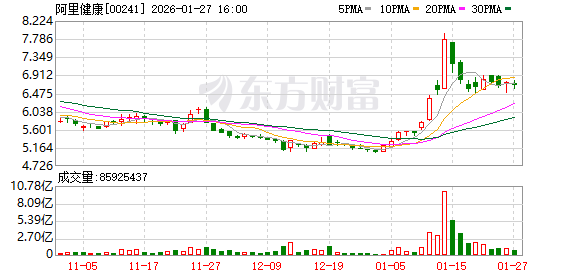
阿里健康(00241.HK):1月23日南向资金增持875.2万股
Sou Hu Cai Jing· 2026-01-23 20:21
Group 1 - The core point of the article highlights the recent trading activity of southbound funds in Alibaba Health, indicating a net increase of 8.752 million shares on January 23, while there were net reductions on three days in the past five trading days totaling 72.562 million shares [1] - Over the last 20 trading days, southbound funds have increased their holdings in Alibaba Health on 16 occasions, resulting in a cumulative net increase of 273 million shares [1] - As of now, southbound funds hold 1.963 billion shares of Alibaba Health, which represents 12.13% of the company's total issued ordinary shares [1] Group 2 - Alibaba Health Information Technology Co., Ltd. is a holding company that provides industrial internet solutions for the medical and pharmaceutical industry, serving as Alibaba Group's flagship platform in the health sector [1] - The company primarily engages in the sales of pharmaceutical health products, operates an e-commerce platform for pharmaceuticals, and offers consumer medical services, leveraging technologies such as cloud computing and big data to develop traceability, digital healthcare, and internet medical services [1]

AI叙事下,阿里健康拿到了“高德、饿了么”的剧本
3 6 Ke· 2026-01-22 23:33
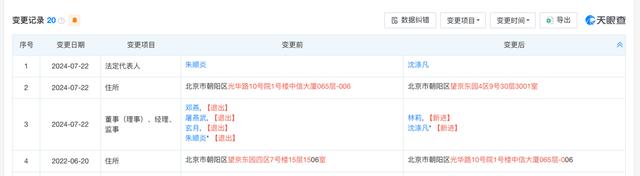
Core Insights - Alibaba Health has launched its AI product "Hydrogen Ion," marking a significant step in its AI strategy [1][10] - The company is positioning itself within the competitive landscape of AI, following the introduction of other AI models like Ant Group's "Afu" and "Lingguang" [2][5] - The leadership transition to CEO Shen Difan is expected to drive the company's focus on AI applications and B2B services [10][11] Group 1: AI Strategy and Product Launch - "Hydrogen Ion" is seen as the first major initiative under Shen Difan's leadership, aiming to integrate AI into Alibaba Health's operations [6][11] - The product is designed as a ChatGPT-like assistant for doctors, but its low-key launch raises questions about its market positioning and potential user base [12][14] - The internal and external challenges of commercializing "Hydrogen Ion" are acknowledged, with a focus on building trust in AI-assisted diagnostics among healthcare professionals [14][15] Group 2: Leadership and Organizational Changes - Shen Difan's appointment as both CEO and Chairman indicates a strategic shift towards AI and digital health [7][10] - The previous leadership under Zhu Shunyan established a foundation for preventive health management, but the focus may now shift towards AI-driven solutions [9][21] - The organizational changes reflect a broader strategy to align with Alibaba Group's emphasis on AI across its various business lines [6][18] Group 3: Market Position and Financial Performance - Alibaba Health's revenue structure shows a strong reliance on its self-operated pharmaceutical business, with a reported income of 26.124 billion yuan for the fiscal year 2025 [21][22] - The company is primarily viewed as a pharmaceutical e-commerce platform rather than a medical technology firm, which may limit its ability to compete in the AI space [22][24] - The challenges of transitioning to a technology-driven model in the highly regulated healthcare sector are highlighted, suggesting that Alibaba Health may need to focus on its core competencies [24][26] Group 4: Competitive Landscape - Ant Group's AI initiatives, particularly "Afu," have gained traction, positioning it as a leader in the healthcare AI space, which may overshadow Alibaba Health's efforts [15][16] - The differing focuses of Alibaba Health and Ant Group—one on pharmaceutical distribution and the other on technology-driven health solutions—illustrate the competitive dynamics within Alibaba's ecosystem [16][26] - The potential for Alibaba Health to become a supporting player in the broader AI strategy of Alibaba Group is discussed, drawing parallels with other business lines that have evolved into supplementary roles [27][29]
阿里健康涨超4% 据报公司旗下AI产品“氢离子”已完成内测并开放下载
Zhi Tong Cai Jing· 2026-01-21 02:51
Core Viewpoint - Alibaba Health (00241) has seen a stock increase of over 4%, currently trading at 6.86 HKD with a transaction volume of 532 million HKD, following the news of its AI product "Hydrogen Ion" completing internal testing and being available for download [1] Group 1: Product Development - The AI product "Hydrogen Ion" is now in the practical application phase, targeting doctors in clinical and research fields [1] - "Hydrogen Ion" emphasizes "low hallucination, high evidence" capabilities, ensuring all responses have authoritative sources and support one-click traceability to the original source [1] Group 2: User Feedback - Multiple doctors involved in the internal testing have reported that "Hydrogen Ion" demonstrates high accuracy in evidence-based Q&A, evidence integration, and analysis summarization tasks [1] - The product is particularly effective in intelligent retrieval and literature review in both Chinese and English, aligning well with the habits of domestic doctors [1] Group 3: Market Positioning - The product logic of "Hydrogen Ion" is similar to the popular overseas product OpenEvidence, but it offers a more localized experience, providing a competitive advantage in the domestic market [1]
港股异动 | 阿里健康(00241)涨超4% 据报公司旗下AI产品“氢离子”已完成内测并开放下载
智通财经网· 2026-01-21 02:48
Core Viewpoint - Alibaba Health's AI product "Hydrogen Ion" has completed internal testing and is now available for download, targeting clinical and research doctors, aiming to be the AI assistant with the lowest hallucination rate in the medical field [1] Group 1: Product Launch and Features - The "Hydrogen Ion" product emphasizes "low hallucination, high evidence" capabilities, providing authoritative sources for all answers and supporting one-click traceability to the original sources [1] - Feedback from multiple doctors involved in the internal testing indicates that "Hydrogen Ion" demonstrates high accuracy in evidence-based Q&A, evidence integration, and analysis, particularly in intelligent retrieval and literature review in both Chinese and English [1] Group 2: Market Positioning - The product logic of "Hydrogen Ion" is similar to the popular overseas product OpenEvidence, but it offers a more localized experience that better suits the habits of domestic doctors [1]