Applied Materials(AMAT)

Search documents
Applied Materials: 50% Upside Potential For The Patient
Seeking Alpha· 2025-06-18 14:19
Applied Materials, Inc. (NASDAQ: AMAT ) shows a very common picture in 2025. Strong, profitable businesses with very rich valuations. Until the market decides to care, the stocks can stay elevated. And, dips will be bought. Based on the many market cyclesI'm Rob Isbitts, founder of Sungarden Investment Publishing. I run the new investing group Sungarden Investors Club, a community dedicated to navigating the modern investment climate with humility, discipline, and a non-traditional approach to income invest ...


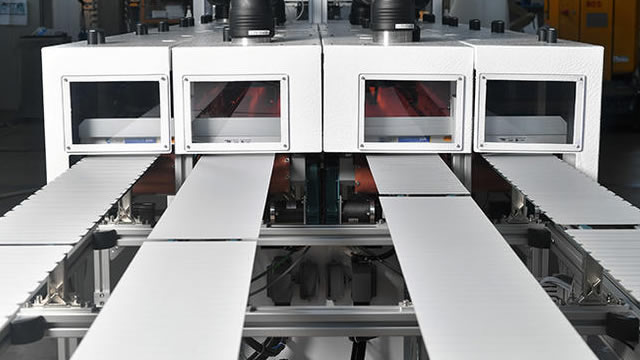
Applied Materials Is A Smart Buy With China Fears Overblown
Seeking Alpha· 2025-06-18 04:04
Group 1 - Applied Materials, Inc. is a crucial player in semiconductor production, especially during the AI era, indicating strong future growth potential [1] - Despite the positive outlook, the stock price of Applied Materials has decreased by nearly 30% [1]
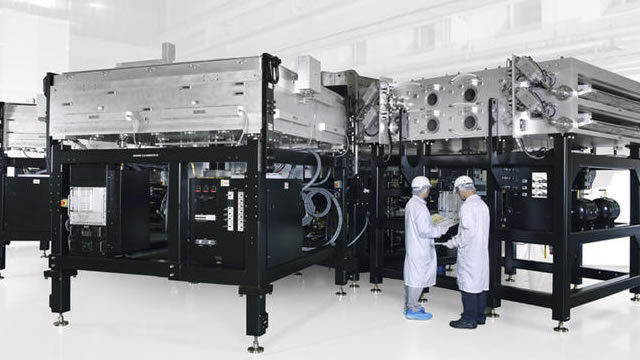
Applied Materials Powers The Future Of AI Chipmaking
Seeking Alpha· 2025-06-17 22:22
Core Insights - Applied Materials, Inc. (NASDAQ: AMAT) is essential in the semiconductor industry, as their machines are crucial for chip production, which underpins modern technologies like data centers and self-driving cars [1] Group 1: Company Overview - The stock of Applied Materials faced a decline despite strong performance indicators, highlighting potential market volatility or investor sentiment issues [1] Group 2: Investment Characteristics - The company is characterized by growth in revenue, earnings, and free cash flow, making it attractive for investors seeking steady growth and high free cash flow margins [1]
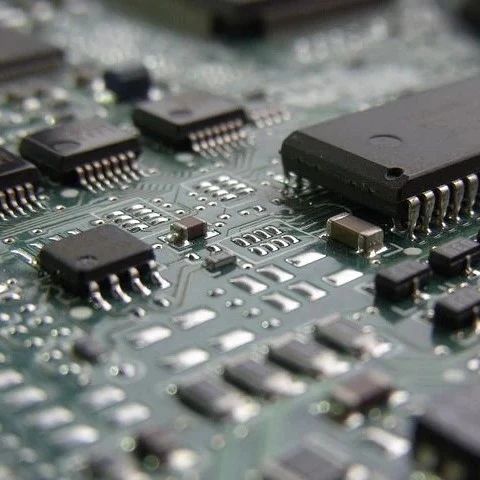
欧洲芯片,为时已晚
半导体行业观察· 2025-06-17 01:34
Core Viewpoint - The Genesis project, involving 58 European companies and research institutions, aims to enhance the sustainability of semiconductor manufacturing, addressing environmental impacts and resource efficiency in the industry [1][2][3]. Group 1: Project Overview - The Genesis project has a budget of €55 million and focuses on making semiconductor production more sustainable globally, not just in Europe [1]. - The project includes four main workflows: monitoring and sensing, new materials, waste minimization, and critical raw materials mitigation [3]. - The initiative aims to produce 45 outcomes over the next three years, addressing emissions, material optimization, and recycling [3]. Group 2: Industry Challenges and Drivers - The semiconductor industry faces increasing pressure from customers to produce chips sustainably, managing water resources and achieving carbon neutrality [4]. - Regulatory measures are expected to strengthen over time, driven by climate change concerns, necessitating action from the industry [4]. - Major companies are pushing for sustainability in semiconductor production, indicating a shift in industry norms [4]. Group 3: Technological Innovations - The project will deploy integrated sensor systems to monitor and reduce emissions of harmful substances like PFAS and greenhouse gases [3]. - There is a focus on developing AI models based on sensor data to enhance wafer fabrication efficiency, although AI integration is not currently part of the Genesis project [7]. - The project aims to replace 30% of new materials used in lithography and packaging processes with more sustainable alternatives [8]. Group 4: Collaboration and Training - The project includes a partnership with Applied Materials to develop material engineering solutions for emerging infrastructure challenges in AI data centers [9][10]. - The FAMES Academy is being established to train engineers and technicians in low-power FD-SOI technology, supporting the European semiconductor community [11]. - The academy will focus on workshops and interactive sessions to equip the industry with necessary skills and knowledge [11].


Applied Materials and CEA-Leti Expand Joint Lab To Drive Innovation in Specialty Chips
Globenewswire· 2025-06-16 13:00
Based at CEA-Leti, Collaboration Focuses on Materials Engineering Solutions To Enable More Energy-Efficient AI Data CentersSANTA CLARA, Calif. and GRENOBLE, France, June 16, 2025 (GLOBE NEWSWIRE) -- Applied Materials, Inc. and CEA-Leti today announced the next phase of their longstanding collaboration to accelerate innovation in specialty semiconductors. Under a memorandum of understanding (MOU), the organizations plan to expand their joint lab and develop materials engineering solutions to address emerging ...

Applied Materials: Valuation Contraction Creates Entry Point - Upgrade To Buy
Seeking Alpha· 2025-06-16 11:13
Analyst's Disclosure:I/we have no stock, option or similar derivative position in any of the companies mentioned, and no plans to initiate any such positions within the next 72 hours. I wrote this article myself, and it expresses my own opinions. I am not receiving compensation for it (other than from Seeking Alpha). I have no business relationship with any company whose stock is mentioned in this article. Seeking Alpha's Disclosure: Past performance is no guarantee of future results. No recommendation or a ...

一张图看懂全球半导体玩家实力
半导体行业观察· 2025-06-16 01:56
Core Viewpoint - The semiconductor industry is increasingly viewed as a critical aspect of national security by various governments, highlighting the global dependence on semiconductors and the vulnerabilities within the complex supply chain [2][3]. Group 1: Semiconductor Supply Chain and Geopolitical Context - The semiconductor supply chain is intricate, involving advanced software, silicon wafers, and complex manufacturing processes, with significant R&D investments [1] - The geopolitical landscape has intensified competition, particularly regarding Taiwan's TSMC, which produces 70% to 90% of the world's advanced transistors [2] - The U.S. has implemented export controls targeting China, aiming to protect its semiconductor industry and maintain a competitive edge in AI development [3] Group 2: Comparative Strengths of Countries in Semiconductor Industry - No single country can fully control the advanced semiconductor supply chain; the U.S. excels in design and tools but lags in manufacturing [5] - China leads in economic resources and packaging/testing but is weaker in equipment and specialized materials [5] - Taiwan dominates in specialized materials and wafer manufacturing but relies on foreign equipment [5][6] Group 3: Investment and Future Prospects - Leading countries are investing heavily to maintain their semiconductor industry positions, with Japan, South Korea, and the EU committing substantial public funds [8] - The U.S. semiconductor advantage is challenged by export controls, impacting equipment manufacturers more than design firms [9] - Nvidia's revenue growth reflects the soaring demand for AI chips, contrasting with the slower growth of equipment manufacturers like Applied Materials [10] Group 4: Emerging Markets and Global Dynamics - India aims to become a semiconductor manufacturing hub, leveraging its market size and labor force, despite lacking key infrastructure [11] - Germany is positioning itself as a major player in the EU semiconductor market, with plans to increase domestic production [11] - Singapore is expanding its role in the semiconductor market through training programs and tax incentives, despite not being fully represented in the index [11]



一张图看懂全球半导体玩家实力
半导体行业观察· 2025-06-16 01:47
Core Viewpoint - The semiconductor industry is increasingly viewed as a critical aspect of national security by various governments, highlighting the complex global supply chain and the geopolitical tensions surrounding advanced chip production [2][3]. Group 1: Semiconductor Supply Chain Complexity - The semiconductor supply chain involves a highly specialized ecosystem, including advanced software for chip design, silicon wafers, complex manufacturing equipment, and decades of R&D investment [1]. - The global reliance on Taiwan's TSMC, which produces 70% to 90% of the world's advanced transistors, has raised concerns about supply chain vulnerabilities amid geopolitical tensions [2]. Group 2: Geopolitical Impacts and National Strategies - Since the U.S. implemented export controls against mainland China in October 2022, semiconductors have become a strategic focus, with countries aiming to strengthen domestic control over semiconductor production [3]. - The competition for advanced chips, particularly GPUs for AI applications, has surged, exemplified by Nvidia's market capitalization doubling from January 2023 to January 2024 [2]. Group 3: Comparative Strengths of Countries/Regions - No single country can fully control the advanced semiconductor supply chain; the U.S. excels in chip design and tools but lags in manufacturing, while mainland China leads in economic resources and packaging [5]. - The U.S., Japan, Taiwan, and South Korea maintain dominance in key supply chain nodes such as advanced manufacturing and chip design, but high costs and technological barriers hinder new entrants [6]. Group 4: Investment Trends and Future Outlook - Leading semiconductor nations are investing heavily to maintain their competitive edge, with Japan committing over $11 billion to support domestic startups and South Korea planning to build the world's largest semiconductor cluster by 2047 [9]. - The U.S. semiconductor advantage is challenged by export controls, which have impacted equipment manufacturers more severely than chip designers, as seen in Nvidia's projected $5.5 billion loss due to export restrictions [10][11]. Group 5: Emerging Markets and Regional Developments - India aims to become a key player in the semiconductor value chain, leveraging its market size and labor force, despite lagging in critical infrastructure compared to leading nations [12]. - Germany is positioning itself as a major semiconductor player in the EU, with plans to double its market share in chip production by 2030, although recent delays in factory construction raise concerns [13]. Group 6: Regional Strategies and Competitive Advantages - Singapore is capitalizing on its geographical advantages and skilled workforce to maintain a strong position in the semiconductor market, focusing on chip design and advanced packaging [14].

3 No-Brainer Artificial Intelligence (AI) Growth Stocks to Buy With $200 Right Now
The Motley Fool· 2025-06-14 09:55
Core Insights - The article discusses the challenges and opportunities in investing in artificial intelligence (AI) stocks, particularly for investors with limited budgets like $200 [2][3] - It highlights three companies that are well-positioned to benefit from the growth of AI and are trading under $200 per share [5] Company Summaries 1. Alphabet - Concerns exist regarding the impact of AI on Alphabet's core Google Search product, with a noted decline in search queries on Apple's Safari browser [6][7] - Despite these concerns, AI is seen as a growth driver for Alphabet, particularly in its Google Cloud business, which experienced a 28% revenue increase in Q1 and an operating margin expansion from 9.4% to 17.8% [8] - The stock trades at approximately $177 per share, reflecting a forward P/E of 18.5, which is below comparable stocks, making it an attractive investment opportunity [9] 2. Qualcomm - Qualcomm is not typically recognized as an AI chipmaker, focusing instead on smartphone chips, but it plans to enter the data center market with CPUs designed for AI [10][11] - The company is well-positioned to benefit from the growing demand for on-device AI processing, leveraging its Snapdragon mobile processors [12][13] - Trading at around $160 per share with a forward P/E of 13.5, Qualcomm offers significant value, especially with its stable licensing business [15] 3. Applied Materials - Applied Materials produces essential wafer fabrication equipment for chip manufacturing, which is critical for AI training and inference [16] - The company has seen a 7% sales growth in Q1, with gross margins exceeding 49%, driven by the demand for high-end devices [18] - The stock is priced at about $175 per share, with a forward P/E of 18.5, representing a solid investment opportunity given its steady revenue growth and expanding margins [19]
3 Magnificent S&P 500 Dividend Stocks Down 15% to 65% to Buy and Hold Forever
The Motley Fool· 2025-06-14 08:30
Group 1: Alphabet - Alphabet is considered one of the "Magnificent Seven" stocks, trading at around 20 times earnings, which is a discount compared to peers and the overall market [2] - The company has a low dividend yield of 0.5% with a payout ratio of 8.9%, indicating significant room for future dividend growth [3] - Alphabet is focusing on share repurchases and investing in AI growth rather than increasing dividends [3] - The company is innovating in AI, introducing features like "AI Overviews" and "AI Mode" in Google Search, which are expected to monetize similarly to traditional search [4] - Alphabet's Gemini 2.5 LLM has gained traction, quickly rising in developer rankings and leading in various applications [5] - The company has three other significant businesses: YouTube, Google Cloud, and Waymo, with YouTube growing by double digits and Google Cloud achieving a $50 billion annual revenue run-rate with 28% growth last quarter [7] - Waymo is a leader in the autonomous taxi industry, conducting over 250,000 autonomous rides weekly across four cities [8] Group 2: Applied Materials - Applied Materials is a leading semiconductor equipment supplier, currently 33% below its July 2024 highs, but recognized for its high-quality business [9] - The company specializes in etch and deposition equipment essential for AI-related semiconductor production, with a services business contributing 22% of revenue [9][10] - Applied Materials pays a 1.1% dividend with a low payout ratio of 19.5%, allowing for potential future dividend growth, including a recent 15% increase [10][11] Group 3: Target - Target is trading at just 11 times earnings with a substantial 4.6% dividend, but is down 64% from its all-time highs [13] - The company is experiencing revenue declines but remains profitable, with competitive store locations despite not being known for ultra-low prices [14] - Target's focus on discretionary items has been impacted by inflation, but signs of recovery are emerging as inflation appears to be easing [15] - The digital business grew in the mid-single digits last quarter, with a notable 36% growth in same-day delivery [16] - Target has a long history and has successfully navigated crises, suggesting potential for recovery and stability in the future [17]