
BeiGene(BGNE)

Search documents
欧盟委员会批准百济神州百悦泽 片剂用于所有当地已获批适应症
Zheng Quan Shi Bao Wang· 2025-08-22 02:50
人民财讯8月22日电,据百济神州消息,欧盟委员会(EC)已批准百悦泽(泽布替尼)新的薄膜包衣片剂剂 型用于所有当地已获批适应症。欧盟市场将从2025年10月逐步以片剂剂型取代胶囊剂型,以满足患者的 临床治疗需求,并提升给药的便捷性。 ...

百济神州首次实现半年盈利
Xin Lang Cai Jing· 2025-08-21 23:33
Core Insights - Innovative pharmaceutical companies BeiGene and Innovent Biologics have reported positive financial results, with BeiGene achieving a net profit of 450 million yuan in the first half of the year, marking its first half-year profitability [1] - Innovent Biologics recorded its first profit in Q1 of this year, although it still incurred a slight loss in the first half, which has significantly reduced compared to the same period last year [1] - The performance improvements of these companies reflect the strong vitality and potential of the biopharmaceutical industry in Beijing, which has been developing for a decade [1] Company Performance - BeiGene's sales of its core innovative cancer drug, Zebrutinib, reached a total of 12.527 billion yuan in the first half of the year, representing a year-on-year growth of 56.2% [1] - The sales breakdown shows that in China, sales totaled 1.192 billion yuan, up 36.5% year-on-year; in the United States, sales reached 8.958 billion yuan, growing by 51.7%; and in Europe, sales amounted to 1.918 billion yuan, with an increase of 81.4% [1] - Another cancer drug, Tislelizumab, generated sales of 2.643 billion yuan in the first half, reflecting a year-on-year growth of 20.6% [1] Future Growth Potential - BeiGene is accelerating its innovative "flywheel" and is positioned for future growth with a global R&D network established across multiple countries [2] - The company has over 40 products in clinical development and commercialization stages, with 13 differentiated new molecular entities set to enter clinical development in 2024 [2]
“现在是很好的投资机会”
Zheng Quan Shi Bao· 2025-08-21 18:31
Group 1 - The interest of South Korean residents in the Chinese stock market has significantly increased this year, with various professionals, including university professors and financial workers, showing strong interest [1] - A veteran investor, Yuan Guodong, has shifted focus from the Korean market to overseas markets, particularly Chinese stocks listed in Hong Kong, due to perceived undervaluation and growth potential in the Chinese market [1] - Yuan's investment strategy emphasizes three sectors: the new energy and electric vehicle industry, technology and consumer electronics, and emerging consumption and healthcare, highlighting companies like BYD, CATL, and Xiaomi [1] Group 2 - Yuan has achieved a return of approximately 15%-20% on his Chinese stock investments, outperforming the average returns of local Korean stocks [2] - The long-term outlook for the Chinese stock market is optimistic, driven by the global competitiveness of companies in new energy, AI, and consumer sectors, with many high-quality Chinese firms being undervalued compared to their US counterparts [2] - Yuan plans to increase the allocation of Chinese assets in his portfolio from around 20% to 30%-35%, aiming for a balanced core asset allocation alongside US stocks [2]





8月21日农银医疗保健股票净值增长0.83%,近6个月累计上涨43.83%
Sou Hu Cai Jing· 2025-08-21 12:19
Core Viewpoint - The Agricultural Bank of China Healthcare Fund (000913) has shown positive performance with a recent net value of 1.9672 yuan, reflecting a growth of 0.83% [1]. Performance Summary - The fund's one-month return is 2.34%, ranking 946 out of 1025 in its category [1]. - Over the past six months, the fund has achieved a return of 43.83%, ranking 46 out of 986 [1]. - Year-to-date, the fund's return stands at 43.08%, with a ranking of 88 out of 976 [1]. Holdings Overview - The top ten holdings of the Agricultural Bank of China Healthcare Fund account for a total of 51.10% of the portfolio, with the following key positions: - Heng Rui Medicine: 8.16% - Zai Lab: 7.99% - Xin Li Tai: 5.84% - Hotgen Biotech: 5.63% - Kelun Pharmaceutical: 5.02% - HAOYOBIO: 4.36% - BeiGene: 3.61% - Eucure Biopharma: 3.58% - Ausun Pharmaceutical: 3.52% - Bide Pharmaceutical: 3.39% [1]. Fund Details - The Agricultural Bank of China Healthcare Fund was established on February 10, 2015, and as of June 30, 2025, it has a total asset size of 1.441 billion yuan [1]. - The fund manager is Meng Yuan, who has a master's degree and has held various positions in the financial sector, including roles at Bank of China Fund Management and Agricultural Bank of China Asset Management [1].



百济神州首次实现半年盈利 创新药企加速实现“自我造血”
Bei Jing Ri Bao Ke Hu Duan· 2025-08-21 11:02
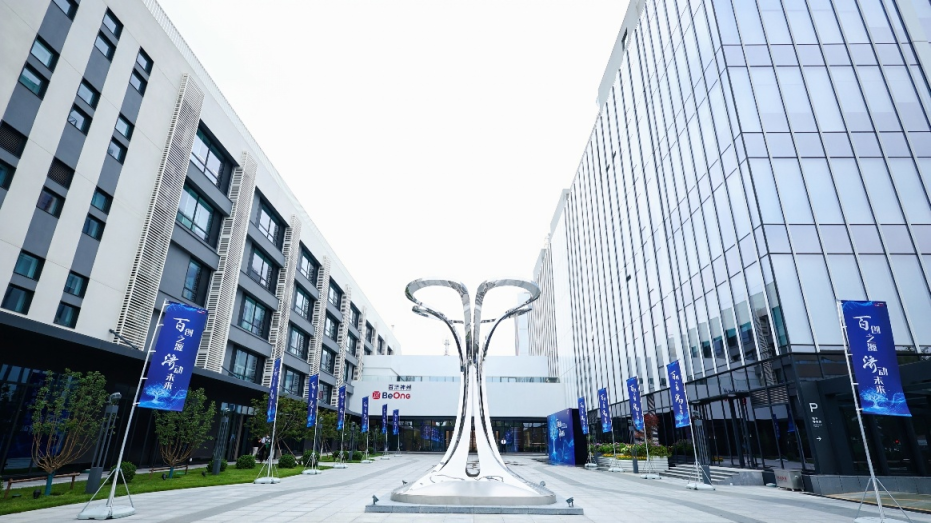
Core Insights - The article highlights the profitability achievements of Beijing-based innovative pharmaceutical companies, particularly Baijiahong and Nocare, marking a significant milestone in their development journey [1][2]. Group 1: Company Performance - Baijiahong reported a net profit of 450 million yuan in the first half of the year, achieving profitability for the first time [1][3]. - Nocare achieved a net profit of 18 million yuan in the first quarter, marking its first quarterly profit, with a significant reduction in net loss to 36 million yuan in the first half of the year [4]. Group 2: Product Sales and Market Expansion - Baijiahong's innovative drug, Zebutinib, generated global sales of 12.527 billion yuan in the first half, a year-on-year increase of 56.2%, with notable growth in the U.S. (51.7%) and Europe (81.4%) [3]. - The sales of another cancer drug, Trelatuzumab, reached 2.643 billion yuan, reflecting a 20.6% increase, driven by new indications approved in China [3][4]. Group 3: R&D and Future Prospects - Baijiahong has established a new R&D center in Changping, covering over 47,000 square meters and equipped with advanced laboratories, supporting the development of over 40 products in clinical and commercialization stages [2][3]. - Nocare is expanding its pipeline with its core product, Obutinib, which is also being tested for autoimmune diseases, potentially unlocking new market opportunities [4].

百济神州(688235):2025Q2利润端大幅超预期,连续两季度GAAP利润为正
Tianfeng Securities· 2025-08-21 10:16
Investment Rating - The report maintains a "Buy" rating for the company [6] Core Insights - The company reported significant financial performance in H1 2025, with total revenue of $2.433 billion, a year-on-year increase of 45%, and a GAAP net profit of $95.59 million, marking a turnaround from losses [1][13] - The company is expected to achieve continuous revenue growth, with projected revenues for 2025-2027 at $38.00 billion, $45.91 billion, and $54.04 billion respectively [6][10] Financial Performance - In Q2 2025, total revenue reached $1.315 billion, a 42% year-on-year increase, with GAAP net profit of $94.32 million, also reflecting a significant recovery [1][13] - The company has successfully reduced its R&D expenses, with a R&D expense rate of 40% in Q2 2025, down 9 percentage points year-on-year [2][32] - Sales and management expenses were $538 million in Q2 2025, with a corresponding expense rate of 41%, a decrease of 7 percentage points year-on-year [2][28] Product Performance - The core product, Zebutinib, achieved global sales of $950 million in Q2 2025, a 49% year-on-year increase, with strong growth in the US and Europe [3][17] - The second key product, Tislelizumab, also showed robust growth, with total revenue of $194 million in Q2 2025, a 22% year-on-year increase [3][22] Future Milestones - The company anticipates several key milestones in the next 18 months, including multiple drugs entering Phase III clinical trials or filing for market approval [4][5] - Notable upcoming events include the expected approval of Tislelizumab for early-stage non-small cell lung cancer in the EU and the initiation of Phase III trials for other products [4][5] Revenue Guidance - The company has updated its revenue guidance for 2025, raising the total revenue forecast from $4.9-5.3 billion to $5.0-5.3 billion, reflecting confidence in product performance [11][12]
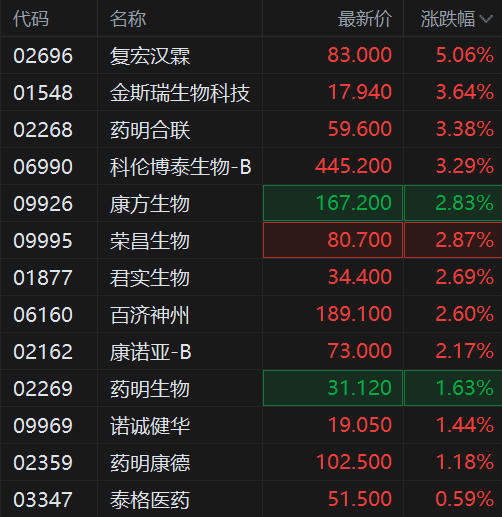
港股异动丨生物医药股普涨 复宏汉霖涨5% 百济神州涨约3%
Ge Long Hui· 2025-08-21 02:03
Core Viewpoint - The Hong Kong biopharmaceutical stocks experienced a general increase, driven by government support for the industry, particularly emphasized by Premier Li Qiang during his recent visit to Beijing [1] Industry Summary - The biopharmaceutical sector in Hong Kong saw significant stock price increases, with notable gains including 5% for Fuhong Hanlin, 3.6% for King’s Ray Biopharmaceutical, and over 3% for WuXi AppTec [1] - Premier Li Qiang highlighted the need for enhanced high-quality technological supply and policy support to promote the development of the biopharmaceutical industry, aiming to produce more high-quality and efficient new drugs [1] - Continuous high-level endorsements from the government signal a strong commitment to supporting the biopharmaceutical industry, especially in the current economic context [1] Company Summary - Fuhong Hanlin (02696) latest price: 83.000, change: +5.06% [1] - King’s Ray Biopharmaceutical (01548) latest price: 17.940, change: +3.64% [1] - WuXi AppTec (02268) latest price: 59.600, change: +3.38% [1] - Other companies with notable increases include: - Keren Biotechnology (06990) +3.29% - Kangfang Biopharmaceutical (09926) +2.83% - Rongchang Biopharmaceutical (09995) +2.87% - Junshi Biosciences (01877) +2.69% - BeiGene (06160) +2.60% [1]

李强在北京调研生物医药产业发展时强调:加大高质量科技供给和政策支持着力推动生物医药产业提质升级
Xin Hua She· 2025-08-21 00:54
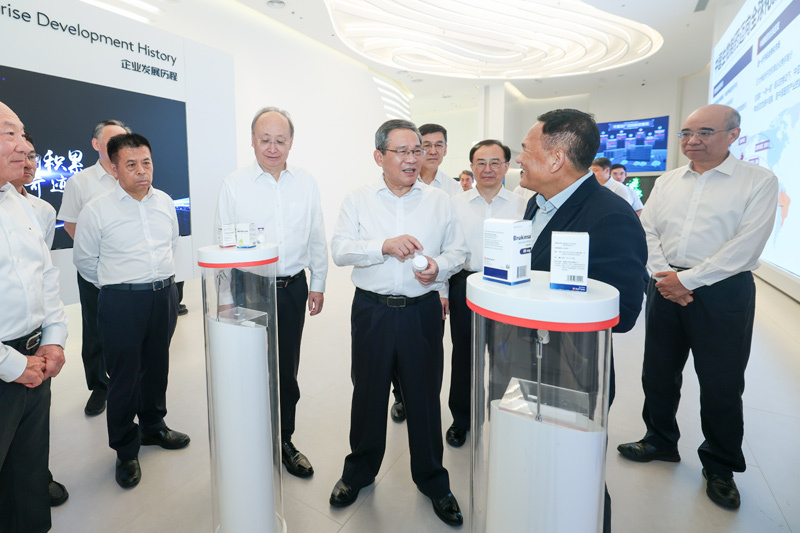
Core Viewpoint - The Chinese government emphasizes the need to enhance high-quality technological supply and policy support to promote the upgrading of the biopharmaceutical industry, focusing on the development of innovative and effective new drugs to improve public health and well-being [2][4]. Group 1: Industry Development - The biopharmaceutical industry is identified as a strategic emerging industry that is crucial for public health and well-being [7]. - There is a significant market potential in the health industry, with a broad outlook for the development of innovative drugs [4]. - The government aims to strengthen original innovation and tackle key core technologies, leveraging both government and market resources to foster innovation [7]. Group 2: Innovation and Research - The focus is on increasing technological innovation efforts, particularly in new targets, new compounds, and new mechanisms of action [4]. - The government encourages the establishment of collaborative research efforts and the cultivation of high-end talent in the life sciences field [4]. - There is a push for the integration of artificial intelligence to enhance various stages of drug development, clinical trials, diagnosis, treatment, and production [7]. Group 3: Policy Support and Collaboration - The government plans to provide policy support in areas such as talent development and financing to nurture high-quality enterprises [4]. - There is an emphasis on optimizing the operational models of innovation platforms to create replicable and scalable experiences [5]. - The government seeks to enhance the synergy between product research, regulatory approval, and management to improve the application of high-level innovative drugs [7].
加大高质量科技供给和政策支持 着力推动生物医药产业提质升级
Bei Jing Ri Bao Ke Hu Duan· 2025-08-20 23:43
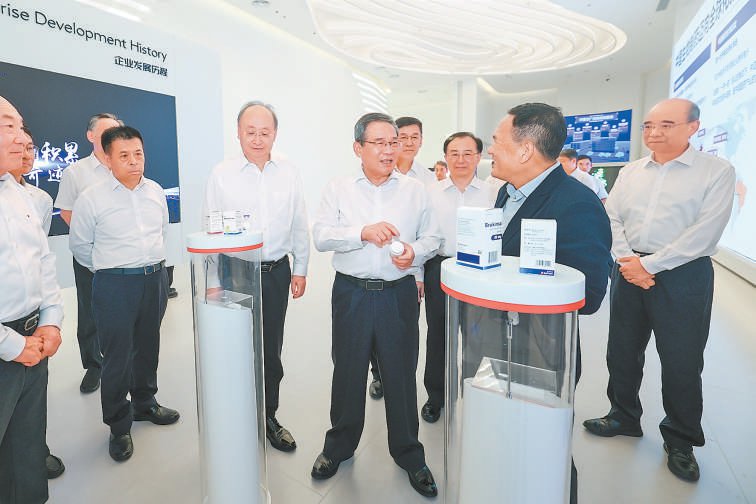
Core Insights - The Chinese government emphasizes the importance of the biopharmaceutical industry for enhancing public health and aims to accelerate innovation and development in this sector [2][4]. Group 1: Government Initiatives - The government plans to increase high-quality technological supply and policy support to promote the biopharmaceutical industry's upgrade and innovation [2][4]. - There is a focus on strengthening original innovation and tackling key core technologies, leveraging both government and market resources to achieve breakthroughs [4]. Group 2: Industry Development - The biopharmaceutical market in China is seen as having significant growth potential, with a strong emphasis on developing innovative drugs with high clinical value and transformation potential [3]. - Companies are encouraged to deepen international cooperation and enhance their innovation and competitiveness through policy support in talent and financing [3]. Group 3: Research and Collaboration - The government advocates for collaborative research efforts targeting new drug targets, compounds, and mechanisms, aiming to produce significant original results and cultivate high-end talent in life sciences [2][3]. - There is a push for the establishment of shared research platforms and one-stop R&D solutions to facilitate the integration of medical and engineering fields, as well as industry-academia collaboration [3]. Group 4: Technology Integration - The integration of artificial intelligence in various stages of drug development, clinical trials, and production is highlighted as a means to enhance the industry's development [4]. - The government aims to optimize policies related to drug procurement and negotiation mechanisms to support the application of high-level innovative drugs [4].
李强:着力推动生物医药产业提质升级
Xin Hua She· 2025-08-20 23:41
Core Insights - The Chinese government emphasizes the importance of accelerating the development of the biopharmaceutical industry, focusing on high-quality technological supply and policy support to enhance innovation and produce more effective drugs [1][2] Group 1: Government Initiatives - The government aims to strengthen original innovation and tackle key core technologies in the biopharmaceutical sector, leveraging both government and market resources to foster innovation [2] - There is a significant market potential in the health industry, with a focus on identifying innovative drug projects with high clinical value and transformation potential [1][2] Group 2: Research and Development - The government encourages collaborative research efforts targeting new drug targets, compounds, and mechanisms, aiming to produce major original achievements and cultivate high-end talent in life sciences [1] - The establishment of shared research platforms is promoted to accelerate the transformation of biopharmaceutical innovations, providing comprehensive support for the entire research and development cycle [2] Group 3: Industry Collaboration - The government advocates for deepening international cooperation among enterprises to enhance innovation and competitiveness in the biopharmaceutical sector [1] - There is a call for optimizing the operational models of innovation platforms to create replicable and scalable practices [2]