BIDU(BIDU)

Search documents
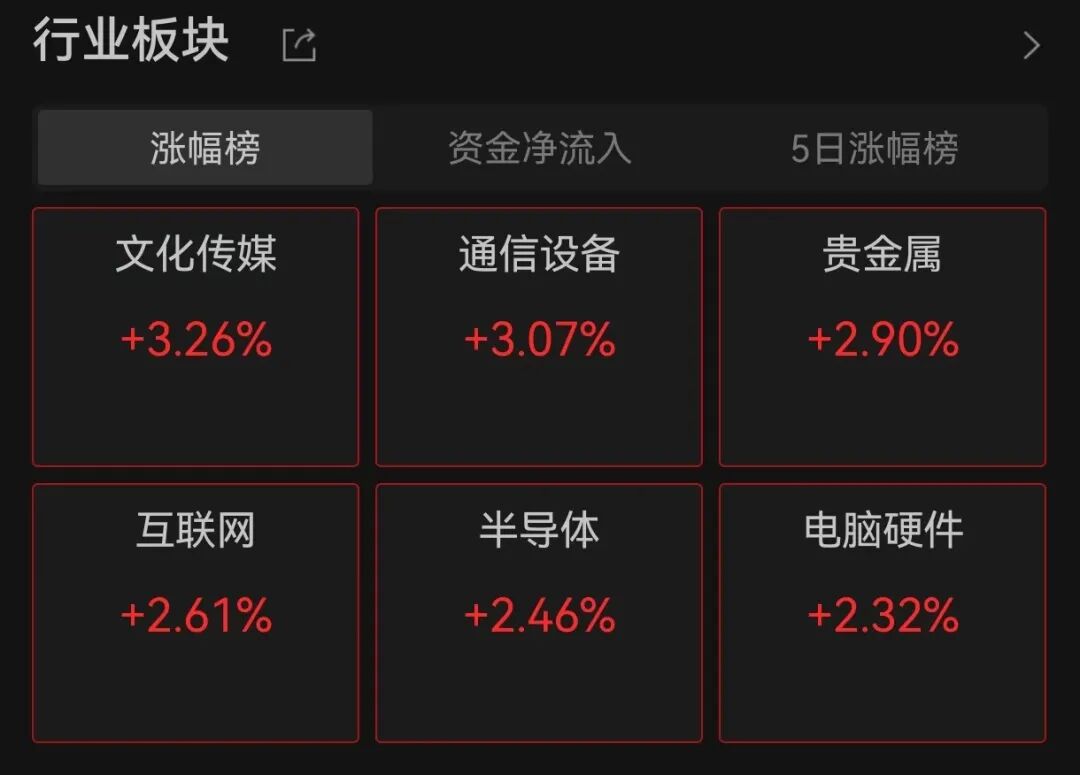
A股三大指数高开;港股高开,恒生科技指数涨近2%丨开盘播报
Mei Ri Jing Ji Xin Wen· 2026-02-09 01:39
每经记者|黄胜 每经编辑|许绍航 宋思艰 记者|黄胜 编辑|许绍航 宋思艰 校对|金冥羽 2月9日,沪指高开0.93%,深成指高开1.50%,创业板指高开1.95%,传媒、CPO、光伏、有色金属等板块指数涨幅居前。 | (免责声明:本文内容与数据仅供参考,不构成投资建议,使用前请核实。据此操作,风险自担。) | | --- | 港股高开,恒生指数涨1.59%,恒生科技指数涨1.9%。华虹半导体涨逾4%,小鹏汽车、哔哩哔哩、百度集团、中国平安、中国人寿涨逾3%。 ...


全球大公司要闻 | SpaceX与xAI合并估值1.25万亿美元,芯片巨头转向月度定价
Wind万得· 2026-02-09 00:30
Group 1 - Tesla's future focus is on AI, autonomous driving, and robotics, with plans for a Robotaxi within five years and expansion of solar battery manufacturing in the U.S. [2] - Stellantis acknowledges a strategic miscalculation with a €22 billion write-down, adjusting its operations by exiting battery joint ventures and halting electric pickup production, expecting a net loss of €21 billion by late 2025 [2] - Bithumb, a major South Korean cryptocurrency exchange, experienced a significant error during a reward event, mistakenly distributing 620,000 bitcoins, leading to a temporary price drop of nearly 18% [3] Group 2 - Yongtai Technology announces that CATL will become a shareholder, aiming to enhance collaboration in lithium battery materials [5] - Meitu expects a 60%-66% increase in net profit by 2025, driven by AI advancements in image processing and expansion of paid services [6] - Baidu faces a lawsuit for generating false criminal information via AI, raising discussions on AI content generation liability [6] - Xiaoma Zhixing partners with Moore Threads to apply domestic AI computing power in autonomous driving, enhancing technology development capabilities [6] - Sunwoda's major shareholder signs a restructuring agreement with Anhui Guowei Group, which plans to invest nearly ¥7.2 billion, potentially enhancing resource integration [6] Group 3 - SpaceX merges with xAI to create a company valued at $1.25 trillion, leveraging SpaceX's financial stability to support AI initiatives [8] - Apple plans to launch several new products in March, including the iPhone 17e and iPad 12, with a focus on AI strategy and Siri upgrades [8] - Netflix is pursuing an $83 billion acquisition of Warner Bros. Discovery, facing antitrust scrutiny amid competitive offers from Paramount [8] - Intel and AMD inform Chinese clients about CPU supply shortages, with delivery times extending up to six months and price increases of over 10% for certain products [9] Group 4 - Samsung Electronics aims to mass-produce sixth-generation high-bandwidth memory (HBM4) by mid-February, becoming the first to do so globally [11] - Crypto.com founder purchases the domain "AI.com" for $70 million, marking a record in domain transaction prices [11] - Japan's Sojitz Corporation introduces a new fungicide with a 97% import registration in India, showcasing innovative mechanisms and broad-spectrum efficacy [11] - Fujifilm will cease sales of certain printing machines in Europe due to profitability challenges, while retaining other product lines [11] - Genesis announces a strategic shift to enhance its high-end brand attributes through a new platform and design approach [11]




给律师生成虚假犯罪记录,AI侵犯名誉案一审开庭丨南财合规周报
2 1 Shi Ji Jing Ji Bao Dao· 2026-02-09 00:25
Group 1: AI Defamation Case - A recent AI defamation case was heard in Beijing Haidian District Court, where a lawyer claimed that AI generated false negative information about him, including serious criminal allegations [3][4] - The defendant, Baidu, argued that AI hallucinations are unavoidable and that they provide neutral technology services without any subjective fault [4] - The lawyer sought damages of 1 million yuan for professional reputation loss and 50,000 yuan for emotional distress, highlighting that other AI platforms did not generate similar false content [4] Group 2: AI Hallucination Legal Precedents - The first domestic AI hallucination case established that generative AI is considered a "service" rather than a "product," applying a fault liability principle [5] - The court emphasized that companies must fulfill three core obligations to avoid liability: clear notification of potential inaccuracies, ensuring functional reliability, and compliance with regulatory filings [5] - The increasing number of disputes related to AI hallucinations indicates a significant industry challenge, necessitating thorough tracing of data sources and training methods to prevent errors [5] Group 3: Market Regulation and Competition - Kimi, an AI product, called on Baidu to remove misleading paid advertisements that confused users by impersonating its official website [6][7] - The market regulatory authority has identified several cases of unfair competition involving AI, particularly focusing on impersonation and false advertising practices [8] - Despite the crackdown on such practices, there has been little accountability for the platforms disseminating misleading information [8] Group 4: WeChat Restrictions on Competitors - WeChat has implemented restrictions on sharing links and codes for various AI products, including Tencent's Yuanbao and Alibaba's Qianwen, citing disruptions to platform order and user experience [9][11] - This move follows a historical precedent where WeChat previously blocked links to Taobao during a major shopping event, indicating a pattern of controlling competitive dynamics [11] Group 5: Regulatory Developments in AI - The European Union has mandated Google to ensure fair access to its ecosystem for third-party AI service providers, aiming to maintain a competitive environment [11] - The EU's regulatory actions will clarify how Google should provide equal access to data and functionalities for AI services, promoting a level playing field [11] Group 6: Penalties for Non-Compliance - Kuaishou was fined 119 million yuan for failing to manage inappropriate content on its platform, reflecting stricter enforcement of cybersecurity laws [12] - The recent increase in penalty limits under the revised cybersecurity law signals a tougher regulatory landscape for large platforms, emphasizing the need for compliance [12]


中国谷歌是个伪命题
虎嗅APP· 2026-02-09 00:14
以下文章来源于版面之外 ,作者画画 版面之外 . 版面之外,才是真相。 本文来自微信公众号: 版面之外 ,作者:画画,题图来自:视觉中国 这份财报厉害的地方不在于它赚了多少钱,而在于它揭示了一个事实: 谷歌已经悄无声息地完成了 从搜索入口向全球AI基础设施的转变。 不妨看看财报里的一个细节,谷歌目前的订单积压额高达2400亿美元,环比增长了55%。这说明全 球的企业界并不是在试用谷歌的AI,而是在排队抢购它的算力和模型服务。Gemini应用的月活用户 已经突破了7.5亿,每分钟处理的Tokens超过100亿。 这种规模的爆发,不是靠一个爆款App就能带动的,而是一套运行了20多年的系统在AI时代突然加速 的结果。 当国内的巨头们,百度、阿里、腾讯,纷纷在喊出要对标谷歌、要做中国的AI基础设施时,这份财 报像是一面镜子,照出了理想与现实之间巨大的鸿沟。 1、中国巨头都有一个谷歌梦 聊完谷歌,回头看看国内。 如果你在2023年和2024年初关注科技新闻,一定看过不少这样的标题:谷歌要完蛋了。 彼时,ChatGpt横空出世,大众铺天盖地的谈论谷歌如何被OpenAI逼到死角,担心这家依靠搜索广 告生存了二十多年的巨头 ...



阿里云出海竞争力增长指数登全球榜首;Temu与匈牙利邮政达成合作|36氪出海·要闻回顾
36氪· 2026-02-08 13:34
Core Insights - Alibaba Cloud ranks first globally in the cloud service competitiveness growth index, maintaining its position as a leader for three consecutive years and being the only Chinese cloud provider in the leader quadrant [3] - Temu partners with Hungarian Post to enhance logistics for e-commerce businesses in Hungary, aiming to improve delivery efficiency for local consumers [4] - Pop Mart establishes its European headquarters in London, planning to open seven stores in the UK and create over 150 jobs [5] - Hesai Technology collaborates with Grab in Southeast Asia to distribute its LiDAR products, enhancing market supply capabilities [5] - Zhijidongli secures $200 million in Series B funding, focusing on R&D and global market expansion [9] - The global AI computing power construction is accelerating, with transformer factory orders in China extending to 2027 due to high demand [11] Alibaba Cloud - Alibaba Cloud is the only Chinese cloud vendor in the leader quadrant of the cloud service competitiveness growth index, serving over 300,000 Chinese enterprises going global [3] - Plans to establish new data centers in multiple countries including Japan, South Korea, and Brazil by 2026 to support Chinese enterprises' overseas development [3] - Collaborates with Transsion to implement advanced imaging technologies in Southeast Asia and Africa, significantly reducing processing time and costs [3] Temu and Logistics - Temu's partnership with Hungarian Post aims to improve logistics for local e-commerce sellers, allowing for streamlined package delivery and return management [4] - The collaboration will leverage Hungary's extensive postal network to enhance delivery services, especially in remote areas [4] Pop Mart - Pop Mart announces London as its European headquarters, with plans to open seven stores across the UK [5] - The move is expected to create over 150 jobs and solidify the brand's presence in the European market [5] Hesai Technology and Grab - Hesai Technology partners with Grab to become the exclusive distributor of its LiDAR products in Southeast Asia, enhancing market access [5] - This collaboration aims to meet the growing demand for high-quality LiDAR sensors across various industries [5] Zhijidongli - Zhijidongli completes a $200 million Series B financing round, with investments aimed at R&D and global market expansion [9] - The company focuses on human-robot interaction and plans to establish a localized ecosystem for technology integration in overseas markets [9] Global AI Computing Power - The demand for AI computing power is driving the global construction of computing infrastructure, with transformer orders in China extending to 2027 [11] - The U.S. market is experiencing longer delivery cycles for transformers, indicating a significant increase in demand for power supply solutions [11]




AI业务进入收获期,百度升级AIDU计划称“薪酬无上限”
Bei Jing Ri Bao Ke Hu Duan· 2026-02-08 10:28
Group 1 - Baidu has upgraded its AIDU talent recruitment and training program to a group-level talent development project, emphasizing "unlimited salary" for top talents [1] - The AIDU program, initiated in 2017, aims to attract top technical talents globally to solve cutting-edge AI challenges and has successfully integrated many university graduates into key project leadership roles [1] - The upgraded AIDU program features a comprehensive training system with mentorship from senior executives and a "dual mentorship" model, providing guidance from both technical and business experts [1] Group 2 - Baidu's board has approved a stock buyback plan of up to $5 billion and plans to issue dividends starting in 2026, which has positively impacted its stock price [2] - In 2025, Baidu's stock price increased by 63%, with a remarkable 57% rise in the second half of the year, leading the tech sector [2]
科技周报|苹果CEO库克谈退休、马云现身阿里千问春节项目组
第一财经网· 2026-02-08 03:36
库克深入谈及退休规划,腾讯、阿里、百度掀起春节前AI大模型的红包大战,松下宣布裁员规模可能 增至1.2万人。 2月5日,苹果CEO库克主持召开一场全员大会,描绘了人工智能(AI)将如何重塑苹果的未来,同时 深入谈及了退休和继任规划。他谈到:"大家都清楚,人到了一定年纪,有些人会选择退休,这是很自 然的事。"库克表示自己花很多时间思考5年后、10年后,甚至15年后谁会坐在这个房间里。思考这些事 情并制订计划,是领导力的重要组成部分。 【点评】:已经年满65岁的库克退休传闻去年下半年开始升温。目前,新任首席运营官萨比·汗已全面 接手运营工作,并正致力于解决行业内普遍面临的内存芯片短缺问题。随着苹果继任者规划逐渐浮出水 面,苹果面临的问题是,公司需要的是一位创新者,还是另一位精明的管理者?是一位像库克那样通过 让公司变得更具可预测性和渐进性而成功的领导者,还是一位像乔布斯那样通过冒险来押注未来的富有 远见的产品规划师? 腾讯、阿里、百度春节撒45亿红包 2026年马年春节前夕,红包大战再度升级,腾讯、阿里、百度三大巨头累计投入超45亿元,且首次将 AI作为核心驱动,开启"红包+AI"的全新玩法。阿里千问斥资最高,达 ...


互联网行业 2026 年 2 月投资策略:国内大厂争夺 AI Agent 流量入口,关注最具确定性的算力和大模型公司
Guoxin Securities· 2026-02-08 02:55
Investment Rating - The report maintains an "Outperform" rating for the internet industry [2][3][4] Core Insights - Major domestic companies are competing for AI Agent traffic entry points, with a focus on companies with the most certainty in computing power and large models, such as Alibaba, Baidu, and Tencent [2][4] - The AI sector is rapidly evolving, with significant investments in talent acquisition, computing infrastructure, and marketing by major players during the Spring Festival period [2] - The report highlights the importance of AI in transforming user interactions with software and the value creation potential of large models [2] Market Review - In January, the Hang Seng Technology Index rose by 3.7%, while the Nasdaq Internet Index fell by 4.7% [11] - The valuation of the Hang Seng Technology Index remained stable, with a PE-TTM of 23.84x, positioned at the 37.28 percentile since its inception [17] - The Nasdaq Index also maintained its valuation, with a PE-TTM of 41.39x, at the 66.79 percentile over the past decade [19] AI Developments - Google launched the open-source medical model MedGemma 1.5 and introduced personal intelligence features in Gemini [21][22] - OpenAI released ChatGPT Health and a user age prediction feature to enhance user safety [23] - Alibaba's Qwen3-Max-Thinking model was introduced, showcasing significant improvements in various dimensions [29] Industry Dynamics - The domestic gaming market is projected to grow by 8% in actual sales revenue by 2025, with a high volume of game approvals in January 2026 [39][40] - Financial technology sector shows a 5% year-on-year growth in payment institutions' reserve funds as of December 2025 [41][42] - The short video industry is experiencing regulatory upgrades and breakthroughs in overseas markets [44] - E-commerce platforms are optimizing store rating logic and reducing deposit requirements for various categories [47][50]

Baidu’s (BIDU) AI Chip Spinoff Seen as Catalyst for Shareholder Value
Yahoo Finance· 2026-02-07 15:11
Core Viewpoint - Baidu, Inc. is recognized as a significant player in the AI sector, with analysts optimistic about its future due to its AI ecosystem and monetization opportunities [1][6]. Group 1: Analyst Insights - US Tiger Securities analyst Bo Pei raised Baidu's price target to $150.00 from $135.00 while maintaining a "Buy" rating, highlighting the company's potential in AI [1]. - The firm believes Baidu will unlock shareholder value through the upcoming listing of its AI chip subsidiary, Kunlunxin, and sees Baidu Cloud benefiting from the rapid adoption of AI in China [2][3]. - Baidu has filed a confidential IPO application for Kunlunxin in Hong Kong, intending to retain majority control post-IPO [4]. Group 2: Financial Projections - Revenue estimates for Baidu's fourth quarter remain unchanged, but non-GAAP EBIT and EBITDA have been slightly reduced due to refined assumptions around depreciation and stock-based compensation [3]. - A valuation of RMB 100 billion is assigned to Kunlunxin, suggesting a conservative multiple of 15.4x EV/sales based on projected 2026 revenue, compared to peers like Cambricon Technologies at approximately 31.5x EV/sales [5]. Group 3: Strategic Developments - The spin-off of Kunlunxin is viewed as a strategic move to unlock hidden value and provide independent capital access for AI chip development [5]. - Despite caution regarding Baidu's near-term revenue and earnings growth, the long-term potential tied to AI is seen as a significant catalyst for the stock, particularly in the robotaxi and AI cloud sectors [6].
2026 AI年度展望:关于「大公司、独角兽、创业者」的十条趋势判断
36氪· 2026-02-07 13:34
Core Viewpoint - The article discusses the competitive landscape of the AI market in China, particularly focusing on the year 2026 as a critical period for major players like Alibaba, Tencent, and ByteDance to solidify their positions in the AI To C market. The competition is expected to be intense, akin to previous battles in ride-hailing, payments, and food delivery sectors [6][8]. Group 1: Major Players and Strategies - In 2026, Alibaba's strategic investment in "Qianwen" will be significant, with plans to spend 3 billion yuan to attract users [6]. - ByteDance is positioned as a formidable competitor in the AI To C space, leveraging its substantial user base and exploring new product avenues like the "Doubao" phone [7][18]. - Tencent is focusing on enhancing its AI applications and models, with a particular emphasis on integrating AI capabilities into its existing services [27][32]. Group 2: Market Dynamics and Challenges - The AI market is still in its infancy regarding commercial models, with no mature business models currently established. Companies are exploring various approaches, including subscription services, API sales, and customized solutions [10][54]. - The competition among major players is expected to intensify as they strive to differentiate their AI products and capture user demand [25][26]. - The article highlights the importance of organizational agility and the need for companies to adapt quickly to market changes, particularly in the context of AI product development [26][72]. Group 3: Investment and IPO Trends - The article notes that recent IPOs, such as those of Zhiyun and MiniMax, signal a more favorable environment for tech companies in the public market, which could enhance funding opportunities for AI firms [67][68]. - However, there is a cautionary note regarding the pressure to commercialize quickly post-IPO, as companies may face scrutiny from investors regarding their performance [69]. Group 4: Future Directions and Innovations - The article emphasizes the need for companies to innovate in AI model capabilities, particularly in areas like memory and contextual understanding, which are seen as critical for future success [83][84]. - There is a growing interest in developing decentralized models that can leverage localized data for better performance in specific industries [85]. - The potential for AI to transform various sectors is highlighted, with a focus on creating personalized and efficient user experiences through advanced AI applications [34][38].