BIDU(BIDU)

Search documents
韩国股民,爆买中国资产
21世纪经济报道· 2026-03-13 00:09
Group 1 - Korean investors have shown significant interest in A-shares, with top net purchases including SANY Heavy Industry, Power Construction Corporation of China, and Accelink Technologies, among others [1][3] - In the Hong Kong market, notable net purchases include China Energy Construction, MiniMax, and Harbin Electric, indicating a strong preference for energy and technology sectors [1] - The trend reflects a shift towards HALO assets, which are characterized by stability and growth potential, particularly in the context of rising global uncertainties [1] Group 2 - Over the past month, three ETFs have made it to the top 20 net purchases by Korean investors, with the Silverhua CSI Innovation Drug Industry ETF leading at a net purchase of $148.05 million [2] - The strong performance of the Korean stock market has encouraged local investors to allocate funds into Chinese assets, particularly in the innovative drug and artificial intelligence sectors [2][3]






本田突发暴雷:因撤回电动化战略损失1000亿元;对标小米SU7 Ultra,追觅汽车售价或超60万元;爱诗科技近期完成3亿美元C轮融资丨邦早报
创业邦· 2026-03-13 00:07
Group 1 - Honda announced a significant loss of 1 trillion yen due to the withdrawal of its electrification strategy, with expected operating losses of 270 billion to 570 billion yen for FY2025 [2] - Tencent's SkillHub platform faced accusations of plagiarism from OpenClaw's creator, but Tencent clarified that it only serves as a local mirror for Chinese users and has contributed to the original project's bandwidth [2] - The launch of the Chasing Car series at AWE2026 is positioned against Xiaomi's SU7 Ultra, with a price range of 600,000 to 700,000 yuan and impressive performance metrics [7] Group 2 - Li Auto reported a revenue of 112.3 billion yuan and a net profit of 1.1 billion yuan for the fiscal year, marking three consecutive years of profitability [9] - ByteDance welcomed Yu Bowen, a former Alibaba executive, to lead its visual model and multimodal interaction team, indicating a strategic move in AI development [9] - Nvidia plans to invest 26 billion USD (approximately 178.8 billion yuan) over the next five years to develop open-source AI models, significantly surpassing OpenAI's investment in GPT-4 [21] Group 3 - BYD is conducting large-scale recruitment, with over 90,000 employees, making it the largest employer among A-share listed companies [13] - Apple celebrated its 50th anniversary, with CEO Tim Cook expressing gratitude to users for their role in shaping the company's innovations [14][15] - Atlassian announced a 10% workforce reduction, affecting around 1,600 employees, to adapt to the rise of AI and strengthen its financial position [21]






OpenClaw爆火,Token驱动需求大周期
Changjiang Securities· 2026-03-12 15:40
Investment Rating - The industry investment rating is "Positive" and maintained [8] Core Insights - Recently, multiple internet and model manufacturers have followed OpenClaw, launching various ready-to-use versions of "lobster," and related policies have been introduced in several regions, leading to a surge in the "lobster farming" concept [2][5] - The current trend driven by OpenClaw indicates a significant shift in AI deployment capabilities, moving towards executable, deployable, and privatized solutions, with competition focusing on execution capabilities and commercialization [11] - The demand for AI agents is expected to see a turning point, with the introduction of free trials, low-cost subscriptions, and lightweight deployments lowering usage barriers, while OpenClaw transitions AI from mere conversation to task execution [11] - The model market is expanding, and the token industry chain is becoming a new focal point, with anticipated growth in token revenue and demand for computing power as user installations increase [11] Summary by Sections Event Description - Multiple internet and model manufacturers are launching various versions of OpenClaw, with policies emerging in several regions to support this trend [5] Market Dynamics - Major companies are competing on deployment thresholds, usage costs, and service delivery, with at least 14 manufacturers currently involved in related products [11] - Policies in regions like Jiangsu and Guangdong are encouraging the development of industrial models using OpenClaw, with financial incentives for companies [11] Future Outlook - The report suggests that the AI industry is entering a demand era, with a focus on high-value applications in sectors like taxation and industry, as well as the potential for supply relief in domestic computing power [11]



道指下挫近700点,芯片股普跌,英特尔跌超4%,英伟达、苹果跌2%,原油直冲100美元
21世纪经济报道· 2026-03-12 14:42
Market Overview - US stock market opened lower with all three major indices falling over 1%, with the Dow Jones down 1.46%, Nasdaq down 1.57%, and S&P 500 down 1.25% [1][2] Technology Sector - Major technology stocks experienced a decline, with the "Big Seven" tech index down 1.53%. Apple and Nvidia fell over 2%, while Tesla, Facebook, and Google dropped over 1.5% [3][4] - Chip stocks collectively fell, with Teradyne and GlobalFoundries down over 5%, and other major players like TSMC and Intel down over 4% [5] Automotive Sector - Honda Motors reported its first annual loss since its listing in 1957, with a projected total cost and loss of up to 2.5 trillion yen (approximately 108.2 billion RMB) due to a reassessment of its electrification strategy [5] Energy Sector - Oil and gas stocks performed well, with US energy stocks rising by 7.6%. Notable increases included Murphy Oil up 3.8% and Occidental Petroleum up 3.3% [6] - International crude oil prices surged, with Brent crude futures rising by 9% to reach $100 per barrel, while WTI crude also increased by over 8% [6][7] Precious Metals - Gold and silver prices showed mixed results, with spot gold experiencing a significant drop before stabilizing at $5157.4 per ounce, while silver rose by 0.59% to $86.23 per ounce [6][7] Economic Indicators - Initial jobless claims in the US for the week ending March 7 were reported at 213,000, slightly below expectations [10]



百“虾”大战:当第一批养虾人开始卸载,大厂的战争才真正开始
虎嗅APP· 2026-03-12 14:19
Core Viewpoint - The article discusses the rapid development and competition among major internet companies in China regarding AI agents, highlighting the contrasting trends of user disengagement and corporate engagement in the AI space [4][10]. Group 1: Company Actions and Timeline - Major internet companies have launched various AI products and services in a compressed timeline, with significant actions occurring from late February to early March [6][8]. - Companies like Tencent, ByteDance, Alibaba, and others have introduced products that integrate OpenClaw, offer one-click deployment, and provide user incentives [9][12]. Group 2: Competitive Strategies - Companies are adopting four main strategies: 1. Infrastructure selling, where cloud services like Tencent Cloud and Alibaba Cloud focus on simplifying deployment processes [12]. 2. Gaining entry points, with Tencent's WorkBuddy and ByteDance's ArkClaw aiming to integrate into popular messaging platforms [12]. 3. Ecosystem control, as seen with Xiaomi and NetEase, which are embedding AI agents into their existing ecosystems [12]. 4. Maintaining presence, where some companies feel compelled to participate in the AI trend to avoid being left out [13]. Group 3: Financial Implications - Each company's financial concerns differ: - Tencent is focused on maintaining its social connection platform [15]. - Alibaba is concerned about preserving its transaction pathways [16]. - Baidu aims to retain its position as the starting point for user queries [17]. - ByteDance is focused on ensuring it remains a key player in content distribution [17]. Group 4: User Experience and Market Impact - The article emphasizes that while users may disengage from specific AI products, the experience of using AI agents has lasting effects on their perception of AI technology [19][20]. - The competition among companies is not just about individual products but about establishing a foundational infrastructure for future AI interactions [20].

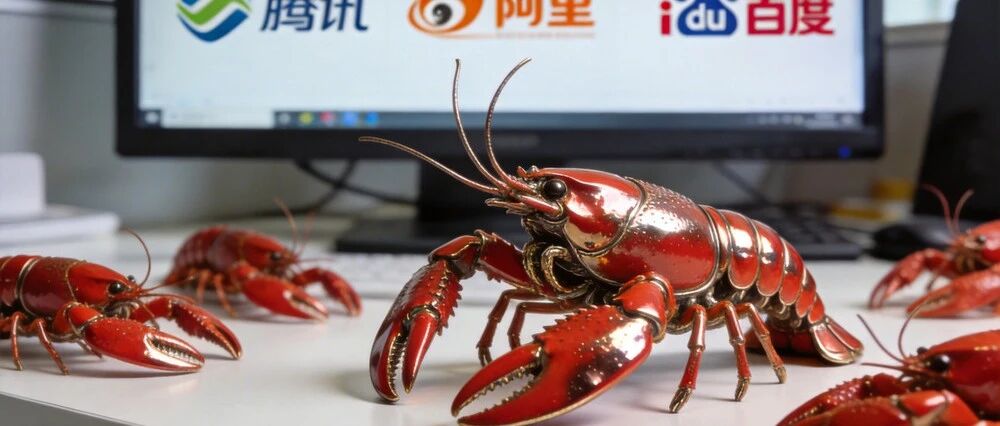
百虾大战!大厂争相驯化野生“龙虾”
新财富· 2026-03-12 12:16
Core Viewpoint - The article discusses the rapid rise of OpenClaw and the ensuing competition among major tech companies in China, referred to as the "Battle of the Shrimp," highlighting the potential and risks associated with this open-source AI tool [3][5][22]. Group 1: OpenClaw's Emergence and Adoption - OpenClaw was launched in January 2026 and quickly gained popularity, surpassing established projects like React and Linux on GitHub within two months [3]. - Major companies including Tencent, Alibaba, ByteDance, and others have launched OpenClaw-based products in a short span, indicating a significant market interest [5][10][11]. - Tencent's product matrix includes offerings for general users, developers, and enterprises, showcasing a comprehensive approach to market penetration [7]. Group 2: Product Features and Innovations - Tencent introduced various products such as WorkBuddy and QClaw for general users, and Lighthouse for developers, emphasizing ease of use and integration with existing platforms [7][8]. - Alibaba's offerings focus on multi-agent collaboration and enterprise security, with products like Qode and HiClaw designed for different user segments [10]. - ByteDance's ArkClaw integrates seamlessly with its Feishu ecosystem, providing a user-friendly experience for task management [11]. Group 3: Security Concerns and Challenges - The open-source nature of OpenClaw presents significant security risks, including potential system vulnerabilities and data breaches, as highlighted by the National Internet Emergency Center [20]. - Users have reported issues with high costs associated with both installation and uninstallation of OpenClaw services, indicating a potential market challenge [18][19]. - The article emphasizes the need for robust security measures as companies seek to transform OpenClaw from a risky open-source tool into a secure productivity solution [22][23]. Group 4: Industry Response and Future Outlook - Major tech companies are implementing security optimizations and leveraging their ecosystems to address OpenClaw's core issues, such as high token consumption and security vulnerabilities [23][29]. - The article suggests that the competition among these companies will lead to a shift from a focus on technology to a focus on safety and commercial sustainability in the AI industry [34]. - The integration of security measures and compliance with regulatory standards will be crucial for the successful adoption of OpenClaw in enterprise environments [33].

全球首款手机“龙虾”上线秒光
21世纪经济报道· 2026-03-12 11:52
Core Viewpoint - Major internet companies are actively participating in the "lobster" (virtual intelligent agent OpenClaw) trend, with Baidu launching the world's first mobile lobster application, "Red Hand Operator," allowing users to control all mobile applications through chat commands [1][7]. Group 1: Baidu's Initiatives - Baidu has introduced a series of initiatives for "raising lobsters," starting with the deployment solution for OpenClaw by Baidu Intelligent Cloud [6]. - On February 14, Baidu App officially supported one-click access to OpenClaw [6]. - On March 11, Baidu Intelligent Cloud launched a zero-deployment service called "DuClaw," enabling users to start using the service without the need for server configuration or API Key [6]. - The "Red Hand Operator" application allows users to automate tasks like ride-hailing and food ordering across different apps using chat commands [7]. Group 2: Market Engagement - Baidu has also set up offline "lobster markets" where engineers assist users in installing the lobster application [4]. - Peter Steinberger, the founder of OpenClaw, has shown interest in collaborating with Baidu, praising the speed of AI innovation in China [4].
Lobster buffet: China's tech firms feast on OpenClaw as companies race to deploy AI agents
CNBC· 2026-03-12 09:11
Core Viewpoint - China is rapidly adopting the OpenClaw AI assistant, with major tech companies and local governments expanding access to this open-source tool, indicating a significant shift in consumer interest and technology adoption in the region [1][3][6]. Group 1: Adoption and Popularity - Tencent has launched a suite of AI products based on OpenClaw, termed "lobster special forces," which integrates with its WeChat superapp [3]. - The usage of OpenClaw in China has surpassed that in the U.S., driven by local companies and consumer interest [3]. - The OpenClaw project has gained more stars on GitHub than Linux, highlighting its popularity and significance in the tech community [18]. Group 2: Features and Capabilities - OpenClaw functions as a digital assistant capable of performing tasks autonomously, such as sending emails and scheduling meetings, which distinguishes it from traditional chatbots [2]. - The tool allows users to send requests through messaging apps like Telegram and WhatsApp, enabling multiple autonomous tasks [10]. Group 3: Market Dynamics - Chinese-developed large language models are gaining traction, with OpenClaw users favoring local tools over U.S. counterparts, indicating a narrowing gap in AI capabilities [9]. - The growing interest in OpenClaw is influencing how Chinese consumers are willing to pay for AI services, with companies offering various support options for installation [14]. Group 4: Installation and Accessibility - The installation process for OpenClaw has been identified as a barrier for non-technical users, prompting companies to simplify the setup [11]. - Initiatives such as Tencent's in-person setup sessions and JD.com's remote assistance for installation are aimed at easing access for consumers [13][14]. Group 5: Future Outlook - The rise of OpenClaw is seen as a pivotal moment in AI adoption, comparable to previous significant developments in the tech industry [19]. - Companies like Violoop are shifting focus to the Chinese market, reflecting the growing demand for AI solutions domestically [15].

中国 AI 发展路径:依托自研芯片构建全栈 AI 能力-China's Emerging Frontiers-China's AI Path Owning the Full AI Stack via In-house Chips
2026-03-12 09:08
Summary of Key Points from the Conference Call Industry Overview - The focus is on China's AI industry, particularly the development of in-house chips by leading Internet companies to gain a competitive edge in AI applications and mitigate risks associated with external suppliers and geopolitical tensions [1][11][55]. Company Insights Alibaba Group Holding (BABA.N) - **Top Pick Status**: Alibaba has been elevated to a top pick, replacing Tencent, due to its comprehensive AI strategy and in-house chip development [1][3]. - **AI Stack Ownership**: Owning the full AI stack (chips, cloud, models, applications) is seen as a structural advantage, positioning Alibaba as a global AI winner [3][4][10]. - **In-house Chips**: Alibaba's T-Head chips are highlighted as top-tier, enabling the company to reduce reliance on third-party suppliers and improve cost efficiency [4][10][15]. - **Cloud Infrastructure**: Alibaba Cloud is recognized as China's 1 and the world's 4 cloud provider, enhancing its AI capabilities [4][10]. - **Market Projections**: The AI chip total addressable market (TAM) in China is projected to reach US$67 billion by 2030, with a domestic market size of US$51 billion, indicating a self-sufficiency rate of 76% [5][10][31]. Tencent - **Ecosystem Strength**: Tencent benefits from its WeChat ecosystem, positioning itself as a "late starter, but quick follower" in the AI space [4][10]. - **Application-Driven Strategy**: Tencent focuses on leveraging its existing services and launching AI-native applications to maintain its competitive edge [16][22]. Baidu (BIDU) - **AI Disruption Risk**: Baidu is seen as a local chip contender with its Kunlunxin chips but faces higher disruption risks in its core search business [4][5]. - **AI Revenue Streams**: Baidu is transforming its core business into AI-driven services and has launched new AI revenue streams, including external sales of its proprietary chips [17][45]. ByteDance - **Rapid Expansion**: ByteDance is aggressively expanding its consumer applications and infrastructure, leveraging its strong traffic from Douyin and TikTok [18][27]. - **Cloud Platform Growth**: The company is rapidly expanding its cloud platform, Volcano Engine, to support its AI applications [19][27]. Market Dynamics - **Chip Market Outlook**: The domestic AI chip market is expected to grow significantly, with major players like Huawei, Cambricon, T-Head, and Kunlunxin leading the market [23][31][32]. - **Consolidation Expected**: Industry consolidation is anticipated in the next 2-3 years, with a focus on supporting sovereign background vendors for strategic reasons [24][25]. - **Market Share Projections**: Huawei is projected to hold approximately 65% of the domestic market share by 2030, followed by Cambricon and others [26][32]. Strategic Importance of In-house Chips - **Competitive Advantage**: In-house chip development is viewed as a long-term strategic asset that enhances supply security, reduces regulatory exposure, and lowers AI unit economics [55][71]. - **Cost Efficiency**: Proprietary chips allow for optimized designs tailored to specific applications, leading to significant cost reductions and improved performance [56][63]. - **Mitigating Supply Chain Risks**: In-house chips help address vulnerabilities created by US export controls, providing stable supply for inference-heavy workloads [71][74]. Financial Valuations - **T-Head Valuation**: T-Head is valued between US$28-86 billion based on projected revenues and market positioning [6][38]. - **Kunlunxin Valuation**: Kunlunxin is valued between US$20-61 billion, with a focus on unlocking shareholder value through potential spin-offs [45][46]. Conclusion - The conference call highlights the strategic shift in China's AI landscape, emphasizing the importance of in-house chip development and the competitive advantages it provides to leading companies like Alibaba, Tencent, Baidu, and ByteDance. The projected growth in the AI chip market and the anticipated consolidation within the industry further underscore the evolving dynamics of this sector.
RoboSense Secures Exclusive Design Win for Baidu's Next-Gen Apollo Go Robotaxi
Prnewswire· 2026-03-12 04:34
Core Insights - RoboSense has secured an exclusive design win to provide digital LiDAR technology for Baidu's next-generation Apollo Go Robotaxi fleet, marking a significant advancement in autonomous mobility solutions [1] Group 1: Company Developments - RoboSense will supply the EM4, the world's only mass-produced thousand-beam-level digital LiDAR, and the E1, a fully solid-state digital LiDAR, for the Apollo Go Robotaxi [1] - The combination of EM4 and E1 offers 360-degree, zero-blind-spot coverage, which is crucial for safe Level 4 (L4) autonomous driving [1] - This partnership with Baidu Apollo Go, a leading autonomous ride-hailing service, reinforces RoboSense's position in the L4 autonomous mobility market [1] Group 2: Market Validation - The design win with Baidu follows RoboSense's recent deployment with WeRide GXR Robotaxi, further validating its technological leadership in the autonomous driving sector [1] - The EM4 and E1 suite is recognized as the most advanced LiDAR solution available globally, highlighting RoboSense's competitive edge [1] - Baidu's selection of RoboSense's digital LiDAR solutions underscores their technical superiority and reliability in automotive applications [1]