BIDU(BIDU)

Search documents
王慧文深夜发帖「抢项目」,竟因全球增速第一的OpenClaw|AI产品榜·网站榜2026年1月
36氪· 2026-02-09 10:45
开源的OpenClaw验证了方向, OpenClaw正以惊人的速度席卷全球,在Github从5千星标到17.5万星标只用了30天成为Github星标之王,在最新发布的2026年01月AI产品榜·网站榜中, OpenClaw 263万月访问量登顶AI产品榜·全球增速榜。 这一现象级产品的爆发,迅速触动了科技行业的敏感神经。2月7日凌晨,王慧文再次在社交媒体公开发布英雄帖:"哪个团队要做OpenClaw相关领域创业, 需要融资的欢迎联系我,或者谁想组局进入这个领域创业,也可以联系我,或者想加入OpenClaw相关创业公司的,也可以联系我。",并留了其投资公司 Lollapalooza的邮箱作为联系方式。 OpenClaw成为Github星标之王、登顶AI产品榜·网站榜·全球增速榜、王慧文发布OpenClaw英雄帖,共同说明了一件事:开源的OpenClaw验证了方向,产品 化后可获得确定性的机会。 产品化后可获得确定性的机会。 其实,在OpenClaw爆火之前还有两个做事火爆的智能体:一个叫Manus、一个叫豆包手机,这三个做事的智能体都有一个核心叫:权限。你给的权限越 多,体感越震撼,意思是用户让渡权限,获得体验 ...



AI应用“春节档”持续上新
财联社· 2026-02-09 10:42
Core Viewpoint - The article discusses the recent surge in AI applications during the "Spring Festival" period, highlighting the launch of new products by major companies like ByteDance, Alibaba, Kuaishou, and Baidu, which has significantly impacted the A-share market, particularly the AI application sector [2]. Group 1: AI Product Launches - ByteDance launched the Seedance 2.0 AI video generation model, capable of creating movie-quality videos from text or images [2][3]. - Alibaba introduced the Qwen3-Max-Thinking AI assistant, which supports adaptive tool invocation and expands testing capabilities [3]. - Baidu released the OCR-VL-1.5 AI office tool, which includes text detection and recognition capabilities [3]. - Kuaishou's new model focuses on the entire video production process, including generation, editing, and post-production [3]. - Shanghai AI Laboratory's InternS1Pro boasts trillion-parameter multimodal reasoning capabilities [3]. - MiniCPM-o4.5 from Weiming Intelligent features human-like perception and communication abilities [3]. - The MOTUS world model from Tsinghua University and Shengshu Technology achieves a perfect closed loop of "seeing-thinking-moving" [3]. Group 2: Upcoming AI Products - ByteDance is set to release the Doubao 2.0 flagship large language model and the Seedream 5.0 image generation model [5]. - Xiaohongshu is testing OpenStoryline 1.0.0, a conversational editing tool similar to other models [5]. - Alibaba's Qwen 3.5 is expected to utilize a new attention mechanism and may be a native VLM model for visual understanding [5]. - Deepseek's DeepSeekV4 aims to integrate reasoning frameworks and visual understanding capabilities for efficient document processing [5].




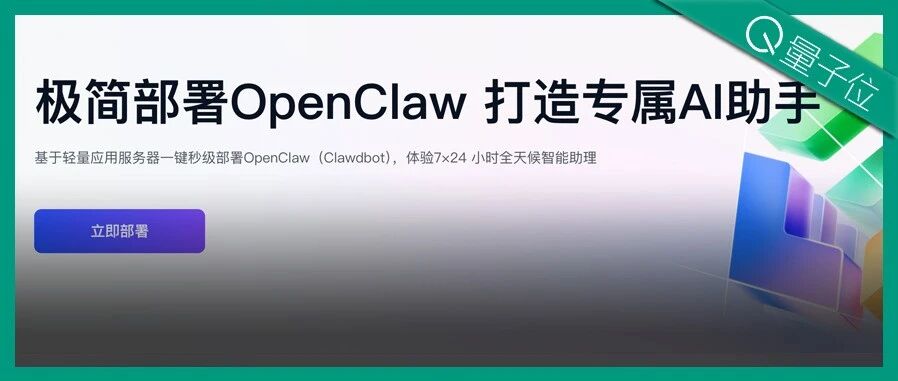
1分钱部署OpenClaw!不挑设备4步搞定,全图形界面10分钟跑通专属AI助理
量子位· 2026-02-09 09:50
克雷西 发自 凹非寺 量子位 | 公众号 QbitAI 2026以来,还有比 OpenClaw (原Clawdbot/Moltbot) 更火的AI和Agent应用吗? 别的不说,光是GitHub上的星星就有17.7万之多,而且增长速度就像在坐火箭。 能有这样的热度,是因为它早就脱离了聊天机器人的范畴,是公认能真正指挥电脑干活的"数字员工"。 比如这位网友就用三台电脑、15个Agent部署了自己的"数字军团",他只需要在一个Discord频道里坐镇指挥,就能让它们完成处理邮件、读 PPT、写代码、发推文,甚至撰写每日汇报等一系列工作。 OpenClaw,一行代码真能搞定? 说实话,为了搭上OpenClaw的这班车,我属实是没少折腾。 不过,想把这位"大神"请进自己的设备,还是得费点周折。 所以很多人都是看着视频里它干活挺爽,但只能眼巴巴地看,真到了自己想用的时候,却发现连大门都进不去。 现在,这个"看得到吃不到"的尴尬局面,终于有解了。 我发现百度智能云搞了个 "作弊级"的方案 ,直接把这个复杂的部署过程给"降维打击"了。 它不需要你懂代码,也不用你折腾环境,直接把这个顶流AI变成了人人都能上手的生产力工具。 ...
春节期间最大热点?AI红包大战开启,人工智能渗透率有望再攀新高
Xuan Gu Bao· 2026-02-09 07:23
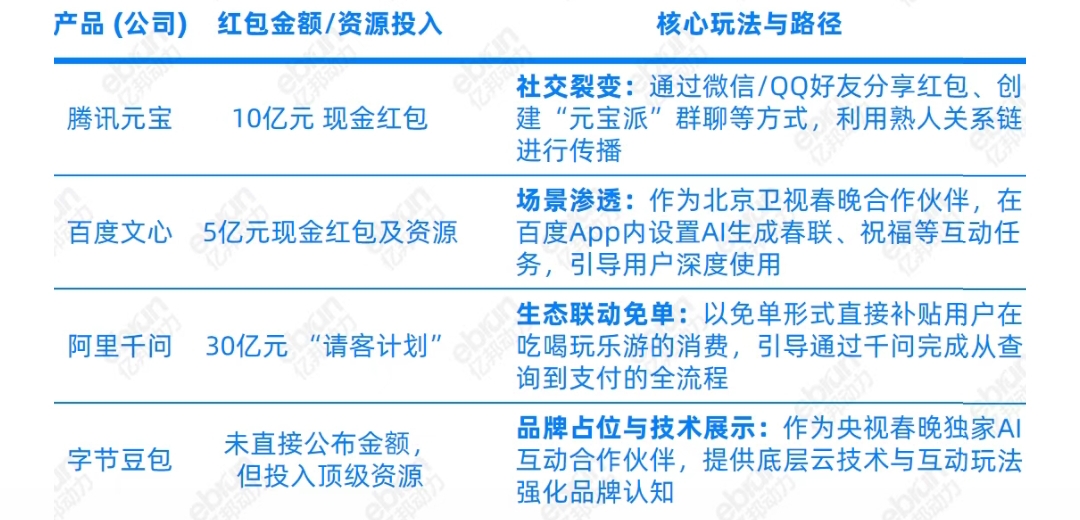
2月2日,阿里巴巴旗下千问APP也宣布投入30亿元启动"春节请客计划",以免单形式请全国人民在春节期间吃喝玩乐。目前三家大厂在春节期间的营销预算 已超45亿元。 值得注意的是,字节跳动虽未公布春节期间红包活动金额,却早已拿下关键战略高地——旗下火山引擎成功斩获2026年央视春晚独家AI云合作伙伴资格。 这一顶级流量入口意味着,字节"豆包"将在除夕夜直面十亿级观众,获得超强曝光。 | 产品(公司) 红包金额/资源投入 | | 核心玩法与路径 | | --- | --- | --- | | 腾讯元宝 | 10亿元 现金红包 | 社交裂变:通过微信/QQ好友分享红包、创 建"元宝派"群聊等方式,利用熟人关系链 | | | | 进行传播 | | 百度文心 5亿元现金红包及资源 | | 场景渗透: 作为北京卫视春晚合作伙伴,在 百度App内设置Al生成春联、祝福等互动任 | | | | 务,引导用户深度使用 | | 阿里干问 | 30亿元"请客计划" | 生态联动免单:以免单形式直接补贴用户在 吃喝玩乐游的消费,引导通过千间完成从查 | | | | 询到支付的全流程 | | 未直接公布金额, | | 品牌占位与技术展示 ...
小摩:目前断定AI应用市场最终赢家为时过早,偏好阿里、百度及快手
Ge Long Hui· 2026-02-09 06:16
2月9日,摩根大通发表研报指,消费者行为正在转变,用户获取信息和消费内容的方式逐渐改变,聊天 机器人正成为搜索、推荐和任务执行的新起点。该行认为,大型互联网平台现在愿意投入真正的营销资 金以加速采用,这将机械性地提高推理量并推动Token消耗的快速增长。摩通更青睐中国AI基础设施受 益,如阿里巴巴和百度以及在线广告受益者快手作为二级赢家,因为该行认为现在判断持久的AI应用 赢家与输家还为时过早。 责任编辑:栎树 港股频道更多独家策划、专家专栏,免费查阅>> ...
大行评级丨小摩:目前断定AI应用市场最终赢家为时过早,偏好阿里、百度及快手
Ge Long Hui· 2026-02-09 05:24
摩根大通发表研报指,消费者行为正在转变,用户获取信息和消费内容的方式逐渐改变,聊天机器人正 成为搜索、推荐和任务执行的新起点。该行认为,大型互联网平台现在愿意投入真正的营销资金以加速 采用,这将机械性地提高推理量并推动Token消耗的快速增长。摩通更青睐中国AI基础设施受益,如阿 里巴巴和百度以及在线广告受益者快手作为二级赢家,因为该行认为现在判断持久的AI应用赢家与输 家还为时过早。 ...
百度智能云推出OpenClaw极速简易部署方案
Di Yi Cai Jing· 2026-02-09 03:35
(文章来源:第一财经) 据36氪,百度智能云正式推出OpenClaw极速简易版部署方案,开发者登录百度智能云官网,基于轻量 应用服务器可视化配置面板,用户可轻松实现OpenClaw快速部署,加速Agent应用从体验到实用的落地 进程。 ...
元宝猛砸150亿投流,打不过千问的1000万杯奶茶?
3 6 Ke· 2026-02-09 03:18
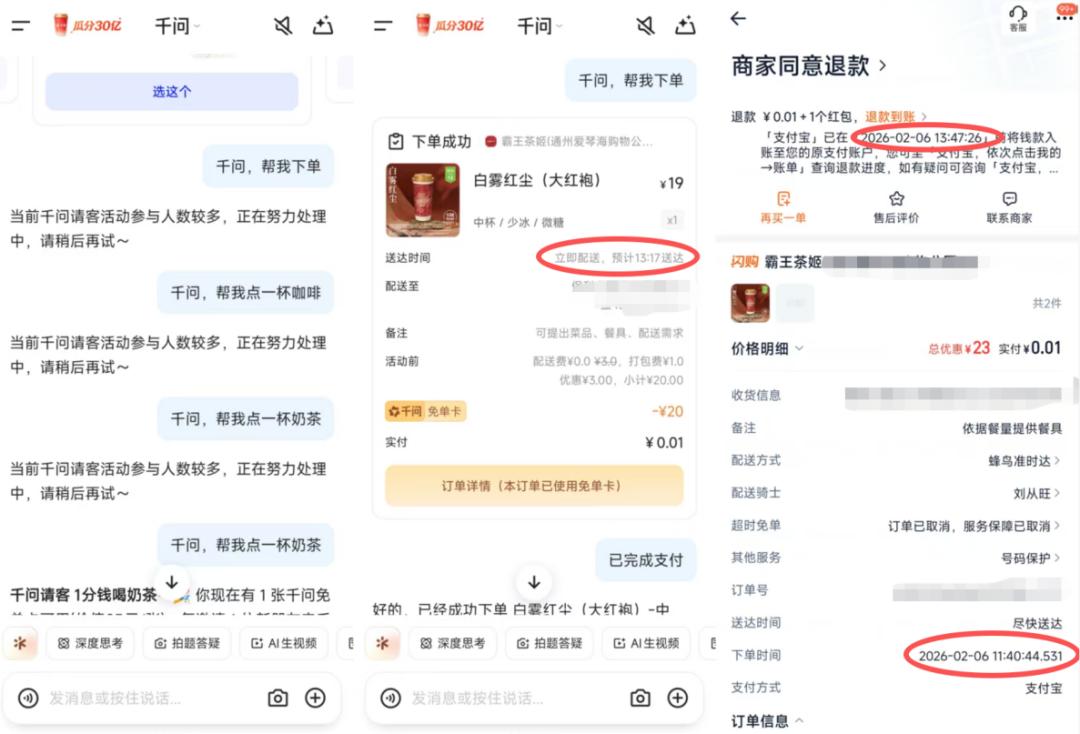
Core Insights - The article discusses the launch of Alibaba's Qianwen "Spring Festival 30 Billion Free Order" campaign, which allows users to order milk tea for just 0.01 yuan, igniting a new round of "AI takeout wars" [1][27] - The campaign saw overwhelming participation, with over 10 million orders placed within the first 9 hours, leading to significant user engagement and social media buzz [27][29] - However, the campaign also faced technical issues, with users reporting system crashes and delays in order fulfillment, highlighting challenges in user experience [1][29] Group 1 - The Qianwen campaign aims to attract users by offering milk tea at a minimal cost, leveraging AI for ordering [1][27] - Social media reactions included complaints about order errors and delivery issues, indicating operational challenges [1][4] - The campaign's success led to Qianwen topping the App Store's free download chart, surpassing Tencent's previous efforts [27][29] Group 2 - The competitive landscape features significant financial investments from major players, with Qianwen committing 30 billion yuan, including 20 billion in free order cards and 10 billion in cash red envelopes [27][29] - The article notes that the marketing strategies of various AI applications are shifting towards user retention and engagement rather than just acquisition [29][55] - The overall AI application market is experiencing a slowdown in user growth, prompting companies to focus on creating indispensable daily use cases for their products [29][55]

硅谷不相信忠诚,AI行业玩成NBA,科学家爽拿“转会费”
3 6 Ke· 2026-02-09 01:48
Core Insights - The loyalty of employees in Silicon Valley has diminished, with significant talent poaching events occurring among major tech companies, particularly in the AI sector [1][2] - The trend of "acqui-hire," where companies acquire others primarily for their talent rather than products, has become a common strategy among tech giants [24][27] Group 1: Talent Poaching Events - Major talent poaching incidents include Meta's $14.3 billion investment in Scale AI to acquire co-founder Alexandr Wang in June 2025, Google's $2.4 billion acquisition of Windsurf's technology and team in July 2025, and NVIDIA's $20 billion deal with Groq in December 2025 [1][2][11] - OpenAI has also been active in recruiting talent, bringing back researchers from Thinking Machines Lab and attracting former Google DeepMind employees [1][2] Group 2: Motivations for Job Changes - Employees are motivated to switch jobs for various reasons, including high salaries, access to cutting-edge resources, and the pursuit of more promising technologies and products [2][32] - The phenomenon of "active" and "passive" job changes is noted, with many researchers leaving for better opportunities or being relocated due to company acquisitions [2] Group 3: Acqui-hire Strategy - Acqui-hire has become a popular method for tech giants to quickly acquire skilled teams without facing antitrust scrutiny, allowing them to maintain a competitive edge in AI [24][27] - The case of Google's acquisition of Windsurf illustrates the potential fallout for remaining employees, who may feel abandoned when key talent is poached [27][28] Group 4: Employee Sentiment and Loyalty - Despite high salaries offered by companies like Meta, employee loyalty remains elusive, with some researchers returning to their previous employers shortly after being hired [18][20] - The culture in the tech industry is shifting, with employees increasingly concerned about long-term commitments to a single company, leading to a more fluid job market [32][35] Group 5: Domestic Talent Competition - The talent war is not limited to Silicon Valley, as domestic companies are also aggressively recruiting AI talent from top labs, indicating a global trend in talent mobility [37][39] - High salaries and rapid job changes are characteristic of the AI industry, where top talent is viewed as a strategic asset [40]





A股三大指数高开;港股高开,恒生科技指数涨近2%丨开盘播报
Mei Ri Jing Ji Xin Wen· 2026-02-09 01:39
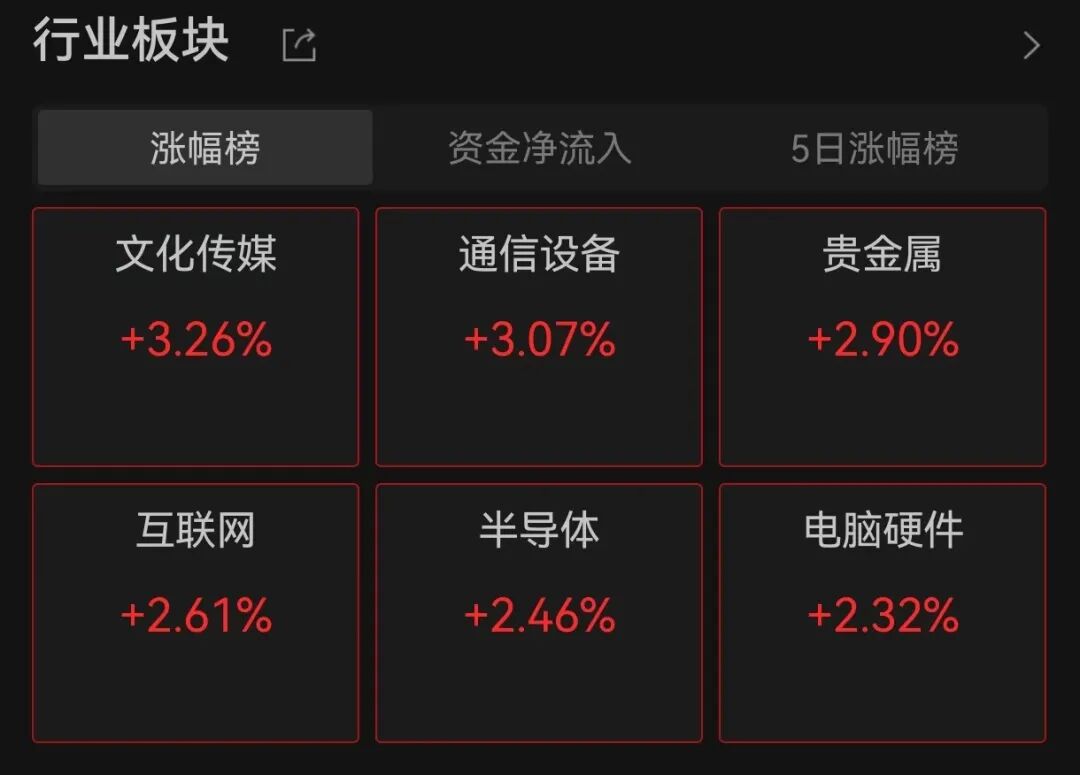
每经记者|黄胜 每经编辑|许绍航 宋思艰 记者|黄胜 编辑|许绍航 宋思艰 校对|金冥羽 2月9日,沪指高开0.93%,深成指高开1.50%,创业板指高开1.95%,传媒、CPO、光伏、有色金属等板块指数涨幅居前。 | (免责声明:本文内容与数据仅供参考,不构成投资建议,使用前请核实。据此操作,风险自担。) | | --- | 港股高开,恒生指数涨1.59%,恒生科技指数涨1.9%。华虹半导体涨逾4%,小鹏汽车、哔哩哔哩、百度集团、中国平安、中国人寿涨逾3%。 ...