BIDU(BIDU)

Search documents
Baidu Launches DuClaw To Simplify Deployment Of OpenClaw AI Agents - Baidu (NASDAQ:BIDU)
Benzinga· 2026-03-11 18:18
Core Insights - Baidu Inc. has launched DuClaw, a fully managed, zero-deployment service on Baidu AI Cloud, providing users immediate access to the OpenClaw agent platform without server setup or API key configuration [1] Group 1: DuClaw Functionality - DuClaw offers a ready-to-use OpenClaw environment, allowing users to bypass system image selection and server configuration entirely [2] - The service is accessible via a web interface and will extend support to enterprise platforms such as WeCom, DingTalk, and Feishu [2] - It includes pre-built Baidu skills like Baidu Search, Baidu Baike, and Baidu Scholar, with options for users to select from various mainstream foundation models [2] Group 2: Background and Development - DuClaw builds on Baidu's previous efforts with OpenClaw, including a Rapid Deployment Solution introduced in February 2026, which allowed visual configuration for deployment [3] - In February, Baidu App integrated OpenClaw into its flagship search product, targeting approximately 700 million monthly active users [4] Group 3: Adoption Challenges - OpenClaw, an open-source agent platform, faced slow adoption due to challenges in environment configuration, model integration, and system reliability [5][6] - Baidu's DuClaw aims to address these pain points, promoting adoption among developers and AI enthusiasts with a promotional offer of 17.8 Chinese Yuan ($2.59) per month for first-time subscribers [6] Group 4: Market Reaction - At the time of publication, Baidu shares were down 1.47% at $123.65 [7]


获英伟达20亿美元投资,这只股票暴涨16%!甲骨文大反弹,涨幅14%;理想汽车涨超4%,黄金白银急跌,油价巨震|美股开盘
Mei Ri Jing Ji Xin Wen· 2026-03-11 14:17
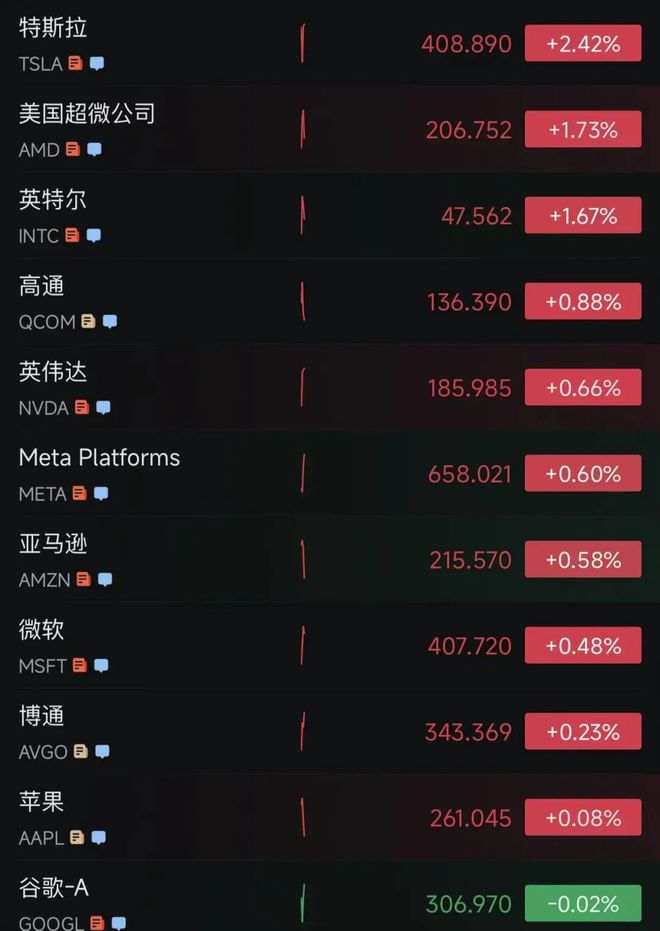
Market Overview - US stock indices showed mixed performance at the opening, with the Dow Jones down 0.16%, Nasdaq up 0.3%, and S&P 500 up 0.13% [1] - By the time of reporting, the Dow Jones had decreased by 0.67%, while the Nasdaq rose by 0.16%, and the S&P 500 fell by 0.1% [1] - A total of 1789 stocks advanced, while 3195 stocks declined [1] Notable Stock Movements - Tesla shares increased by 2.42%, closing at $408.89 [2] - Advanced Micro Devices (AMD) rose by 1.73%, closing at $206.75 [2] - Intel shares gained 1.67%, closing at $47.56 [2] - Oracle Corporation's stock surged over 14% after reporting strong quarterly results and raising its revenue forecast for fiscal year 2027, with adjusted earnings per share of $1.79 against an expectation of $1.70, and revenue of $17.19 billion, a 22% year-over-year increase [2] Chinese Stocks Performance - The Nasdaq China Golden Dragon Index fell by 0.25%, with most popular Chinese stocks declining [7] - Li Auto shares rose by 4.56%, closing at $18.57 [8] Commodity Market - Gold and silver prices experienced a pullback, with spot gold dropping to $5173.67 per ounce, down 0.32% [10] - Spot silver fell by 3.46%, trading at $85.28 per ounce [10] Inflation and Oil Prices - The US Consumer Price Index (CPI) for February rose by 2.4% year-over-year, with core CPI increasing by 2.5% [13] - WTI crude oil prices saw significant volatility, initially rising over 6% before narrowing to a 2.58% increase [13] - The G7 energy ministers expressed support for measures to address the current energy situation, including the potential use of strategic energy reserves [16]


2017,制造奥本海默
远川研究所· 2026-03-11 13:30
Core Insights - The article discusses the revolutionary impact of the Transformer architecture introduced in the paper "Attention Is All You Need" by Google researchers in June 2017, which has become the foundation for various AI applications, including large models and AI agents [2][3][4]. Group 1: Historical Context and Initial Reactions - The initial reception of the Transformer architecture was underwhelming, with both Google and the tech community underestimating its potential, focusing instead on projects like AlphaGo [3][4]. - The paper's authors, from Google Brain and Google Research, were primarily focused on improving translation efficiency, not realizing the broader implications of their work [11][4]. - The success of AlphaGo in 2016 overshadowed the significance of the Transformer, leading to a lack of attention from Google's management [4][3]. Group 2: Development and Adoption of Transformer - The introduction of the Transformer aimed to improve computational efficiency by eliminating the need for RNNs, utilizing self-attention mechanisms to allow words in a text to relate to each other dynamically [13][12]. - The release of the Transformer paper sparked a wave of innovation in natural language processing (NLP), leading to models like BERT, which set new benchmarks in the field [14][15]. - OpenAI was one of the few organizations that recognized the transformative potential of the Transformer, leading to the development of the GPT series of models [5][16]. Group 3: The Rise of OpenAI and GPT Models - OpenAI's GPT-1 model, released in 2018, showcased a generative approach to language modeling, differing from Google's discriminative approach with BERT [16][19]. - The release of GPT-3 in 2020 marked a significant milestone, with 175 billion parameters, demonstrating the effectiveness of scaling laws in AI model performance [21][20]. - OpenAI's strategic decisions, including partnerships with Microsoft, positioned it as a leader in the AI space, leading to a competitive arms race among tech giants [27][26]. Group 4: Ethical Considerations and Future Directions - Concerns about the ethical implications of AI models, particularly regarding bias and safety, have emerged, prompting OpenAI to develop InstructGPT to align AI outputs with human values [28][29]. - The article highlights the ongoing tension between technological advancement and ethical considerations in AI development, suggesting that the industry must navigate these challenges carefully [34][27].





全民“养虾”需谨慎;黄仁勋罕见发重磅长文;德国大众集团计划裁员5万人
新财富· 2026-03-11 08:04
Group 1: OpenClaw Product Development - The OpenClaw product form has gained widespread recognition in the industry, leading major companies to quickly follow suit with their own versions [1][3][5] - Tencent has launched a comprehensive "lobster" product matrix, including various versions such as self-developed, local, cloud, enterprise, and desktop products, along with supporting security and knowledge base features [1] - Alibaba has introduced self-developed desktop products with strong local file editing capabilities, supporting custom skill development and multi-agent team collaboration [1] - ByteDance has released the ArkClaw cloud hosting product, which integrates deeply with the Feishu ecosystem and offers excellent user experience for both enterprises and individuals [1] - Other companies like Kimi, MiniMax, Xiaomi, and Huawei have also introduced their own cloud hosting and desktop products, focusing on various features such as long text processing, multi-modal understanding, and system integration [3][5][8] Group 2: Market Reactions and Trends - MiniMax's stock price surged over 22% on March 10, 2026, surpassing Baidu's market capitalization for the first time, indicating strong market recognition of AI-native capabilities [15] - The rapid growth of AI products and the competitive landscape among companies like Tencent, Alibaba, and ByteDance reflect a significant transformation in the Chinese internet industry [15] - The emergence of AI agents is seen as a major breakthrough in tool-based AGI, with companies like Cheetah Mobile emphasizing the importance of local data protection and custom development services [8] Group 3: Regulatory and Security Concerns - The National Internet Emergency Center issued a warning regarding the risks associated with the OpenClaw AI agents, highlighting vulnerabilities such as high permissions and weak default security configurations [10] - Users are advised to take precautions to prevent data breaches and system control issues, especially in critical industries like finance and energy [10]



A股工业母机、光通信走强,长飞光纤2连板,港股科技股继续反弹,蔚来涨超15%
21世纪经济报道· 2026-03-11 02:01
Market Overview - On March 11, A-shares opened higher, but the Shanghai Composite Index turned negative, dropping by 0.07% by 9:40 AM, while the Shenzhen Component Index rose by 0.29%, the ChiNext Index increased by 0.67%, and the Sci-Tech Innovation Board Index gained 0.32% [1] - More than 2,600 stocks in the Shanghai and Shenzhen markets experienced price increases [1] Sector Performance - The industrial mother machine, optical communication, and precious metals sectors saw the highest index gains [4] - The optical fiber concept has been particularly strong, with Changfei Optical Fiber achieving two consecutive trading limits and setting a new historical high, while companies like Zhongtian Technology, Hengtong Optic-Electric, Tongding Interconnection, and Changying Technology also saw price increases [4] - The industrial mother machine sector was active, with Huadong CNC hitting the daily limit, Hengjin Induction rising over 12%, and Huazhong CNC, Nuwai CNC, and Qiaofeng Intelligent also experiencing gains [5] Hong Kong Market - The Hong Kong market also opened higher, with the Hang Seng Index up by 0.4% and the Hang Seng Technology Index increasing by 0.56% [5] - Major technology stocks led the gains, with NIO rising over 15%, and Tencent Holdings, Xiaopeng Motors, Baidu Group, and Lenovo Group all increasing by more than 2% [5]



第一批想卸载小龙虾的人出现了……
吴晓波频道· 2026-03-11 00:29
Core Viewpoint - The rapid rise of the AI application "OpenClaw" (referred to as "小龙虾") is driven by societal FOMO (Fear of Missing Out), despite not achieving widespread adoption [3][32]. Group 1: OpenClaw's Rise and Challenges - OpenClaw, an AI assistant that operates directly on personal computers, gained popularity after Tencent's promotional installation events, leading to a surge in interest and subsequent policy support from various cities [8][22]. - Despite its initial success, many users are now considering uninstalling OpenClaw due to its complexity, high operational costs, and security risks [10][22]. - The installation process requires technical knowledge, which deters non-developers, and the AI's performance in handling complex tasks is limited, leading to user dissatisfaction [12][13]. Group 2: Cost and Security Concerns - The operational costs associated with using OpenClaw are significant, with users reporting daily token consumption that can exceed 10 million tokens, translating to expenses of hundreds to thousands of dollars [15][19]. - Security risks are prevalent, as OpenClaw's access to system-level permissions has led to incidents of data loss and unauthorized transactions, raising concerns about user data safety [16][19]. - Major platforms like Google and Meta have begun banning accounts associated with OpenClaw due to its potential to disrupt content ecosystems and generate excessive operational costs [22][24]. Group 3: Market Dynamics and Future Outlook - The market for AI applications like OpenClaw is competitive, with numerous tech giants launching their versions to capture user interest and retain them within their ecosystems [29][43]. - The potential for monetization exists through cloud service rentals and token usage fees, similar to telecom operators' business models, indicating a lucrative future for companies that can effectively manage user engagement [38][39]. - As the AI landscape evolves, companies are likely to focus on creating a robust application ecosystem, which could lead to significant revenue opportunities in the long term [41][44].

OpenClaw爆火,业内人士称还不是小白用户养虾的时候
21世纪经济报道· 2026-03-11 00:28
Core Viewpoint - OpenClaw, an open-source AI agent, is gaining significant popularity globally, with over 250,000 stars on GitHub in just four months, surpassing established projects like Linux and React, indicating a revolutionary shift in AI from a dialogue tool to an execution assistant [1][4]. Group 1: Market Response and User Engagement - The "养虾" (raising shrimp) phenomenon has led to large gatherings in cities like Shanghai, where over 300 people queued to receive their own OpenClaw, highlighting the strong local interest in AI tools [1]. - Despite the excitement, the actual usage rate among individual users is less than half of the download numbers, indicating challenges in practical application [1][6]. - Major cloud service providers like Alibaba Cloud and Tencent Cloud have introduced deployment solutions, but enterprise-level adoption of OpenClaw remains limited [1][6]. Group 2: Technological Advancements - OpenClaw aims to transition AI capabilities from mere conversation to task execution, marking a significant evolution in human-computer interaction [3][4]. - The architecture of OpenClaw includes four layers that facilitate natural language commands leading to autonomous execution, addressing privacy and response speed concerns [6]. - The tool's ability to automate local tasks and integrate with various applications reduces the technical barriers for users, making it more accessible [5][6]. Group 3: Competitive Landscape - The rise of OpenClaw has prompted other tech giants to accelerate their AI initiatives, with Tencent launching WorkBuddy, which is compatible with OpenClaw's functionalities [9][10]. - The competitive edge of OpenClaw lies in its cross-platform capabilities, although it still requires collaboration with other applications to fully realize its potential [9]. Group 4: User Demographics and Adoption Challenges - The user base for OpenClaw spans a wide age range, from 20 to 60 years old, indicating broad appeal across demographics [8]. - Despite the enthusiasm, there are concerns regarding the readiness of average users to effectively utilize OpenClaw, as it requires a certain level of technical understanding [15]. Group 5: Security and Risk Management - OpenClaw's design introduces potential security risks, including the possibility of executing unauthorized commands and information leaks due to misconfigurations [13][14]. - The need for robust security measures is emphasized, with recommendations for users to implement strict access controls and data encryption to mitigate risks [14]. Group 6: Future Implications - The emergence of OpenClaw signifies a potential shift in productivity dynamics, where individuals may leverage multiple AI agents to enhance their work efficiency [11]. - The balance between open-source innovation and commercial viability will be crucial for the sustainable growth of OpenClaw and similar technologies [14].

挡住豆包的那堵墙,被“龙虾”推倒了
凤凰网财经· 2026-03-10 13:53
Core Viewpoint - The article discusses the competitive landscape among major smartphone manufacturers (Xiaomi, Samsung, and Apple) in developing mobile AI agents, driven by the success of the open-source multi-agent framework OpenClaw, which has transformed user expectations regarding AI capabilities and data privacy [3][12][38]. Group 1: Competitive Landscape - Xiaomi has initiated a closed testing phase for its mobile AI agent product, miclaw, which is based on its self-developed MiMo model, aiming to enhance system-level execution capabilities [3][19]. - Samsung's Galaxy S26 features Google's Gemini AI agent, enabling cross-application operations, although it requires user initiation, contrasting with OpenClaw's proactive capabilities [8][22]. - Apple has decided to collaborate with Google to develop its next-generation AI model based on Gemini, indicating a shift in its traditionally isolated approach to technology [10][25]. Group 2: User Data and Trust - OpenClaw has challenged the prevailing notion that users are overly concerned about data privacy, as many users willingly share data for enhanced AI experiences, indicating a shift in user trust [12][13][38]. - The success of OpenClaw has prompted various tech companies, including ByteDance, Alibaba, Tencent, and others, to rapidly adopt and integrate OpenClaw-related services into their platforms [14][34]. Group 3: Development Strategies - The three major manufacturers are cautiously exploring the potential of mobile AI agents, with each company adopting unique strategies while remaining aware of the limitations of current technology [17][18]. - Xiaomi's miclaw is designed to integrate over 50 system capabilities, but it currently lacks advanced functionalities like payment processing, reflecting a cautious approach to user data handling [19][21]. - Samsung and Google's collaboration on Gemini is a step forward but still conservative, as they face challenges in getting third-party apps to adopt their GUI-based solutions [22][23]. Group 4: Future Implications - The emergence of mobile AI agents poses a potential threat to existing super apps, as these agents could redefine user engagement and application usage patterns [27][46]. - The article suggests that the future of mobile AI agents lies in creating frameworks that allow for seamless integration without overly relying on third-party app cooperation, which has historically been a barrier [36][37]. - The ongoing "shrimp farming" competition among tech giants indicates a significant shift in the industry, with super apps facing challenges in maintaining their dominance as user habits evolve [47].


Alibaba, and Other Chinese Stocks Jump. Beijing Export Boom Defies Trade Tensions.
Barrons· 2026-03-10 13:32
Core Insights - Elevated Chinese exports have positively impacted the stock prices of major companies such as Alibaba, Temu, and Baidu, indicating a potential recovery in the Chinese economy and increased demand for their products and services [1] Company Analysis - Alibaba's shares have seen a significant increase due to the rise in exports, reflecting investor confidence in the company's ability to capitalize on the growing market [1] - Temu, a rising e-commerce platform, has benefited from the export surge, suggesting its expanding role in the international market [1] - Baidu's stock performance has also improved, highlighting its resilience and adaptability in a changing economic landscape [1] Industry Trends - The overall increase in Chinese exports signals a potential rebound in the manufacturing sector, which could lead to further growth opportunities for technology and e-commerce companies [1] - The positive export data may encourage more foreign investment in Chinese companies, enhancing their market positions and competitive advantages [1]

「养龙虾」翻车实录:D盘没了、账号废了、余额清空了……
机器之心· 2026-03-10 10:35
Core Viewpoint - The article discusses the recent surge in popularity of "raising lobsters," referring to the installation and training of OpenClaw, highlighting the competitive landscape among major tech companies and the associated risks and costs for users [1][4][29]. Group 1: Industry Trends - Major tech companies such as Tencent, ByteDance, Alibaba, and Xiaomi are rapidly entering the OpenClaw space, with Tencent launching multiple initiatives including the integration of OpenClaw into WeChat Work and the introduction of similar products like WorkBuddy [4][6]. - The excitement around OpenClaw has led to a significant increase in user engagement, with Tencent's WorkBuddy experiencing unexpected traffic that caused service instability [4][6]. - The capital market is reacting positively, with stocks related to OpenClaw seeing price increases, indicating a strong market sentiment towards AI-driven solutions [10]. Group 2: User Risks and Challenges - Users have reported numerous issues with OpenClaw, including unauthorized actions taken by the AI, such as deleting important files and mismanaging social media accounts, leading to significant operational risks [16][19][26]. - The Ministry of Industry and Information Technology has issued warnings about the security risks associated with OpenClaw, advising users to carefully manage configurations and permissions to prevent potential cyber threats [28]. - The financial burden of using OpenClaw is highlighted, with users experiencing unexpected costs due to excessive token consumption, leading to financial strain [29][32]. Group 3: Market Dynamics - The article notes a parallel between the current enthusiasm for OpenClaw and the previous hype surrounding DeepSeek, suggesting a cyclical nature in tech trends [9]. - There is a humorous observation that the costs associated with installing and potentially uninstalling OpenClaw could lead to a new business opportunity, reflecting the absurdity of the situation [35][37].