BP(BP)

Search documents
英国石油公司鹿特丹炼油厂的原油处理单元于6月3日上午停产。
news flash· 2025-06-03 10:17
Core Viewpoint - The crude processing unit at BP's Rotterdam refinery was shut down on June 3rd [1] Company Summary - BP's Rotterdam refinery experienced a shutdown of its crude processing unit, indicating potential operational disruptions [1]

Dividend Harvesting Portfolio Week 221: $22,100 Allocated, $2,225.40 In Projected Dividends
Seeking Alpha· 2025-05-29 12:30
Group 1 - The focus is on growth and dividend income as a strategy for retirement planning [1] - The portfolio is structured to generate monthly dividend income that grows through reinvestment and annual increases [1] Group 2 - The article expresses personal opinions and is not intended as investment advice [2][3] - It emphasizes the importance of conducting individual research before making investment decisions [2]





据知情人士透露,英国石油公司(BP)的Castrol润滑油业务吸引到Reliance Industries Ltd.等能源公司的的收购意向。阿波罗和Lone Star Funds等买断公司也感兴趣。(彭博)
news flash· 2025-05-28 17:17
据知情人士透露,英国石油公司(BP)的Castrol润滑油业务吸引到Reliance Industries Ltd.等能源公司的 的收购意向。 阿波罗和Lone Star Funds等买断公司也感兴趣。(彭博) ...

BP Deepens Ties With China, Signs LNG Supply Deal With Zhejiang Energy
ZACKS· 2025-05-28 15:01
Group 1 - BP plc has signed a long-term LNG supply deal with China's Zhejiang Energy, marking a 10-year LNG sales and purchase agreement [1] - Under the agreement, BP will supply up to 1 million metric tons per year of LNG on a delivered ex-ship basis, sourced from its global portfolio [2] - This deal indicates BP's strategy to expand its downstream presence in one of Asia's largest LNG markets [2] Group 2 - Zhejiang Energy has also secured LNG supply agreements with other companies, including Exxon Mobil Corporation, which involves 1 million metric tons per year for 10 years [3] - China is one of the largest LNG importers globally and is transitioning from coal to natural gas to meet climate targets [3] - The ongoing trade war has led China to re-export a significant amount of LNG to neighboring countries [4]


壳牌(SHEL.US)与英国石油(BP.US)合并是否值当?小摩这么看
智通财经网· 2025-05-28 08:45
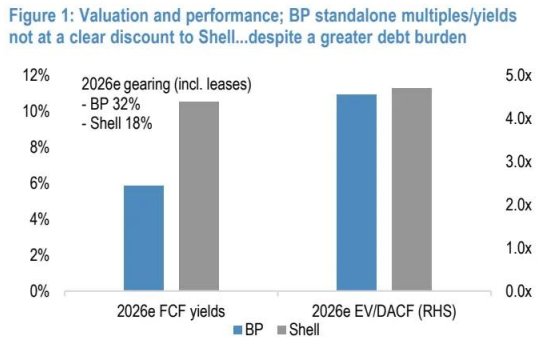
行业巨头并购的蓝图已发展至2030年代的石油持续增长、市场/交易的上升空间、转型的灵活性以及更 低的加权平均资本成本等方面。收购英国石油公司能否完全实现壳牌的这些核心目标?答案似乎只是部 分达成而非完全达成。而且,按照目前的估值,小摩的模型并未显示这将使壳牌在 2030 年达到其"北极 星"目标——即每股自由现金流CAGR超过 10%。 智通财经APP获悉,最近关于壳牌(SHEL.US)与英国石油(BP.US)并购案的争论愈发激烈,摩根大通根据 预估模型和对全球超级巨头互补性的分析来评估其利弊。总的来看,小摩认为这笔交易需要更低的价格 或者更高的协同效应, 并给予壳牌"增持"评级,但给予英国石油"持股观望"评级。 英国石油与壳牌以及全球大型石油公司同行的对比。壳牌和英国石油公司的资产组合互补性处于中等而 非顶级水平,美国上游业务、天然气(贸易)以及北美和欧洲的营销业务是突出领域。然而,壳牌仅有 25% 至 30% 的油气产量位于英国石油公司 80% 产量所在的八个核心国家,反垄断方面的考虑可能成为 下游业务的限制因素。小摩还展示了英国石油公司与道达尔能源(TTE.US)、埃克森美孚(XOM.US)、雪 佛龙( ...

BP Begins Sale of Castrol in $20B Asset Divestment Strategy
ZACKS· 2025-05-27 13:21
Core Insights - BP plc has initiated the sale of its Castrol lubricants business as part of a strategy to raise $20 billion by 2027 through asset divestments [1][2] - The sale is expected to streamline BP's portfolio and enhance its financial stability under CEO Murray Auchincloss [1][6] - Analysts estimate that the Castrol sale could generate between $10 billion and $11 billion, making it one of the largest divestments in BP's current pipeline [4] Company Strategy - BP has engaged Goldman Sachs to manage the sale process and has circulated an information memorandum to potential bidders [2] - The divestment of Castrol is part of a broader restructuring effort that includes evaluating other non-core assets such as the Gelsenkirchen refinery in Germany and a 50% stake in Lightsource bp [5] - The decision to sell assets follows pressure from activist investor Elliott Management for strategic changes and operational efficiencies [6] Market Interest - Early interest in the Castrol business has been noted, with reports indicating that Saudi Aramco has expressed interest [7] - The formal sale process and the involvement of Goldman Sachs suggest increasing momentum in BP's divestment program [7]

BP被收购可能性有限
Zhong Guo Hua Gong Bao· 2025-05-26 02:28
Core Viewpoint - BP has been experiencing poor financial performance and declining stock prices, leading to speculation about potential acquisitions by major Western oil companies, although the likelihood of such acquisitions in the short term appears low [1][3]. Financial Status - BP's market capitalization has fallen to $78.1 billion, while its total assets, excluding liabilities, exceed $280 billion [3]. - The value of BP's oil and gas assets in the Gulf of Mexico and U.S. shale regions is estimated at $82 billion, surpassing the company's overall market value [3]. - BP carries a significant debt load of $77 billion, complicating potential acquisition scenarios [3]. Acquisition Considerations - Shell is seen as a potential acquirer, but concerns about market share leading to monopoly issues and the need for asset divestitures could delay any merger [3]. - Cultural differences between Shell and BP may require years for integration post-acquisition, and potential layoffs could create political pressure on the UK government [3]. - ExxonMobil and Chevron have expressed interest in acquiring BP, but face challenges related to U.S.-EU political dynamics and operational integration due to geographical distance [4]. - TotalEnergies and Abu Dhabi National Oil Company (ADNOC) are also mentioned as potential buyers, but TotalEnergies is currently focused on stock buybacks and may not pursue BP, while ADNOC faces similar political hurdles as U.S. companies [4].
中国石化燃料油公司与BP新加坡私人有限公司签订新战略合作协议
Sou Hu Cai Jing· 2025-05-23 08:33
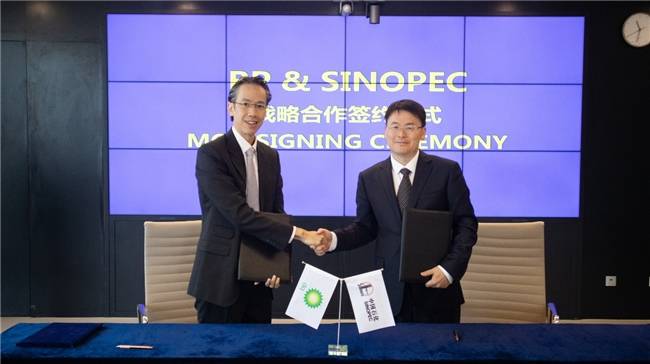
Group 1 - BP Singapore and Sinopec Fuel Oil Company held a strategic cooperation seminar from May 19 to 21, 2025, and signed a new round of strategic cooperation agreement [1][2] - The partnership between BP Singapore and Sinopec Fuel Oil Company began in 2011, leading to the establishment of the BP SINOPEC joint venture in 2015, which has since developed a comprehensive service network in the ship supply oil business [1][2] - The new strategic cooperation agreement aims to enhance core competitiveness by leveraging complementary resources, technology, and market advantages, marking a significant milestone in their collaboration [2] Group 2 - Future cooperation will focus on global ship supply oil business, emphasizing core areas such as resources, storage, logistics, and sales, while also addressing digital development and low-carbon transformation [4] - The partnership aims to respond to the complex international competitive landscape and fully explore the value of the industrial chain to create lasting core competitiveness [4]

Dividend Harvesting Portfolio Week 220: $22,000 Allocated, $2,213.76 In Projected Dividends
Seeking Alpha· 2025-05-22 12:45
Group 1 - The focus is on growth and dividend income as a strategy for retirement planning [1] - The portfolio is structured to generate monthly dividend income that grows through reinvestment and annual increases [1] - The author holds long positions in several companies including JEPI, TGT, BP, MO, and FSK [1] Group 2 - The article is presented as personal opinion and not as professional investment advice [2] - It emphasizes the importance of conducting personal research before making investment decisions [2] - The views expressed may not reflect those of Seeking Alpha as a whole [3]


Bear of the Day: BP PLC (BP)
ZACKS· 2025-05-22 12:01
Core Viewpoint - The energy sector, particularly BP PLC, is facing challenges despite high consumer demand for fuel, primarily due to lower oil prices impacting stock performance [1][2]. Company Analysis - BP has been attempting to reposition itself as a cleaner energy company, but this shift has not been rewarded by the market, especially as operational focus has been compromised [2]. - The transition towards renewables is costly for BP and is negatively affecting its profit margins [2]. - Earnings estimates for BP have been significantly revised downwards, with the Zacks Consensus Estimate dropping from $3.53 to $2.38 over the past 60 days, leading to a Zacks Rank of 5 (Strong Sell) [3]. Industry Comparison - Despite BP's struggles, the company still offers a yield of 6.51%, which is attractive [4]. - Other companies in the Oil and Gas – Integrated – International Peers industry, such as Exxon Mobil and Shell, are performing better and hold a Zacks Rank of 3 (Hold) [4].