BP(BP)

Search documents
BP: Takeover Speculation, Low Valuation, Capital Returns
Seeking Alpha· 2025-05-15 14:44
Core Insights - BP's shares experienced a surge due to speculation around a potential takeover [1] - The company reported better-than-expected revenue results for the first quarter, despite a decline in petroleum prices [1] - BP generated strong free cash flow during this period [1]



Dividend Harvesting Portfolio Week 219: $21,900 Allocated, $2,206.52 In Projected Dividends
Seeking Alpha· 2025-05-15 13:00
Core Viewpoint - The article emphasizes a personal investment strategy focused on growth and dividend income, aiming for an easy retirement through a portfolio that generates monthly dividend income and benefits from reinvestment and annual increases [1]. Group 1 - The investment strategy is centered around compounding dividend income and growth [1]. - The portfolio is structured to provide monthly dividend income, which is expected to grow through reinvestment and yearly increases [1]. - The author has disclosed a beneficial long position in several stocks, including JEPQ, MO, BCX, BP, and XOM, through various means such as stock ownership and options [1].



BP Buyout Buzz Puts Spotlight on Transocean's Comeback Potential
MarketBeat· 2025-05-12 16:04
Core Viewpoint - The energy sector is currently presenting potential investment opportunities, particularly through acquisitions, with BP being a notable target for major companies like Exxon Mobil, Chevron, and Shell [2][5]. Group 1: Industry Performance - The Energy Select Sector SPDR Fund (XLE) has underperformed the S&P 500 index by as much as 20% over the past 12 months, indicating a potential catch-up opportunity for the industry [3][4]. - Valuation multiples, particularly price-to-book (P/B) ratios, have declined over the past year, leading to cyclically cheap levels for major industry players [4]. Group 2: Acquisition Insights - BP's potential acquisition price could reach up to $160 billion, which is double its current market capitalization, suggesting a potential 100% upside for shareholders if the acquisition is approved [6]. - Exxon Mobil is positioned as a likely winner in the bidding for BP due to its strong balance sheet and fewer regulatory hurdles compared to competitors [7]. Group 3: Alternative Investment Opportunities - Transocean Ltd. is highlighted as a strong investment opportunity, having seen a 54.5% decline in stock price over the past year, which may have priced in worst-case scenarios [11][12]. - Analysts at BTIG Research have reiterated a Buy rating on Transocean with a price target of $5 per share, indicating confidence in its recovery potential [13].


壳牌收购BP,有意义吗?
Hua Er Jie Jian Wen· 2025-05-12 06:48
Group 1 - Shell is exploring the possibility of acquiring BP, which could create a European oil giant capable of challenging ExxonMobil and Chevron [1] - The combined company would have a daily oil and gas production of nearly 5 million barrels of oil equivalent, an 85% increase from Shell's current production of approximately 2.7 million barrels [1] - This merger would position the new entity as the largest oil and gas producer globally, surpassing ExxonMobil's 4.6 million barrels and Chevron's 3.4 million barrels per day [1] Group 2 - Shell is already the world's largest liquefied natural gas (LNG) seller, and acquiring BP would elevate its annual LNG sales to over 90 million tons, accounting for more than 20% of the global market [2] - The acquisition of BP's Denver-based shale oil business (BPX) would rectify Shell's previous strategic error of selling its Permian Basin assets to ConocoPhillips in 2021 [2] - Both companies are major commodity traders, and their merger could enhance their trading operations, although it remains uncertain if this would improve capital return rates [2][4] Group 3 - BP's leverage ratio was 48% as of the end of Q1, making it the most indebted among oil giants, compounded by ongoing liabilities from the 2010 Deepwater Horizon oil spill [3] - Shell would need to pay a premium to address BP's over-leveraged balance sheet, which RBC describes as a potential "poison pill" for Shell, known for its conservative financial management [4] Group 4 - Regulatory challenges may arise from the merger, as it would expand Shell's fuel retail network by approximately 48%, adding over 21,000 sites and raising competition concerns in certain markets [4] - RBC estimates that divesting BP's entire marketing and retail division could yield $30 billion to $40 billion, which Shell might consider to mitigate regulatory issues [4] Group 5 - Analysts from Bank of America suggest that Shell might find it wiser to repurchase its own shares rather than acquire BP, citing historical data showing that past acquisitions have not significantly enhanced per-share cash flow [5][6] - Shell has been actively repurchasing shares, totaling $42 billion, which represents over 20% of its current market value, despite a 15% decline in stock price over the past year [6] Group 6 - Shell's CFO has indicated that the current low oil prices make stock buybacks a more attractive capital allocation strategy [6] - The CEO has emphasized that value investment now lies in repurchasing more Shell shares, highlighting the need for over $3 billion in annual synergies to avoid cash flow dilution post-acquisition [7]

欧美五大油企一季度合计利润下降29%
Zhong Guo Hua Gong Bao· 2025-05-12 02:00
Core Viewpoint - The net profits of the five major oil companies in Europe and the U.S. are projected to decline significantly in the first quarter of 2025, primarily due to falling crude oil prices, raising concerns about further deterioration in future performance [1][2]. Group 1: Financial Performance - In Q1 2025, the combined net profit of the five major oil companies reached $20.531 billion, a 29% decrease compared to the same period last year [1]. - Individual company performances include: ExxonMobil with $7.71 billion (down 6%), Shell with $4.78 billion (down 35%), Chevron with $3.5 billion (down 36%), TotalEnergies with $3.85 billion (down 32.7%), and BP with $0.69 billion (down 69.6%) [1]. - The net profits of these five companies have declined for eight consecutive quarters [1]. Group 2: Oil Price Impact - The average price of West Texas Intermediate (WTI) crude oil futures in Q1 2025 was approximately $75 per barrel, down about 10% from $82 per barrel in the same period last year [1]. - The Brent crude oil futures price also fell by 10% compared to the previous year [1]. - The decline in oil prices is partly attributed to the policies of the Trump administration, which included calls for OPEC to lower prices and tariffs that increased global recession expectations [1][2]. Group 3: Future Outlook - Market analysts predict that the performance of these oil companies may worsen in Q2 2025, with WTI futures dropping below $70 per barrel and currently trading at just over $60 per barrel [2]. - A study by the Dallas Federal Reserve indicates that developing new U.S. oil requires a WTI price of about $65 per barrel, suggesting that if prices fall below $60 per barrel, oil production may begin to decline due to unprofitability [2]. - Despite the Trump administration's encouragement for increased U.S. oil production, companies are still facing pressure on profit margins due to low oil prices and rising material costs [2].


Is a Big Oil Megamerger Brewing? Exxon, Chevron, and Others Are Eyeing This Oil Stock.
The Motley Fool· 2025-05-11 19:22
Consolidation in the Oil Industry - A consolidation wave has occurred in the oil sector, with ExxonMobil initiating a $64.5 billion acquisition of Pioneer Natural Resources and Chevron planning to buy Hess for $60 billion [1][2] BP's Strategic Shifts - BP has faced challenges and undergone two significant strategy shifts, initially pledging to cut capital spending on oil and gas projects by 40% to focus on clean energy [4] - Due to a recovery in oil prices and underperformance, BP has revised its strategy, reducing renewable investment from $5 billion to $1.5 billion to $2 billion annually while increasing oil and gas capital investment to $10 billion per year [5][6] BP's Production Goals - BP aims to increase its overall oil and gas output to an average of 2.5 million barrels of oil equivalent (BOE) per day by 2030, up from less than 2.4 million BOE last year [6] Comparison with Competitors - BP's strategy contrasts with U.S. oil giants like Exxon and Chevron, which have clear multi-year strategies for shareholder value growth, including Exxon's $140 billion investment plan and Chevron's focus on advantaged assets [7][8] Potential Takeover Interest - BP's underperformance has made it a potential takeover target, with companies like Shell, Exxon, Chevron, TotalEnergies, and Adnoc Gas reportedly considering acquisitions [10][12] - Shell has expressed hesitance, preferring stock repurchases over acquiring BP, citing the need to stabilize its own operations first [11] Challenges to Acquisition - BP's significant debt of $77 billion, partly from the Deepwater Horizon disaster, poses a challenge for potential acquirers, as it could negatively impact their balance sheets [13] - Regulatory scrutiny in the U.K. may also hinder any acquisition attempts, as there may be resistance to foreign control of BP [13] Investment Appeal - Despite speculation around a potential acquisition, BP's shifting strategy and financial challenges make it a less appealing investment compared to Exxon and Chevron, which have more defined growth strategies [14]
邓正红能源软实力:传统石油巨头估值体系正在重构 英国石油引发折价收购潮
Sou Hu Cai Jing· 2025-05-11 13:26
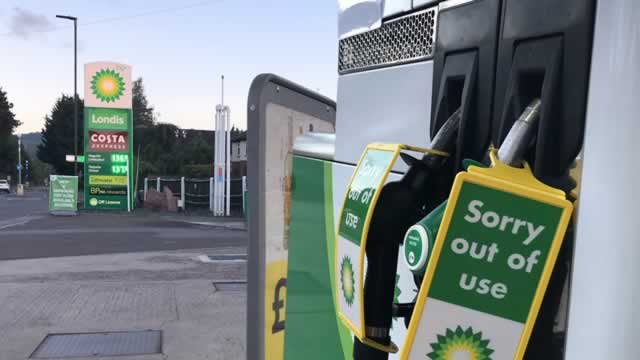
Core Insights - The article discusses the reshaping of global energy soft power dynamics, highlighted by BP's stock price plummeting 27%, which has triggered a wave of discounted acquisition interest from major oil companies [1][2][4] - The decline in BP's stock reflects a structural undervaluation of traditional oil and gas assets amid accelerating energy transition, leading to a shift in valuation metrics towards "energy resilience + low-carbon technology" [2][4] - The involvement of activist investors like Elliott Management aims to restructure BP's governance model, emphasizing the need for agility in responding to market fluctuations [2][4] Group 1: BP's Stock Performance and Market Dynamics - BP's stock has dropped 27% over the past year, making it a target for potential acquisitions by competitors such as Shell, Chevron, and ExxonMobil [1][2] - The geopolitical landscape, including U.S. sanctions on Iran and Venezuela, has increased uncertainty in the oil market, prompting energy companies to consolidate supply chain control through mergers and acquisitions [2][3] - The shift in valuation from production scale to adaptability in energy transition reflects a broader trend in the industry [2][4] Group 2: Strategic Implications of Potential Acquisitions - If European companies like Shell and Total lead the acquisitions, it could create a regional energy alliance to counterbalance the U.S. shale oil dominance [3] - The acquisition of BP aligns with the trend of "light asset, high turnover" strategies among oil giants, as it allows for cost optimization and enhanced resilience during price volatility [3] - BP's expertise in offshore wind and biofuels could complement the acquiring companies' portfolios, facilitating a faster transition to clean energy technologies [3] Group 3: Governance and Soft Power Dynamics - The potential acquisitions signify a shift in the energy sector's governance models, driven by activist capital seeking to enhance shareholder value while balancing long-term strategic goals [4] - The competition for energy soft power is evolving from resource control to defining rules and building ecosystems, indicating a comprehensive struggle for influence in the energy market [4]

3 Stocks to Watch as Trump Reaches Trade Deal with the U.K.: BP, NOMD, RYCEY
ZACKS· 2025-05-08 23:55
Group 1: Trade Deal Impact - The stock market experienced a historic rebound following President Trump's announcement of a new trade deal with the United Kingdom, aimed at reducing trade barriers [1] - Several British ADRs are highlighted as potential investment opportunities due to the trade deal [1] Group 2: Nomad Foods (NOMD) - Nomad Foods is the largest frozen food company in Europe and has been identified as a strong buy with a Zacks Rank 1, having increased by 16% in 2025 [2] - EPS estimates for Nomad Foods have been trending higher, with an expected rise of 11% this year and a projected increase of 7% in fiscal 2026 to $2.31 [3][4] - The stock trades under $20 at a forward earnings multiple of 8.9X, indicating a favorable valuation [3] Group 3: Rolls-Royce (RYCEY) - Rolls-Royce is positioned favorably with a Zacks Rank 2, as U.K. car tariffs will be reduced from 25% to 10% on the first 100,000 imported vehicles [4][5] - The stock is currently priced around $10, presenting a favorable risk-to-reward scenario [5] Group 4: BP (BP) - BP, formerly British Petroleum, is trading under $30 and offers a 6.75% annual dividend yield, making it a potential buy-the-dip candidate [6][7] - The elimination of higher tariffs on steel and aluminum is expected to benefit BP significantly, as it faced issues related to infrastructure projects [7][8]



近2万亿!两大国际石油巨头或将合并
DT新材料· 2025-05-08 15:36
【DT新材料】 获 悉 , 据外媒报道,国际能源巨头 壳牌公司(Shell) 正与顾问团队商讨收购竞争对手 英 国石油公司(BP) 的可能性,若交易达成,将缔造一家市值约2050亿英镑(约合人民币1.97万亿元)的全 球能源与航运巨擘,成为油气行业有史以来规模最大的并购案之一。 彭博社援引知情人士消息称,这家石油巨头近几周来持续与顾问团队探讨收购BP的可行性及战略价值。 最 终决策很大程度上将取决于BP股价是否持续下探。 过去12个月来,由于业务重组计划未能获得投资者认可 叠加油价暴跌,BP股价已累计下跌近三分之一。 壳牌也可能按兵不动,等待BP主动寻求其他潜在收购方率 先行动。 报道称相关讨论仍处初期阶段,壳牌最终或选择专注于股票回购及小型收购,而非推进如此大规模的并 购。 壳牌公司发言人表示:"正如我们多次强调的,当前工作重心是持续强化公司运营效能、保持战略定力 并推进业务精简,以此充分释放壳牌的内在价值。" 这两家英国石油巨头若成功合并,将缔造能源行业史上 最具里程碑意义的交易之一。 BP长期业绩低迷的困境,很大程度上源于前任首席执行官伯纳德·卢尼(Bernard Looney)推行的净零排放 战略。 ...

Dividend Harvesting Portfolio Week 218: $21,800 Allocated, $2,195.04 In Projected Dividends
Seeking Alpha· 2025-05-08 13:00
Group 1 - The focus is on growth and dividend income as a strategy for retirement planning [1] - The portfolio is structured to generate monthly dividend income that grows through reinvestment and annual increases [1] Group 2 - The article expresses personal opinions and is not intended as investment advice [2][3] - It emphasizes the importance of conducting personal research before making investment decisions [2]