
Berkshire Hathaway(BRK.A)

Search documents
Market Minute 11-17-25- Berkshire Buys Alphabet, CDR Buys Bubble Wrap
Yahoo Finance· 2025-11-17 14:20
Group 1 - Berkshire Hathaway Inc. disclosed a $4.9 billion stake in Alphabet Inc., marking a rare investment in the tech sector by Warren Buffett [2] - Jeff Bezos is launching a new AI startup called Project Prometheus, which has secured $6.2 billion in funding and aims to hire 100 employees, focusing on AI applications in engineering and computer manufacturing [3] - Clayton Dubilier & Rice has acquired Sealed Air Corp. for $6.2 billion, with the stock price previously surging due to takeover rumors before easing back after the buyout price was revealed [4] Group 2 - The digital asset market is experiencing a selloff, with smaller altcoins reaching their lowest levels since November 2020, as tracked by the MarketVector Digital Assets 100 Small-Cap Index [4] - Bitcoin has lost almost all of its gains from 2025, while Ethereum is down approximately 5% year-to-date [4]


Is Alphabet Berkshire's New "Mag-7" Favorite? ETFs in Focus
ZACKS· 2025-11-17 14:00
Core Insights - Berkshire Hathaway disclosed a new $4.3 billion position in Alphabet, making it the 10th largest equity holding by the end of Q3 2025 [1][2] - The company has reduced its exposure to Apple by 14.9% sequentially, while Alphabet's addition marks a strategic shift in its portfolio [3] - Alphabet's stock rose approximately 4% in after-hours trading following the announcement of Berkshire's investment [3] Company Performance - Alphabet's stock has increased by 45.9% year-to-date and has surged 66% in the past six months, indicating strong market performance [4] - The company reported significant growth in its AI initiatives, with revenues from products built on generative AI models growing over 200% year-over-year [8] - Google Cloud revenues surged by 33.5%, exceeding Zacks Consensus Estimates, reflecting robust demand for its services [7] Investment Rationale - Alphabet is part of the "Magnificent Seven" group, known for their advancements in AI, positioning it favorably in the tech sector [6] - The company's forward price-to-earnings (P/E) ratio is 26.68X, which is lower than the tech sector's average of 30.75X, suggesting a potentially attractive valuation [9] - Alphabet has a strong Growth and Momentum Score of "B" and holds a Zacks Rank 2 (Buy), indicating positive market sentiment [9] Strategic Outlook - The incoming CEO Greg Abel may be more inclined to pursue tech investments, potentially influencing future portfolio decisions [5] - Alphabet's AI app Gemini has seen a significant increase in monthly active users, growing from 450 million to over 650 million [7] - The company plans to increase its capital spending to $91-93 billion to expand its AI infrastructure, signaling a commitment to growth in this area [7] ETF Exposure - Alphabet has substantial exposure to various exchange-traded funds (ETFs), providing additional investment avenues for those interested in the company [10]


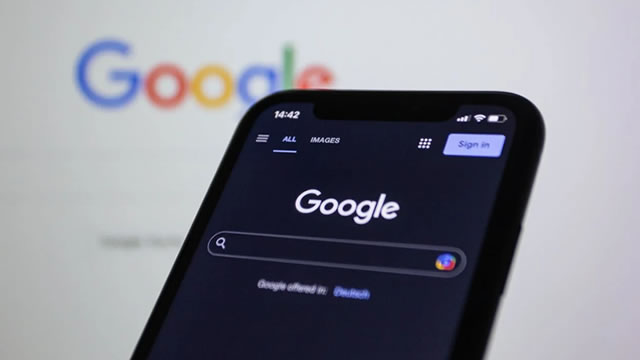
“股神”巴菲特退休前的最后大手笔 谷歌盘前涨超5%
Feng Huang Wang· 2025-11-17 12:00
Core Insights - Alphabet's stock price increased by 5.2% in pre-market trading following the disclosure that Berkshire Hathaway, led by Warren Buffett, has built a position in Alphabet [1] - As of September 30, Berkshire holds 17.85 million shares of Alphabet, valued at approximately $4.93 billion based on recent closing prices [1] - This investment marks a rare move by Buffett into the technology sector, amidst growing concerns over significant expenditures by tech giants in AI and data center infrastructure [1] Company Summary - Berkshire Hathaway's investment in Alphabet is seen as one of the last major investments under Buffett's leadership, who will step down as CEO by the end of 2025 [1] - The market is increasingly worried about the substantial capital being allocated by tech companies for data centers and chip acquisitions, amounting to hundreds of billions of dollars [1] Stock Performance - As of the report, Alphabet's stock price rose by 4.91% [1]
巴菲特首次建仓谷歌
21世纪经济报道· 2025-11-17 11:45
| | | | UNITED STATES SECURITIES AND EXCHANGE COMMISSION Washington, D.C. 20549 | | | | | | OMB APPROVAL | | | | --- | --- | --- | --- | --- | --- | --- | --- | --- | --- | --- | --- | | | | | FORM 13F | | | | | OMB Number: Estimated average burden | | 3235-0006 | | | | | | | | | | | hours per response: | | | 23.8 | | | | | FORM 13F INFORMATION TABLE | | | | | | | | | | COLUMN 1 | COLUMN 2 | COLUMN 3 | | COLUMN 4 | COLUMN 5 | | COLUMN 6 | COLUMN 7 | COLUMN 8 | | | | | | | | VALUE | SHRS OR SHI | PUT/ | INVE ...

「美股盘前」谷歌涨超5%;马斯克警告比尔·盖茨;美银预警:标普500深度回调或达10%
Mei Ri Jing Ji Xin Wen· 2025-11-17 11:21
Group 1 - Major stock indices are showing positive trends, with Dow futures up 0.14%, S&P 500 futures up 0.50%, and Nasdaq futures up 0.79% [1] - Prominent tech stocks are also rising, with Tesla up over 1%, Amazon up over 1%, and Micron Technology up over 2% [1] - Chinese concept stocks are experiencing gains, with JD.com up 1.26%, Baidu up 1.17%, Futu up 2.54%, and NIO up 1.46% [1] Group 2 - Google shares rose over 5% after Berkshire Hathaway disclosed a new position in Alphabet, purchasing 17.85 million shares, making it the 10th largest holding [1] - Alibaba's stock increased by over 3% following the launch of its Qwen-based Qianwen app, which aims to enhance user interaction and service across various life scenarios [1] Group 3 - Elon Musk warned Bill Gates to close his short position on Tesla, which he has held for nearly eight years, citing the negative impact on investor confidence [2] - SoftBank's Q3 holdings in U.S. stocks increased to $26 billion, up 4% from the previous quarter, while it exited positions in Oracle and Cipher Mining, and initiated a new position in Intel with approximately 86.96 million shares valued at $2.9 billion [2] Group 4 - The Saudi Public Investment Fund (PIF) significantly reduced its U.S. stock holdings in Q3, decreasing from approximately $23.8 billion to $19.4 billion, marking an 18% decline and the lowest level in two years [3] - Bank of America issued a warning regarding potential risks for the S&P 500, suggesting a possible correction of up to 10% as market breadth deteriorates [3]


Google-parent Alphabet's shares rally after Berkshire reveals $4.9 billion stake
Reuters· 2025-11-17 09:53
Alphabet's shares rose 5.5% in premarket trading on Monday after Berkshire Hathaway disclosed a stake in the tech giant, marking what could be one of the final major moves by the conglomerate under th... ...

Alphabet shares hit record after Berkshire makes rare tech bet with $4.9 billion stake
Yahoo Finance· 2025-11-17 09:52
Core Insights - Alphabet's shares increased by 5.2% following Berkshire Hathaway's disclosure of a stake in the company, potentially marking one of the last significant investments by Warren Buffett's leadership [1][2] - Berkshire Hathaway acquired 17.85 million shares of Alphabet, valued at approximately $4.93 billion based on the last closing price, indicating a rare investment in technology amidst concerns over high AI spending [2][5] - The investment in Alphabet is seen as a strategic move, as the company is priced more modestly compared to its AI peers like Nvidia and Microsoft, trading at 25.01 times expected earnings [5] Berkshire Hathaway's Investment Strategy - Buffett is set to retire as CEO at the end of 2025, with Greg Abel as his successor, raising questions about the future direction of Berkshire's investment strategy [3] - Berkshire has reduced its stake in Apple, which remains its largest holding at $64.9 billion, and has also trimmed its position in Bank of America, indicating a selective approach to investments [6] - The increase in Berkshire's cash reserves has raised concerns among investors, but the investment in Alphabet suggests a balance between caution and opportunism, targeting resilient companies [7] Market Context - Alphabet's shares have risen 46% this year, outperforming the S&P 500 index, reflecting strong market performance despite broader concerns about technology spending [7]
正值交接前夕,巴菲特首次建仓谷歌
2 1 Shi Ji Jing Ji Bao Dao· 2025-11-17 07:17
| | COLUMN 1 | COLUMN 2 | | COLUMN 3 | | --- | --- | --- | --- | --- | | NAME OF ISSUER | | TITLE OF CLASS | CUSIP | FIGI | | ALLY FINL INC | | COM | 02005N100 | | | ALLY FINL INC | | COM | 02005N100 | | | ALLY FINL INC | | COM | 02005N100 | | | ALLY FINL INC | | COM | 02005N100 | | | ALLY FINL INC | | COM | 02005N100 | | | ALLY FINL INC | | COM | 02005N100 | | | ALPHABET INC | | CAP STK CL A | 02079K305 | | | ALPHABET INC | | CAP STK CL A | 02079K305 | | Alphabet公布的2025q3财报显示,其营收达约1023亿美元,同比增长约16%,其中云服务收入约 ...
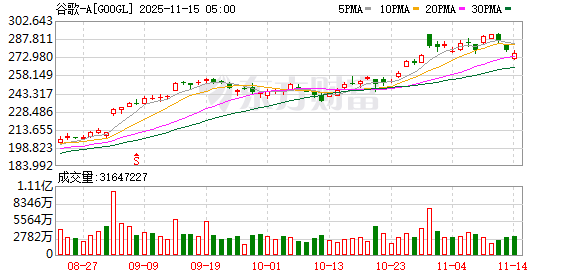
突发大消息,“20CM”直线涨停
天天基金网· 2025-11-17 05:19
Market Overview - The technology sector experienced a rebound, with AI applications leading the surge, particularly in multi-modal AI and AI agents [3][4] - As of the morning close, the Shanghai Composite Index fell by 0.43%, the Shenzhen Component Index by 0.35%, and the ChiNext Index by 0.8%, with a total market turnover exceeding 1.27 trillion yuan [3] Key Drivers of Technology Stock Rebound - Two main factors catalyzed the rebound in technology stocks: 1. Berkshire Hathaway disclosed a significant purchase of nearly 17.85 million shares of Google-A, valued at approximately $4.3 billion, which alleviated market concerns regarding an "AI bubble" [6][7] 2. Positive developments in AI applications, including the release of OpenAI's GPT-5.1 series and Alibaba's launch of the "Qianwen" project, which aims to integrate AI into various aspects of daily life [7] Notable Stock Performances - Several stocks in the AI sector saw significant gains, including: - Xuan Ya International, which hit a 20% limit up [5] - Long-term partnerships in the lithium battery supply chain, such as Rongbai Technology's agreement with CATL, which guarantees a minimum annual procurement of 60% of its total supply [11] - Other companies like Suzhou Keda and Aerospace Development also reported notable increases in stock prices [5] Industry Trends - The lithium battery supply chain is witnessing a trend of long-term contracts, with multiple companies, including Haibo Sichuang and Tianqi Materials, entering strategic agreements with CATL for substantial future supply commitments [12][13]




Why Warren Buffett investing in Alphabet isn’t as surprising as it sounds
Rask Media· 2025-11-17 03:48
With so much chatter about Warren Buffett investing in Alphabet (NASDAQ:GOOGL), many investors are asking what this move really signals about Berkshire’s long-term thinking.Every quarter, large US investment managers must reveal their portfolio moves in a simple public document known as a 13F filing. It’s a snapshot of what the world’s biggest investors owned at the end of the quarter.Nothing more, nothing less.But because Berkshire Hathaway (NYSE:BRK.A NYSE:BRK.B) sits at the top of that food chain, every ...
