salesforce(CRM)

Search documents
AI 产品定价指南
Hu Xiu· 2025-08-12 13:41
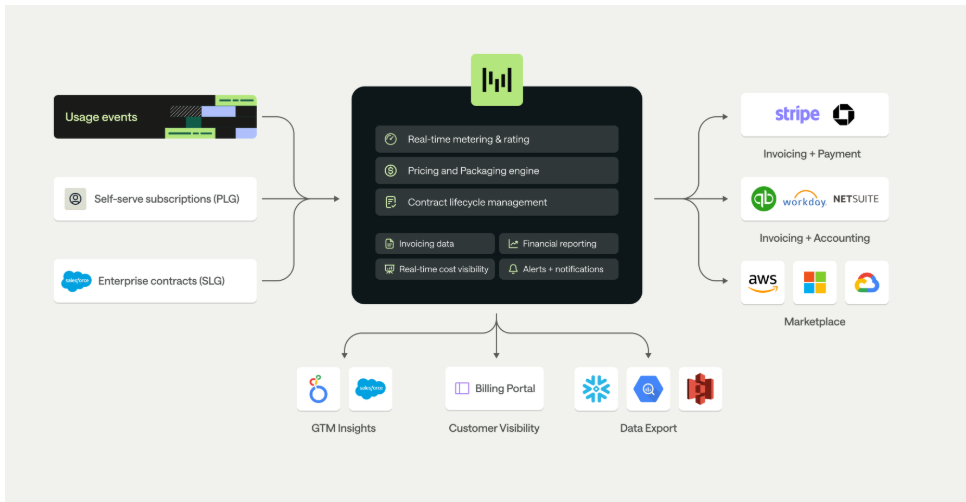
Group 1 - The core viewpoint of the article is that AI is fundamentally changing the pricing logic of software, moving from traditional seat-based pricing to usage-based or outcome-based pricing models [2][12][66] - AI enhances human efficiency, leading to a decrease in the number of software users, which challenges the traditional seat-based pricing model [12][15] - The implementation of usage-based pricing faces challenges such as the need for real-time billing systems, dynamic pricing models, and the retention of large-scale real data [2][18][21] Group 2 - CEOs need to focus on sales compensation structures and the division of sales responsibilities when transitioning to usage-based pricing [22][28] - The current trend among SaaS companies is to adopt a hybrid business model that combines both seat-based and usage-based pricing [15][16] - The pricing model for AI products can be analyzed based on attribution capability and autonomy, with stronger pricing power associated with high attribution and autonomy [42][46] Group 3 - The evolution of billing models has transitioned from on-premise software licenses to cloud-based seat subscriptions, and now to AI-driven value-based pricing [11][12] - Companies must continuously adapt and remain agile in their pricing strategies to capture value effectively [58][66] - The strategic significance of usage-based pricing is that it directly ties revenue to the value created for customers, allowing for a more flexible and responsive business model [22][66] Group 4 - The challenges of implementing usage-based pricing include the need for real-time monitoring of usage and the complexity of dynamic pricing models [18][21] - Companies must ensure that their financial teams evolve into real-time data hubs to support the new pricing models [33][66] - The shift to usage-based pricing requires a fundamental transformation in business operations, including sales, customer support, and product development [25][67] Group 5 - The most common pricing model for AI products is currently a hybrid model, reflecting a transition from traditional seat-based pricing to usage-based pricing [47][66] - The future may see an increase in outcome-based pricing models, with predictions that the proportion of companies adopting such models could rise from 5% to 25% in the next three years [48][66] - Companies need to focus on enhancing product autonomy and attribution capabilities to unlock greater commercial value [48][66]


美银:ServiceCloud业务将迎来反弹 重申赛富时(CRM.US)“买入”评级
智通财经网· 2025-08-12 07:17
Group 1 - The core viewpoint is that Bank of America analyst Bradley Sills reaffirms a "Buy" rating for Salesforce (CRM.US) with a target price of $350, driven by expected growth rebound in its largest business segment, Service Cloud [1] - Analysts project that Service Cloud revenue will reach $9.7 billion in fiscal year 2026, accounting for 25% of total subscription revenue [1] - The growth of Service Cloud is anticipated to accelerate to 9% in the coming quarters, with a long-term growth rate expected to reach 12% [1] Group 2 - Analysts believe that upselling additional services and the "agent power" product will be the main drivers of business growth [1] - Due to a weaker dollar in the first quarter, Salesforce is expected to benefit from favorable currency effects [1] - Salesforce's revenue guidance for the second quarter of 2026 is projected to be between $10.11 billion and $10.16 billion, representing a year-over-year growth of 8% to 9% [1]
Lynch Carpenter Investigates Salesforce Data Breach Affecting Millions of Individuals
GlobeNewswire News Room· 2025-08-11 20:33
Core Insights - A cybersecurity incident affecting Salesforce has compromised the personal information of potentially millions of individuals, impacting several major companies including Air France, KLM, Adidas, Qantas, Allianz Life, Louis Vuitton, Dior, Tiffany & Co., Chanel, and Google [1] Group 1 - The data breach involves the exposure of personally identifiable information (PII) [1] - Lynch Carpenter, LLP is investigating claims against Salesforce and the impacted companies related to this data breach [2] - Individuals who received a data breach notification from the affected companies may be entitled to compensation [2] Group 2 - Lynch Carpenter is a national class action law firm with a focus on data privacy matters and has represented millions of clients over more than a decade [3] - The firm has earned national acclaim for complex litigation for plaintiffs across the country [3]

Salesforce Stock Plunges 28% YTD: Should You Exit the Investment?
ZACKS· 2025-08-11 14:10
Core Insights - Salesforce, Inc. (CRM) is experiencing significant underperformance, with a stock decline of 28% in 2025, compared to a 13.5% drop in the broader Zacks Computer and Technology sector [1][8] - The company's revenue growth has slowed considerably, with a 7.7% increase in Q1 of fiscal 2026, leading to cautious investor sentiment [5][8] - Salesforce's earnings per share (EPS) growth is projected to decline significantly, with a compound annual growth rate (CAGR) of 12.9% expected over the next five years, down from 27.8% in the previous five years [9] Sales Performance - Salesforce's revenue growth has decelerated, with Q1 fiscal 2026 revenues rising only 7.7% year-over-year, and non-GAAP EPS increasing by just 5.7% [5][8] - Analysts predict mid-to-high single-digit growth for fiscal years 2026 and 2027, indicating a continued trend of cautious enterprise spending [6] Financial Estimates - Current Zacks Consensus Estimates for Salesforce's upcoming quarters and years are as follows: - Current Quarter (7/2025): $10.13 billion - Next Quarter (10/2025): $10.29 billion - Current Year (1/2026): $41.15 billion - Next Year (1/2027): $44.94 billion - Year-over-year growth estimates are projected at 8.66% for the current quarter and 8.58% for the current year [7] Valuation Analysis - Salesforce's stock trades at a low forward P/E ratio of 20.08, significantly below the sector average of 28.16 [8][10] - Compared to peers, Salesforce's P/E is lower than SAP (38.32), Oracle (36.17), and Microsoft (33.42), suggesting a potential undervaluation [12] Strategic Implications - The current valuation may attract investors; however, the ongoing challenges related to slowing sales growth could indicate a value trap [13] - The company needs to adapt its strategy to remain competitive, as businesses are shifting towards smaller, lower-risk IT investments rather than large digital transformation projects [9] Conclusion - Salesforce is no longer viewed as a growth powerhouse, with limited upside potential due to slowing revenue and earnings growth [14] - The company currently holds a Zacks Rank 4 (Sell), suggesting that investors may want to consider other opportunities in the tech sector [14]

These 3 Artificial Intelligence (AI) Stocks Could Soar More Than 40% Over the Next 12 Months, According to Wall Street
The Motley Fool· 2025-08-11 09:41
Core Insights - The article discusses the potential rebound of AI software stocks, highlighting that AI is transforming businesses and creating wealth for investors [1][2]. Group 1: Atlassian - Atlassian has received strong support from analysts, with 25 out of 31 rating it as a "buy" or "strong buy" [4]. - The average 12-month price target for Atlassian suggests an upside potential of around 60%, with the most pessimistic analyst predicting a 23% increase [5]. - Despite a 30% decline year to date and being nearly 50% below its 52-week high, Atlassian's revenue grew by 22% year over year to nearly $1.4 billion [6][7]. Group 2: Salesforce - Salesforce also enjoys positive sentiment, with 42 out of 54 analysts rating it as a "buy" or "strong buy" [8]. - The consensus 12-month price target indicates a potential increase of 45%, with one analyst forecasting an 80% rise [8]. - Similar to Atlassian, Salesforce's stock is down almost 30% year to date, but the company is pursuing an acquisition of Informatica for $8 billion to enhance its AI strategy [9]. Group 3: Adobe - Adobe has a favorable outlook, with 27 out of 40 analysts rating it as a "buy" or "strong buy" [10]. - The average 12-month price target for Adobe reflects an upside potential of around 42%, with one analyst predicting a nearly 79% increase [10]. - Adobe's stock has decreased over 20% this year, but it reported record revenue of $5.87 billion in Q2, up 11% year over year [11][12].



狼真的来了!“AI第一轮就业大冲击”已至,矛头直指年轻人
美股IPO· 2025-08-10 22:35
Core Viewpoint - The rise of artificial intelligence (AI) is significantly impacting the job market, particularly for entry-level positions, leading to increased unemployment rates among recent graduates and young professionals in the technology sector [1][3][5]. Group 1: Impact of AI on Employment - Over 10,000 jobs in the U.S. have been lost due to generative AI applications in the first seven months of this year, with entry-level positions being the most affected [3][4]. - The unemployment rate for U.S. graduates surged from 4.0% in December 2023 to 8.1% [3][5]. - AI has become one of the top five reasons for layoffs in the U.S., with over 806,000 layoffs announced by companies in 2025, the highest since 2020 [3][4]. Group 2: Challenges for Young Job Seekers - Nearly half of U.S. Generation Z job seekers believe that AI has devalued their degrees, with the unemployment rate for recent college graduates rising to 6%, significantly above the national average of around 4% [5][6]. - The technology sector has seen the most significant impact, with unemployment rates for employees aged 20-30 increasing by approximately 3 percentage points this year [6][7]. Group 3: Shift in Hiring Practices - Companies are increasingly using AI to replace tasks traditionally performed by entry-level employees, leading to a 15% decline in job postings for entry-level positions [4][8]. - Major companies like Shopify and McKinsey have publicly stated that they will not hire new employees if AI can perform the tasks [8].



3 No-Brainer Artificial Intelligence (AI) Stocks to Buy Now and Hold Forever
The Motley Fool· 2025-08-08 21:00
Core Insights - The excitement surrounding artificial intelligence (AI) has significantly increased stock prices for major tech companies, with Nvidia's market cap exceeding $4 trillion since the launch of ChatGPT in late 2022 [1][2] Company Summaries Amazon - Amazon Web Services (AWS) is the largest public cloud computing platform, generating $116.4 billion in the last 12 months, approximately 50% larger than Microsoft's Azure [5] - AWS experienced a decline in operating margin due to stock-based compensation timing and significant investments in capacity, but it maintains higher margins than smaller competitors [7] - Despite a recent stock price drop following disappointing earnings, Amazon's long-term potential, especially in AWS, remains strong, presenting a buying opportunity for long-term investors [9] Salesforce - Salesforce's Data Cloud has seen a 120% year-over-year growth in recurring revenue, reaching $1 billion in the most recent quarter, with strong adoption in major deals [11][12] - The company is well-positioned to benefit from increased spending on AI, as its software suite is deeply integrated into enterprise operations, making it difficult for companies to switch away [13] - Shares are trading at 22 times forward earnings estimates, indicating a favorable buying opportunity [13] Meta Platforms - Meta is projected to spend between $66 billion and $72 billion on AI capital expenditures, positioning itself as a major player in generative AI [14] - The company reported a 22% revenue increase and a 38% growth in operating income, driven by AI-enhanced advertising and user engagement [18] - Meta shares trade at an attractive valuation of around 16 times forward EBITDA estimates, and 27 times forward P/E, suggesting strong investment potential [19][20]



无人谈论的AI堆栈:数据采集作为基础设施
3 6 Ke· 2025-08-07 07:23
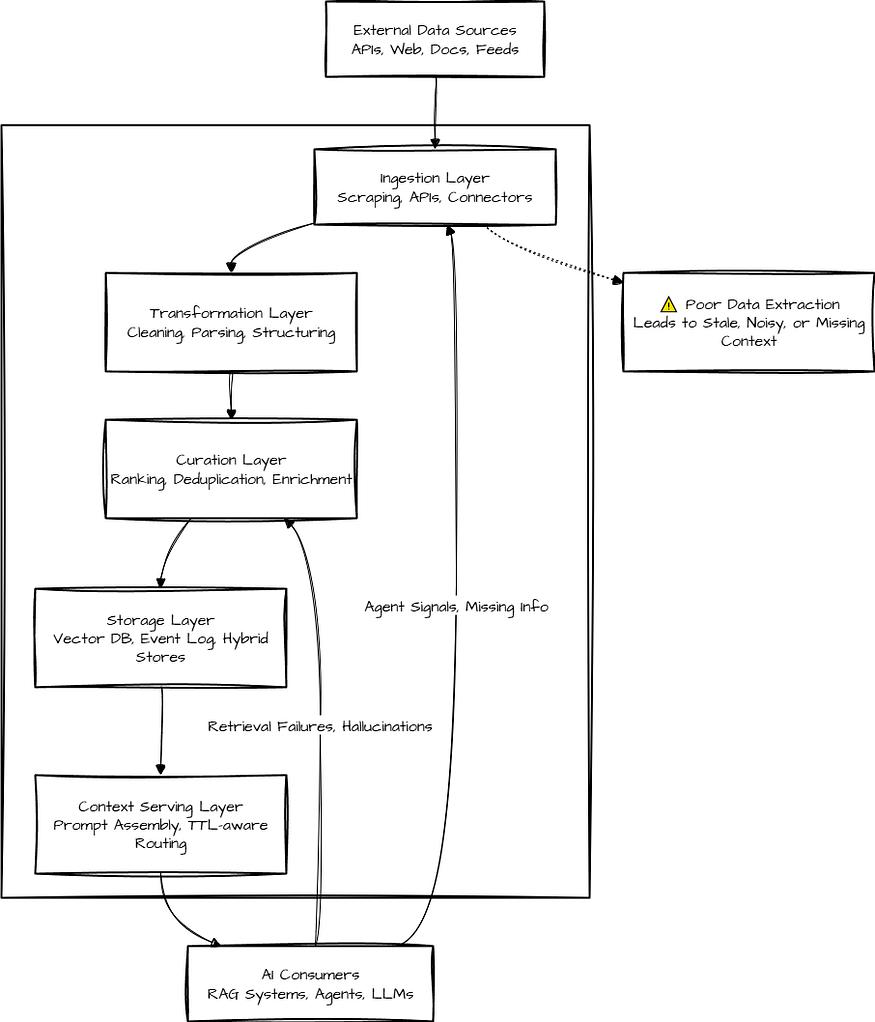
Core Insights - The performance of AI products increasingly relies on data quality and freshness rather than just model size [1][2][3] - Companies like Salesforce and IBM are acquiring data infrastructure firms to enhance their AI capabilities with real-time, structured data [2][5][6] - The definition of "good data" includes being domain-specific, continuously updated, structured, deduplicated, and real-time actionable [4][5][6] Data Infrastructure Importance - Data collection is now seen as a critical infrastructure rather than a secondary task, emphasizing the need for reliable, real-time access to data [2][9][22] - The modern AI data stack has evolved into a value chain that includes data acquisition, transformation, organization, and storage [10][22] - Effective data retrieval quality surpasses prompt engineering, as outdated or irrelevant data can hinder model performance [7][19] Strategic Data Collection - Data collection must be strategic, providing structured and immediate data for AI agents [12][13] - It should handle dynamic user interfaces, CAPTCHAs, and mixed extraction methods to ensure comprehensive data gathering [14][15] - Data collection infrastructure should be scalable and compliant with legal standards, moving beyond fragile scraping tools [16][22] Future of AI Systems - The future of AI performance will depend more on knowledge acquisition speed and context management rather than just model size [23][24] - Companies that view data collection as a foundational capability will likely achieve faster and more cost-effective success [25]

Google Says Hackers Stole Customer Info in Salesforce Data Breach
PYMNTS.com· 2025-08-06 17:27
Google says some customer information was stolen in a recent data breach.By completing this form, you agree to receive marketing communications from PYMNTS and to the sharing of your information with our sponsor, if applicable, in accordance with our Privacy Policy and Terms and Conditions .Complete the form to unlock this article and enjoy unlimited free access to all PYMNTS content — no additional logins required.Writing on its blog Tuesday evening (Aug. 5), the tech giant’s Threat Intelligence Group said ...

Google says hackers stole its customers' data in a breach of its Salesforce database
TechCrunch· 2025-08-06 12:05
Core Insights - Google has confirmed a data breach involving customer information from one of its Salesforce database systems, which is used for storing contact information for small and medium businesses [1][2] - The hacking group responsible, known as ShinyHunters (UNC6040), has a history of targeting large companies and their cloud-based databases [2][3] - The stolen data consists mainly of basic business information that is largely publicly available, such as business names and contact details [2] Data Breach Details - Google did not disclose the number of affected customers, and there is no information on whether a ransom demand has been made [2] - This incident is part of a broader trend of breaches targeting Salesforce cloud systems, with recent incidents involving companies like Cisco and Qantas [3] - ShinyHunters employs voice phishing techniques to gain access to cloud-based Salesforce databases [3] Potential Threats - Google indicated that ShinyHunters may be preparing a data leak site, a tactic used by ransomware gangs to extort companies by publishing stolen data [4] - The group has connections with other cybercriminal organizations, including The Com, which is known for hacking, extortion, and threats of violence [4]