
数据管理平台

Search documents
宣亚国际连续三年亏损 主营业务深度绑定汽车行业的整合营销服务商
Xin Lang Zheng Quan· 2026-02-06 03:33
Core Insights - The article highlights the challenges faced by XuanYa International, a marketing technology company, due to its reliance on the automotive industry and the resulting growth stagnation and performance volatility [1][6]. Business Overview - XuanYa International provides integrated marketing services primarily for the automotive sector, encompassing three main areas: digital marketing services, public relations services, and technology and data products [2]. - The digital marketing services segment is the revenue backbone, focusing on social media operations, content creation, media buying, and performance optimization for brand clients, particularly in the automotive industry [2]. - The public relations services include brand strategy consulting, event planning, media relations, and crisis management, which were the company's original offerings [2]. - The technology and data products segment, aimed at enhancing service efficiency through self-developed or co-developed marketing SaaS tools and data management platforms, currently contributes a small portion of revenue and has not become a core growth driver [2]. Structural Risks - The company's performance is highly correlated with the automotive industry's economic cycles, making it vulnerable to fluctuations in marketing budgets during downturns [3]. - As the automotive market faces challenges such as intensified price competition in the electric vehicle sector and pressure on traditional automakers, marketing investments are becoming more focused and results-driven, putting continuous pressure on XuanYa International's traditional service model [3]. Competitive Landscape - XuanYa International's business model remains labor-intensive and resource-driven, struggling to compete with international agencies and top creative firms in strategy and creativity [4]. - The company faces intense price competition from numerous local marketing firms, MCNs, and direct media clients, which complicates its claimed transition to a "marketing technology" focus [4]. - The investment in self-developed technology products has not yielded significant market barriers or revenue scale, preventing the company from aligning its valuation with that of technology firms [4]. Growth Challenges - Efforts to diversify into non-automotive sectors such as consumer goods and finance have yielded limited results, maintaining the dominance of the automotive sector in revenue generation [5]. - Initiatives related to new concepts like the metaverse and AI marketing remain largely at the case study and conceptual stage, lacking scalable and sustainable new revenue sources [5]. - The slow pace of transformation in the face of accelerating marketing technology changes may result in missed future opportunities [5]. Conclusion - The case of XuanYa International reflects the broader challenges faced by traditional integrated marketing service providers amid industry changes, particularly when heavily reliant on a single sector without establishing technological or brand moats [6]. - For investors, the key to assessing the company's value lies in its ability to reduce dependence on a single industry, improve profit quality, and develop new business lines with product potential [6].

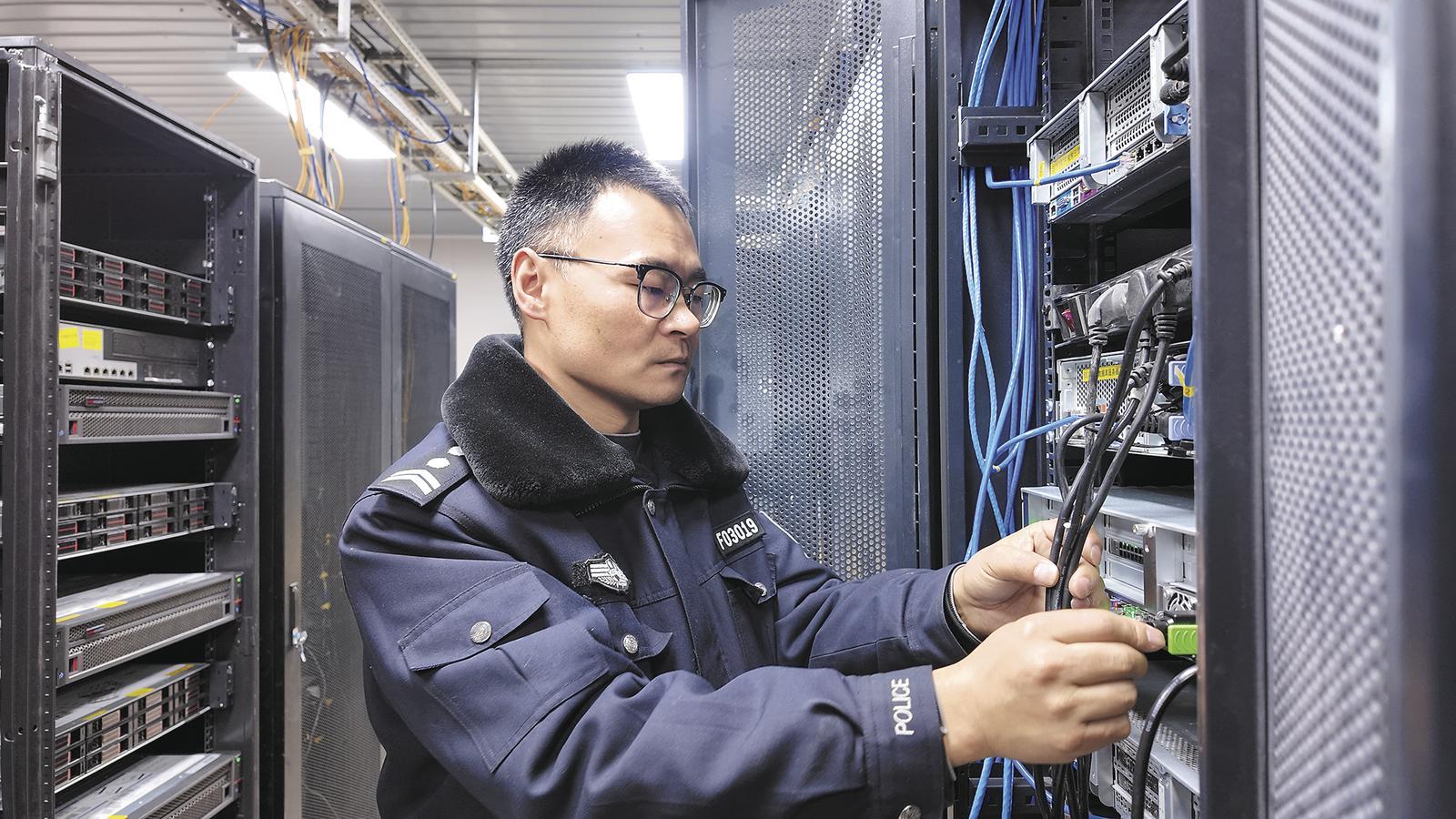
警营“码”力侠 编织平安网
Xin Lang Cai Jing· 2026-01-31 18:30
Core Viewpoint - The article highlights the dedication and technical expertise of Chen Hui, a police officer who has significantly contributed to the modernization and efficiency of the public security system in his region through innovative technological solutions [1][2][3]. Group 1: Career Development - Chen Hui joined the police force in 2012 and quickly gained a reputation for his technical skills after successfully repairing outdated computers [1]. - In 2017, he took on a critical role in the County Public Security Bureau's Science and Technology Information Office, where he was responsible for the operation and maintenance of network and communication systems [2]. - His first major challenge involved ensuring uninterrupted communication during a high-profile cycling event, demonstrating his commitment and resilience [2]. Group 2: Innovations and Contributions - Chen Hui developed several tools to improve operational efficiency, including the "Gonghe Public Security Directory" app, which reduced the time to find personnel from ten minutes to one second [3]. - He created a data management platform tailored to local needs, addressing issues of information fragmentation in key locations [3]. - His work led to the development of multiple systems that significantly enhanced monitoring and operational efficiency, earning him recognition from the Ministry of Public Security [3]. Group 3: Personal Dedication - Chen Hui has dedicated over thirteen years to his career, often prioritizing work over personal life, which delayed his marriage until the age of 35 [6]. - He has been recognized multiple times as an "Outstanding Auxiliary Police Officer," reflecting his commitment and contributions to the police force [6]. - His perfectionist approach drives him to strive for excellence in every task, emphasizing the importance of passion and attention to detail in his work [4].

银行秋招竞逐数字人才 金融科技岗成“香饽饽”
Zhong Guo Zheng Quan Bao· 2025-11-27 20:39
Core Insights - Financial technology (FinTech) positions have become a popular choice in the recent recruitment season among banks, with city and rural commercial banks increasing their investments in digital transformation [1][3] - The demand for FinTech talent is high, with banks establishing permanent positions for technology roles to support their digital initiatives [2][3] - The integration of FinTech is expected to enhance the competitive edge of city and rural commercial banks, allowing them to better serve local agricultural and small micro-enterprises [4][5] Group 1: Financial Technology Investment - City and rural commercial banks are significantly increasing their investments in FinTech, achieving notable success in digital transformation [3] - Shanghai Bank plans to invest 2.519 billion yuan in FinTech in 2024, which represents 5% of its annual revenue [3] - The application of FinTech helps these banks overcome the limitations of physical branches by reducing customer acquisition and operational costs [4] Group 2: Talent Demand and Roles - Banks are actively seeking FinTech talent across three main categories: technical development, business empowerment, and ecosystem collaboration [2] - Positions include software development, data analysis, and project management, aimed at enhancing the banks' digital capabilities [2] - The focus on hiring FinTech professionals reflects the banks' commitment to digital transformation and innovation in financial services [2][3] Group 3: Integration and Future Prospects - The integration of FinTech is transforming banks from "digital" to "intelligent," enhancing operational efficiency and creating new growth opportunities [5][6] - Significant advancements have been made in various banking sectors, including marketing, risk management, operations, and payment systems [5][6] - Future developments in FinTech, such as the deep application of large models and the expansion of digital currency usage, are expected to further empower banking operations [6]

Cloudera首席技术官:每家零售企业都需要成为一家科技公司
Huan Qiu Wang· 2025-11-27 07:26
Core Insights - The retail industry is accelerating its digital and intelligent transformation as year-end promotional seasons approach, with successful retailers adopting a "tech company" mindset to leverage data as a strategic asset [1][5] - Data management is crucial for modern retail operations, impacting everything from inventory management to fraud detection, especially during peak shopping periods when data volume and associated risks increase [1][2] - Retailers that prioritize data visibility and control can scale their operations and enhance security while providing seamless consumer experiences [1][2] Group 1: Challenges and Pressures - The holiday peak season imposes three main pressures on retail systems: scalability, fault tolerance, and labor shortages, leading to potential system failures or performance declines during sudden traffic surges [2] - Any downtime during peak periods can result in significant sales losses and negatively impact overall customer satisfaction [2] - Transaction processing and fraud detection systems must remain stable under increased traffic, necessitating robust data management platforms that can handle additional loads without failures [2] Group 2: Consumer Trust and Data Governance - According to PwC's "2024 Consumer Voice Survey," 74% of consumers in the Asia-Pacific region are concerned about privacy and data sharing, highlighting the importance of consumer trust in retail competition [3] - Retailers must demonstrate responsible data usage to maintain customer loyalty, with a strong governance framework and zero-trust architecture being essential [3] - Security design principles can minimize data exposure risks, while a unified governance framework ensures consistent data security and compliance across mixed environments [3] Group 3: Role of AI and Real-Time Data - AI and machine learning are critical for optimizing demand forecasting, personalizing experiences, and enhancing fraud detection during peak shopping periods [3][4] - Retailers benefit from both historical and real-time data processing, as historical data informs demand prediction models while real-time data is vital for immediate responsiveness [3][4] - Real-time data collection systems enable dynamic decision-making, allowing retailers to identify anomalies instantly and push personalized offers at the right moment [4] Group 4: Conclusion - The ability to responsibly manage data, maintain system scalability under pressure, and continuously build consumer trust is becoming a key determinant of success in the competitive retail market [4][5] - Retailers that integrate data visibility and governance into their core strategies will be better positioned to stabilize operations, enhance customer experiences, and achieve business growth during critical shopping periods [5]
曼孚科技获嘉远资本等近亿元投资,AI基础设施开启产业新周期
Zheng Quan Shi Bao Wang· 2025-08-18 13:33
Core Insights - Manfu Technology, an AI infrastructure and data intelligence platform service provider, has completed nearly 100 million yuan in B+++ round financing led by Jiayuan Capital, which will be used for AI Agent platform upgrades, embodied intelligence dataset construction, and global market expansion [1][2] Company Summary - The recent financing marks a dual breakthrough for Manfu Technology in both capital markets and technology strategy, supported by early investors like Qianhai Xinnuo, indicating a growing shareholder base focused on long-term support and international expansion [1] - Manfu Technology's business addresses the critical need for high-quality, scenario-specific data, as the value of general data diminishes while vertical domain data becomes increasingly important in sectors like autonomous driving and AI large models [1][2] - The company aims to create a comprehensive AI infrastructure by covering the entire value chain from raw data to model implementation, including integrated data labeling platforms, data management platforms (including vector databases), and model training platforms [1] Industry Summary - The competition in the AI industry has entered a deeper phase, where a company's moat must be built on high-quality data and the ability to implement solutions in complex scenarios [2] - The rapid rise of large models and embodied intelligence is expected to replicate the logic of autonomous driving, emphasizing the need for superior, scenario-based data infrastructure to establish a leading position in the next industrial cycle [2] - The strategic expansion of Manfu Technology from a dual focus on autonomous driving and large models to a tripartite focus including embodied intelligence reflects the inevitable evolution of the AI industry [2]
软件巨头Salesforce拟80亿美元收购数据管理平台公司Informatica,以增强在人工智能市场的竞争优势。
news flash· 2025-05-27 13:14
Core Insights - Salesforce plans to acquire data management platform Informatica for $8 billion to enhance its competitive edge in the artificial intelligence market [1] Group 1 - The acquisition aims to strengthen Salesforce's position in the rapidly growing AI sector [1] - Informatica's capabilities in data management are expected to complement Salesforce's existing offerings [1] - The deal reflects a broader trend of consolidation in the tech industry as companies seek to bolster their AI capabilities [1]

