FedEx(FDX)

Search documents
美股指数涨跌不一,道指创历史新高,市场押注美国政府停摆将结束
Feng Huang Wang· 2025-11-11 22:40
Market Overview - The U.S. stock market showed mixed results with the Dow Jones reaching a historical high, driven by expectations of an end to the government shutdown [1] - The Senate passed a budget bill to end the government shutdown, which is now under consideration by the House of Representatives [1] - Concerns over high valuations in AI stocks led to a decline in companies like Nvidia, which saw a sell-off after SoftBank liquidated its Nvidia shares for $5.8 billion [1][2] Employment and Economic Data - Recent ADP data indicated a loss of an average of 11,250 jobs per week in the U.S. private sector over the last four weeks, contributing to negative market sentiment [2] Stock Performance - The Dow Jones increased by 559.33 points (1.18%) to close at 47,927.96, while the Nasdaq fell by 58.87 points (0.25%) to 23,468.30 [3] - The S&P 500 rose by 14.18 points (0.21%) to 6,846.61, with healthcare and energy sectors performing well, while the technology sector declined by 0.72% [3] Notable Company Movements - Nvidia's stock dropped by 2.96%, reflecting broader concerns in the AI sector [4] - CoreWeave, an Nvidia-invested cloud computing company, lowered its revenue guidance for the year, further pressuring AI stocks [2][4] - AMD's CEO stated that the AI data center market is expected to exceed $1 trillion by 2030, with significant growth anticipated in their data center business [6] - Google announced a $6.4 billion investment in Germany for data center construction, marking a significant commitment to European infrastructure [7] - Microsoft plans to invest $10 billion in Portugal for AI infrastructure, collaborating with Nvidia and other partners [8]




FedEx Corporation (FDX) Presents at Baird 55th Annual Global Industrial Conference Transcript
Seeking Alpha· 2025-11-11 19:11
Group 1 - The article does not provide any specific content related to a company or industry [1]



X @Bloomberg
Bloomberg· 2025-11-11 18:54
Financial Outlook - FedEx expects profit this quarter to improve from a year ago [1] Investor Sentiment - Easing investor concerns about a potentially lackluster holiday season [1]
FedEx (NYSE:FDX) FY Conference Transcript
2025-11-11 17:50
FedEx FY Conference Summary Company Overview - **Company**: FedEx (NYSE: FDX) - **Date of Conference**: November 11, 2025 Key Points Industry Context - FedEx operates in the logistics and transportation industry, which has seen significant changes due to the pandemic and evolving global supply chain dynamics [5][6][7] - The company moves $2 trillion worth of commerce and connects 3 million shippers to 225 million consumers, positioning itself as a central player in global supply chains [5][6] Strategic Strengths and Changes - FedEx has built a robust network over 50 years, which is difficult to replicate, and has become integral to global supply chains [5][6] - The pandemic has shifted supply chain discussions to boardroom levels, highlighting FedEx's role in the industrial economy [6][7] - The company has successfully reduced structural costs, achieving operating income growth even with declining revenue, marking a historical first for FedEx [8][9] - FedEx is evolving its networks to be more flexible and intelligent, referred to as Network 2.0 and Tricolor [9][10] Technological Advancements - FedEx is leveraging its data from 17 million packages processed daily to enhance logistics intelligence and support AI applications [10][37] - The company is focusing on automation in its operations, particularly in its ground hubs, to improve efficiency and reduce manual handling [35][36] Market Adaptability - FedEx is adapting to changing global supply chain patterns, with a notable shift in traffic from Trans-Pacific routes to Intra-Asia routes [15][16] - The company is the largest broker in America, emphasizing its operational capabilities to provide seamless customer experiences [16][17] Financial Performance and Guidance - In Q1, FedEx reported a $150 million adjusted operating income impact and anticipates a total of $1 billion impact due to trade policy headwinds [19][21] - U.S. outbound air freight volumes increased by 22%, contributing approximately $40 million to revenue [19][20] - The company expects modest demand for the peak season, with improvements in operational metrics compared to previous years [25][27] Trade Policy Impact - The recent U.S.-China trade deal is expected to provide some certainty, but its immediate impact on FedEx's operations remains unclear [21][22] - FedEx is focused on managing the $1 billion headwind while continuing to leverage its strengths in the industrial economy [23][22] Spin-off Plans - FedEx plans to spin off its freight division to create two independent companies, aiming to unlock value for shareholders and allow each entity to focus on its core strengths [40][41] - The management team for the freight division has been assembled, emphasizing experienced leadership to drive growth [41] Upcoming Events - FedEx will hold two investor days: one for FedEx Corporation (excluding freight) on February 11-12, 2026, in Memphis, and another for FedEx Freight in the spring of 2026 in New York [43] Additional Insights - FedEx's commitment to safety is highlighted in its handling of aircraft inspections amid regulatory challenges [28][30] - The company is actively working with partners to enhance its service offerings, particularly in healthcare logistics, where it has seen significant growth [37][39]
联邦快递中国区总裁许宝燕:不卷价格 以“枢纽+下沉”重构在华物流业务新格局
Mei Ri Jing Ji Xin Wen· 2025-11-11 13:59
Core Insights - The Chinese express delivery industry is transitioning from a price war to a value competition phase, with FedEx poised for new growth opportunities after 41 years in the market [2][3] - The State Post Bureau reported that in September, the national postal industry generated a revenue of 152.57 billion yuan, a year-on-year increase of 6.8%, with express delivery revenue reaching 127.37 billion yuan, up 7.2% [2] - FedEx's strategy focuses on cost reduction, efficiency enhancement, and quality improvement, aligning with the industry's shift towards value competition [3][5] Industry Trends - The logistics market in China is evolving rapidly, driven by policy incentives and trade upgrades, with 229 national logistics hubs established, primarily in central and western regions [3][5] - Cross-border e-commerce is experiencing significant growth, with imports and exports reaching 33.61 trillion yuan in the first three quarters of 2025, a 4% increase [3][5] - The logistics sector is witnessing a shift from scale competition to value competition, with some companies seeing an increase in single-ticket gross profit from 0.1 yuan to 0.3 yuan [3][4] Company Strategy - FedEx is focusing on leveraging infrastructure benefits and aligning with market demand, having established 103 branches and over 100 ground operations stations across major cities [5][6] - The company is enhancing its logistics infrastructure, with significant upgrades planned for key operational centers, including a 48% expansion of the Shenzhen International Port Operations Center [5][6] - FedEx is prioritizing the establishment of operations in transportation hubs and trade-active areas to improve service efficiency and customer experience [6] Future Outlook - FedEx's future strategy will concentrate on three main areas: expanding network coverage in Europe and Asia, enhancing cross-border e-commerce and heavy cargo transport, and deepening digital transformation [8][9] - The company is optimistic about the long-term potential of the Chinese market, which has become one of the fastest-growing regions for FedEx's international business [8][9] - The growth of trade between China and Vietnam, projected to reach 205.2 billion USD in 2024, has prompted FedEx to increase its cargo flights between the two countries [8]
US Air Freight Transport Market to Reach USD 61.63 Billion by 2030, Fueled by Fast U.S.-Asia E-Commerce Deliveries and U.S.-Mexico Electronics Reshoring
Medium· 2025-11-11 11:58
Core Insights - The US Air Freight Transport Market is projected to grow from USD 49.85 billion in 2025 to USD 61.63 billion by 2030, reflecting a CAGR of 4.33% driven by demand in e-commerce, healthcare, and high-value manufacturing sectors [1][11] Market Drivers - Rapid growth in e-commerce is leading to increased demand for faster delivery, with consumers expecting two-day or same-day shipping, prompting carriers to optimize routes and expand capacity [3][12] - Nearshoring of semiconductor, electronics, and automotive manufacturing to Mexico is increasing air cargo volumes along the US-Mexico corridor, emphasizing the need for just-in-time delivery [4][12] - The healthcare sector is increasingly relying on air freight for temperature-sensitive shipments, necessitating compliance with cold-chain standards and expanding logistics capabilities [5][6] Infrastructure and Operational Enhancements - Major US airports are investing in cargo facilities and infrastructure upgrades to handle rising freight volumes, improving operational efficiency and reducing turnaround times [7][12] - Airlines are increasing their fleet of dedicated freighters and adopting sustainable aviation fuels to enhance service reliability and reduce environmental impact [7][12] Competitive Landscape - Key players in the market include UPS, FedEx, DHL, Atlas Air Worldwide Holdings, and Kuehne + Nagel, each offering specialized services tailored to various industries [10][12]


Zacks Industry Outlook United Parcel Service and FedEx
ZACKS· 2025-11-11 08:06
Core Insights - The Zacks Transportation—Air Freight and Cargo industry is currently facing significant challenges due to ongoing supply-chain disruptions and a softer-than-expected demand environment, leading to weaker package volumes [1][2] Industry Overview - Companies in the Zacks Transportation - Air Freight and Cargo industry provide air delivery and freight services, often offering specialized transportation and logistics solutions [3] - The health of these companies is closely tied to the overall economy, with major players like UPS transporting millions of packages daily [4] Key Trends - **Demand Slowdown**: There is a notable decline in shipping demand, particularly in Asia and Europe, with the Cass Freight Shipments Index declining by 5.4% year-over-year in September, marking a deteriorating trend over the past seven months [5] - **Rising Cost Pressures**: The industry is experiencing persistent cost inflation, including labor shortages and increased maintenance costs, which are squeezing profitability [6] - **Tariff Turmoil**: Protectionist tariff policies from the U.S. administration are reshaping the transportation service industry, increasing costs and disrupting supply chains [7] - **Fed Rate Cuts**: The U.S. Federal Reserve's recent interest rate cuts signal potential relief for the industry by lowering borrowing costs [8][9] Industry Performance - The Zacks Air Freight and Cargo industry currently holds a Zacks Industry Rank of 187, placing it in the bottom 23% of 244 Zacks industries, indicating murky near-term prospects [10] - The industry's earnings estimate for 2025 has decreased by 2.3% since September 2025, reflecting a negative outlook [11] - Over the past year, the industry has underperformed the S&P 500, decreasing by 20.4% compared to the S&P 500's growth of 14.2% [13] Valuation Metrics - The industry is currently trading at a trailing 12-month EV/EBITDA of 8.72X, significantly lower than the S&P 500's 18.24X and the sector's 10.03X [14] Company Highlights - **United Parcel Service (UPS)**: UPS is recognized for its shareholder-friendly activities, including dividends and buybacks, supported by robust free cash flow generation and cost-cutting efforts [15][16] - **FedEx Corp. (FDX)**: FedEx is also noted for rewarding shareholders through dividends and buybacks, with a solid liquidity position and effective cost-cutting measures [17]

联合包裹服务公司股价下跌2.2%,联邦快递股价下跌1.9%
Mei Ri Jing Ji Xin Wen· 2025-11-10 15:07
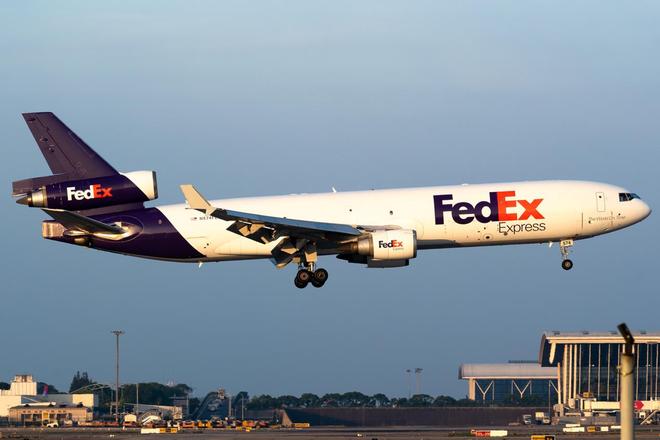
Group 1 - The Federal Aviation Administration (FAA) has banned the MD-11 aircraft from flying, leading to a decline in stock prices for United Parcel Service (UPS) by 2.2% and FedEx by 1.9% [1]
美国宣布:全部停飞
Zheng Quan Shi Bao· 2025-11-09 15:10
Core Points - The FAA has grounded all MD-11 cargo aircraft following a crash involving a UPS plane, pending safety inspections [3][4] - The grounding affects FedEx and UPS, which operate 28 and 27 MD-11 aircraft respectively, representing 4% and 9% of their total cargo fleets [3][4] - The crash resulted in at least 14 fatalities, prompting Boeing to recommend the suspension of this aircraft model [3][5] Group 1: Impact of the Grounding - The grounding of MD-11 aircraft is a precautionary measure due to safety concerns after the crash, which involved the separation of the left engine from the aircraft [3][4] - Both FedEx and UPS have announced the suspension of over 50 MD-11 aircraft for safety checks [3][4] - The FAA's emergency directive was issued due to the potential for similar issues in other aircraft of the same design [3] Group 2: Broader Industry Implications - The ongoing government shutdown has severely impacted the U.S. aviation industry, leading to significant flight delays and cancellations [7][9] - On November 8, over 6,600 flights were delayed and more than 1,500 flights were canceled due to air traffic controller shortages [9] - Newark Liberty International Airport and JFK Airport experienced average delays of 75 minutes and 60 minutes respectively due to personnel shortages [8][9] Group 3: Future Concerns - Former FAA Deputy Administrator Dan Elwell warned that if the government shutdown continues, flight reductions could reach 20%, severely affecting holiday travel plans [10] - The FAA has indicated that if the shutdown persists, certain airspaces may need to be closed [10]

UPS和FedEx停飞所有麦道11型货机 加速该机型终结运营进程
Zhong Guo Jing Ying Bao· 2025-11-09 12:45
Core Viewpoint - UPS and FedEx have announced the temporary grounding of all MD-11 cargo aircraft due to safety concerns following a recent accident involving a UPS MD-11, which resulted in 14 fatalities [2][4]. Group 1: Company Actions - UPS has grounded its MD-11 fleet, which constitutes approximately 9% of its total aircraft, based on a recommendation from Boeing [2]. - FedEx has also grounded its MD-11 cargo planes, which make up 4% of its fleet, and is conducting a comprehensive safety review [2]. - Both companies have implemented emergency plans to maintain service continuity for their global customers [2]. Group 2: Regulatory Response - The Federal Aviation Administration (FAA) issued an emergency airworthiness directive on November 8, mandating the grounding of all MD-11 aircraft due to potential safety issues [2]. Group 3: Industry Context - Currently, three U.S. airlines operate MD-11 cargo aircraft: UPS, FedEx, and Western Global Airlines [3]. - The MD-11 aircraft, originally manufactured by McDonnell Douglas, has been out of passenger service since 2014, and its operational future is uncertain following the recent grounding [3]. Group 4: Accident Details - The recent accident involved a UPS MD-11 cargo flight that crashed shortly after takeoff from Louisville International Airport, leading to 14 deaths, including 11 on the ground [4]. - The aircraft involved was a 1991 model, converted from passenger to cargo service in 2006, and had been maintained prior to the incident [4]. Group 5: Company Profiles - UPS operates a total of 295 aircraft, including 27 MD-11s, and has a global logistics network covering over 200 countries with approximately 490,000 employees [5]. - FedEx operates a slightly larger fleet of 28 MD-11s, contributing to its position as one of the largest cargo airlines globally [2].