
HWORLD(HTHT)

Search documents
美股异动 | 华住(HTHT.US)涨近4% 2025年上半年实现营收利润双增长
智通财经网· 2025-09-05 15:51
Core Insights - H World Group (华住) reported a nearly 4% increase in stock price, reaching $37.79 [1] - In Q2, hotel revenue was 26.9 billion yuan, a 15% year-on-year increase [1] - Total revenue for the group was 6.4 billion yuan, up 4.5% year-on-year [1] - Adjusted net profit reached 1.35 billion yuan, reflecting a 7.6% year-on-year growth [1] - Adjusted EBITDA was 2.3 billion yuan, increasing by 11.3% year-on-year [1] Hotel Operations - The total number of operating hotels reached 12,137, an 18% year-on-year increase [1] - The total number of operating rooms was 1,184,915, up 18.3% year-on-year [1] - During the reporting period, 597 new hotels were opened, with 2,947 hotels in the pipeline [1] - The total number of cities covered by operating and pipeline hotels reached 1,522 [1] Future Guidance - For Q3, the company expects revenue growth between 2% to 6% year-on-year for 2024 [1] - Excluding H World International, revenue growth is projected between 4% to 8% [1] - Management franchise and licensing revenue is anticipated to grow between 20% to 24% year-on-year for Q3 2024 [1]

“有点钱,但不多,不急花”:2025上半年消费者现状
Hu Xiu· 2025-09-05 06:26
Group 1: Consumer Market Overview - The overall vitality of the consumer market is improving, with a 5% year-on-year increase in retail sales of consumer goods in the first half of the year, reaching 24.55 trillion yuan [1][2] - The contribution rate of final consumption expenditure to GDP growth is 52%, indicating that consumer spending is a key driver of economic growth [1][2] - The core CPI has shown a continuous upward trend, indicating a recovery in domestic demand [1][2] Group 2: Emotional Consumption Trends - Emotional consumption has become a significant trend, with the emotional consumption market expected to exceed 2 trillion yuan by 2025, growing at a compound annual growth rate of 12% since 2013 [4][11] - Companies like Pop Mart have seen substantial revenue growth from emotional products, with LABUBU generating 4.81 billion yuan in revenue in the first half of the year, contributing to Pop Mart's total revenue of 13.88 billion yuan, a 204.4% increase year-on-year [7][5] - Other companies in the emotional consumption space, such as MINISO, are also adapting their strategies to capture this market, with their sub-brand TOP TOY achieving 740 million yuan in revenue, a 73% increase [8] Group 3: Traditional Consumption Decline - Traditional consumption categories, particularly in the liquor and high-end tea sectors, are experiencing declines, with many companies reporting negative growth in revenue and profit [10][12] - The white liquor industry saw a 5% decrease in revenue and a 7.5% drop in net profit in the second quarter of 2025, with only a few companies maintaining positive growth [10] - The high-end tea market is also struggling, with companies like Tianfu Tea reporting a 17.1% decline in revenue [10] Group 4: Impact of Economic Conditions on Consumer Behavior - Economic uncertainties have led to a cautious consumer sentiment, with many individuals opting for cost-effective options and prioritizing emotional value in their purchases [12][13] - The trend of "old consumption" is fading, as younger consumers focus on personal satisfaction rather than social status, leading to a shift in spending patterns [9][11] - The overall consumer sentiment is reflected in the decline of high-end dining and entertainment, with many consumers opting for more affordable alternatives [17][18] Group 5: Investment and Housing Market Dynamics - The real estate market is facing challenges, with a 11.2% decline in real estate development investment in the first half of 2025, and a 3.5% drop in new housing sales [25][26] - Consumer confidence in real estate has diminished, leading to a decrease in housing purchases and a shift towards investments in stocks and gold [27][29] - The stock market has seen increased activity, with A-shares and Hong Kong stocks experiencing good liquidity, indicating a shift in investment preferences among consumers [27][29]




酒店MVP承压,华住靠什么稳住大盘?
美股研究社· 2025-09-03 12:56
Core Viewpoint - The Chinese hotel industry is facing a supply-demand imbalance in 2025, with 360,000 hotels competing for customers while both room prices and occupancy rates are declining. Huazhu Group, however, reported a 3.5% increase in revenue and over 40% growth in net profit, showcasing a successful turnaround amidst industry challenges [5][7]. Group 1: Industry Overview - The hotel industry has been in a "quagmire" since 2024, with average revenue per available room (RevPAR) declining by over 5% in the first half of 2025. The overall market is still undergoing deep adjustments [8][30]. - The average daily rate (ADR) for Huazhu was 290 RMB, down 1.9% year-on-year, while occupancy rates remained high at 81%, slightly down by 1.6 percentage points [7][8]. Group 2: Huazhu's Performance - In the first half of 2025, Huazhu Group achieved revenue of 11.8 billion RMB, a 3.5% year-on-year increase, and net profit of 2.4 billion RMB, up from 1.7 billion RMB the previous year, marking a growth of over 40% [7][9]. - The second quarter revenue was approximately 6.4 billion RMB, reflecting a 4.5% year-on-year growth, with Huazhu China contributing 5.1 billion RMB, a 5.7% increase [7][9]. Group 3: Expansion Strategy - Huazhu's strategy involves aggressive expansion, opening 595 new stores in the second quarter, bringing the total to 12,137, an 18% year-on-year increase. The economy hotel segment accounted for 49% of the total [11][12]. - The average operating cost per store decreased by 14.56% to 606,000 RMB, attributed to the scale effect from the expansion [11][12]. Group 4: Asset-Light Transformation - Huazhu is transitioning to a light-asset model, with franchise and special operation hotels accounting for 45.4% of revenue, up 6.9 percentage points from the previous year. The operating profit margin improved to 27.8% from 25.6% year-on-year [17][18]. - The light-asset model is seen as a key growth driver, with franchise revenue growing by 22.8% to 2.8 billion RMB in the second quarter [26][27]. Group 5: Market Challenges and Future Outlook - The hotel market is entering a "stock era," where supply exceeds demand, leading to potential price wars. The average occupancy rate for large hotels was only 58.8% despite a net increase of nearly 30,000 hotels last year [30][31]. - Huazhu aims to capture the lower-tier market, which has a growing population and increasing disposable income, while maintaining a focus on quality amidst intensifying competition [31][32].

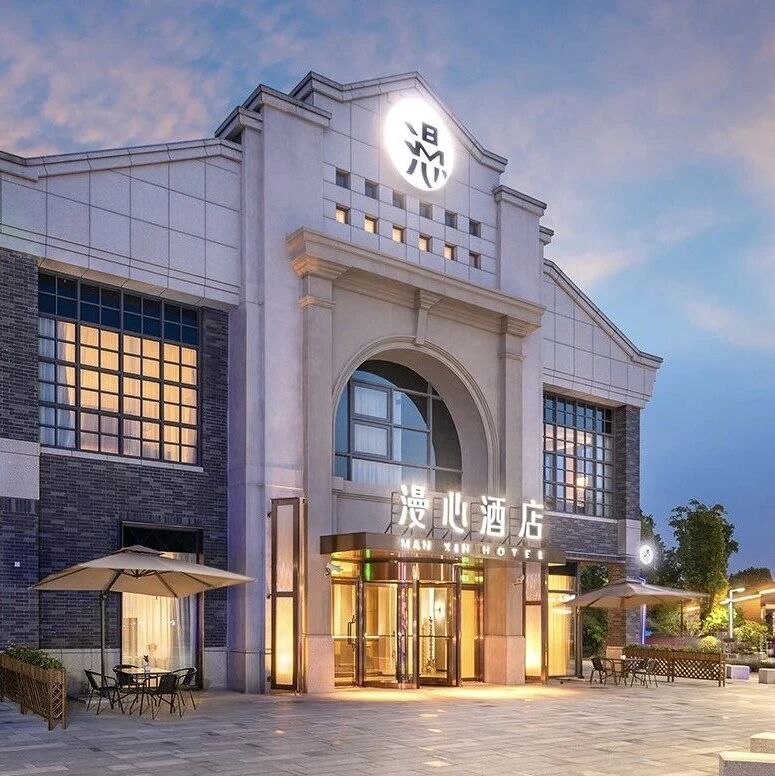
华住20周年“硬核”局:开“样板房车”重走318川藏线,全线酒店让天险变通途
Xin Lang Cai Jing· 2025-09-02 10:30
Core Viewpoint - The article highlights the significant role of Huazhu Hotels in providing quality accommodation along the challenging G318 Sichuan-Tibet Highway, enhancing the travel experience for tourists in high-altitude regions [1][3][5]. Group 1: Company Initiatives - Huazhu has established over 300 hotels along the G318 route, ensuring comprehensive coverage for travelers from Chengdu to Tibet [3][7]. - The launch of the "Huazhu Club Hotel Sample Room RV" marks a unique initiative to engage members in a journey along the G318, celebrating the company's 20th anniversary [3][7]. - Huazhu's "Price Guarantee" program offers members assurance against price fluctuations, enhancing customer confidence in booking accommodations [16]. Group 2: Market Demand and Challenges - The G318 route is increasingly popular, with a reported 3.1272 million visitors during the 2024 National Day holiday, reflecting a 13.85% year-on-year increase [5]. - Tourists face significant challenges such as altitude sickness and inadequate accommodation options, making reliable hotels essential for a comfortable experience [8][11]. - The article emphasizes the need for improved infrastructure and services along the G318 to attract more visitors and enhance their travel experience [19][20]. Group 3: Customer Experience - Huazhu hotels provide essential amenities such as oxygen supply systems and 24-hour hot water, addressing the specific needs of travelers in high-altitude areas [11][15]. - The availability of clean and comfortable accommodations, along with nutritious breakfast options, significantly improves the overall travel experience for visitors [13][15]. - The company’s commitment to maintaining consistent service standards across its hotels ensures that travelers can expect a reliable experience regardless of location [15].

暑期落幕,酒店价格回调 北上广深商务酒店普遍降价超10%
Nan Fang Du Shi Bao· 2025-08-27 23:11
Core Insights - The hotel prices in major Chinese cities have significantly declined, with many budget and mid-range brands experiencing price drops of over 10%, and some exceeding 20% [6][10][16] - The average daily rate (ADR) for Atour Hotels has fallen below levels seen five years ago, with a reported decline of 19% in the Beijing area [10][11] - The hotel market is facing a supply-demand imbalance, leading to decreased occupancy rates and revenue per available room (RevPAR) across various hotel brands [14][15] Price Trends - From August 1 to September 1, 2023, hotel prices in Beijing, Shanghai, Guangzhou, and Shenzhen showed a general downward trend, with 9 out of 10 observed hotel brands reporting average price declines [6][8] - Economic and mid-range hotel brands were the most affected, with brands like Home Inn and Hanting experiencing price drops of 27.2% and 24.1%, respectively [6][7] - High-end brands like Sheraton showed more stability, with a price drop of only 8%, while Hilton was the only brand to see a price increase of 3.5% [7] OTA Price Variations - Price fluctuations among different Online Travel Agencies (OTAs) were notable, with Ctrip offering the lowest average prices in Beijing at 572.9 yuan, while Tongcheng had the highest at 594.2 yuan [8][9] - In the transition to the off-peak season, Ctrip's prices dropped significantly by 13% to 498.4 yuan, while Qunar also saw a decline of 12.5% [9][18] Atour Hotel Performance - Atour's ADR for Q1 2025 was reported at 418 yuan, lower than the 429.5 yuan seen in 2019, indicating a downward trend in pricing [10][11] - The company's RevPAR has also declined, with a 7.3% year-on-year drop reported for Q1 2025 [10][11] Market Dynamics - The hotel market is experiencing a supply expansion that outpaces demand recovery, leading to lower occupancy rates and increased pressure on pricing [14][15] - The average occupancy rate for five-star hotels fell to 58.25% in Q2 2024, reflecting the challenges faced by the industry [15] Regional Observations - In Beijing, the average hotel price dropped by 13.5%, with significant declines in brands like Orange Crystal and Home Inn [16] - In Shanghai, the average price fell by 14.6%, with Vienna experiencing a notable drop of 28.1% [16] Future Outlook - The hotel industry is expected to face continued challenges, with predictions of a decline in RevPAR for Q3 2024, although the rate of decline may be less severe than in Q2 [14]



亚朵上半年营收增长33.96% 中高端市场杀成红海
2 1 Shi Ji Jing Ji Bao Dao· 2025-08-27 14:36
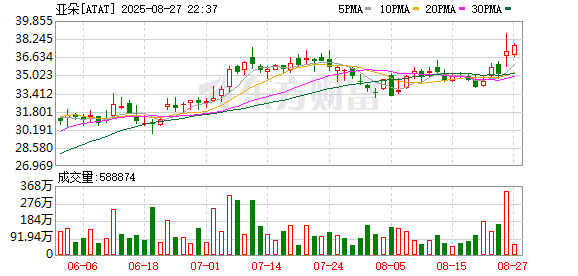
Core Viewpoint - Atour Group has reported strong financial results for Q2 2025, driven by its "accommodation + retail" dual-driven model, despite challenges in the domestic hotel industry and declining core indicators [2][3]. Financial Performance - In Q2 2025, Atour's net revenue increased by 37.4% to 2.469 billion yuan, with adjusted net profit rising by 30.2% to 427 million yuan, and adjusted EBITDA growing by 37.7% to 610 million yuan [2]. - For the first half of 2025, Atour's cumulative revenue reached 4.374 billion yuan, a 33.96% increase from 3.265 billion yuan in the same period last year, with cumulative net profit of 668 million yuan, up 19.02% from 562 million yuan [2]. - Retail revenue for Q2 was 965 million yuan, showing an 80% year-on-year growth, significantly contributing to overall performance [2][6]. Market Context - The domestic hotel industry is experiencing a rational recovery, with STR data indicating declines in RevPAR, ADR, and OCC by 6%, 4%, and 2% respectively in 2024 [3]. - Atour's strategy focuses on the mid-to-high-end market, contrasting with Huazhu's expansion into lower-tier markets [3]. Expansion and Operations - Atour's number of operating hotels reached 1,824, a 29.2% increase year-on-year, with a total of 213,000 rooms, up 30.7% [3]. - The company has 816 hotels in the pipeline, indicating ongoing expansion efforts [3]. - The launch of Atour's 3.6 version hotels aims to enhance business travel convenience and comfort, while the 4.0 version integrates aesthetic space design with local culture [3]. Retail Business Growth - Atour's retail business has become a significant highlight, with Q2 retail GMV reaching 1.144 billion yuan, an 84.6% increase [6]. - The retail segment's gross margin stands at 52.7%, significantly higher than the main business's gross margin, indicating strong profitability [6]. - The rapid growth of the retail business has helped offset weaknesses in the accommodation sector and reinforced brand culture through scene marketing [6]. Competitive Landscape - The hotel industry is shifting towards a more competitive environment, with both Atour and Huazhu facing declining RevPAR [8]. - Huazhu reported a 4.5% revenue increase to 6.4 billion yuan in Q2, with a net profit growth of 44.7% to 1.5 billion yuan, showcasing its resilience through scale advantages [4][5]. Challenges and Strategic Focus - Atour's average RevPAR fell to 343 yuan, a 4.4% decline year-on-year, with ADR at 422 yuan and OCC at 76.4% [3]. - The company is focusing on balancing boutique offerings with scalability, as high investment costs may deter franchisees [8]. - Atour's management is addressing operational challenges by evaluating hotel performance and closing underperforming locations, with 34 closures already in the first half of the year [9].
暑假接近尾声!酒店价格出现回调,如家、汉庭、全季跌幅靠前
Nan Fang Du Shi Bao· 2025-08-27 07:21
Core Insights - The hotel prices in major Chinese cities have significantly decreased, with many budget and mid-range brands experiencing price drops of over 10% and some exceeding 20% [3][5][10] - The price adjustments reflect a broader trend of declining average daily rates (ADR) and revenue per available room (RevPAR) across the hotel industry, particularly affecting mid-range and budget hotels [22][25][30] Price Trends - From August 1 to September 1, hotel prices in Beijing, Shanghai, Guangzhou, and Shenzhen showed a general downward trend, with 9 out of 10 observed hotel brands reporting average price declines [3][5] - Economic and mid-range brands were the most affected, with brands like Home Inn and Hanting experiencing price drops of 27.2% and 24.1% respectively [5][10] - High-end brands showed more stability, with Hilton being the only brand to see a price increase during this period [5][10] OTA Price Variations - Price strategies among different Online Travel Agencies (OTAs) displayed significant divergence, with Ctrip offering the lowest prices in some regions while Tongcheng had the highest [7][13] - In Beijing, Ctrip's average price dropped 13% to 498.4 yuan, while in Shanghai, Qunar saw a significant decline of 11.8% [7][10] Regional Observations - In Beijing, the overall hotel price decline reached 13.5%, with specific brands like Home Inn and Orange Crystal showing notable drops [10][12] - Shanghai's hotel prices fell by 14.6%, with Vienna experiencing a significant drop of 28.1% [10][12] - Guangzhou also saw a widening price gap among OTAs, particularly in budget hotels, indicating a competitive pricing environment [13][15] Company Performance - At Atour Hotel, the average daily rate (ADR) for the first quarter of 2025 was reported at 418 yuan, lower than the 429.5 yuan recorded in 2019 [20][22] - The overall RevPAR for Atour in 2024 showed a decline of 6.8% compared to the previous year, reflecting ongoing challenges in the market [22][25] - Huazhu Group reported a 2% decrease in ADR to 290 yuan in the second quarter of 2024, indicating a similar trend across the industry [23][25] Market Dynamics - The hotel market is facing supply-demand imbalances, with new hotel openings outpacing the recovery of travel demand post-pandemic [29][30] - The average occupancy rate for five-star hotels dropped to 58.25% in the second quarter of 2024, highlighting the pressure on hotel revenues [29][30]

美股三大指数均小幅收涨,礼来涨近6%,中概股蔚来涨超10%
Ge Long Hui A P P· 2025-08-26 22:52
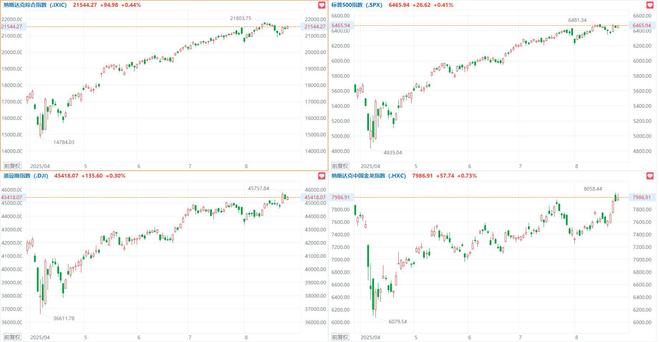
Market Performance - US stock market opened lower but closed higher, with all three major indices posting slight gains: Nasdaq up 0.44%, S&P 500 up 0.41%, and Dow Jones up 0.3% [1] - Major tech stocks mostly increased, with Tesla and Nvidia rising over 1%, while Apple, Netflix, Amazon, and Meta saw slight gains; Google, Microsoft, and Intel experienced minor declines [1] Company Highlights - Eli Lilly's stock surged nearly 6% following the successful results of its Phase 3 clinical trial for oral GLP-1 receptor agonist orforglipron for obesity combined with type 2 diabetes [1] - Popular Chinese concept stocks mostly rose, with the Nasdaq Golden Dragon China Index increasing by 0.72% [1] - NIO saw a significant increase of 10.02%, while Atour and Xpeng rose by 5.84% and 5.46% respectively; Li Auto increased by 2.71%, and Huazhu rose by 2.33% [1] - Other notable increases included Tencent Music, Global Data, Pony.ai, Miniso, ZTO Express, and NetEase, all rising by up to 1.98% [1] - Xiaomi Group's ADR rose by 1.65%, TSMC's ADR increased by 1.33%, Tencent Holdings' ADR went up by 0.19%, while Pinduoduo's ADR fell by 3.35% [1][2]



H World: The Good And The Bad
Seeking Alpha· 2025-08-26 08:48
Group 1 - The article focuses on the Asia Value & Moat Stocks research service, which targets value investors looking for Asia-listed stocks with significant discrepancies between price and intrinsic value [1] - The service emphasizes deep value balance sheet bargains, such as net cash stocks and low price-to-book (P/B) stocks, as well as wide moat stocks that represent high-quality businesses [1] - The author provides a range of watch lists with monthly updates, specifically concentrating on investment opportunities in the Hong Kong market [1]

加盟业务驱动,华住2025上半年营收利润双增长
Jin Rong Jie· 2025-08-23 15:17
Core Viewpoint - Huazhu Group reported a revenue of 11.8 billion yuan for the first half of 2025, a year-on-year increase of 3.5%, and a net profit of 2.4 billion yuan, up 41.2% year-on-year, indicating resilience despite industry challenges [1][2]. Financial Performance - In Q2 2025, Huazhu achieved a revenue of 6.4 billion yuan, a 4.5% increase year-on-year, with adjusted net profit reaching 1.35 billion yuan, up 7.6% [1][2]. - The total transaction volume (GMV) for the group reached 26.9 billion yuan, reflecting a 15% year-on-year growth [2]. - The number of hotels in operation increased to 12,137, a growth of 18% year-on-year, with total rooms reaching 1,184,915, up 18.3% [1][2]. Business Strategy - Huazhu's strategy focuses on expanding into new cities and regions, particularly in lower-tier cities, to achieve high-quality network expansion [1][2]. - The company opened 597 new hotels in Q2, with economy and mid-range hotels making up 44% and 42% of the new openings, respectively [1][2]. Revenue Breakdown - Revenue from management and franchise hotels was 5.4 billion yuan, a 22% increase, accounting for 45.4% of total revenue, up from 38.5% in the same period last year [2]. - The revenue from leased and owned hotels was 6.2 billion yuan, a decline of 8.7%, with Huazhu China specifically seeing a 10.3% drop [2]. Market Dynamics - The overall RevPAR (Revenue per Available Room) for Huazhu decreased by 7.9% to 233 yuan, with occupancy rates dropping by 2.9 percentage points to 81.1%, indicating increased market competition and weak demand [3]. - The company anticipates a slight decline in RevPAR for the full year due to increased hotel supply and weaker consumer sentiment, but aims to meet its revenue guidance through product upgrades and sales enhancements [4]. Brand Development - Huazhu's HanTing brand ranked first in the latest "Top 50 Hotel Brands" list, while its Orange Hotel brand surpassed 1,000 locations, positioning itself as a second growth engine in the mid-range market [5]. - The company is leveraging the current real estate market downturn to acquire prime properties in first and second-tier cities for new high-end hotel developments [5].