HWORLD(HTHT)

Search documents
全球头部酒店如何通过AI客服提升入住率?【502线上同行】
虎嗅APP· 2026-01-22 13:42
Core Insights - The hospitality and travel industry is facing a critical challenge where customer service is no longer just a response center but a key operational node that impacts conversion rates, repurchase rates, and service efficiency [3] - Travelers are increasingly impatient, prioritizing immediate responses over cleanliness or food quality, leading to rising labor costs exceeding 30% [3][4] Group 1: AI Integration in Customer Service - The integration of AI in customer service is evolving from a simple response system to a comprehensive concierge service that can drive repurchase [7] - AI can reduce ineffective inquiries and compress interaction rounds through dual engines of itinerary and location [7] - The boundaries of proactive care are defined by time thresholds, types of benefits, and push frequency [7] Group 2: Human-AI Collaboration in Customer Service - There is a need to identify which services should be handled by AI and which should remain human-operated across pre-stay, in-stay, and post-stay phases [8] - Examples of both successful and failed cases of intelligent distribution and human-machine collaboration are discussed [8] Group 3: Unique Challenges of AI in Hospitality - The hospitality sector cannot simply adopt retail models for AI customer service due to different operational needs [8] - The effectiveness boundary between scene-level knowledge graphs and Q&A knowledge bases is highlighted [8] - Compliance and safety issues arise when agents transition from "suggestion" to "execution" [8]



2026酒店业新变局:寒冬中探寻突破的持久之道
Sou Hu Cai Jing· 2026-01-21 16:47
Core Viewpoint - The hotel industry is experiencing a dichotomy, with some players struggling while others thrive through innovation in operations and business models, emphasizing efficiency and cash flow health over mere expansion [1][3]. Group 1: Industry Trends - The economic hotel segment is shrinking, with brands like Pudding Hotel and Wan Feng exiting the market, while leading players like Huazhu and Atour are leveraging "stay + retail" and AI technology to enhance their operations [1][3]. - The focus has shifted from opening new locations to improving operational efficiency and innovating business models, as the era of aggressive expansion is over [1][3]. Group 2: Financial Challenges - The hotel industry is capital-intensive, with long payback periods, particularly for mid-range hotels, which now have a return cycle extending to 5-6 years, compounded by tightening financing conditions [3][4]. - Many innovative ideas are hindered by a lack of funding, as hotels face significant financial pressure [3][4]. Group 3: Digital Hotel Solutions - A new digital hotel solution has emerged, aiming to tokenize future revenue rights of hotels into digital equity, allowing public investors to purchase these rights [4][6]. - For example, a hotel with 300 rooms can issue 20,000 digital rights at 2,000 yuan each, generating 40 million yuan in cash without incurring debt, effectively "securitizing" future room revenues [6][7]. Group 4: Benefits of Digital Solutions - This approach provides quick capital for hotels, allowing them to bypass traditional financing routes and directly attract market investment [7][9]. - Tokenizing assets enhances liquidity, enabling holders to transfer rights in a compliant secondary market, thus unlocking the value of previously illiquid assets [7][9]. - The model fosters a win-win ecosystem where equity holders are also long-term customers, enhancing customer loyalty and trust through transparent digital technology [7][10]. Group 5: Future Outlook - With the influx of funds from digital equity sales, hotels can further develop their "stay + retail" offerings, creating more sophisticated environments and products [9][10]. - The integration of AI with clear user profiles and blockchain data can lead to more precise service delivery and automated management of rights [9][10]. - The hotel industry is likely to evolve into a multifaceted value platform that combines investment, consumption, and brand experience, moving beyond traditional accommodation services [10].

酒店-供需驱动-结构优化-酒店行业景气度上行
2026-01-20 01:50
Summary of Hotel Industry Conference Call Industry Overview - The hotel industry is experiencing an upward trend driven by supply-demand dynamics and structural optimization, with a significant mismatch in supply and demand in 2023 due to a post-pandemic demand surge while supply lagged behind, leading to increased Average Daily Rates (ADR) [1][2] - The chain hotel rate in China is approximately 40%, lower than over 70% in the U.S., indicating potential for growth in the chain hotel segment, particularly in the economy sector [1][10] Key Insights - **Supply and Demand Dynamics**: The pandemic caused a significant reduction in hotel supply, with recovery to pre-pandemic levels only occurring in 2023 and 2024. The mismatch in supply and demand has led to a notable increase in ADR, attracting single hotels back into the market, which disrupts the chain rate [2][4] - **Challenges Facing the Industry**: The hotel industry faces challenges such as oversupply, deteriorating operations, and intense competition. Single hotels are heavily reliant on Online Travel Agencies (OTAs) for customer acquisition, facing high commission rates, while large chain hotels are reducing dependence on OTAs through proprietary channels [5][6][8] - **Investor Sentiment**: Despite low returns, investors are attracted to the hotel industry due to stable cash flows, reasonable payback periods (5-6 years, with some regions achieving 4 years), and opportunities for property transformation [5][9] Performance of Major Brands - **Huazhu Group**: The group operates approximately 11,000 to 12,000 stores, with improvements in RevPAR for its economy brands (Hanting, Haiyou) and mid-to-high-end brand (Quanjing) in Q4 2026. However, most other brands have not shown recovery, indicating that the recovery is not widespread across the industry [12][14] - **Investment Returns**: There are significant differences in returns when investing in different hotel brands. For instance, Quanjing has shown higher premiums compared to Jinjiang's Vienna brand, which has performed poorly [13] Future Trends and Recommendations - **Chain Rate Trends**: The chain rate is expected to continue growing, particularly in the luxury and mid-to-high-end segments, while the economy segment may see a decline due to the influx of single hotels [4][9] - **Impact of Policy Changes**: Upcoming policy changes, such as the potential expansion of holiday systems, are expected to positively impact travel and hotel demand, creating more opportunities for the industry [17] - **Recommendations for Investors**: Focus on large chain brands like Huazhu, which have shown strong growth potential. However, due to Huazhu not being available on the Hong Kong Stock Connect, investors are recommended to consider Shoulv, which is showing positive trends [18][19] Conclusion - The hotel industry is in a stabilization phase, with signs of recovery in select brands. However, the overall recovery is not expected to be uniform across the industry, and competition is likely to intensify as single hotels engage in price wars. Investors should prioritize large chain brands with strong growth momentum for future investments [20]
社会服务板块2025年四季度前瞻:促消费政策频发、休闲需求稳中向好,关注出行链布局机会
CMS· 2026-01-19 05:07
Investment Rating - The report maintains a positive investment rating for the industry, highlighting a favorable outlook for the tourism and leisure sectors due to government policies aimed at boosting domestic consumption and service spending [1][35]. Core Insights - The report emphasizes the recovery of domestic tourism, with expected growth rates of 12% in revenue and 18% in visitor numbers for Q1-Q3 2025, driven by sustained leisure travel demand and the rise of experiential consumption [1][35]. - The overall tourism market is projected to grow by over 10% for the year, supported by government initiatives such as promoting spring and autumn travel and issuing cultural tourism consumption vouchers [1][35]. - Key companies recommended for investment include China Duty Free Group, Jin Jiang Hotels, Shouqi Group, Tongcheng Travel, and Ctrip Group, alongside high-growth tea beverage stocks like Gu Ming and low-valuation restaurant growth stocks like Green Tea Group [1][35]. Summary by Sections 1. Restaurant Sector - Offline consumption is gradually recovering, with Q4 restaurant revenue showing steady growth, achieving 519.9 billion and 605.7 billion yuan in October and November 2025, respectively, with year-on-year growth of 4.99% and 4.40% [7][10]. - Leading restaurant companies are recovering faster than the industry average, with significant revenue increases noted for major players [10][14]. 2. Tea Beverage Sector - The tea beverage sector has seen a surge in same-store sales growth due to delivery subsidies, with leading brands like Gu Ming and Hu Shang A Yi maintaining high growth rates of 15-20% [7][10][14]. - The number of new store openings has doubled compared to 2024, indicating aggressive expansion strategies among top brands [16]. 3. OTA (Online Travel Agency) - The recovery of outbound travel demand is evident, with strong performance in Southeast Asia routes and a notable increase in visitor numbers to Japan and South Korea [20][24]. - The report highlights the long-term profit potential of leading OTA companies like Ctrip and Tongcheng Travel, driven by the ongoing recovery in leisure travel demand and improved commission rates [24][25]. 4. Hotel Sector - The hotel industry is expected to see a stable RevPAR (Revenue per Available Room) in Q4, with a year-on-year growth of 6-8% in room supply [29][30]. - Major hotel chains like Shouqi and Jin Jiang are projected to maintain or improve their performance, benefiting from cost reductions and increased guest traffic during holiday periods [29][30][31]. 5. Investment Recommendations - The report suggests focusing on the travel sector, particularly companies involved in OTA, hotels, and scenic spots, as they are likely to benefit from favorable government policies [1][35]. - Additionally, it recommends investing in high-growth tea beverage stocks and undervalued restaurant growth stocks, indicating a diversified approach to capitalizing on the recovery in consumer spending [1][35].


2026酒店业再变革:寒冬下的新玩法与持久战
Tai Mei Ti A P P· 2026-01-19 01:10
Core Insights - The hotel industry is facing a significant downturn, with many brands struggling to maintain profitability and market presence as evidenced by the forced delisting of Buding Hotels and the sudden closure of Marriott's Hangzhou hotel [1][2] - Economic hotel room availability is declining, with only 54% of the market share remaining by the end of 2024, and major players like Jinjiang, Shoulv, and Huazhu are shifting focus from expansion to renovation of existing properties [1][3] - The competitive landscape is evolving from a focus on scale to one emphasizing quality and innovation, with a notable shift towards the "stay + retail" model as a new revenue stream [5][6] Industry Trends - The global hotel industry is experiencing high saturation, with new brand survival rates below 35%, leading to significant closures among older, less profitable properties [3] - Major hotel groups are reporting mixed financial results, with Huazhu leading in occupancy rates and revenue per available room (RevPAR), while Jinjiang shows revenue decline despite profit growth [4] - The shift towards a "quality era" in the hotel industry is marked by a focus on operational efficiency, cost control, and innovative business models rather than mere expansion [4][10] Innovations and Strategies - The integration of AI technology is transforming hotel operations, with predictions that 75% of hotels will automate processes by 2025, although the domestic market still lags in implementation [8][9] - The "stay + retail" model is gaining traction, with hotels like Atour and Hanting introducing retail options that enhance guest experiences and increase non-room revenue [5][6] - Future success in the hotel industry will depend on the ability to offer tailored products and services that meet the diverse needs of different customer segments, alongside maintaining quality control in a franchise-heavy environment [10]

酒店行业近况更新及最新事件影响交流会
2026-01-15 01:06
Summary of Hotel Industry Conference Call Industry Overview - The hotel industry is experiencing a shift towards improved ecosystem regulation, particularly with the removal of "choose one" clauses, which may restore pricing autonomy to hotels and enhance profitability through better inventory management and rental rates [1][2] Key Points Pricing and Distribution - The return of pricing power to hotels is expected to benefit chain hotels significantly, allowing them to strengthen direct sales channels and reduce reliance on Online Travel Agencies (OTAs) [1][2] - Chain hotels like Huazhu and Jinjiang have a high proportion of direct sales, with Huazhu's direct sales at approximately 65% and Jinjiang at about 30% [1][4] - Independent hotels, which heavily depend on OTAs, will benefit from unified pricing across platforms, potentially lowering commission costs and improving profitability [1][4] Market Dynamics - JD.com's entry into the hotel and travel market has been unsuccessful due to inadequate preparation, lack of domestic inventory support, and insufficient supply chain capabilities [5][6] - The hotel investment sentiment is becoming more cautious, with a decrease in new property acquisitions and a focus on evaluating investment returns amid rising labor costs [3][16] Regulatory Impact - The investigation by the State Administration for Market Regulation into unfair competition practices among online platforms is expected to optimize the online platform structure, potentially allowing hotels to regain pricing power and reduce commission rates from 15% to 10% or 12% [2][9] Supply and Demand Trends - The supply growth rate in the chain hotel market is expected to slow down in 2026, with fewer new properties being signed and a focus on rebranding existing hotels [12] - Business travel demand is anticipated to remain stable, with slight increases in costs for corporate housing agreements [13] - The influx of inbound tourists is projected to rise due to visa-free policies, positively impacting domestic hotel demand [14] Performance Metrics - The average occupancy rates vary significantly among brands, with Huazhu at around 82% and Atour at approximately 70%, while many independent hotels struggle with rates as low as 45% [17] Future Outlook - The hotel industry is cautiously optimistic for the first half of 2026, with expectations of slight growth for major brands like Huazhu and Jinjiang, driven by seasonal demand and increased holiday durations [10][11] Additional Insights - The fair distribution of platform traffic is likely to favor chain hotels by eliminating paid promotion rankings, thus enhancing their visibility and conversion rates [7][8] - The overall sentiment in the industry is positive regarding the recent regulatory changes, which are seen as beneficial for both operators and consumers [9]
亚太2026 年一季度亚太十大核心观点-Top 10 Asia Pac Ideas Quarterly_ Introducing the Top 10 Asia Pac Ideas for Q1 2026
2026-01-13 11:56
Summary of Key Points from the Conference Call Industry Overview - The report presents the **Top 10 Asia Pac Ideas for Q1 2026**, focusing on stock recommendations for companies in the Asia Pacific region that are expected to have significant market and business-related catalysts in the upcoming quarter [1][2][10]. Company Recommendations - The **10 Buy-rated stocks** identified for Q1 2026 are: - **ASX Ltd**: Target Price (TP) of AUD 64.10, representing a 27% upside [3][5]. - **Chroma ATE**: TP of TWD 1,180, with a 38% upside [3][5]. - **Damai Entertainment**: TP of HKD 1.10, indicating a 22% upside [3][5]. - **H World Group**: TP of USD 62.00, with a 28% upside [3][5]. - **LG Electronics India**: TP of INR 1,840, representing a 23% upside [3][5]. - **Mitsubishi Heavy Industries**: TP of JPY 4,900, indicating a 15% upside [3][5]. - **Montage**: TP of CNY 155.00, with a 16% upside [3][5]. - **Ping An Insurance**: TP of HKD 74.00, representing a 3% upside [3][5]. - **Singtel**: TP of SGD 5.50, indicating a 21% upside [3][5]. - **Tencent Holdings**: TP of HKD 780.00, with a 23% upside [3][5]. Investment Rationale - The selection process involved consultations with BofA Fundamental Equity Research analysts and sector heads to ensure a diversified list of stocks with strong potential for outperforming or underperforming peers [2][11]. - The report emphasizes that the stocks are chosen based on their **Buy** or **Underperform** ratings, ensuring that only high-conviction ideas are included [2][14]. Performance and Updates - The list will be published at the beginning of each quarter and will remain unchanged unless there are significant developments affecting the stocks [4][15]. - Stocks may be re-evaluated for subsequent quarters based on ongoing catalysts and market conditions [16]. Additional Insights - **ASX Ltd**: The company has seen a share price decline of over 28% since mid-June, trading more than one standard deviation below historic levels, indicating potential for recovery [34]. - **Chroma ATE**: The company is positioned well in the semiconductor capital equipment industry, with expected growth driven by demand for AI server infrastructure and system-level testing [41][56]. - **Damai Entertainment**: As a subsidiary of Alibaba, it operates in various entertainment sectors, including live performance ticketing and content production, indicating a diversified revenue stream [64]. Risks and Considerations - Potential risks include regulatory interventions, market conditions affecting revenue growth, and competition within the semiconductor equipment sector [37][60]. - The report highlights the importance of monitoring macroeconomic factors and sector-specific developments that could impact the performance of the recommended stocks [7][60]. This summary encapsulates the key points from the conference call, focusing on the companies and industry dynamics relevant to the investment recommendations for Q1 2026.

假照片拿摄影比赛第一名?最新回应
Xin Lang Cai Jing· 2026-01-11 12:03
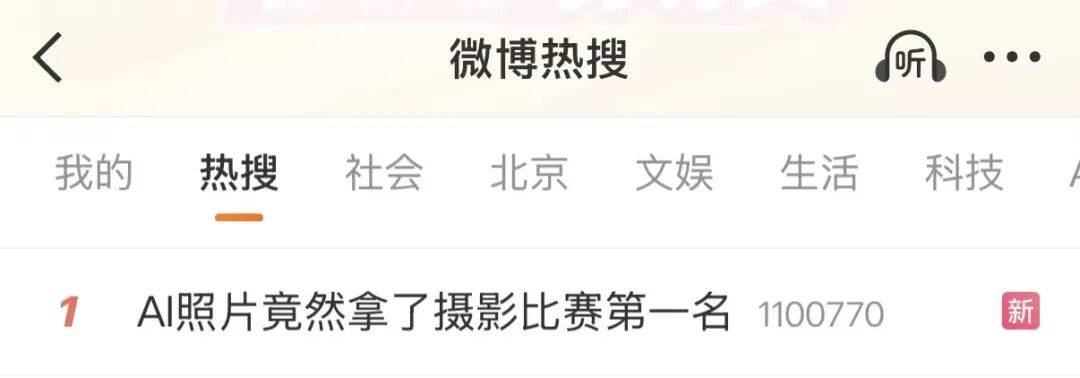
Core Viewpoint - The photography competition organized by Huazhu's high-end hotel brand awarded first place to an AI-generated image, raising concerns about originality and adherence to competition rules [1][9]. Group 1: Competition Details - The winning entry, titled "Riding Old Light," was identified as an AI-generated image after scrutiny revealed inconsistencies in the text on signs within the image [2][4]. - The competition, named "Art MaxX·City Memory Photography Competition," was promoted by Huazhu's Shanghai Oriental Meilun Meihuan Hotel and the official WeChat account of Huazhu's family [4][6]. - The judging panel consisted of five professional judges, including members from the China Photographers Association and the Shanghai Artists Association [6]. Group 2: Contest Results and Reactions - The results were publicly announced between January 6 and January 10, with the final results being published on January 10, after which the original announcement was deleted [6]. - Following internal reviews, Huazhu's customer service confirmed that the first-place award was revoked due to the entry not meeting originality criteria, as AI-generated works were explicitly prohibited [9]. - Legal experts noted that the submission of AI-generated works constituted a breach of competition rules, allowing the organizers to revoke the award and potentially seek damages [9].
鼓励出游和文体消费,出行链和会展体育迎板块机遇
GOLDEN SUN SECURITIES· 2026-01-07 05:59
Investment Rating - The report maintains a "Buy" rating for the industry, indicating a positive outlook for the sector's performance in the coming months [5]. Core Insights - The report highlights the encouragement of travel and cultural consumption through policies aimed at enhancing employee leisure activities, which is expected to boost the travel and cultural sectors significantly [2][4]. - The introduction of additional public holidays and policies supporting paid leave is anticipated to stimulate cultural and tourism consumption, particularly during traditionally low seasons [4]. - Data from travel platforms indicates a substantial increase in ticket bookings during recent holiday periods, showcasing a growing consumer interest in travel and leisure activities [3]. Summary by Sections Policy Initiatives - The report discusses the issuance of guidelines by various government bodies to promote employee cultural and sports activities, allowing for up to four organized trips per year and the distribution of cultural consumption vouchers [1][2]. Market Trends - Significant growth in ticket bookings was observed during the autumn and snow holidays, with some regions reporting increases of over 300% in ticket reservations compared to previous years [3]. - The report notes that the policy-driven encouragement of travel is likely to transform traditionally slow tourism periods into more active seasons, benefiting sectors such as duty-free, hotels, and sports events [4]. Investment Recommendations - The report suggests focusing on sectors with potential for growth, particularly in Hainan and during the upcoming Spring Festival, as well as sectors benefiting from new consumer trends and favorable policies [5][8]. - Specific companies are recommended for investment, including those in the duty-free, hotel, and new retail sectors, which are expected to perform well in the current market environment [8].




昨夜,全线收涨!涉及美联储降息!
Xin Lang Cai Jing· 2026-01-07 00:29
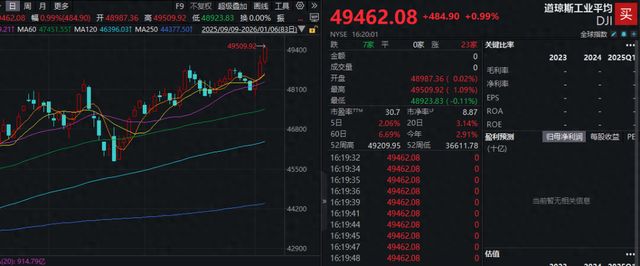
Group 1: Market Performance - The U.S. stock market saw all three major indices rise, with the Dow Jones Industrial Average reaching a new historical high, approaching the 50,000 mark, closing at 49,462.08 points, up 0.99% [3] - The Philadelphia Semiconductor Index increased by 2.75%, setting a new historical high, with notable gains in chip stocks such as Microchip Technology up over 11%, Micron Technology up over 10%, and NXP Semiconductors up over 9% [5][6] Group 2: Federal Reserve Insights - Federal Reserve Governor Milan stated that the Fed should lower interest rates by more than 100 basis points this year, as economic data trends may support further rate cuts [5] - Milan noted that core inflation has returned to around the Fed's 2% target, and he expects strong economic growth in the U.S. this year [5] Group 3: Commodity Prices - Silver prices surged again, with COMEX silver futures breaking the $80 per ounce mark, reflecting a rise of approximately 6% [8] - Gold prices also saw a slight increase, with COMEX gold futures surpassing $4,500 per ounce, up over 1% [8]