HWORLD(HTHT)

Search documents
What Makes H World Group (HTHT) a Strong Momentum Stock: Buy Now?
ZACKS· 2025-12-12 18:01
Core Viewpoint - Momentum investing focuses on following a stock's recent price trends, with the aim of buying high and selling higher, capitalizing on established price movements [1] Company Overview: H World Group (HTHT) - H World Group currently holds a Momentum Style Score of B, indicating potential for strong performance based on price changes and earnings estimate revisions [3] - The company has a Zacks Rank of 2 (Buy), suggesting it is positioned for outperformance in the market [4] Price Performance - HTHT shares have increased by 3.9% over the past week, while the Zacks Hotels and Motels industry has decreased by 0.83% during the same period [6] - Over the last month, HTHT's price change is 6.42%, significantly outperforming the industry's 0.77% [6] - In the last quarter, HTHT shares rose by 25.7%, and over the past year, they gained 43.1%, compared to the S&P 500's increases of 5.09% and 14.7%, respectively [7] Trading Volume - HTHT's average 20-day trading volume is 1,478,450 shares, which serves as a bullish indicator when combined with rising stock prices [8] Earnings Outlook - Recent earnings estimate revisions for HTHT show a positive trend, with two estimates moving higher for the full year, raising the consensus estimate from $1.97 to $2.09 [10] - For the next fiscal year, two estimates have also increased, with no downward revisions noted [10] Conclusion - Given the strong momentum indicators and positive earnings outlook, HTHT is recommended as a stock to consider for near-term investment opportunities [12]


低碳酒店成酒店业ESG发展主流趋势,节能、减排是改造重点
Nan Fang Du Shi Bao· 2025-12-11 08:31
Core Insights - The article emphasizes the importance of ESG (Environmental, Social, and Governance) principles in promoting sustainable and high-quality development in companies, particularly in the hospitality industry [1][3]. Group 1: ESG Initiatives and Trends - The "Sustainable Innovation Laboratory" by Southern Metropolis Daily is collecting exemplary ESG practices from companies to publish the "2025 ESG Sustainable Innovation Trend Insight Report" [2]. - The hospitality industry is encouraged to adopt clean energy and eco-friendly materials, with a focus on reducing solid waste and promoting green consumption [3]. - Data from Ctrip indicates that low-carbon hotels are preferred by travelers aged 20-40, with 70% willing to pay a premium for low-carbon travel [3][9]. Group 2: Circular Economy and Waste Reduction - The hospitality sector is moving towards reducing single-use plastic items, with regulations mandating the elimination of such items in hotels by 2025 [4]. - Hotel groups are implementing measures like not providing single-use items, using recyclable packaging, and encouraging consumers to use eco-friendly products [4][9]. - Examples include Huazhu Group's introduction of biodegradable toiletries and sustainable materials for hotel amenities [5][7]. Group 3: Incentives for Sustainable Practices - Hotels are creating incentive systems to encourage guests to participate in sustainable practices, such as reducing towel and linen changes [10][12]. - Huazhu's "Green Stay" program has seen participation from over 9,000 hotels, avoiding the washing of 7.885 million towels and reducing carbon emissions by 676 tons [12]. - Jinjiang Hotels is also promoting a "Reduction Stay" initiative, rewarding guests for minimizing the use of disposable items [12][13]. Group 4: Energy Efficiency and Carbon Reduction - The hospitality industry is focusing on energy efficiency, with 70% of carbon emissions coming from energy and electricity consumption [14]. - Hotels are adopting smart technologies to optimize energy use, such as automated systems that reduce power consumption when rooms are unoccupied [15][16]. - Ctrip has introduced a "Low Carbon Hotel Standard" to support hotels in their transition to lower carbon emissions, with 3,300 hotels certified by the end of 2024 [16].





社会服务专题报告十:春秋假刺激文旅需求回暖,冰雪与消费补贴政策助力多领域服务消费
Shenwan Hongyuan Securities· 2025-12-10 12:27
Investment Rating - The report rates the industry as "Positive" [3] Core Insights - The implementation of the Spring and Autumn holiday policy has significantly boosted tourism demand, leading to a remarkable increase in market activity [5][22] - The "Snow Holiday" policy has stimulated rapid growth in the winter tourism sector, particularly in ice and snow activities [25][26] - Government subsidies and financial support are effectively driving service consumption across multiple sectors, including tourism, sports, and education [32][33] Summary by Sections 1. Spring and Autumn Holidays Drive Tourism Demand Recovery - The Spring and Autumn holiday policy was introduced to encourage local education departments to implement school holidays, leading to increased travel during off-peak seasons [10][13] - Family travel demand surged, with over 53% of trips during the Autumn holiday being family-oriented, particularly in educational tourism activities [17][21] - Popular tourist destinations experienced a significant increase in ticket bookings, with some locations reporting a 3.4 times year-on-year increase in ticket reservations [21][22] 2. Consumer Subsidies Promote Steady Recovery in Service Consumption - Recent policies from multiple government departments aim to enhance service consumption quality and convenience, focusing on cultural, tourism, sports, and education sectors [32][33] - During the National Day and Mid-Autumn Festival, over 29,000 cultural and tourism events were held, with consumption subsidies exceeding 480 million yuan [33] - The introduction of "ticket root economy" has linked various sectors, significantly boosting overall city consumption [33] 3. Valuation of Key Industry Companies - The report provides a detailed valuation of key companies in the tourism and hospitality sectors, highlighting their market capitalization and earnings per share projections [37][40] - Notable companies include Sanchuan Tourism, Huazhu, Atour, and Jiuhua Tourism, which are recommended for investment consideration due to their growth potential in the current market environment [40][41]


酒店“第三空间”成增收突破口
Qi Lu Wan Bao· 2025-12-04 21:40
Core Insights - The hotel industry is witnessing a transformation where spaces are being redefined to cater to remote workers and non-guests, creating a "third space" economy that aims to drive new revenue growth amidst overall industry pressure [1][2] Group 1: Changing Consumer Behavior - Consumers are shifting from paying for accommodation to paying for experiences and environments, with hotel lobbies becoming preferred spaces for remote work due to their amenities like stable WiFi and comfortable seating [2] - High-end hotel facilities such as gyms and pools are also attracting non-guests, with experience vouchers becoming popular on second-hand platforms [2] Group 2: Financial Performance and Strategy - Leading hotel groups like Huazhu and Atour are focusing on the "third space" as a key strategy to counter industry challenges, with Atour reporting a 76.4% year-on-year increase in retail revenue, reaching 846 million yuan, which now constitutes 32.2% of total revenue [2][3] - Atour's strategy includes transforming hotel lobbies into multifunctional spaces that integrate retail and cultural experiences, with retail revenue share increasing from 13.8% in 2022 to 30.3% in 2024 [3] Group 3: Market Trends and Future Directions - The competition in the hotel third space is evolving towards precision and efficiency, focusing on consumer needs through differentiated experiences that enhance both non-room revenue and lodging services [4] - Future trends may include deeper integration of local culture, technology-driven immersive experiences, and enhanced membership systems as consumer demands continue to evolve [5]
小摩:行业整合对华住集团-S和亚朵(ATAT.US)更有利 维持“增持”评级
Zhi Tong Cai Jing· 2025-12-04 11:54
Group 1 - The core viewpoint indicates that Huazhu Group and Atour have significantly outperformed Jinjiang Hotels and ShouLai Hotels this year, with respective increases of 41% and 59% compared to Jinjiang's 2% decline and ShouLai's 7% increase [1] - Morgan Stanley recommends investors to "overweight" Huazhu Group and Atour over a 12-month period due to their stronger brands and products, which provide clearer long-term growth prospects, while their valuations are comparable to or even cheaper than Jinjiang and ShouLai [1] - The self-discipline within the hotel industry has exceeded expectations, benefiting Huazhu and Atour, as indicated by Morgan Stanley's consumer forum insights [1] Group 2 - Morgan Stanley's tracking data shows that the expansion rate of Huazhu and Atour has been significantly faster than that of Jinjiang and ShouLai, highlighting a trend of industry consolidation that favors Huazhu and Atour [1] - In the past month, there has been a notable divergence in the performance of Chinese hotel stocks, with Huazhu Group and Jinjiang Hotels performing well, while Atour and ShouLai Hotels lagged behind the industry [2] - The report suggests that the stock price movements are not entirely supported by fundamentals, as Huazhu Group's average revenue per available room (RevPAR) for Q4 shows upward risk, indicating potential short-term price increases [2]
小摩:行业整合对华住集团-S(01179)和亚朵(ATAT.US)更有利 维持“增持”评级
智通财经网· 2025-12-04 07:19
Core Viewpoint - Morgan Stanley reports significant divergence in the performance of Chinese hotel stocks over the past month, with Huazhu Group and Jinjiang Hotels performing well, while Atour and ShouLai Hotels lag behind the industry [1] Group 1: Company Performance - Huazhu Group and Atour have seen stock price increases of 41% and 59% respectively this year, significantly outperforming Jinjiang Hotels and ShouLai Hotels, which have seen declines of 2% and an increase of 7% respectively [1] - Morgan Stanley suggests that the stock price movements are not entirely supported by fundamentals, indicating potential short-term upside for Huazhu Group due to upward risks in average revenue per available room (RevPAR) for Q4 [1] Group 2: Industry Trends - The self-discipline within the hotel industry has exceeded expectations, benefiting Huazhu and Atour [1] - The data shows a slowdown in the number of new rooms added in Q4 across the four tracked hotel companies, with Huazhu and Atour expanding at a faster rate than Jinjiang and ShouLai, indicating a trend of industry consolidation favoring Huazhu and Atour [1]
H World Group: Downgrade To Hold As Valuation Has Caught Up With Expectations
Seeking Alpha· 2025-12-03 12:42
Core Viewpoint - H World Group (HTHT) received a buy rating due to strong Q2 results indicating continued engagement and growth potential [1] Company Analysis - The investment approach focuses on identifying undervalued companies with long-term growth potential, emphasizing value investing principles [1] - The strategy involves purchasing quality companies at a discount to their intrinsic value and holding them for long-term earnings and shareholder returns [1]

华住跳出舒适区,要在高端市场搏一搏
Sou Hu Cai Jing· 2025-12-03 10:07
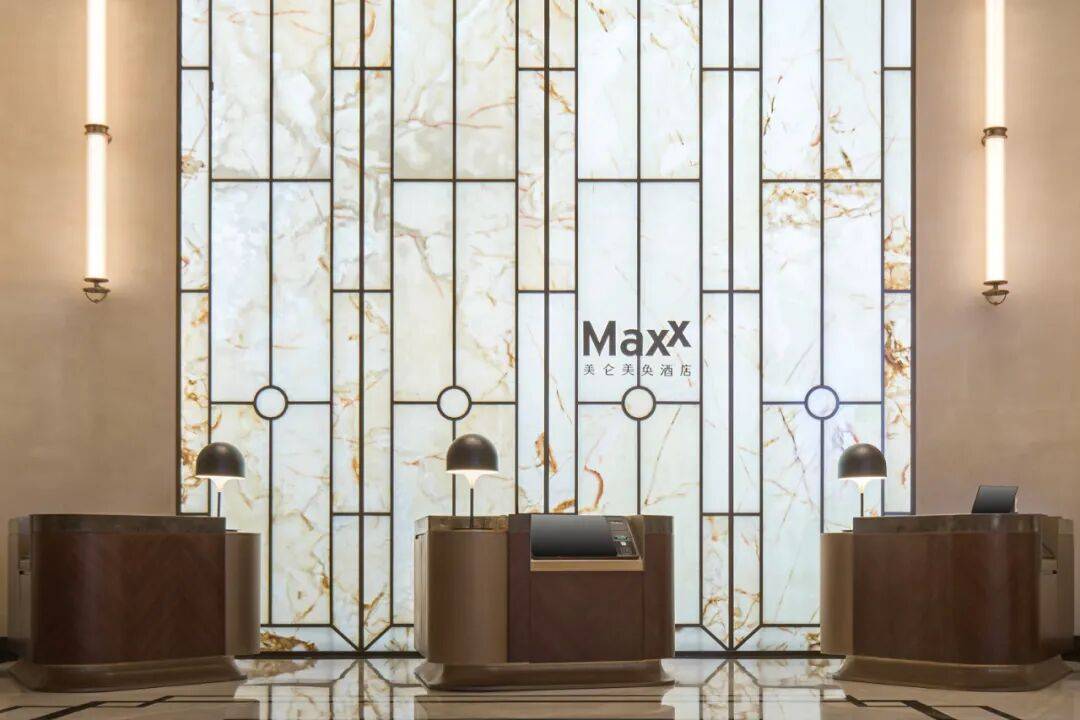
Core Viewpoint - The high-end hotel industry is facing significant challenges, with a decline in average room prices and occupancy rates, indicating a mismatch between supply and demand in the market [1][3]. Industry Overview - The average room price for five-star hotels in China decreased by 5% to 599 RMB per night in the first three quarters of 2024, while the average occupancy rate fell by 4% year-on-year [1]. - The decline is attributed to the aftermath of the real estate bubble, loss of business travelers, and pressure from mid-range hotels [1]. Market Trends - The demand for high-end hotels is shifting from traditional luxury offerings to experiences that resonate emotionally with guests, emphasizing comfort and unobtrusive service [3]. - High-end hotels are now expected to provide identity recognition and self-satisfaction rather than just accommodation [3]. Company Strategy - Huazhu Group is strategically positioning itself in the high-end market by developing four key brands: Xiyue, Huajian Tang, Shibaige, and Meilun Meihuan, targeting different high-end consumer segments [3][4]. - The brands focus on cultural confidence and unique experiences, with Xiyue and Huajian Tang appealing to domestic travelers and Shibaige and Meilun Meihuan targeting international and high-net-worth business travelers [4][5]. Brand Differentiation - Xiyue offers a subtle luxury experience that reflects Chinese culture, while Huajian Tang emphasizes destination experiences with scenic locations and immersive activities [4][10]. - Shibaige combines German efficiency with local insights to cater to business travelers, enhancing meeting services and operational efficiency [6][8]. - Meilun Meihuan focuses on aesthetic experiences and gourmet offerings, appealing to high-net-worth individuals seeking unique stays [9][10]. Market Opportunities - The high-end hotel market is expected to benefit from a surge in inbound tourism, with a projected 82.9% increase in foreign visitors in 2024 due to relaxed visa policies [10]. - There is significant potential in renovating aging five-star hotels to meet current market demands, with a report indicating that by the end of 2024, the number of hotels in China will reach 348,700, with a total of 17.64 million rooms [10][11]. Competitive Advantage - Huazhu Group is well-positioned to capitalize on the renovation opportunities in the market due to its strong supply chain, operational efficiency, and established brand matrix [11][12]. - The company’s focus on experience-driven offerings and systematic operational logic distinguishes it from competitors who rely solely on traditional luxury marketing [12].
全球市场早报|美股三大股指集体收涨,波音涨超10%
Sou Hu Cai Jing· 2025-12-02 23:30
Market Performance - The Dow Jones Industrial Average rose by 185.13 points, closing at 47,474.46, an increase of 0.39% [1] - The Nasdaq Composite gained 137.75 points, ending at 23,413.67, up by 0.59% [1] - The S&P 500 index increased by 16.74 points, closing at 6,829.37, a rise of 0.25% [1] Sector Performance - Major technology stocks mostly increased, with Apple up over 1%, Facebook nearly 1%, Nvidia up 0.86%, Microsoft up 0.67%, Google up 0.29%, Amazon up 0.223%, while Tesla fell by 0.21% [1] - Energy stocks declined across the board, with ExxonMobil down over 1%, Chevron down more than 1%, ConocoPhillips down over 1%, Schlumberger down 0.7%, and Western Oil down nearly 1% [1] - Airline stocks collectively rose, with Boeing up over 10%, American Airlines up more than 2%, Delta Airlines up over 1%, Southwest Airlines up nearly 2%, and United Airlines up over 3% [1] - Semiconductor stocks mostly increased, with the Philadelphia Semiconductor Index rising by 1.83%, Intel up over 8%, NXP Semiconductors up more than 7%, Microchip Technology up over 6%, and Texas Instruments up over 4% [1] Chinese Stocks - The Nasdaq Golden Dragon China Index fell by 0.65%, with individual stocks like Xpeng Motors down nearly 8%, and Artis Solar down nearly 6% [2] - Some Chinese stocks saw gains, such as Wanwu Xingsheng up over 6%, Atour up more than 5%, and Tiger Brokers up nearly 2% [2] Economic Indicators - Recent data indicates a gradual cooling of the economy, with policymakers urging caution on interest rate cuts and warning of potential inflationary pressures [2] - The probability of a 25 basis point rate cut by the Federal Reserve in December has surged to 89.2% according to the Chicago Mercantile Exchange [2] European Market Performance - European stock indices showed mixed results, with the FTSE 100 in London down 0.01%, the CAC 40 in Paris down 0.28%, and the DAX in Frankfurt up 0.51% [2] Commodity Prices - International oil prices fell, with light crude oil futures for January 2026 down by $0.68, closing at $58.64 per barrel, a decrease of 1.15% [3] - Brent crude oil futures for February fell by $0.72, closing at $62.45 per barrel, a decline of 1.14% [3] Currency Exchange Rates - The US dollar index decreased by 0.06%, closing at 99.357 [3] - The euro traded at 1.1622 against the dollar, the pound at 1.3211, and the yen at 155.88 [3]




中国消费者(HA):中国仍在消费不足吗
Sou Hu Cai Jing· 2025-12-01 00:46
Core Conclusion - The notion of "insufficient consumption in China" is a distorted perception amplified by pricing and statistical methods. Bank of America provides extensive data showing that the true picture of Chinese consumption is not "volume shrinkage," but rather "high volume, low price." Total commodity consumption has reached or even surpassed that of the US, Japan, and South Korea; service consumption has met basic standards but still has gaps in quality. The main contradiction in the current market is the mismatch between "mass supply" and "upgraded demand." Companies focusing on the four key areas of "Efficiency, Experience, Service, Globalization (E2SG)" will thrive through cycles [1]. Group 1: Commodity Consumption - China's total commodity consumption is impressive, with certain categories outperforming developed countries. For example, per capita egg consumption is 128.5 g/day, which is 6% higher than the US and 42% higher than the global average. Sulfur consumption is 1117.9 g/day, which is 3.2 times that of the US. Seafood consumption is 114 g/day, nearly double that of the US. However, dairy consumption is only 86.9 g/day, which is 1/7 of the US level, but this gap is mitigated by plant proteins and eggs. The ownership of cooking appliances is 2.14 times the global average and 1.22 times that of the US. The number of new energy vehicles is 7.7 per thousand people, surpassing the US by 1.66 times and Japan by 8.75 times [3][4]. Group 2: Service Consumption - In terms of service consumption, China has met basic standards but still has quality gaps. The average housing area per person is 49 m², slightly below the US's 65 m² but higher than the UK and France. Medical visits average 6.8 times per year, exceeding the US by 3.4 times. Education duration is 15.5 years, on par with the US and Japan, but extracurricular spending is only $140/year, which is 1/28 of South Korea's. The prices for leisure and entertainment, such as concerts and exhibitions, have increased by 53%, indicating a significant supply-demand gap in high-quality offerings [5][6]. Group 3: Misconceptions of Consumption - The illusion of "insufficient consumption" stems from three main sources: 1. Low prices: Most goods/services are priced at only 20%-60% of US prices (e.g., mobile plans at 15%, taxis at 20%, utilities at 24%). 2. Supply chain advantages: China's role as the "world's factory" and innovations in distribution (like community group buying) continue to drive prices down. 3. Statistical discrepancies: If government transfer payments are included, the actual consumption to GDP ratio aligns with that of South Korea, which is approximately 40% [6]. Group 4: Mismatches and E2SG Investment Framework - There are three core mismatches in the market: 1. Supply vs. Demand: There is an oversupply of mass-market products, but insufficient emotional value and experience. 2. Channels vs. Communication: Fragmented media and ineffective traditional marketing require precise targeting and content-driven e-commerce. 3. Expectations vs. Reality: While income expectations are weak, there is a high demand for quality, necessitating affordable yet high-quality offerings [7]. Group 5: E2SG Investment Tracks - The E2SG investment framework emphasizes four key dimensions for companies to succeed in a "high volume, low price" market: 1. Efficiency: Achieving low costs and quick turnover through supply chain optimization and scale effects. 2. Experience: Creating differentiation through product innovation and capturing emotional consumption needs. 3. Service: Filling the gap in high-quality supply. 4. Globalization: Leveraging China's high volume and low price advantage to expand into international markets [10][11][12]. Group 6: Recommended Companies - Bank of America has identified seven companies with long-term competitive advantages across various sectors, including: - Pop Mart: Strong IP operation capabilities and global expansion, with an expected EPS growth of 30% by 2026. - Midea: Leading in global white goods with supply chain efficiency, focusing on overseas OBM business growth. - Geely: Rich in new energy vehicle reserves, planning to launch over 10 new models by 2026 with a target growth of 50%-80%. - Huazhu Group: Benefiting from leisure travel demand recovery and expanding through a light asset model, with a projected 21% CAGR in profits from 2024-2026. - Trip.com Group: Leading in OTA with expected 45% growth in international business revenue over the next six years. - Tencent Holdings: Dominating digital entertainment with stable mobile game revenue and AI-driven efficiency improvements. - Damai Entertainment: Leading in live entertainment ticketing with a projected 60% CAGR in profits from 2025-2028 [20][21].