
MUFG(MUFG)

Search documents
Japan’s Biggest Asset Managers Eye Launch of Nation’s First Crypto Trusts
Yahoo Finance· 2025-11-24 13:35
Core Insights - Japan's largest asset management firms are preparing to launch the country's first cryptocurrency investment trusts as regulatory changes are anticipated [1][9] - The Financial Services Agency (FSA) plans to reclassify cryptocurrencies under the Financial Instruments and Exchange Act by 2026, allowing their inclusion in investment trusts [4][9] - A tax overhaul is being considered, which would lower the financial income tax on crypto gains from a maximum of 55% to 20% [5] Industry Developments - A survey indicates that major players like Daiwa Asset Management, Asset Management One, Amova, and Mitsubishi UFJ are exploring crypto trust products [3] - SBI Global Asset Management aims to launch Bitcoin and Ethereum ETFs and multi-asset crypto trusts, targeting ¥5 trillion ($32 billion) in assets under management within three years [6][9] - Other firms, including Nomura Asset Management and Daiwa Asset Management, are building internal capacities and strategies in anticipation of regulatory changes [8] Regulatory Changes - Current regulations prevent cryptocurrencies from being included in investment trusts due to restrictions in the Act on Investment Trusts and Investment Corporations [4] - The FSA's reclassification of crypto is expected to provide the same investor protections as stocks and bonds, facilitating the establishment of crypto investment trusts [4][5] - The anticipated legislative changes are seen as a way to activate household capital and encourage investment [7]

Japan’s biggest asset managers signal interest in launching crypto funds: report
Yahoo Finance· 2025-11-20 17:28
Group 1: Interest in Crypto Funds - Six major Japanese asset managers, with a total of $2.5 trillion in assets under management, have expressed interest in launching crypto funds [1] - The firms include Mitsubishi UFJ Asset Management, Nomura Asset Management, SBI Global Asset Management, Daiwa Asset Management, Asemane One, and Amova Asset Management [1] Group 2: Company Profiles - Mitsubishi UFJ Asset Management is part of the Mitsubishi UFJ Financial Group, which has total assets of approximately $2.7 trillion and has been exploring blockchain and crypto projects [2] - Nomura Asset Management, Japan's largest wealth manager, manages 153 trillion yen in client assets, holding a 15% share of the domestic market [2] - Daiwa Asset Management had around $213 billion in assets under management as of March 2024 [3] Group 3: Regulatory Environment - The Financial Services Agency (FSA) of Japan is considering allowing investment trusts that incorporate cryptocurrencies, which could accelerate Japanese investment in crypto [3] - Recent changes in the regulatory landscape, influenced by developments in the US and Europe, are prompting a shift in Japan's financial sector towards digital assets [4] - The FSA is preparing to reclassify Bitcoin, Ethereum, and over 100 altcoins as financial products [6] Group 4: Market Sentiment - The approval of Bitcoin spot exchange-traded funds in the US has generated optimism among Japanese investors regarding the creation of cryptocurrency investment trusts [5] - Japanese law currently restricts fund managers from including crypto in their portfolios, but the FSA is pursuing deregulatory policies to position Tokyo as a regional crypto hub [5]
Billionaire family turns India’s gold obsession into a fortune
ETRetail.com· 2025-11-20 03:45
Core Insights - The Muthoot clan's gold loan business is thriving as consumers leverage rising gold prices for short-term cash, with the market for gold loans surging 35% to 13.4 trillion rupees ($151 billion) in the past year [21][3] - Muthoot Finance's outstanding gold loans reached 1.25 trillion rupees, surpassing the State Bank of India's 725.5 billion rupees, although SBI's growth rate was higher at 87% [22][14] - The company faces increasing competition from both local banks and foreign investors, with Bain Capital acquiring an 18% stake in Manappuram Finance for $500 million and Mitsubishi UFJ Financial Group in talks to buy 20% of Shriram Finance for $2.6 billion [3][21] Company Overview - Muthoot Finance has been in the gold loan business for nearly nine decades, with a simple model where clients can borrow up to 75% of their jewelry's value, charging interest rates between 1% to 1.5% per month [8][21] - The company holds 209 metric tons of gold for clients, valued at nearly $28 billion, which is more than Singapore's official foreign reserves [22][13] - The non-performing loan rate for Muthoot Finance stands at 2.3%, comparable to commercial banks, indicating a low default risk among its clientele [16][22] Market Dynamics - The gold loan market in India is deeply rooted in cultural practices, with significant purchases occurring during festivals and weddings, contributing to the high demand for gold loans [5][21] - Muthoot Finance's business model primarily focuses on gold loans, which account for about 90% of its revenue, suggesting a need for diversification into other financial products [14][22] - The company's stock has seen a 73% increase this year, reflecting strong market performance and boosting the Muthoot family's wealth to over $13 billion [17][21]


Mitsubishi UFJ Financial Group, Inc.减持北京首都机场股份18万股 每股作价2.98港元
Zhi Tong Cai Jing· 2025-11-19 11:22
Group 1 - Mitsubishi UFJ Financial Group, Inc. reduced its stake in Beijing Capital International Airport (00694) by 180,000 shares at a price of HKD 2.98 per share, totaling approximately HKD 536,400 [1] - After the reduction, Mitsubishi UFJ Financial Group's remaining shareholding is approximately 169 million shares, representing a holding percentage of 8.99% [1]

MUFG(MUFG) - 2026 Q2 - Earnings Call Transcript
2025-11-18 02:02
Financial Data and Key Metrics Changes - Gross profits increased by JPY 189.3 billion year-on-year, driven by rising yen interest rates and improved lending spreads [1][2] - Net operating profits rose by JPY 61.3 billion year-on-year, while credit costs decreased by JPY 65.7 billion year-on-year [2][3] - Profits attributable to owners of the parent reached JPY 1,292.9 billion, marking a record high for the first half [3] Business Line Data and Key Metrics Changes - Customer segment net operating profit (NOP) is growing steadily, with all business groups achieving an increase in net income, except for retail and digital due to strategic expenditures [4] - Global commercial banking was impacted by an economic slowdown in Asia, while net fees and commissions expanded significantly due to growth in various fee revenues [2][4] Market Data and Key Metrics Changes - Loans increased by approximately JPY 1.8 trillion from the end of fiscal year 2024, with a JPY 4 trillion increase excluding government loans [4] - Domestic corporate lending spreads are rising, particularly for large corporates, indicating successful profit improvement measures [4][5] Company Strategy and Development Direction - The company aims to achieve a mid- to long-term ROE target of 12% by pursuing both organic and inorganic growth strategies [12][14] - A new service brand, Emutto, was launched to enhance the domestic retail business, alongside a focus on digital banking and AI integration [11][12] - The company is committed to sustainable finance and corporate transformation using AI, with a goal to increase AI use cases significantly [12][13] Management's Comments on Operating Environment and Future Outlook - Management expressed confidence in achieving the revised net income target of JPY 2.1 trillion, citing strong performance in the customer segment and lower credit costs [10][20] - The outlook for credit costs remains unchanged, with expectations of a strong yen and strategic expense allocation impacting future performance [21][29] Other Important Information - The CET1 ratio fell 30 basis points to 10.5% due to growth investments and increased loans, with expectations to remain around the midpoint of the target range [9][29] - The company announced a share repurchase plan totaling JPY 500 billion and the cancellation of 200 million treasury shares to enhance shareholder returns [10][11] Q&A Session Summary Question: Upward revision of guidance and ROE target - Inquiry about the assumptions behind the upward revision and the rationale for a relatively small increase in the profit target [17] - Management clarified that the revision was based on better-than-expected performance and aimed at appropriate disclosure of forecasts [20][22] Question: CET1 ratio forecast and inorganic investments - Request for clarification on the CET1 ratio forecast and comments on recent articles regarding inorganic investments [27] - Management provided an expected range for the CET1 ratio and stated that they continue to consider opportunities in specific areas [29][30] Question: Credit costs and private credit market - Questions regarding the impact of credit costs and the concentration of risk in the private credit market [28] - Management noted that they have limited exposure to private credit and emphasized the importance of careful project selection [30] Question: Detailed breakdown of revised financial targets - Request for a detailed breakdown of factors affecting the revised financial targets for FY 2025 [33] - Management explained the contributions from various segments and one-off gains impacting the targets [35] Question: Future growth in net fees and commissions - Inquiry about the sustainability of strong net fees and commissions growth observed in the first half [41] - Management indicated that growth is expected to continue due to ongoing initiatives and acquisitions [42] Question: Impact of exchange rates on CET1 ratio - Questions regarding the factors contributing to the decline in the CET1 ratio and the potential for improvement in a weak yen environment [41] - Management explained the impact of exchange rates and the expected effects of currency trends on the CET1 ratio [43] Question: Breakdown of NOP and ordinary profit - Request for clarification on the components contributing to the increase in NOP and ordinary profit [47] - Management provided details on the contributions from foreign exchange and one-off gains related to ownership interest [48][50]
MUFG(MUFG) - 2026 Q2 - Earnings Call Presentation
2025-11-18 01:00
FY2025 1H Financial Results Summary | FX rate | End Sep | End Mar | End Sep | | --- | --- | --- | --- | | | 2024 | 2025 | 2025 | | USD/JPY | 142.73 | 149.52 | 148.88 | Financial Highlights under Japanese GAAP for 1st Half of the Fiscal Year Ending March 31, 2026 November 14, 2025 Mitsubishi UFJ Financial Group Breakdown of Changes in NOP*2 Breakdown of Changes in Net Income All references in this presentation to "KS impact" refer to the effects of notes *1 1,274.8 R&D +8.2 CWM +47.6 JCIB +10.5 AM/IS +9.4 GC ...
Welspun taps EY for next big clean-energy stake sale of $100 million
MINT· 2025-11-18 00:05
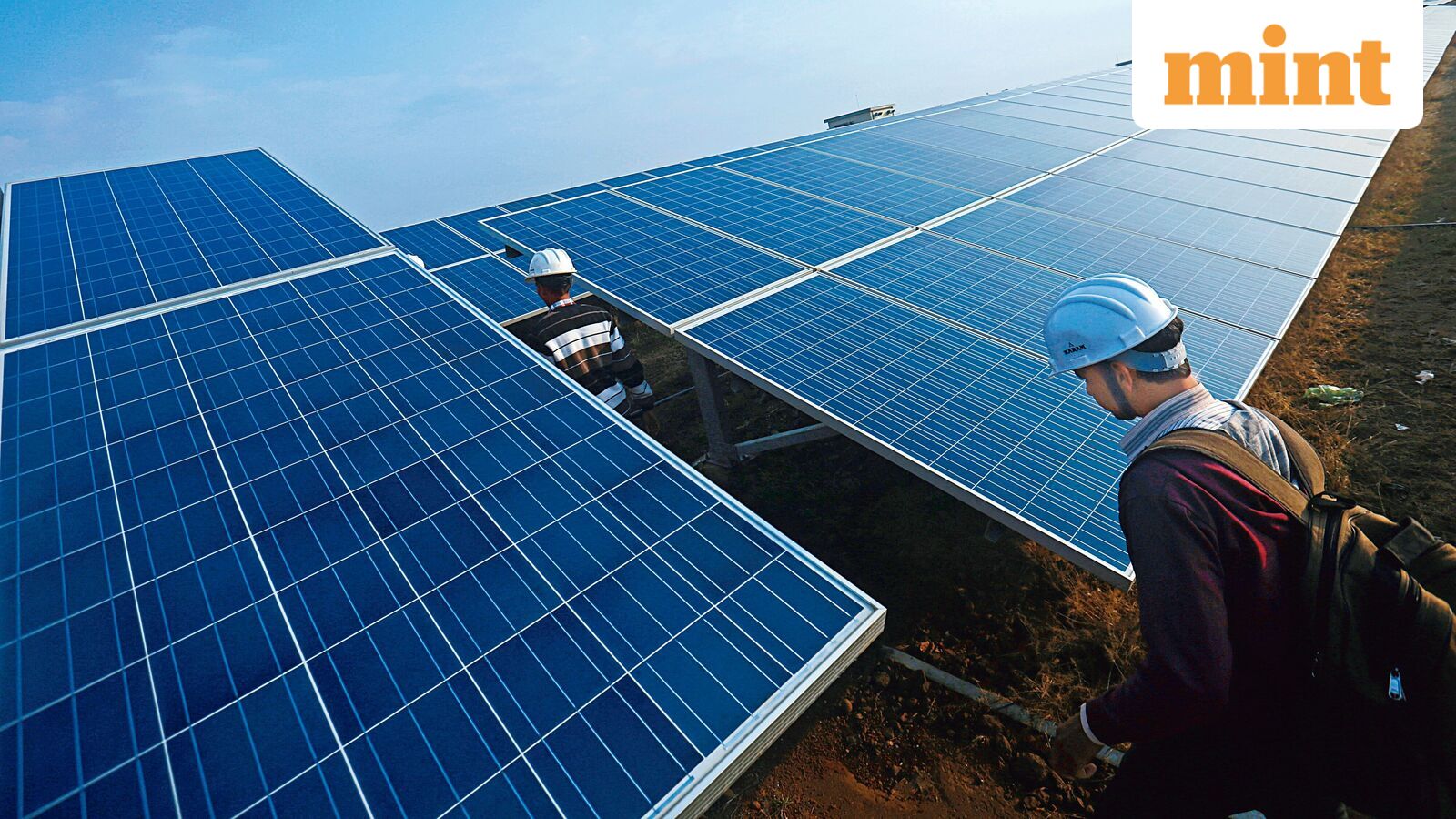
Core Insights - Welspun World is planning to sell a majority stake in its clean-energy platform, Welspun New Energy, for an equity value of approximately $100 million, having hired EY for the process [1][2][3] Group 1: Company Overview - Welspun World previously sold its entire 1.1 GW renewable energy portfolio to Tata Power for $1.4 billion in 2016 [3] - Welspun New Energy has a contracted capacity of 1.2 GW, with 866 MW contracted to state-run entities such as NTPC Ltd and Solar Energy Corporation of India [2] Group 2: Market Context - The Indian government aims to increase renewable energy capacity from 197 GW to 500 GW by 2030, with a long-term goal of 1,800 GW by 2047 and 5,000 GW by 2070 [5] - Foreign direct investment (FDI) in India's electricity sector has doubled since pre-pandemic levels, reaching $5 billion, with 83% of power sector investment directed towards clean energy in 2024 [6][7] Group 3: Investment Opportunities - India received around $2.4 billion in development finance institution funding for clean energy projects in 2024, making it the largest recipient globally [7] - Significant transactions in the sector include plans by Siemens AG and Fullerton Fund Management to acquire a 49% stake in Hygenco Green Energies, and Indian Oil Corp's renewable energy subsidiary planning to acquire a 50% stake in Fourth Partner Energy for around $400 million [9][10]
Mitsubishi UFJ Financial Group, Inc. 2026 Q2 - Results - Earnings Call Presentation (NYSE:MUFG) 2025-11-17
Seeking Alpha· 2025-11-17 21:01
Group 1 - The article does not provide any specific content related to a company or industry [1]

MUFG(MUFG) - 2026 Q2 - Quarterly Report
2025-12-29 11:12
Financial Performance - For the six months ended September 30, 2025, ordinary income was 6,893,775 million yen, a 0.5% increase from the previous year[10]. - Profits attributable to owners of the parent for the same period were 1,292,955 million yen, reflecting a 2.8% increase year-over-year[10]. - The comprehensive income for the six months ended September 30, 2025, was 1,123,012 million yen, down 15.0% from 1,321,798 million yen in the previous year[10]. - Ordinary income for the six months ended September 30, 2025, was 6,893,775 million yen, a slight increase of 0.5% from 6,860,277 million yen in the same period of 2024[24]. - Profits attributable to owners of the parent for the six months ended September 30, 2025, were 1,292,955 million yen, up from 1,258,195 million yen, reflecting a growth of 2.8%[24]. - Total comprehensive income for the six months ended September 30, 2025, decreased to 1,123,012 million yen from 1,321,798 million yen, a decline of 15%[25]. - Cash dividends declared for the six months ended September 30, 2025, amounted to 449,732 million yen, an increase from 240,937 million yen in the previous period[28]. - The company reported extraordinary gains of 44,449 million yen for the six months ended September 30, 2025, compared to 9,549 million yen in the same period of 2024[24]. Assets and Liabilities - As of September 30, 2025, total assets were 404,318,108 million yen, a decrease from 413,113,501 million yen as of March 31, 2025[11]. - The company reported a decrease in total liabilities from 391,385,368 million yen as of March 31, 2025, to 382,079,899 million yen as of September 30, 2025[21]. - The total liabilities as of September 30, 2025, were ¥281,521,665 million, down from ¥295,226,792 million as of March 31, 2025, reflecting a reduction of approximately 4.6%[116]. - The total assets of the company were ¥290,930,204 million, a decrease from ¥304,366,471 million as of March 31, 2025[114]. Equity and Capital - The equity-to-asset ratio improved to 5.2% as of September 30, 2025, compared to 5.0% as of March 31, 2025[11]. - The balance of shareholders' equity at the end of the period was 16,869,984 million yen, an increase from 16,316,321 million yen at the end of the previous period[28]. - The total shareholders' equity as of September 30, 2025, was ¥8,886,241 million, an increase from ¥8,654,637 million as of March 31, 2025, representing a growth of approximately 2.7%[116]. - MUFG's total capital ratio increased to 18.99% as of September 30, 2025, up by 0.16% from 18.83% as of March 31, 2025[67]. - MUFG's total capital reached ¥21,052.8 billion, an increase of ¥907.8 billion from ¥20,145.0 billion[67]. Loans and Credit - The total loans for MUFG increased to ¥139,413.3 billion as of September 30, 2025, an increase of ¥2,076.9 billion from ¥137,336.3 billion[73]. - The non-performing loans ratio for MUFG decreased to 1.01% as of September 30, 2025, down from 1.11%[73]. - The allowance for credit losses decreased to ¥1,139.8 billion as of September 30, 2025, down by ¥75.0 billion from ¥1,214.9 billion[73]. - Total loans as of September 30, 2025, amounted to ¥120,603,546 million, an increase of ¥1,074,964 million from March 31, 2025[78]. - The non-performing loans ratio decreased to 0.60% as of September 30, 2025, down from 0.72%[78]. - The total amount of loans classified as "Doubtful" decreased by ¥104,802 million to ¥342,522 million as of September 30, 2025[78]. - The total amount of loans classified as "Bankrupt or De facto Bankrupt" decreased by ¥5,535 million to ¥44,467 million as of September 30, 2025[78]. - The total amount of loans classified as "Normal" increased by ¥410,848 million to ¥2,974,426 million as of September 30, 2025[81]. Income and Expenses - Interest income for the six months ended September 30, 2025, was 4,183,706 million yen, a decrease of 4% from 4,357,421 million yen in the previous year[24]. - Ordinary expenses increased to 5,147,099 million yen for the six months ended September 30, 2025, from 5,103,351 million yen, reflecting a rise of 0.9%[24]. - Net interest income decreased by ¥68,551 million to ¥1,440,026 million from ¥1,508,577 million year-over-year[45]. - Total taxes increased by ¥9,829 million to ¥338,091 million from ¥328,262 million year-over-year[47]. - The company's trading income for the six months ended September 30, 2025, was ¥44,261 million, up from ¥34,346 million for the same period in 2024, reflecting an increase of approximately 28.5%[117]. Securities and Investments - The net unrealized gains on available-for-sale securities increased to 1,646,350 million yen as of September 30, 2025, from 1,327,127 million yen as of March 31, 2025[23]. - The available-for-sale securities amount to ¥60,709,607 million, showing unrealized gains of ¥2,699,026 million as of September 30, 2025[62]. - The total unrealized gains for available-for-sale securities increased from ¥2,005,377 million to ¥2,402,769 million from March 31, 2025, to September 30, 2025[62]. - The total amount of debt securities held to maturity is ¥23,845,331 million, with unrealized losses of ¥632,323 million[60]. Operational Metrics - The number of consolidated subsidiaries increased to 344 from 340 year-over-year[45]. - The number of treasury stocks increased from 561,193,945 shares as of March 31, 2025, to 685,710,440 shares as of September 30, 2025[15]. - The company has set an earnings target of 2,100.0 billion yen for profits attributable to owners of the parent for the fiscal year ending March 31, 2026[13].
MUFG, HSBC bet big on India’s GIFT city in warning to Asia hubs
The Economic Times· 2025-11-14 02:05
Core Insights - GIFT City is emerging as a significant financial hub in India, attracting global banks and capturing market share from established centers like Hong Kong and Singapore [1][17] - The hub offers tax incentives, including a 10-year tax holiday on business income and the absence of withholding tax on loans, making it an attractive option for lenders [3][17] - Indian companies are increasingly preferring to borrow from GIFT City, with the hub disbursing nearly $20 billion in dollar loans in the fiscal year ended March, representing over a third of total offshore loans for local companies [1][17] Financial Growth and Investment - S&P Global Ratings anticipates that top Indian businesses will increase capital expenditure to approximately $800 billion between fiscal 2026 and 2030, and an additional $1 trillion by fiscal 2035 [5][17] - The banking assets and funds in GIFT City have grown more than twofold since June 2023, with banks managing $94 billion as of June, nearly triple the amount from three years prior [7][10] - The shift of the SGX Nifty contract to GIFT City has boosted the derivatives business, with annual equity derivatives turnover crossing $1 trillion in the fiscal year ended March, up from $255 billion in fiscal 2023 [11][17] Competitive Landscape - GIFT City is taking a larger share of the offshore borrowing market for Indian companies, posing a challenge to established financial centers [4][17] - Domestic banks like Axis Bank have consolidated their foreign business to GIFT City, shutting down branches in other global hubs [9][17] - The all-inclusive borrowing cost in GIFT City is reported to be 50 to 70 basis points lower compared to other global centers, enhancing its competitive edge [17] Challenges and Future Prospects - Despite progress, GIFT City faces challenges in attracting talent and competing with established cities in terms of infrastructure and social amenities [14][17] - The push for Indian corporates to raise foreign equity capital from GIFT City is still in early stages, with no immediate plans from large Mumbai-listed companies [12][17] - The Indian government's initiatives to spur green bond trading in the hub have not gained traction, indicating areas for improvement [13][17]

