Workflow
Nokia(NOK)
icon
Search documents
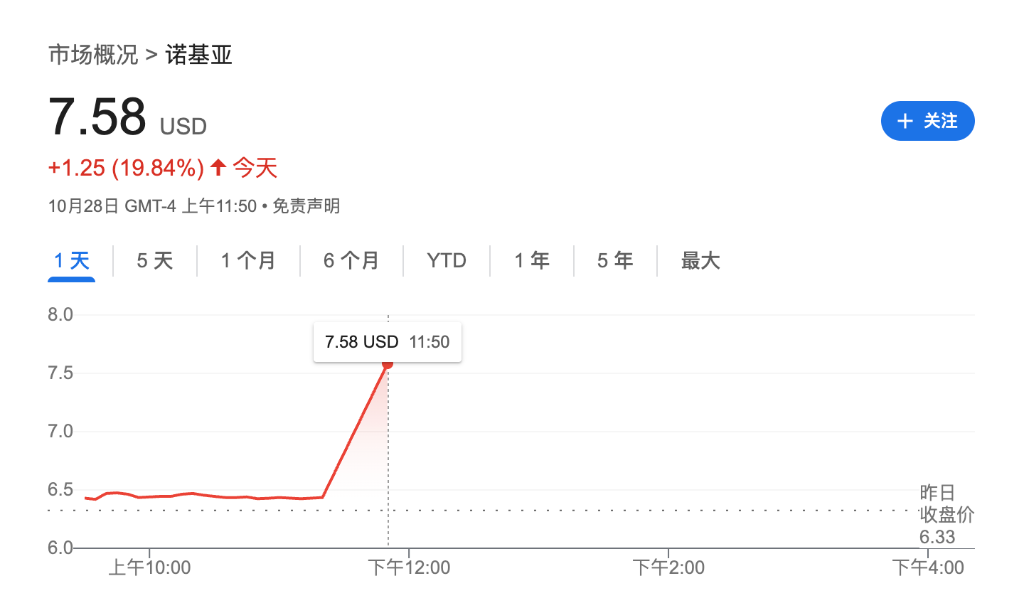
美股异动|诺基亚盘前涨超2% 联合HPE打造AI驱动自主网络
Ge Long Hui· 2025-10-10 09:31
Core Viewpoint - Nokia has announced a partnership with HPE to license technology assets, enhancing its capabilities in AI-driven Radio Access Network (RAN) automation, which will strengthen its MantaRay SMO platform and expand its solutions in autonomous networks [1]. Group 1: Company Developments - Nokia's stock price increased by over 2% to $5.29 in pre-market trading following the announcement [1]. - The collaboration with HPE is expected to bolster Nokia's industry-leading position in AI-driven RAN automation [1]. Group 2: Financial Metrics - As of the last trading session, Nokia's closing price was $5.18, with a market capitalization of approximately $27.864 billion [1]. - The stock has a 52-week high of $5.41 and a low of $3.807, indicating a significant range in its trading performance over the past year [1].
Critical networks face stealthy intrusions, record-breaking DDoS attacks and rising cryptographic demands, according to Nokia study
Globenewswire· 2025-10-08 07:30
Core Insights - Cyber attackers are increasingly penetrating core telecom infrastructure undetected, with DDoS attacks reaching new extremes and the need for crypto agility becoming a requirement [1][2][4] Cybersecurity Threats - Attackers are targeting core networks, accessing sensitive systems like subscriber data and lawful interception platforms, often using trusted tools and exploiting misconfigurations [2][6] - Nearly 60% of high-cost breaches are attributed to insider actions or human errors, with complex supply chains increasing exposure to credential misuse and privilege escalation [5][6] DDoS Attack Trends - Terabit-scale DDoS attacks are now occurring daily, a significant increase from once every five days in 2024, with residential broadband amplifying the risks [3][6] - 78% of DDoS attacks now conclude within five minutes, up from 44% in 2024, indicating a need for rapid detection and mitigation strategies [7][6] AI and Quantum Readiness - Over 70% of telecom security leaders prioritize AI and machine learning for threat analytics, with more than half planning to implement AI for detection within 18 months [4][6] - The validity period for digital certificates is decreasing significantly, projected to drop to 47 days by 2029, highlighting the urgency for compliance and quantum-safe networking [8] Industry Response and Recommendations - The industry must enhance resilience through shared threat intelligence, AI-driven detection, and crypto agility to combat the evolving cyber threats [9][10] - Security measures should be integrated into network design to ensure uninterrupted critical functions amid rising DDoS threats [10]
Critical networks face stealthy intrusions, record-breaking DDoS attacks and rising cryptographic demands, according to Nokia study
Globenewswire· 2025-10-08 07:30
Core Insights - Cyber attackers are increasingly penetrating core telecom infrastructure undetected, with DDoS attacks reaching record levels and the need for crypto agility becoming essential [1][2][4] Group 1: Cybersecurity Threats - Attackers are targeting core networks, accessing sensitive systems like subscriber data and lawful interception platforms, often using trusted tools and exploiting misconfigurations [2][6] - DDoS attacks have surged to terabit-scale, occurring daily, with gigabit residential broadband amplifying the risks [3][6] - Nearly 60% of high-cost breaches are attributed to insider actions or human errors, with complex supply chains increasing vulnerabilities [5][6] Group 2: Defense Strategies - Over 70% of telecom security leaders prioritize AI and machine learning for threat analytics, with more than half planning to implement AI for detection within 18 months [4][6] - The industry is urged to adopt automated certificate management and encryption to prepare for quantum computing threats [4][8] - DDoS attack durations are decreasing, with 78% now concluding within five minutes, highlighting the need for rapid detection and mitigation [7][6] Group 3: Industry Response - The report emphasizes the importance of shared threat intelligence, AI-driven detection, and crypto-agility to enhance resilience in interconnected networks [9] - Network owners must proactively protect against complex DDoS attacks, integrating security measures into the network infrastructure [10] - The urgency for compliance with upcoming regulations is low, despite the shrinking validity of digital certificates [8]
Nokia unveils world’s first 50G PON solution for post-quantum enterprise connectivity
Globenewswire· 2025-10-07 14:00
Core Insights - Nokia has launched the world's first 50G PON solution aimed at providing ultra-fast, post-quantum broadband connectivity for enterprises, enhancing capacity, reliability, and security [1][8] - The solution is compatible with existing 10G and 25G PON networks, allowing operators to upgrade seamlessly without major disruptions [1][2] - The 50G PON solution incorporates quantum-safe encryption and secure key exchange to protect sensitive data against future quantum computing threats [3][8] Product Features - The 50G PON solution is built on Nokia's Lightspan MF platform and utilizes the Quillion chipset, supporting various PON technologies including GPON, XGS, and future optical modules [2][8] - It offers fully redundant PON designs to ensure continuous connectivity, even during faults such as fiber cuts, and includes advanced AI features for optimized network performance [3][8] - The solution is designed to maximize port density and maintain backward compatibility with existing optics, facilitating cost-efficient network upgrades [2][6] Market Demand - The demand for multi-gigabit deployments is increasing globally, driven by advancements in cloud computing, AI, and mobile technologies, with enterprises requiring higher capacity and security [4][5] - Nokia's 25G/50G PON solutions are positioned to meet the evolving needs of enterprises in both current and post-quantum environments [4][5] - Operators benefit from a single line card that supports multiple PON speeds, simplifying network management while catering to diverse customer needs [6]
Nokia unveils world's first 50G PON solution for post-quantum enterprise connectivity
Globenewswire· 2025-10-07 14:00
Core Insights - Nokia has launched the world's first 50G PON solution aimed at providing ultra-fast, post-quantum broadband connectivity for enterprises, enhancing capacity, reliability, and security [1][8] - The solution is compatible with existing 10G and 25G PON networks, allowing operators to upgrade seamlessly without major disruptions [1][2] - The 50G PON solution incorporates quantum-safe encryption and secure key exchange to protect sensitive data against future quantum computing threats [3][8] Product Features - The 50G PON solution is built on Nokia's Lightspan MF platform and utilizes the Quillion chipset, supporting various PON technologies including GPON, XGS, and future optical modules [2][8] - It offers fully redundant PON designs to ensure continuous connectivity, even during faults such as fiber cuts, and includes advanced AI features for optimized network performance [3][8] - The solution is designed to maximize port density and maintain backward compatibility with existing optics, facilitating cost-efficient network upgrades [2][6] Market Demand - The demand for multi-gigabit deployments is increasing globally, driven by advancements in cloud computing, AI, and mobile technologies, with enterprises requiring higher capacity and security [4][5] - Nokia's 25G/50G PON solutions are positioned to meet the evolving needs of enterprises in the post-quantum future, providing a full range of PON options to address specific customer requirements [4][6] - Operators are looking for scalable and cost-efficient networks that can adapt to growing customer needs, which the new line card supports [6]
Nokia launches FTTH digital twin and AI-powered tools to boost network reliability
Globenewswire· 2025-10-06 07:00
Core Insights - Nokia has launched new software tools and AI models to enhance operational efficiencies and network reliability for FTTH networks [1][9] - The Altiplano platform enables operators to create a digital twin of their FTTH network, providing a unified view of both active and passive components [1][9] - Improved visibility into the passive outside plant allows operators to address issues more quickly, reducing costs and service delays [2][3] Group 1: Product Features - The Altiplano platform includes automation tools that streamline processes and continuously validate inventory, topology, and resource data [3][4] - New applications such as the Fiber Health Analyzer and Subscriber Line Identifier enhance monitoring and issue resolution capabilities [3][5] - The digital twin capabilities are compatible with various inventory and geospatial software solutions, suitable for both greenfield and brownfield deployments [4][9] Group 2: Operational Benefits - The unified view of the network helps operators detect and resolve issues faster, leading to significant operational advantages [5][6] - Automation and AI tools contribute to improved reliability and efficiency in FTTH networks, enhancing the overall subscriber experience [6][7] - The integration of active and passive components minimizes disruptions and sets a new standard for reliable, cost-effective broadband [7][9]
Nokia and fibertime accelerate roll-out of fiber broadband access to underserved townships across South Africa
Globenewswire· 2025-10-06 07:00
Core Insights - Nokia and fibertime are expanding fiber broadband access to an additional 400,000 homes in underserved communities across South Africa, aiming to connect 2 million homes by 2028 [1][10] - The deployment will utilize Nokia's IP and fiber access technologies, including Lightspan access nodes and Wi-Fi 6 enabled fiber access points, to create semi-mobile networks [2][10] - Fibertime is connecting 1,200 households daily to high-speed internet, with speeds up to 950Mbps, at a cost of R5 per day, allowing users to purchase vouchers for service without contracts [3][10] Technology and Solutions - Nokia's ONT Easy Start will automate the fiber modem activation process, while the 7750 Wireless Access Gateway will enable a single SSID for seamless connectivity [2] - The deployment will also include Nokia's Altiplano and Network Services Platform solutions, enhancing network automation and reliability [4][5] - Nokia's AI-powered tools will improve operational efficiencies and subscriber experience by enabling quicker detection and resolution of network disruptions [5] Community Impact - Reliable broadband is essential for education, healthcare, and local economies, yet many remain unconnected due to geographical challenges [6] - The initiative aims to bring broadband services to thousands of customers in regions previously considered difficult to serve [6][10] - The partnership builds on previous efforts to deploy FTTH networks in major South African cities, including Cape Town and Johannesburg [7]
TotalEnergies: LNG, Portfolio Shifts And Capex Discipline Create Opportunity (NYSE:TTE)
Seeking Alpha· 2025-10-05 11:46
Group 1 - The article highlights TotalEnergies' strong focus on natural gas and electricity, positioning the company to benefit from future market trends [1] - The author has over 10 years of experience researching various companies across multiple sectors, including commodities and technology, which informs their analysis [1] - The transition from a personal blog to a value investing-focused YouTube channel indicates a commitment to providing in-depth research on a wide range of companies [1] Group 2 - The author expresses a particular interest in metals and mining stocks while also being comfortable analyzing other industries such as consumer discretionary, REITs, and utilities [1]
帝国的兴衰——世界500强里的通信设备商
芯世相· 2025-10-05 01:04
Core Viewpoint - The article discusses the evolution of the telecommunications equipment industry over the past two decades, highlighting the rise and fall of major companies and the impact of geopolitical factors on market dynamics [5][21]. Group 1: Historical Overview - In 2000, seven telecommunications equipment manufacturers made it to the Fortune Global 500, including Lucent and Nortel, which have since disappeared from the list [7][9]. - By 2005, Chinese companies Huawei and ZTE began to emerge as significant players, with Huawei's revenue reaching 45.3 billion RMB and ZTE's at 21.5 billion RMB [9][11]. - The 2010 list saw Huawei enter the rankings for the first time at position 397, with a revenue of 21.8 billion USD, while other traditional players struggled [14][21]. Group 2: Recent Developments - By 2020, Huawei had risen to the 49th position on the Fortune Global 500, with a revenue of 124.3 billion USD, marking a 166% increase in revenue over five years [21][22]. - The article notes that the global telecommunications market is fixed in size, leading to increased competition and pressure on other manufacturers as Huawei expanded [22][24]. - The U.S. government's actions against Huawei, including placing it on an entity list, significantly impacted its operations and market orders [22][23]. Group 3: Future Outlook - By 2025, only two telecommunications equipment manufacturers, Huawei and Cisco, are expected to remain on the Fortune Global 500 list, with Huawei at 83rd and Cisco at 273rd [26][27]. - The telecommunications industry is experiencing a cyclical downturn, with both Ericsson and Nokia facing declining revenues post-2022 due to reduced operator investments [29][31]. - The article emphasizes the need for companies to adapt to changing market conditions and the potential for new entrants to emerge in the telecommunications space [36][37].
Nokia Powers Data Center Connectivity in Singapore: Stock to Gain?
ZACKS· 2025-10-02 14:06
Group 1: Nokia and Telin Partnership - Telin has chosen Nokia solutions to enhance data center connectivity in Singapore, a key hub for data center expansion in the Asia-Pacific region [1][2] - Nokia is providing advanced optical technology and platforms to support low-latency services and scalability for evolving customer needs [2][8] Group 2: Market Growth and Trends - The Singapore data center market is projected to grow from $366.2 million in 2025 to $848.62 million by 2025, with a compound annual growth rate (CAGR) of 15.04% [3] - The global data center market is expected to experience an 11.2% CAGR from 2025 to 2030, indicating a strong growth trend that Nokia can capitalize on [3] Group 3: Nokia's Strategic Position - Nokia is experiencing positive momentum in software and enterprise sectors, which is beneficial for its licensing business [4] - The company is the only global supplier offering O-RAN with commercial 5G Cloud-RAN networks, positioning it favorably in the market [4] - Nokia's expansion into the data center market through its IP routing business and partnerships with major companies like Apple enhances its competitive edge [4]