Pfizer(PFE)

Search documents
Pfizer Inc. (NYSE: PFE) Price Prediction and Forecast 2025-2030 (October 2025)
247Wallst· 2025-10-04 12:00
Shares of Pfizer ( NYSE: PFE )Â gained 10.02% over the past month after gaining 4.50% the month prior. ...


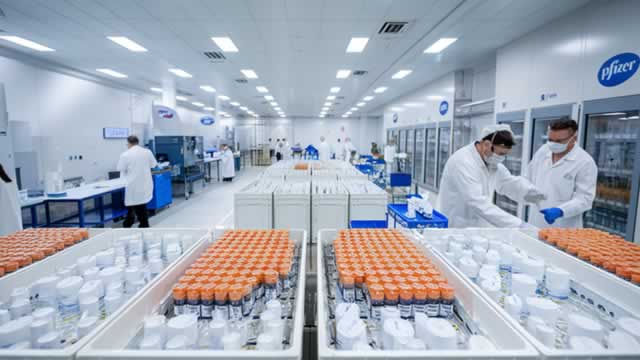
辉瑞700亿换豁免!特朗普“药房”85%折,全球药价被美国薅羊毛?
Sou Hu Cai Jing· 2025-10-04 04:44
Core Points - Trump and Pfizer's CEO reached a tripartite agreement focusing on drug price reduction, domestic investment, and tariff exemptions, attracting global attention [1] - The agreement is a result of months of pressure from the Trump administration, which previously demanded 17 global pharmaceutical companies to lower drug prices to levels comparable to developed countries [1][2] - According to a RAND Corporation report, U.S. drug prices are 2.78 times higher than the average prices in 32 OECD member countries [1] Group 1 - Pfizer will provide all drugs and future new drugs to the U.S. Medicaid program at "most favored nation prices," referencing the lowest prices from eight developed countries [2] - The "TrumpRx" government-operated platform will allow direct sales to U.S. consumers, offering discounts up to 80% on certain drugs and 50% on most primary care medications [2] - Pfizer will invest $70 billion in U.S. manufacturing and receive a three-year exemption from drug tariffs, with Trump stating that no tariffs will be charged if factories are relocated to the U.S. [2] Group 2 - Concerns have arisen regarding potential global drug price increases as companies may raise prices in developing countries to offset losses in the U.S. market [3] - The U.S. government plans to pressure other countries through trade negotiations to increase drug tariffs, contributing to market volatility and uncertainty [3] - The unilateral U.S. drug tariff policy has faced criticism for its lack of clarity, making it difficult for companies to establish stable investment plans [3] Group 3 - The transfer of U.S. drug pricing issues to the global stage highlights the hegemonic logic of the "America First" policy, which may lead to detrimental outcomes for the U.S. in the global pharmaceutical market [4]

Pharmaceutical Stocks: Valuations And Pipelines Are Only Beginning To Be Appreciated
Seeking Alpha· 2025-10-03 20:20
I wrote back in January that I believed the drug stocks would outperform the general stock market for the first time in years in 2025 . The rationale was quite simple-valuations were conservative yetAnalyst’s Disclosure:I/we have a beneficial long position in the shares of LLY, AZN, NVO, PFE either through stock ownership, options, or other derivatives. I wrote this article myself, and it expresses my own opinions. I am not receiving compensation for it (other than from Seeking Alpha). I have no business re ...


Trump Officials Plan to Test New Medicare Drug Pricing Rules
MINT· 2025-10-03 17:26
A new regulatory pilot project from the US Centers for Medicare and Medicaid Services is under review at the White House budget office, suggesting that the Trump administration is seeking to take regulatory action against drugmakers even as it strikes deals with individual companies. There are no details about the policy CMS plans to test, titled the “Guarding US Medicare Against Rising Drug Costs” pilot, including what drugs or companies could be impacted. Regulatory pilot projects help the government de ...

MRK Stock Up Nearly 14% So Far This Week: What's Driving It?
ZACKS· 2025-10-03 15:11
Core Insights - Merck's shares have increased nearly 14% this week due to rising investor optimism in the pharmaceutical sector following Pfizer's significant deal with the Trump administration aimed at reducing drug costs and enhancing U.S. innovation and manufacturing [1][10] Pharmaceutical Sector Overview - Pfizer's deal intends to lower drug prices to match those in other developed countries, supporting the Most Favored Nation pricing proposal by President Trump. Pfizer will also provide substantial discounts through a new purchasing platform and invest an additional $70 billion in U.S. operations [2] - The deal alleviates major concerns in the drug and biotech industry regarding tariffs and pricing, positively impacting stocks of other large drugmakers like Merck, AstraZeneca, Eli Lilly, and AbbVie, which have also seen significant gains [3][6] Merck's Recent Developments - Merck achieved a regulatory success with the FDA's approval of a subcutaneous formulation of its PD-L1 inhibitor, Keytruda, which will be marketed as Keytruda Qlex, extending its patent protection beyond the original intravenous version's exclusivity expiration in 2028 [4][5] - The approval of Keytruda Qlex allows Merck to maintain a substantial revenue stream from Keytruda even after the original IV patents expire [5] Investment and Manufacturing Commitments - In response to tariff threats, major drugmakers have pledged billions for U.S. investments. Lilly plans to invest $27 billion in new manufacturing sites by 2025, while AstraZeneca has committed $50 billion for U.S. manufacturing and R&D by 2030 [7] - Other companies like Johnson & Johnson, GlaxoSmithKline, Novartis, and Roche have also made significant commitments to U.S. manufacturing and R&D investments [8] Merck's Stock Performance and Valuation - Year-to-date, Merck's shares have declined by 10%, underperforming the industry, which has risen by 8.3% [11] - Merck's current price/earnings ratio stands at 9.49, which is lower than the industry average of 15.93 and its 5-year mean of 12.67, indicating an attractive valuation relative to the industry [12] - The Zacks Consensus Estimate for Merck's 2025 earnings per share remains stable at $8.93, while the estimate for 2026 has slightly decreased from $9.61 to $9.59 [13]


Is PFE Stock a Buy After 14% Rise Post Drug Pricing Deal With Trump?
ZACKS· 2025-10-03 15:01
Core Insights - Pfizer has entered a significant agreement with the Trump administration to reduce drug prices and enhance U.S. innovation and manufacturing [1][10] - The deal includes price reductions for certain drugs to match costs in comparable developed countries and substantial discounts through a new purchasing platform [2][4] - Pfizer will invest an additional $70 billion in U.S. manufacturing in exchange for a three-year exemption from tariffs on pharmaceutical imports [3][10] Drug Pricing and Market Impact - Pfizer will implement price cuts of up to 85%, averaging 50%, on key treatments [2] - The stock price of Pfizer increased nearly 14% following the announcement, alleviating major concerns in the pharmaceutical industry regarding tariffs and pricing proposals [4][10] - Other major drugmakers also saw stock gains, indicating potential for similar agreements in the industry [4] Oncology and Product Pipeline - Pfizer is a leading player in oncology, with revenues from oncology drugs growing 9% in the first half of 2025 [6] - The acquisition of Seagen has strengthened Pfizer's oncology portfolio, with expectations of eight or more blockbuster oncology medicines by 2030 [7][10] - New and acquired products contributed $4.7 billion in revenues in the first half of 2025, reflecting a 15% operational increase year-over-year [9][10] Financial Performance and Projections - Pfizer anticipates a revenue compound annual growth rate (CAGR) of approximately 6% from 2025 to 2030, with the Seagen acquisition expected to add over $10 billion in risk-adjusted revenues by 2030 [11][10] - The company expects to face challenges from declining COVID product sales, with revenues dropping from $56.7 billion in 2022 to around $11 billion in 2024 [12] - Pfizer is preparing for a significant impact from loss of exclusivity (LOE) on key products between 2026 and 2030 [13] Cost Management and Future Outlook - Pfizer aims to achieve savings of $7.7 billion by the end of 2027 through cost cuts and restructuring [22] - Despite anticipated revenue challenges, Pfizer expects earnings per share (EPS) growth and maintains a dividend yield of around 7% [22][24] - The company has announced plans to acquire Metsera, re-entering the obesity drug market after previously halting development on another weight-loss drug [23][24] Valuation and Investment Considerations - Pfizer's stock is trading at a price/earnings ratio of 8.70, significantly lower than the industry average of 15.93, indicating attractive valuation [18] - The Zacks Consensus Estimate for earnings has increased for 2025 and 2026, reflecting positive sentiment [20] - Investors are encouraged to consider Pfizer for long-term investment due to its cheap valuation, high dividend yield, and growth prospects [24]
Pharma Stocks Eye Best Week in 16 Years as Trump Overhang Eases
Yahoo Finance· 2025-10-03 13:28
(Bloomberg) — Pharmaceutical stocks are poised to cap off their best week in 16 years as a drug-pricing and tariff deal with the US government helped ease an overhang that’s been weighing on the sector for most of the year. The group’s advance was spurred by Pfizer Inc. (PFE) on Tuesday when it agreed to slash some of its drug prices for Americans enrolled in the Medicaid insurance program in exchange for a three-year reprieve on import tariffs. The New York-based company also agreed to invest $70 billion ...
小摩:辉瑞(PFE.US)与美国政府定价协议“影响有限”,或成为行业“模板”
Zhi Tong Cai Jing· 2025-10-03 13:00
Group 1 - The agreement between the U.S. government and Pfizer marks a significant moment for the pharmaceutical industry, as it reflects a shift in negotiations regarding drug pricing and the linkage to foreign prices [1][3] - Pfizer has agreed to reduce the prices of some drugs by up to 85% and will sell directly to the public through a new website, TrumpRx, avoiding potential tariffs [2] - The deal has positively impacted Wall Street, with Pfizer's stock rising by 5.6% on the announcement day, alleviating investor concerns about potential revenue losses due to stricter regulations [2] Group 2 - The agreement is expected to set a precedent for other pharmaceutical companies, with officials indicating that more companies are eager to negotiate similar deals [3] - The U.S. government aims to reduce spending on Medicaid, which provides insurance for low-income individuals, through this agreement [3] - Analysts believe that Pfizer's commitment to align future drug prices with those in other wealthy countries will have a limited financial impact on the company [2]
X @Bloomberg
Bloomberg· 2025-10-03 12:33
The deal with Pfizer has allowed Trump to finally claim progress toward ending what he views as unfair foreign freeloading off of high drug prices that Americans pay.Here's how it happened ⤵️ https://t.co/BTvtbuu8cZ ...
3 Way-Too-Early Predictions For 2026
Seeking Alpha· 2025-10-03 12:24
Group 1 - The article discusses the Biotech Forum, which focuses on covered call trades and offers a model portfolio of attractive biotech stocks [1][2] - The author makes three early predictions for the biotech sector in 2026, indicating a forward-looking perspective on market trends [1] - The Biotech Forum provides live chat discussions, trade ideas, and weekly market commentary, enhancing investor engagement and information sharing [2] Group 2 - The article mentions that the investing group has a beneficial long position in several biotech companies, including BMY, GILD, NVO, and PFE, indicating confidence in these stocks [3] - The content emphasizes that past performance does not guarantee future results, highlighting the inherent uncertainties in investment [4]