Restaurant Brands International(QSR)

Search documents
Tim Hortons Boosts Restaurant Brands Growth but Investors Are Not Impressed
247Wallst· 2026-02-12 14:30
Core Insights - Restaurant Brands International (QSR) reported a 7.4% increase in Q4 revenue to $2.47 billion, with adjusted operating income rising 16.5% to $674 million, driven primarily by Tim Hortons' performance [1] - Despite meeting earnings expectations, investor reaction was lukewarm, with shares retreating slightly in early trading [1] Financial Performance - Adjusted diluted EPS was $0.96, aligning with consensus estimates - Revenue of $2.47 billion exceeded the $2.44 billion estimate by 1.2%, marking a 7.4% year-over-year growth - Adjusted operating income increased by 16.5% to $674 million, while reported operating income fell by 2.2% to $621 million - Net income from continuing operations rose 5.8% to $274 million, impacted by higher tax expenses [1] Brand Performance - Tim Hortons led the growth with revenue of $1.14 billion, up 10.6%, and comparable sales growth of 2.8% in Canada - The International segment generated $263 million in revenue, a 10.8% increase with 6.1% comparable sales growth - Burger King reported $383 million in revenue, up 2.1%, with U.S. comparable sales increasing by 2.6% - Popeyes experienced a revenue decline of 2.5% to $196 million [1] Capital Allocation and Outlook - The company returned $1.1 billion to shareholders in 2025 through dividends and reduced net leverage to 4.2x from 4.6x - A Q1 2026 dividend of $0.65 per share was declared, with a 2026 annual dividend target set at $2.60 per share - CEO Josh Kobza highlighted the company's consistent execution and progress in strengthening its brands, maintaining long-term targets of 3%+ comparable sales growth and 8%+ organic adjusted operating income growth through 2028 [1]


Restaurant Brands International(QSR) - 2025 Q4 - Earnings Call Transcript
2026-02-12 14:30
Financial Data and Key Metrics Changes - For the full year 2025, the company delivered comparable sales growth of 2.4%, net restaurant growth of 2.9%, and system-wide sales growth of 5.3% [30] - Organic adjusted operating income (AOI) growth was 8.3%, and nominal adjusted EPS growth was 10.7% [30][29] - The company achieved its third consecutive year of approximately 8% organic adjusted operating income growth, demonstrating consistency within the industry [6][48] Business Line Data and Key Metrics Changes - Tim Hortons Canada and International delivered 19 consecutive quarters of positive comparable sales, with comparable sales in Canada growing 2.8% in Q4 2025 [7][9] - The International segment saw comparable sales growth of 4.9% for the full year, including 6.1% in Q4, and net restaurant growth of 4.9% [13][14] - Burger King U.S. achieved comparable sales growth of 1.6% for the full year, including 2.6% in Q4, outperforming the burger QSR industry in 9 out of the last 12 quarters [18][23] Market Data and Key Metrics Changes - In Canada, Tim Hortons faced macroeconomic uncertainty but still delivered solid performance, with breakfast food sales growing 3.5% [9][10] - The international segment, particularly in markets like France and Australia, experienced strong performance, with double-digit system-wide sales growth [14][16] - Burger King China reported comparable sales growth of 9.2% in Q4, driven by improvements in restaurant fundamentals and growth in delivery [15] Company Strategy and Development Direction - The company is focused on long-term growth, with plans to return to a 99% franchise business model and accelerate net restaurant growth to 5%+ [8][41] - The company is refranchising Burger King restaurants ahead of schedule and has established a joint venture with CPE for Burger King China to drive growth [3][29] - The strategy includes a disciplined approach to capital allocation and a focus on operational consistency across all brands [42][46] Management's Comments on Operating Environment and Future Outlook - Management noted that 2025 was a challenging year due to elevated costs and macroeconomic pressures, but the fundamentals of the business are improving [42][43] - The company expects to ramp back towards 5% unit growth by the end of the algorithm period, with a positive outlook for 2026 [31][41] - Management expressed confidence in the ability to build on the momentum from 2025, emphasizing the strength of the franchisee base and operational improvements [29][48] Other Important Information - The company generated nearly $1.6 billion of free cash flow in 2025 and returned $1.1 billion of capital to shareholders through dividends [34] - The company plans to increase its dividend target by roughly 5% to $2.60 per share, marking the 14th consecutive year of dividend growth [34] - Franchisee profitability at Tim Hortons remained resilient at approximately CAD 295,000 despite cost pressures [12][43] Q&A Session Summary Question: Can you discuss the comparable sales evolution and trajectory in 2026, particularly for Tim Hortons and Burger King? - Management indicated that the positive Q4 sets a good foundation for 2026, with expectations for a similar consumer environment and continued focus on fundamentals [53] Question: How much of the international momentum is driven by a healthier backdrop versus share gains? - Management noted that the momentum is a combination of a supportive structural market and effective local strategies, with strong performance in EMEA and Asia Pacific [60][62] Question: How do you view the strength of the fast food market in Europe compared to the U.S. and Canada? - Management highlighted consistent positive performance across major Western European markets and noted that Canada also showed positive sales growth across all day parts [71]
Restaurant Brands (QSR) Beats Q4 Earnings and Revenue Estimates
ZACKS· 2026-02-12 13:40
Core Viewpoint - Restaurant Brands (QSR) reported quarterly earnings of $0.96 per share, exceeding the Zacks Consensus Estimate of $0.93 per share, and showing an increase from $0.81 per share a year ago [1] Financial Performance - The earnings surprise for the quarter was +2.76%, with the company previously expected to post earnings of $1 per share but actually reporting $1.03, resulting in a surprise of +3% [2] - Restaurant Brands generated revenues of $2.47 billion for the quarter ended December 2025, surpassing the Zacks Consensus Estimate by 2.72%, compared to $2.3 billion in the same quarter last year [3] Stock Performance - Since the beginning of the year, Restaurant Brands shares have increased by approximately 3.6%, outperforming the S&P 500's gain of 1.4% [4] Future Outlook - The company's earnings outlook is crucial for investors, with current consensus EPS estimates at $0.82 for the coming quarter and $3.99 for the current fiscal year, with revenues expected to be $2.25 billion and $9.76 billion respectively [5][8] - The estimate revisions trend for Restaurant Brands was mixed ahead of the earnings release, resulting in a Zacks Rank 3 (Hold), indicating expected performance in line with the market [7] Industry Context - The Retail - Restaurants industry, to which Restaurant Brands belongs, is currently ranked in the bottom 23% of over 250 Zacks industries, suggesting potential challenges ahead [9]

Restaurant Brands International Profit Slides Despite Revenue Growth
WSJ· 2026-02-12 12:45
Core Insights - Restaurant Brands International experienced a decline in profit during the fourth quarter, despite an increase in sales across its major brands, which contributed to revenue growth in the period [1] Financial Performance - The company's revenue increased due to higher sales across its major brands, indicating strong consumer demand [1] - However, the profit fell, suggesting that rising costs or other factors may have impacted the bottom line despite the revenue growth [1]
Burger King overseas surge helps Restaurant Brands beat earnings estimates
Invezz· 2026-02-12 12:18
Core Insights - Restaurant Brands International reported stronger-than-expected quarterly earnings and revenue, driven by the international growth of Burger King, which helped offset weaker performance in other brands [1] Financial Performance - Adjusted earnings per share for the quarter ended December 31 reached 96 cents, exceeding analyst expectations of 95 cents [1] - Revenue increased to $2.47 billion, surpassing forecasts of $2.41 billion [1] - Net income attributable to shareholders fell to $113 million, or 34 cents per share, down from $259 million, or 79 cents per share, in the same quarter last year [1] - Net sales rose by 7.4%, while organic revenue grew by 6.5% after excluding currency fluctuations and planned refranchising [1] - Same-store sales increased by 3.1%, with international markets showing the strongest gains [1] International Expansion - Burger King's international same-store sales growth was 5.8%, exceeding analyst expectations of 3.7% [1] - Restaurant Brands is accelerating international expansion through a joint venture in China, with CPE acquiring about 83% ownership of Burger King China [1] - The joint venture allows for shared operational responsibilities and investment costs, emphasizing the importance of China as a growth market [1] Brand Performance - Tim Hortons reported same-store sales growth of 2.9%, below analyst expectations of 3.8%, but remained the largest revenue contributor at 46% of total revenue [1] - Burger King's overall same-store sales increased by 2.7%, exceeding analyst estimates of 2.4% [1] - Popeyes faced the weakest performance with same-store sales declining by 4.8%, compared to expectations of a 2.4% drop [1] - Restaurant Brands is taking steps to address Popeyes' slowdown, including leadership changes [1]
Restaurant Brands International(QSR) - 2025 Q4 - Annual Results
2026-02-12 11:44
EXHIBIT 99 Consolidated system-wide sales grow 5.8% in the fourth quarter and 5.3% in 2025 Consolidated comparable sales up 3.1% in Q4, led by 6.1% at INTL, 2.8% at TH Canada and 2.6% at BK US Achieves 2025 targets for organic Adjusted Operating Income growth and net leverage Returns ~$1.1 billion of capital to shareholders in 2025 while investing for growth Miami, February 12, 2026 – Restaurant Brands International Inc. ("RBI") (NYSE/TSX: QSR, TSX: QSP) today reported financial results for the fourth quart ...
Burger King owner Restaurant Brands beats fourth-quarter sales estimates
Reuters· 2026-02-12 11:40
Burger King owner Restaurant Brands beats fourth-quarter sales estimates | ReutersSkip to main content[Exclusive news, data and analytics for financial market professionalsLearn more aboutRefinitiv]Item 1 of 2 Restaurant Brands International logo and stock graph are seen displayed in this illustration taken, May 3, 2022. REUTERS/Dado Ruvic/Illustration[1/2]Restaurant Brands International logo and stock graph are seen displayed in this illustration taken, May 3, 2022. REUTERS/Dado Ruvic/Illustration [Purchas ...
Restaurant Brands earnings top estimates as international Burger King restaurants fuel sales growth
CNBC· 2026-02-12 11:32
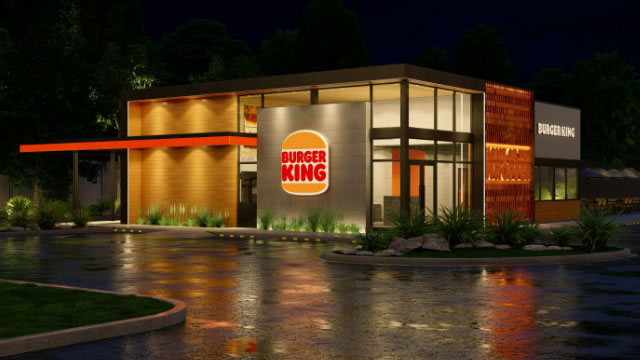
Core Insights - Restaurant Brands International reported strong quarterly earnings and revenue, exceeding expectations due to robust international growth [1][2] Financial Performance - The company reported a fourth-quarter net income of $113 million, or 34 cents per share, down from $259 million, or 79 cents per share, a year earlier [1] - Adjusted earnings were 96 cents per share, slightly above the expected 95 cents [7] - Net sales increased by 7.4% to $2.47 billion, with organic revenue growth of 6.5% after excluding currency fluctuations and refranchising sales [2] Same-Store Sales - Same-store sales rose by 3.1%, driven by strong international performance [2] - Outside the U.S. and Canada, same-store sales increased by 6.1%, with international Burger King restaurants achieving 5.8% growth, surpassing analyst expectations of 3.7% [3] Segment Performance - Tim Hortons reported a same-store sales growth of 2.9%, below the projected 3.8%, contributing 46% to overall revenue [5] - Burger King achieved a same-store sales growth of 2.7%, exceeding the expected 2.4% [5] - Popeyes experienced a decline in same-store sales of 4.8%, worse than the anticipated 2.4% decrease [5] Strategic Initiatives - The company plans to expand its international presence, including a joint venture for Burger King China, where CPE owns approximately 83% and Restaurant Brands retains a 17% stake [4] - To address challenges at Popeyes, the company appointed Burger King veteran Peter Perdue to lead the U.S. and Canadian business and named Matt Rubin as the new chief marketing officer [6] - Further growth strategies will be discussed at the investor day in Miami on February 26 [6]
Restaurant Brands International Inc. Reports Fourth Quarter and Full Year 2025 Results
Prnewswire· 2026-02-12 11:30
Core Insights - Restaurant Brands International Inc. (RBI) reported a consolidated system-wide sales growth of 5.8% in Q4 2025 and 5.3% for the full year 2025, with comparable sales increasing by 3.1% in Q4 [1][2] - The company achieved its 2025 targets for organic Adjusted Operating Income (AOI) growth and net leverage, returning approximately $1.1 billion of capital to shareholders while investing for growth [1][4] - CEO Josh Kobza highlighted the consistent execution from teams and franchisees, leading to a third consecutive year of roughly 8% organic AOI growth [1][3] Operational Highlights - System-wide sales for Q4 2025 reached $12.131 billion, up from $11.279 billion in Q4 2024, while total revenues for the year were $46.762 billion compared to $44.476 billion in 2024 [1][2] - Net restaurant growth was reported at 2.9% for Q4 and 2.9% for the full year, with a total system restaurant count of 33,041 at the end of 2025 [1][2] - Adjusted Operating Income for Q4 was $674 million, reflecting a 15.6% growth compared to Q4 2024, while the full year adjusted operating income was $2.584 billion, up 8.3% from 2024 [1][2] Financial Performance - Total revenues for Q4 2025 were $2.466 billion, an increase from $2.296 billion in Q4 2024, while full-year revenues rose to $9.434 billion from $8.406 billion [1][5] - Net income from continuing operations for Q4 was $274 million, down from $361 million in Q4 2024, with diluted earnings per share from continuing operations at $0.60 compared to $0.79 in the prior year [1][5] - The company declared a dividend of $0.65 per common share for Q1 2026, with an annual total dividend target of $2.60 per share for 2026 [1][4] Segment Performance - Tim Hortons (TH) reported system-wide sales growth of 2.7% in Q4 2025, while Burger King (BK) saw a 1.9% increase, and Popeyes (PLK) experienced a decline of 2.5% [2][3] - The International (INTL) segment achieved a system-wide sales growth of 11.9% in Q4, driven by strong performance from Burger King and Popeyes [3][4] - The Restaurant Holdings (RH) segment, which includes results from the Carrols acquisition, reported total revenues of $480 million in Q4 2025, up from $445 million in Q4 2024 [4][5] Future Outlook - For 2026, RBI expects consolidated capital expenditures of around $400 million and adjusted interest expense between $500 million and $520 million [4][5] - The company aims for long-term consolidated performance of 8%+ organic AOI growth and 3%+ comparable sales from 2024 to 2028 [4][5] - RBI continues to focus on refranchising efforts and enhancing operational efficiency across its brands [4][5]

Happy Belly Food Group Signs Definitive Agreement for the Sale of Holy Crap Foods as It Focuses on Accelerating Its QSR Businesses
TMX Newsfile· 2026-02-12 11:20
Toronto, Ontario--(Newsfile Corp. - February 12, 2026) - Happy Belly Food Group Inc. (CSE: HBFG) (OTCQB: HBFGF) ("Happy Belly" or the "Company"), a leader in acquiring and scaling emerging food brands, is pleased to announce that, further to its press release dated December 22, 2025 (the "Prior Release"), the Company has successfully executed a definitive agreement (the "Definitive Agreement") in connection with the previously announced sale of Holy Crap Foods, its cereal and oatmeal brand, for $1,000,000 ...