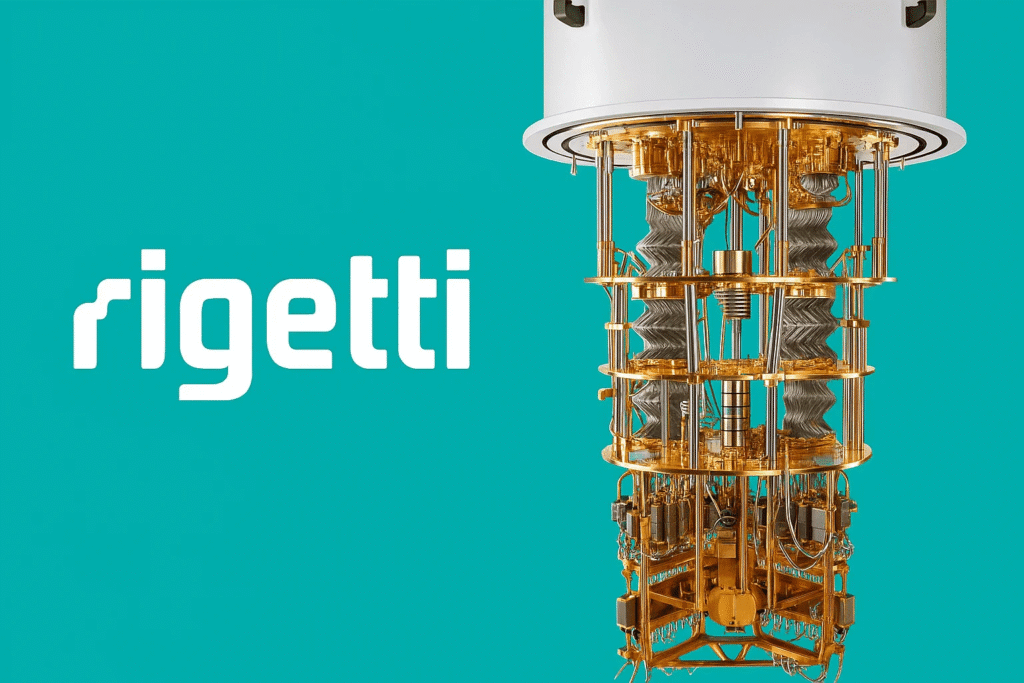
Rigetti(RGTI)

Search documents
Rigetti's New Orders and India MoU: Will They Boost Q3 Performance?
ZACKS· 2025-11-10 18:33
Core Insights - Rigetti Computing (RGTI) is transitioning from research and development to commercial execution, highlighted by $5.7 million in purchase orders for its Novera 9-qubit quantum systems and a partnership with India's C-DAC for hybrid quantum-classical systems [1][7] - The upcoming third-quarter results will be critical in assessing Rigetti's ability to convert these developments into revenue growth and technology scalability [1][7] Company Developments - Rigetti announced purchase orders totaling approximately $5.7 million for two Novera 9-qubit systems, one for an Asian technology manufacturer and the other for a California-based AI startup [1][7] - A Memorandum of Understanding (MOU) was signed with India's C-DAC to co-develop hybrid quantum-classical systems under the ChipIN initiative, indicating a strategic move into a government-backed market [1][7] Financial Performance - Rigetti's shares have increased by 121.3% year-to-date, significantly outperforming the industry growth of 7.9% [6] - The company has a price-to-book ratio of 19.79, which is above the industry average, and carries a Value Score of F [9] - The Zacks Consensus Estimate for Rigetti's 2025 earnings suggests a substantial 75% increase compared to the previous year [10] Earnings Estimates - The Zacks Consensus Estimates for Rigetti's upcoming quarters indicate a projected loss per share of -$0.05 for the current quarter and -$0.04 for the next quarter, with a year-over-year growth estimate of 37.5% for the current quarter [11]



Top Stocks With Earnings This Week: Plug, Oklo, Circle And More
Benzinga· 2025-11-10 13:38
Earnings Reports Overview - The earnings season is slowing down, but several retail-favorite companies are set to report this week [1] - Key companies reporting include Barrick Mining Corp., Plug Power Inc., Oklo Inc., Cisco Systems Inc., Walt Disney Co., and Applied Materials Inc. [2][3][5][10][11] Company-Specific Insights - Barrick Mining Corp. reported its third-quarter results before the market opened on November 10 [2] - Plug Power Inc. is expected to report losses of 12 cents per share and revenue of $179.54 million, having missed earnings expectations for the last 18 quarters [3] - Oklo Inc. is anticipated to report losses of 13 cents per share and revenue of $17.01 billion, with stock volatility noted ahead of the report [5] - Cisco Systems Inc. is expected to be a focal point for investors, particularly regarding management's guidance and updates on AI and cybersecurity business momentum [10] - Walt Disney Co. and JD.com Inc. will release earnings reports before the market opens on November 13 [11] - Applied Materials Inc. is set to release its Q4 results after the market closes on November 13 [11] Additional Companies Reporting - Other companies reporting this week include Workhorse Group Inc., Beyond Meat Inc., Microvision Inc., and Virgin Galactic Holdings Inc. [4][6][12]





Where Will Rigetti Computing Be in 1 Year?
Yahoo Finance· 2025-11-10 11:00
Group 1 - Rigetti Computing is a leading pure-play company in quantum computing, presenting significant investment opportunities but also high risks due to the lack of a backup business model [1] - The company recently sold two Novera quantum computing systems for a total of $5.7 million, indicating a viable product and leadership in the market [4] - Rigetti's systems are compatible with Nvidia's NVQLink, which enhances its position in the quantum computing landscape [5][8] Group 2 - The launch of Nvidia's NVQLink suggests that quantum computing integration into existing infrastructure may happen sooner than expected, making Rigetti an attractive investment [6] - Investors are encouraged to adopt a long-term perspective regarding Rigetti's stock, as useful quantum computing is still a few years away [7]
The Zacks Analyst Blog Rigetti, IonQ and D-Wave Quantum
ZACKS· 2025-11-10 07:56
Core Viewpoint - Rigetti Computing is preparing to release its third-quarter 2025 results, with expectations of a loss per share of 5 cents and revenues of $2.39 million, indicating a year-over-year growth of 37.5% in earnings but only a modest revenue growth of 0.4% [2][3]. Financial Performance - The consensus estimate for 2025 revenues is $8.7 million, reflecting a decline of 19.7% year over year, while the loss per share is expected to be 9 cents, suggesting a year-over-year growth of 75% [4]. - Rigetti has had mixed performance in the past four quarters, surpassing the consensus estimate once, missing once, and meeting expectations twice, resulting in an average earnings surprise of negative 10.8% [4]. Earnings Analysis - Rigetti has an Earnings ESP of 0.00%, indicating no expected earnings surprise for the upcoming report [5]. - The company currently holds a Zacks Rank of 3 (Hold), suggesting a neutral outlook [6]. Market and Operational Factors - The third-quarter performance is likely to be influenced by uncertainties in U.S. public-sector funding, particularly due to the expiration of the National Quantum Initiative [7]. - Rigetti's rollout of the Cepheus-1-36Q quantum system is expected to provide early benefits, with strong technical gains and increased experimentation among customers [8]. Cash Position and Valuation - Rigetti has over $570 million in cash and no debt, positioning it well for continued system development and stable margin execution [9]. - Year-to-date, Rigetti's shares have gained 125.1%, outperforming the broader Internet Software industry, which advanced 10.2% [12]. Long-Term Strategy - Rigetti aims to deliver a 100+ qubit chiplet-based system with approximately 99.5% fidelity by the end of 2025, with a long-term goal of achieving a 1,000-qubit system [13]. - The company is focusing on building an ecosystem through partnerships, such as the collaboration with Quanta Computer Inc., which includes significant financial commitments from both parties [17][18]. Commercial Developments - Recent orders for the Novera QPU systems indicate growing demand for quantum systems beyond government labs, with potential for broader enterprise adoption in the future [15][16]. - The integration of Novera with NVIDIA's DGX Quantum platform highlights Rigetti's efforts in hybrid quantum-classical workflows [18]. Investment Outlook - The upcoming third-quarter results are expected to reflect steady progress rather than a major financial turning point, supporting a hold view for investors [19]. - While Rigetti's balance sheet allows for continued investment, visibility into larger commercial demand remains limited, suggesting a cautious approach for prospective investors [21].


Rigetti EPS Preview: Betting on the Future of Quantum Computing
ZACKS· 2025-11-09 20:36
Group 1: Quantum Computing Overview - Quantum computing is expected to be the next generation of computing, utilizing superposition to process information as both 0 and 1 simultaneously, unlike classical computers which operate in a binary manner [1] - Quantum computers can solve complex problems that would take conventional computers millions of years, although they are not necessarily faster in every aspect [2] Group 2: Rigetti Computing Company Overview - Rigetti Computing is a leader in the quantum computing industry, specializing in superconducting quantum chips for applications in finance, logistics, and scheduling [3] - The company aims to build powerful computers to address significant global challenges [3] Group 3: Earnings Expectations - Rigetti is set to report Q3 2025 earnings on November 10th, with expected revenue of $2.39 million and an EPS of -$0.05 according to Zacks Consensus Analyst Estimates [4] - The company has a mixed EPS track record, having matched expectations twice, missed once, and beaten once since going public [4] Group 4: Market Performance - Rigetti's stock has seen a dramatic increase of approximately 2,261% over the past year, indicating strong investor interest in quantum computing technology despite unproven earnings [9] - The options market suggests a post-earnings move of around 14% [5] Group 5: Company Focus - Rigetti is primarily in the R&D stage, and its performance will be evaluated based on partnerships, technological advancements, and forward-looking statements rather than just earnings results [6][8]

2 Top Quantum Computing Stocks to Watch in November
The Motley Fool· 2025-11-08 15:15
Core Insights - Quantum computing is poised to revolutionize computing power by utilizing qubits, which can exist in multiple states simultaneously, potentially solving problems that would take traditional computers millions of years [1] - Companies like Rigetti Computing and D-Wave Quantum are early movers in the quantum computing space, with significant stock price increases and unique business models that warrant attention from investors [2][3] Rigetti Computing - Rigetti Computing has seen a remarkable 156% increase in stock price this year, attributed to its pick-and-shovel business model and vertical integration efforts [3] - The company focuses on providing the infrastructure necessary for quantum computing rather than generating revenue directly from the technology, similar to Nvidia's role in the AI industry [4] - Rigetti manufactures its own chips at its facility in Fremont, California, which enhances control over its supply chain and reduces reliance on foreign partners [6] - The company has received government support, including an $8.6 million grant from DARPA in 2020, highlighting its strategic importance [7] D-Wave Quantum - D-Wave Quantum has experienced explosive growth, with a 293% year-to-date gain and a staggering 3,200% increase over the past 12 months [8] - Unlike Rigetti, D-Wave focuses on quantum annealing technology, which is designed for optimization tasks, making it suitable for applications in logistics and generative AI [9] - D-Wave has begun commercializing its technology, with second-quarter revenue increasing by 42% year-over-year to $3.1 million, although it still faces significant operating losses of $26.5 million [10] Investment Considerations - While both Rigetti and D-Wave present attractive investment opportunities, the commercial viability of quantum computing technology may still be years away, and both companies are incurring substantial research costs [11] - The price-to-sales multiples for Rigetti and D-Wave are extremely high at 1,110 and 335, respectively, indicating that their shares may be overvalued given the long-term challenges they face [12]


Market Shifts, Geopolitical Tensions, and Policy Debates Shape Global Outlook
Stock Market News· 2025-11-08 14:38
Housing Market - The median age of a first-time homebuyer in the U.S. has reached a record 40 years, up from 31 a decade ago, indicating a worsening housing affordability crisis [2][8] - The share of first-time buyers has dropped to a record low of 21%, down from nearly 50% in 2010, reflecting the challenges in entering the housing market [2][3] - Experts estimate that delaying homeownership until age 40 could result in a loss of approximately $150,000 in equity on a typical starter home, affecting long-term wealth building [3] Quantum Computing Sector - Quantum computing stocks have experienced explosive growth, with some companies seeing increases as high as 2,734% over the past year, significantly outperforming the broader AI sector [4][5] - Despite the impressive stock performance, these companies are unlikely to generate substantial revenue for years, highlighting the speculative nature of the sector [5] - Investor enthusiasm remains high, driven by the potential of quantum computing to revolutionize various industries, despite warnings from industry leaders about the long timeline to commercialization [5] Geopolitical Tensions - Russia is preparing proposals for potential nuclear weapons tests in response to statements from former U.S. President Donald Trump regarding the possibility of resuming U.S. nuclear tests [6][7] - President Putin has indicated that Russia would only resume testing if the U.S. does so first, signaling a potential shift in global nuclear policy and raising concerns about a new arms race [7] Healthcare Policy - Former President Trump has proposed redirecting federal healthcare funds from insurance companies directly to citizens, aiming to empower individuals to purchase their own healthcare [9][10] - This proposal comes amid ongoing debates in Congress over healthcare funding, particularly concerning the expiration of federal health insurance tax credits, which could lead to increased premium costs for millions [10]


1,900% Stock Gains and Hate Mail: Welcome to Quantum Investing
Yahoo Finance· 2025-11-08 14:00
Core Insights - The Trump administration prioritizes quantum computing development, with companies like Rigetti Computing Inc and D-Wave Quantum Inc leading the charge despite limited real-world applications and significant cash burn [1][7] - Quantum computing stocks have surged over 1,900% in the past year, outperforming traditional AI stocks, and now boast market capitalizations exceeding $10 billion, despite generating less than 1% of the revenue of established companies [2][3] Company Performance - Rigetti and D-Wave are currently not expected to generate significant revenue for years, yet they remain highly attractive to investors [1][2] - The companies are considered among the best performers in the stock market, significantly outpacing returns from popular AI companies like Palantir Technologies Inc [2] Market Sentiment - The quantum computing sector is characterized by speculative investments, with strong opinions on both sides regarding its future potential [3][4] - Optimists believe breakthroughs in quantum computing could lead to transformative applications, while skeptics warn of a potential bubble driven by unrealistic expectations [4][6] Investment Comparisons - The investment landscape for quantum computing is likened to biotechnology, where investors are willing to endure long wait times for potential breakthroughs, although quantum technology remains largely theoretical [6] - Nvidia's CEO has suggested that significant advancements in quantum computing may be decades away, highlighting the uncertainty in the timeline for practical applications [7] Funding and Valuation - Recent funding rounds, such as Fidelity International's investment in Quantinuum, have valued the startup at $10 billion, indicating strong investor interest in the quantum computing space [7]


Rigetti Pre-Q3 Earnings Analysis: Buy, Sell or Hold the Stock?
ZACKS· 2025-11-07 18:41
Core Insights - Rigetti Computing (RGTI) is expected to release its third-quarter 2025 results on November 10, with a consensus estimate for loss per share at 5 cents and revenues at $2.39 million, indicating a year-over-year growth of 37.5% in earnings but only a modest revenue growth of 0.4% [1][2] Financial Performance - The consensus for 2025 revenues is $8.7 million, reflecting a decline of 19.7% year over year, while the loss per share is estimated at 9 cents, suggesting a year-over-year growth of 75% [2] - RGTI has had mixed performance in the past four quarters, surpassing estimates once, missing once, and meeting expectations twice, resulting in an average earnings surprise of negative 10.8% [2] Earnings Estimates - The earnings estimates for the upcoming quarters remain stable, with the loss per share projected at -0.05 for Q1, -0.04 for Q2, -0.09 for F1, and -0.17 for F2 [3] Market Position and Valuation - RGTI currently holds a Zacks Rank of 3 (Hold), with an Earnings ESP of 0.00%, indicating lower chances of beating estimates [5][6] - Year-to-date, RGTI shares have gained 125.1%, outperforming the broader Internet Software industry, which advanced 10.2% [11] Strategic Developments - The third-quarter results are likely to be influenced by U.S. public-sector funding uncertainties, particularly due to the expiration of the National Quantum Initiative [7] - Rigetti's rollout of the Cepheus-1-36Q, the largest multichip quantum system, is expected to provide early benefits, with strong technical gains and access through Rigetti QCS and Microsoft Azure [8][9] - The company has over $570 million in cash and no debt, positioning it well for continued system development [9] Long-Term Vision - Rigetti aims to deliver a 100+ qubit chiplet-based system with approximately 99.5% two-qubit gate fidelity by the end of 2025, with a long-term goal of achieving a 1,000-qubit system [15] - Recent orders for Novera QPU systems indicate growing demand for quantum systems beyond government labs, suggesting potential for broader enterprise adoption [16][17] Partnerships and Collaborations - A strategic collaboration with Quanta Computer Inc. involves over $100 million in commitments from both partners, supporting manufacturing scale and system commercialization [18] - Integration with NVIDIA's DGX Quantum platform highlights Rigetti's focus on hybrid quantum-classical workflows, enhancing its ecosystem [18] Future Outlook - The upcoming third-quarter results are expected to reflect steady progress on Rigetti's chiplet-based roadmap, with continued focus on fidelity metrics and system deliveries rather than just near-term revenues [19][21] - While the balance sheet provides a cushion for ongoing investments, visibility into larger commercial demand remains limited, suggesting a cautious approach for prospective investors [21]

Rigetti Computing's Upcoming Earnings: A Glimpse into Quantum Computing's Future
Financial Modeling Prep· 2025-11-07 16:00
Core Insights - Rigetti Computing is a significant player in the quantum computing industry, focusing on developing quantum integrated circuits and systems to enhance computing capabilities [1] - The company is set to release its third-quarter earnings on November 10, 2025, with Wall Street expecting an EPS of -$0.05 and revenue of $2.17 million, while Rigetti estimates revenue at $2.39 million, a 0.4% increase from the previous year [2] - Rigetti's stock has increased by 182% since its second-quarter earnings report, driven by investor sentiment and advancements in quantum computing, despite a negative P/E ratio of -62.17 [3] - The company faces challenges with a negative enterprise value to operating cash flow ratio of -206.15, indicating difficulties in generating positive cash flow, but maintains a low debt-to-equity ratio of 0.014 [4] - Rigetti's strong current ratio of 41.57 suggests excellent short-term liquidity, providing a buffer against financial uncertainties as the third-quarter earnings season unfolds [5][6]