Roche(RHHBY)

Search documents
特朗普拟对药品进口征收200%关税 药企恐慌应对供应链重组挑战
智通财经网· 2025-07-11 23:07
Core Viewpoint - The potential implementation of a 200% tariff on the pharmaceutical industry by the Trump administration raises significant concerns regarding drug prices, company profit margins, and supply chain stability in the U.S. market [1][2]. Group 1: Tariff Impact - The proposed 200% tariff is expected to substantially increase drug production costs, compress profit margins for companies, and potentially disrupt existing supply chains, leading to drug shortages and price hikes in the U.S. market [2]. - A study by the Pharmaceutical Research and Manufacturers of America (PhRMA) indicates that a 25% tariff on imported drugs could result in an annual increase of nearly $51 billion in U.S. drug prices, with an average price increase of 12.9% [2]. Group 2: Industry Response - Major pharmaceutical companies such as Novartis, Sanofi, Roche, Eli Lilly, and Johnson & Johnson have committed to increasing their investments in the U.S. in response to the pressure from the Trump administration [3]. - However, the 12 to 18 months grace period provided by the Trump administration is deemed insufficient for companies to relocate large-scale production lines back to the U.S., as such relocations typically require 4 to 5 years [3]. Group 3: Ongoing Monitoring and Negotiations - Companies like Bayer and Novartis are closely monitoring the tariff situation and are focused on ensuring supply chain stability while minimizing potential impacts [4]. - There is hope within the industry for future trade negotiations to secure some form of exemption from the tariffs, particularly in light of recent trade agreements between the U.S. and the U.K. that mention preferential treatment for U.K. drugs and raw materials [4].


诺华、罗氏股价在苏黎世交易中上涨。

news flash· 2025-07-04 13:52
Core Viewpoint - The stock prices of Novartis and Roche have increased during trading in Zurich [1] Group 1 - Novartis and Roche are experiencing a rise in their stock prices, indicating positive market sentiment towards these companies [1]
商汤科技携手罗氏诊断,推出体外诊断专业场景AI解决方案
Zheng Quan Shi Bao Wang· 2025-06-28 03:24
Group 1 - SenseTime (商汤) announced a collaboration with Roche Diagnostics to launch an AI solution named "Yiwen e-Da" tailored for the in vitro diagnostics (IVD) sector, leveraging SenseTime's self-developed multimodal model and Roche's extensive expertise [1] - Roche Diagnostics is a core business of the Roche Group, a Fortune Global 500 company, and has maintained the leading market share in the global IVD field [1] - The "Yiwen e-Da" platform addresses the high accuracy and professionalism required in the IVD field, overcoming common issues faced by general models, such as misunderstanding and irrelevant responses [2] Group 2 - The platform includes over 500 professional documents and nearly 7,000 pages of complex content, covering around 20,000 knowledge points and 120,000 high-quality retrieval slices [2] - The accuracy of "Yiwen e-Da" is reported to be 38% higher than that of other general models, as evaluated by professionals on 200 randomly generated questions [2] - The platform can quickly interpret and analyze various content types, including text, diagrams, and technical tables, providing timely and intelligent interactions for users [3] Group 3 - SenseTime emphasizes data security and compliance in the healthcare sector, ensuring that "Yiwen e-Da" adheres to industry safety standards and privacy regulations [3] - The platform features high traceability, clearly explaining the sources of professional data, which enhances user trust [3] - SenseTime plans to continuously improve the "Yiwen e-Da" platform's technology and functionality to provide smarter, more precise, and reliable AI service solutions for the IVD industry [3]
Roche Holding AG (RHHBY) Virtual Hematology Investor Conference Transcript
Seeking Alpha· 2025-06-23 21:06
Group 1 - Roche Holding AG is hosting its fifth Investor Relations call of the year, focusing on the latest clinical results from its hematology portfolio, including both malignant and non-malignant conditions [3][4] - The call will feature a presentation by Charles Fuchs, the Global Head of Oncology and Hematology Product Development, who will discuss the latest data on Non-Hodgkin Lymphoma (NHL), particularly the Phase III SUNMO results for Lunsumio plus Polivy in second-line DLBCL [5]


30亿新厂开建!跨国医疗巨头重仓中国
思宇MedTech· 2025-06-23 08:23
Core Viewpoint - Roche Diagnostics is significantly expanding its operations in China through a new investment project in Suzhou, aimed at enhancing local production and R&D capabilities for in vitro diagnostic (IVD) products, thereby addressing the growing healthcare needs in the Asia-Pacific region [1][4][6]. Group 1: Project Details - The new project is located in the Suzhou Industrial Park, covering a total planned area of 108 acres, with an initial investment area of 55 acres and a construction area of approximately 120,000 square meters, including new factories, offices, quality inspection buildings, and warehouses [2][4]. - The initial investment is set at 3 billion RMB (approximately 383 million Swiss Francs), with a total investment expected to reach 10 billion Swiss Francs [2][4]. Group 2: Strategic Importance - This project represents Roche Diagnostics' strategic commitment to the Chinese market, aiming to introduce more internationally leading IVD product lines that cover disease prevention, early diagnosis, and treatment monitoring [4][6]. - The new facility will enhance Roche's production capacity in the Asia-Pacific region, improve supply chain efficiency, and shorten the time for innovative products to enter the market [4][6]. Group 3: Market Trends and Opportunities - The global IVD market is projected to show strong growth, with an estimated valuation of 108 to 116.7 billion USD in 2024, and a compound annual growth rate (CAGR) of 3.61% to 8.4% expected from 2025 to 2030/2035, potentially reaching 1200 to 1900 billion USD [12]. - The Asia-Pacific region, particularly China, is anticipated to be the fastest-growing market, with a CAGR of 6.64% from 2025 to 2034, driven by rising incidences of chronic and infectious diseases, increased healthcare infrastructure investment, and a growing middle-class population [12]. Group 4: Technological Innovations - Roche is positioned as a leader in technological innovations in molecular diagnostics, next-generation sequencing (NGS), artificial intelligence (AI), and point-of-care (POC) testing, with ongoing high R&D investments to continuously launch innovative products [12][13]. - The new project will support the local production of POC products, enhancing Roche's rapid diagnostic product line, particularly in the management of infectious and chronic diseases [13]. Group 5: Historical Context and Future Outlook - Roche Diagnostics has a long-standing presence in China, dating back to 1997, and has progressively expanded its operations, with the Suzhou base established in 2015 as its first production and R&D center in the Asia-Pacific region [9][11]. - The new investment project is expected to be completed by 2027 and operational by 2028, further solidifying Roche's role in the local healthcare landscape [8].

Roche's Lunsumio and Polivy combination significantly prolongs remission for people with relapsed or refractory large B-cell lymphoma
GlobeNewswire News Room· 2025-06-20 15:45
Core Insights - Roche's phase III SUNMO study demonstrated that the combination of Lunsumio® (mosunetuzumab) and Polivy® (polatuzumab vedotin) significantly improves progression-free survival (PFS) and objective response rate (ORR) in patients with relapsed or refractory large B-cell lymphoma (LBCL) compared to the standard treatment R-GemOx [1][2][3] Study Results - The combination therapy showed a 59% reduction in the risk of disease progression or death (hazard ratio [HR] 0.41, p<0.0001) with a median PFS of 11.5 months, three times longer than R-GemOx's 3.8 months [2][3] - The 12-month PFS rate was 48.5% for the combination therapy compared to 17.8% for R-GemOx [2] - Objective response rates were 70.3% for the combination versus 40.0% for R-GemOx, with complete response rates at 51.4% compared to 24.3% [2] Safety Profile - The safety profile of the combination was consistent with known profiles of the individual drugs, with low incidence of cytokine release syndrome (CRS) and fewer adverse events leading to treatment discontinuation [2][3] - Grade 3-4 adverse events were similar between the two treatment arms (58.5% vs. 57.8%) [2] Clinical Implications - The combination therapy may provide an effective alternative to traditional chemotherapy, suitable for outpatient settings, addressing the urgent need for new treatment options in difficult-to-treat LBCL [2][4] - The National Comprehensive Cancer Network (NCCN) has included Lunsumio and Polivy in its guidelines as a category 2A recommendation for second-line treatment of DLBCL [2] Roche's Commitment - Roche aims to enhance treatment options for patients with lymphomas through its extensive portfolio, including ongoing studies with other bispecific antibodies and combination therapies [5][11] - Lunsumio is already approved in over 60 countries for relapsed or refractory follicular lymphoma, while Polivy has approvals in over 100 countries for various indications [6][9]

专家热议:促进“产学研医资政”深度融合 加速创新科研成果落地转化
Ren Min Wang· 2025-06-20 09:02
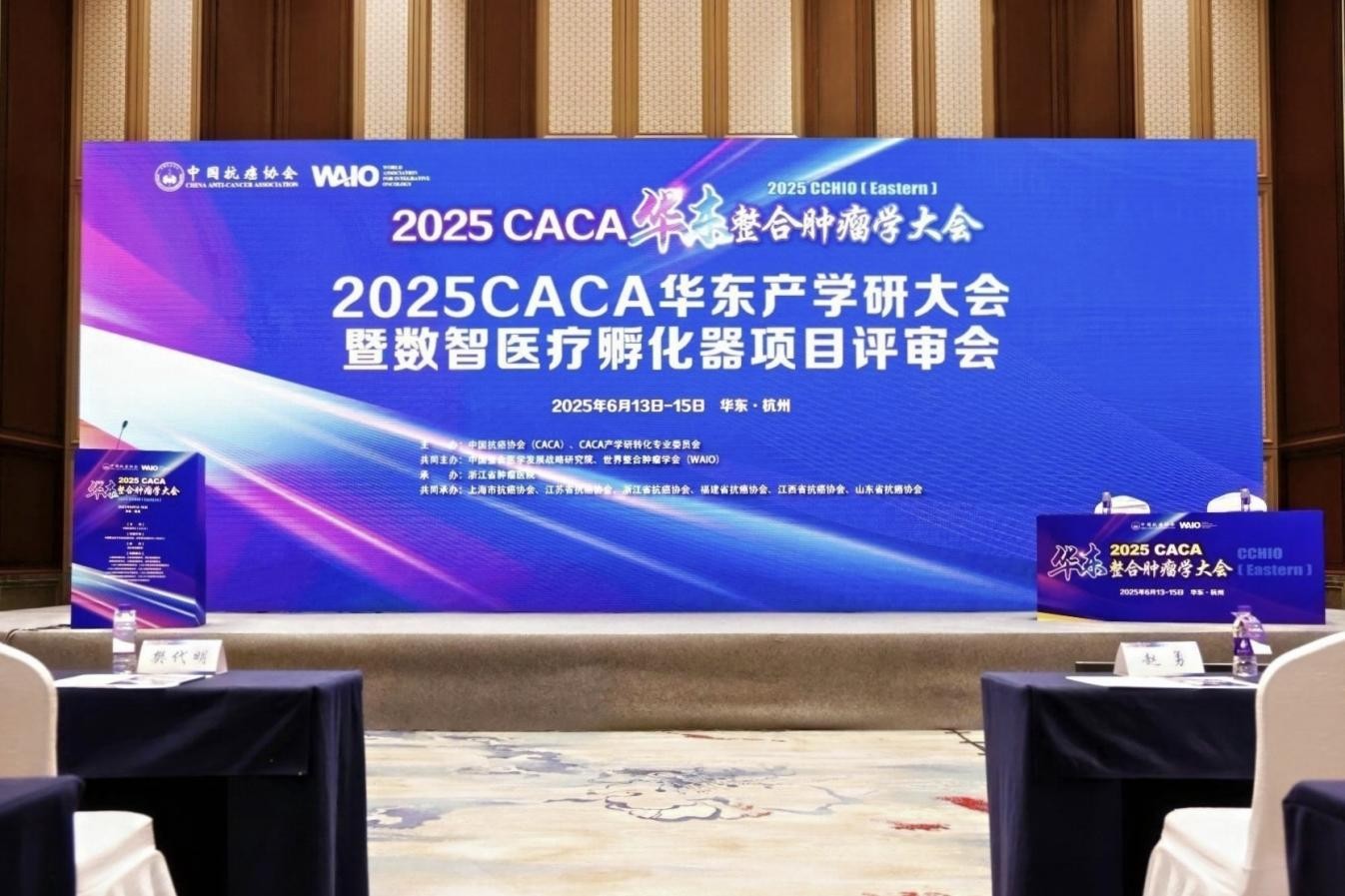
Core Viewpoint - The 2025 CACA East China Integrated Oncology Conference highlighted the importance of deep integration of "industry, academia, research, medical, finance, and government" resources to accelerate the translation of cancer prevention and treatment research into clinical applications [1][2] Group 1: Innovation and Research - Eight innovative research projects in fields such as liver cancer, breast cancer, lung cancer, and lymphoma were presented at the conference [1] - The director of the China Anti-Cancer Association's Industry-Academia-Research Transformation Committee emphasized the need to streamline the entire chain of "industry, academia, research, medical, finance, and government" to promote digital medical innovation and research results [2] Group 2: AI Technology in Clinical Applications - AI technology is recognized as a key driver for new productivity and an important tool for promoting precision medicine [3] - AI can integrate various data types, such as pathological images and genetic information, to assist clinicians in improving diagnostic efficiency and providing personalized treatment plans [3][4] Group 3: Clinical Decision Support and Patient Management - The "Smart Medical Incubator" project aims to discover valuable clinical innovations and research data to address public health needs [5] - Clinical Decision Support Systems (CDSS) are being developed to integrate patient imaging data and drug efficacy prediction models, enhancing patient benefit rates [5]
Roche: Despite Venclexta Study Failure, PD Program Is Another Growth Avenue
Seeking Alpha· 2025-06-16 21:05
Group 1 - Roche Holding's subsidiary Genentech and AbbVie announced an update on the phase 3 VERONA study, which evaluates the use of Venclexta (venetoclax) [2] - The study is part of a global randomized trial aimed at assessing the efficacy of the drug in specific patient populations [2] Group 2 - The Biotech Analysis Central service offers in-depth analysis of pharmaceutical companies, including a library of over 600 articles and a model portfolio of small and mid-cap stocks [2] - The service is available for $49 per month, with a discounted yearly plan at $399, providing a 33.50% savings [1]


RHHBY to Advance Parkinson's Disease Drug to Late-Stage Development
ZACKS· 2025-06-16 14:50
Core Insights - Roche (RHHBY) is advancing its pipeline candidate prasinezumab into phase III development for early-stage Parkinson's disease based on data from phase IIb PADOVA study and ongoing open-label extensions [1][7] - The candidate is a potential first-in-class anti-alpha-synuclein antibody targeting a known biological driver of Parkinson's disease progression [3] - Year-to-date, Roche's shares have increased by 20.9%, outperforming the industry growth of 4% [1] Development Details - The PADOVA study evaluated prasinezumab's safety and efficacy in 586 randomized patients, although it missed its primary endpoint of time to confirmed motor progression [4][5] - Despite missing statistical significance, positive trends toward reduced motor progression were observed at 104 weeks, with expectations of sustained effects based on additional open-label extension data [5][6] - The ongoing PASADENA and PADOVA open-label studies are assessing the long-term safety and efficacy of prasinezumab in over 750 individuals with early-stage Parkinson's disease [3] Licensing and Financials - Roche holds exclusive rights to prasinezumab under a licensing agreement with Prothena (PRTA) established in December 2013, which includes paying double-digit teen royalties on net sales [7][9] - Prothena has earned $135 million to date, with potential for up to $620 million in additional milestone payments [9] Industry Context - Developing treatments for Parkinson's disease is challenging due to its chronic and progressive nature, with both motor and non-motor symptoms [10] - Other companies, such as UCB and Novartis, are also working on treatments, with UCB's recent investigational drug failing to meet clinical endpoints [11]

Giant-Cell Arteritis Market Heats up with AbbVie's RINVOQ Approval | DelveInsight
GlobeNewswire News Room· 2025-06-12 17:00
Core Insights - AbbVie's RINVOQ (upadacitinib) has received FDA approval for the treatment of giant cell arteritis, marking it as the first oral JAK inhibitor approved for this condition in Western countries, and the ninth indication for the drug [1][6] Group 1: Market Dynamics - The approval of RINVOQ has intensified competition among pharmaceutical companies in the giant cell arteritis market [1] - DelveInsight estimates the giant cell arteritis market size to grow from USD 960 million in 2023 at a significant CAGR by 2034, driven by factors such as an increasing geriatric population and rising prevalence of cardiovascular disorders [14] Group 2: Treatment Landscape - The primary treatment for giant cell arteritis has traditionally involved high doses of corticosteroids like prednisone, with the aim of preventing serious complications such as blindness [3] - ACTEMRA/ROACTEMRA (tocilizumab) was the first approved treatment for giant cell arteritis in Europe, with its approval supported by the Phase III GiACTA study demonstrating improved remission rates [4][7] - RINVOQ's pivotal Phase 3 SELECT-GCA trial showed that 46.4% of patients achieved sustained remission with RINVOQ compared to 29.0% on placebo [7] Group 3: Emerging Therapies - Companies like Novartis and CSL/Kiniksa Pharmaceuticals are conducting clinical trials for new treatment options, indicating a need for more effective therapies in the giant cell arteritis space [10][12] - The anticipated launch of emerging therapies is expected to transform the market landscape, offering new standards of care and opportunities for innovation [13]