
SINO BIOPHARM(SBHMY)

Search documents
中国生物制药(01177.HK):“TQB3205「pan-KRAS抑制剂」”临床试验申请获NMPA批准
Ge Long Hui· 2026-03-11 11:06
Core Viewpoint - China Biologic Products (01177.HK) announced that its subsidiary, Chengdu Kanghong Pharmaceutical Group Co., Ltd., has received clinical trial approval from the National Medical Products Administration (NMPA) for TQB3205, a pan-KRAS inhibitor intended for the treatment of advanced malignant tumors [1][2] Group 1: Product Development - TQB3205 is an oral pan-KRAS inhibitor that binds with high affinity to various KRAS mutant proteins, inhibiting SOS1-mediated KRAS nucleotide exchange and blocking RAS activation, thereby effectively suppressing the proliferation of various KRAS mutant tumor cells [1] - The KRAS gene is the most frequently mutated gene in the RAS family, with approximately 30% of cancer cases globally associated with RAS gene mutations, and KRAS mutations account for 85% of all RAS mutations, prevalent in pancreatic cancer (90%), colorectal cancer (30%-50%), and non-small cell lung cancer (15%-20%) [1] Group 2: Market Need and Future Plans - Despite the approval of the KRASG12C inhibitor, Sotorasib (brand name: Anfatin), by NMPA in November 2024, the clinical demand in the KRAS field remains unmet, highlighting the urgent need for pan-KRAS inhibitors that can cover a broader range of mutation subtypes [2] - The company aims to accelerate the clinical development of TQB3205 to overcome existing treatment limitations and provide new therapeutic options for a wider range of patients with advanced malignant tumors harboring KRAS mutations [2]

中国生物制药(01177) - 自愿公告 - TQB3205「PAN-KRAS抑制剂」临床试验申请获...
2026-03-11 11:01
香港交易及結算所有限公司及香港聯合交易所有限公司對本公告的內容概不負責,對其準確性或完 整性亦不發表任何聲明,並明確表示,概不對因本公告全部或任何部份內容而產生或因倚賴該等內 容而引致的任何損失承擔任何責任。 KRAS基因是RAS家族中突變頻率最高的基因。全球約30%的癌症病例與RAS基因突變相關,其中由 KRAS突變導致的癌症佔所有RAS突變的85%,在胰腺癌(90%)、結直腸癌(30%-50%)、非小細胞肺 癌(15%-20%)等多種癌症中普遍存在[1-2]。然而,不同腫瘤類型的KRAS突變亞型差異顯著,常見類 型包括G12C、G12V、G12D、G13D等[3-4]。目前全球已獲批上市的5款KRAS抑制劑均僅針對G12C單 一突變亞型。 1 本集團聯合開發的KRAS G12C抑制劑格索雷塞(商品名:安方寧)已於2024年11月獲得NMPA的上市 批准。儘管如此,KRAS領域的臨床需求遠未得到滿足,亟需能覆蓋更廣泛突變亞型的pan-KRAS抑 制劑。本集團將加速推動TQB3205的臨床開發,致力於突破現有治療局限,為更廣泛的KRAS突變晚 期惡性腫瘤患者帶來新的治療選擇。 資料來源: 承董事會命 中國生物 ...
翰森制药核心产品新适应症获批,中国生物制药罗伐昔替尼出海落地!港股通创新药ETF(159570)回调近2%,超2亿元资金狂涌!
Xin Lang Cai Jing· 2026-03-09 06:45
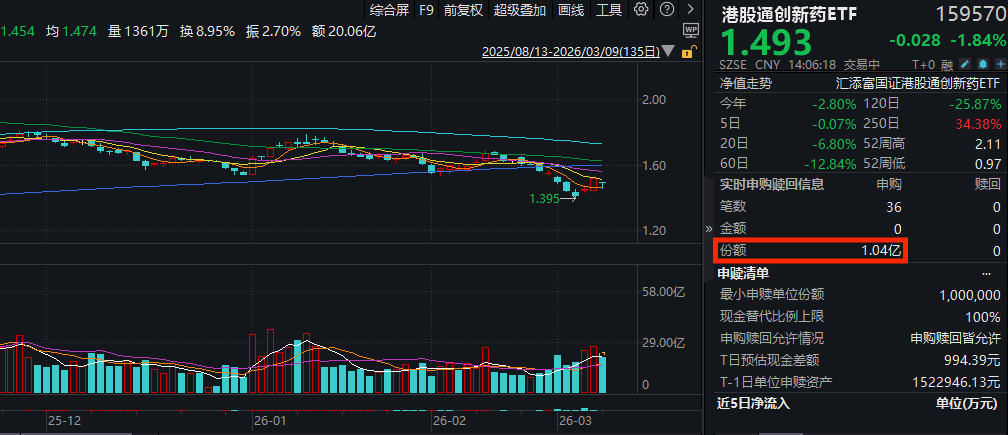
Group 1 - The core viewpoint of the news highlights the recent downturn in the Asia-Pacific market, particularly in the Hong Kong pharmaceutical sector, with the Hong Kong Stock Connect Innovation Drug ETF (159570) experiencing a nearly 2% decline, despite a significant net subscription of 210 million yuan and a total scale exceeding 23.1 billion yuan [1][3] - The high-level meeting has officially categorized innovative drugs as an "emerging pillar industry," emphasizing the acceleration of commercial health insurance development and the promotion of high-quality development in innovative drugs [3] - The approval of Hansoh Pharmaceutical's application for the listing of Amivantamab tablets marks a significant milestone, as it is the first domestically developed third-generation EGFR-TKI in China, with five approved indications since its initial approval in March 2020 [3] Group 2 - In business development news, China Biologic Products announced an exclusive licensing agreement with Sanofi for Rovafatinib, a novel oral small molecule JAK/ROCK inhibitor, with potential payments totaling up to 1.53 billion USD, including an upfront payment of 135 million USD [4] - The Hong Kong Stock Connect Innovation Drug ETF (159570) saw most of its index's popular stocks decline, with notable drops including 5% for 3SBio and over 4% for CanSino Biologics, while Hansoh Pharmaceutical saw a slight increase due to new drug news [4] - The innovative drug sector is experiencing short-term volatility, but the long-term growth potential remains intact, with a focus on the globalization of Chinese pharmaceutical companies and the advancement of innovative technologies [6][9] Group 3 - The focus of the market has shifted from the ability to enter overseas markets to the progress of products in overseas clinical deployments, with key data readouts and milestone achievements becoming critical for future evaluations [7] - Chinese companies are making breakthroughs in frontier technologies such as small nucleic acids and cell therapies, positioning themselves as core assets in global transactions [8] - Leading innovative drug companies are entering a positive cycle of product commercialization and reinvestment in research and development, with expectations for significant performance improvements in the upcoming earnings period [9]


从“仿创龙头”到“全球伙伴”:中国生物制药15.3亿美元授权赛诺菲首创药物独家权利!
Ge Long Hui· 2026-03-06 05:28
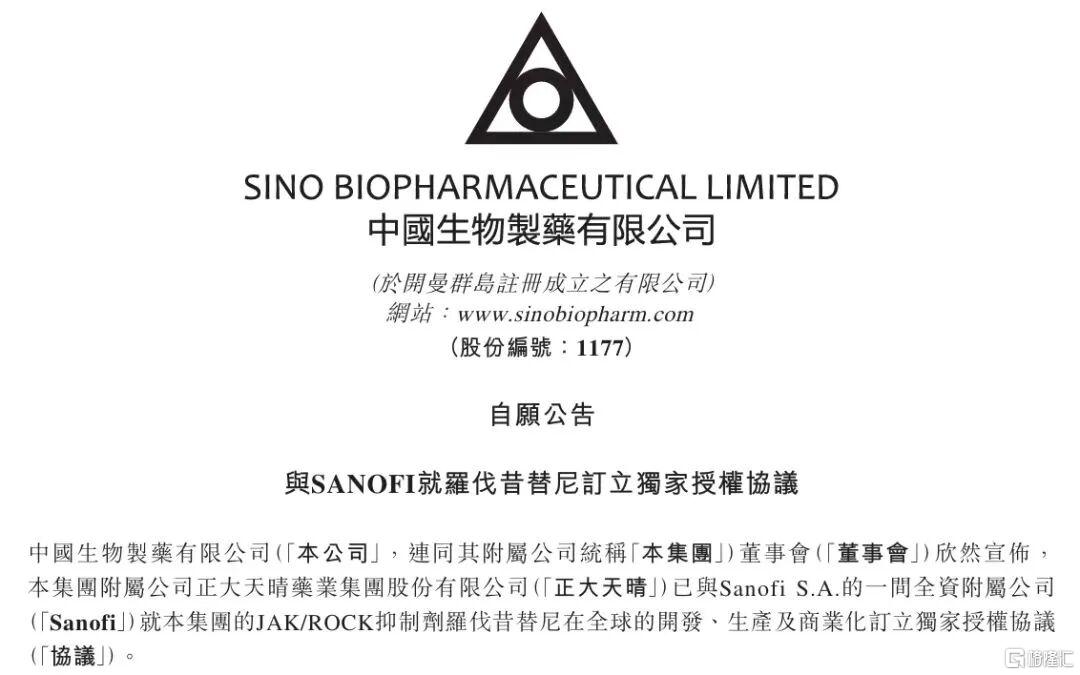
Core Viewpoint - The exclusive global licensing agreement between China National Pharmaceutical Group (China Biologic) and Sanofi for the innovative drug Rovaxtinib marks a significant milestone in the recognition of Chinese pharmaceutical companies by multinational corporations (MNCs) [4][14]. Group 1: Transaction Overview - The agreement grants Sanofi exclusive rights to develop, manufacture, and commercialize Rovaxtinib globally, with potential total payments reaching up to $1.53 billion [1]. - This transaction is notable as it is the first innovative drug licensing project between a Chinese pharmaceutical company and an MNC in recent years, highlighting the growing trust and collaboration in the industry [4][14]. Group 2: Product Significance - Rovaxtinib is the world's first JAK/ROCK dual-target small molecule inhibitor, demonstrating significant clinical value in treating myelofibrosis and chronic graft-versus-host disease (cGVHD) [8][10]. - The drug has shown promising clinical data, with a 59.1% improvement in graft-versus-host symptoms and an 86.4% overall response rate in clinical trials [13]. Group 3: Strategic Implications - For China Biologic, the transaction provides immediate financial benefits and long-term revenue stability through milestone payments and sales sharing [14]. - Sanofi can leverage its global resources to maximize Rovaxtinib's market potential, aligning with its existing pipeline in hematological diseases [14]. Group 4: Industry Trends - The deal signifies a shift in the industry, where the full-chain R&D capabilities of Chinese pharmaceutical companies are increasingly recognized by MNCs, enhancing mutual trust [4][15]. - China Biologic's successful collaboration with Sanofi reflects its robust innovation pipeline and growing international presence, paving the way for future global partnerships [15][17].
中国生物制药:里程碑式的业务发展,迈向全球化;将 JAK 抑制剂 ROCKi 授权给赛诺菲
2026-03-06 02:02
Summary of Sino Biopharmaceutical Conference Call Company Overview - **Company**: Sino Biopharmaceutical (1177.HK) - **Industry**: Pharmaceutical and Biotechnology Key Points Licensing Agreement - Sino Biopharmaceutical has entered into a licensing agreement with Sanofi for the global rights to rovadicitinib, a first-in-class JAK/ROCK inhibitor - The deal includes upfront payments of **US$135 million**, potential milestone payments of up to **US$1.395 billion**, and tiered sales royalties in the double digits - Ravadicitinib was approved for commercialization in China for myelofibrosis in **February 2026** and is in phase 3 trials for chronic graft-versus-host disease (cGVHD) in China, with FDA approval for phase 2 trials in the US - This agreement marks a significant milestone for Sino Biopharmaceutical in its globalization efforts, as it is the first licensing-out deal with a multinational corporation (MNC) [1][2] Clinical Development and Market Potential - cGVHD and myelofibrosis are relatively small indications in the US, with prevalences of approximately **14,000** and **19,000** respectively - Ravadicitinib shows promising potential as a treatment for cGVHD, with a best overall response (BOR) of **86.4%** compared to **74%-76%** for other therapies, and a failure-free survival rate of **85.2%** at 12 months versus **56%** for belumosudil - The safety profile of rovadicitinib is also favorable, with a discontinuation rate of **4%** compared to **6%-16%** for peers [2] Business Development Strategy - The management indicated a focus on retaining China rights for key therapeutic areas (TAs) such as oncology and hepatitis, while opting to license out global rights for assets like rovadicitinib due to commercial challenges in rare diseases in China - The business development strategy includes: 1. Collaborating with large MNCs for assets with global potential 2. Flexible collaboration modes for early-stage assets 3. Exploring emerging markets for mature assets like biosimilars - Key assets with licensing opportunities are expected to have significant data readouts in **2026** [3] Financial Estimates and Valuation - Earnings estimates for **2025-2028** remain largely unchanged, with an increase in the probability of success (PoLS) for rovadicitinib from **50%** to **100%** - The 12-month target price (TP) for Sino Biopharmaceutical has been adjusted slightly to **HK$8.02** from **HK$7.90** [6][8] Risks and Challenges - Key downside risks include: 1. Broader price cuts on the generics portfolio 2. Delays in regulatory approvals for key products 3. Low returns on R&D investments due to resource allocation issues 4. Below-expectation ramp-up of innovative drugs [8] Market Performance - Current market cap is **HK$107.1 billion** (approximately **US$13.7 billion**) - The stock price is currently at **HK$5.71**, indicating an upside potential of **40.5%** to the target price [10] Additional Insights - The agreement with Sanofi is expected to create commercial synergies with Sanofi's existing GVHD portfolio, which includes products like Sarclisa and Rezurock, generating sales of approximately **€588 million** and **€490 million** respectively in **2025** [1]

移植领域超百亿元BD大单!中国生物制药牵手赛诺菲
Bei Jing Shang Bao· 2026-03-05 11:36
Group 1 - The core transaction involves China Biologic Products (01177.HK) entering into an exclusive licensing agreement with Sanofi for the development, production, and commercialization of the JAK/ROCK inhibitor, rovalpitin [1][4] - The agreement grants China Biologic Products a $135 million upfront payment and potential milestone payments of up to $1.395 billion, along with tiered royalties based on annual net sales of rovalpitin [4][5] - This transaction marks a record for the largest external licensing deal in the transplantation field for a Chinese pharmaceutical company, with a total estimated value exceeding 10.5 billion RMB [4][5] Group 2 - Rovalpitin, a first-in-class oral small molecule JAK/ROCK inhibitor, has been approved for use in patients with primary myelofibrosis and related conditions, indicating it is a mature product rather than an early-stage asset [4][5] - The deal is expected to enhance China Biologic Products' cash flow and support its R&D efforts while allowing for a global expansion under a light-asset model [5][6] - The transaction challenges the stereotype that Chinese innovative drugs can only export early-stage projects, providing a new paradigm for local pharmaceutical companies in global licensing and long-term revenue sharing [5][6] Group 3 - In recent years, China Biologic Products has been actively expanding its portfolio, including a $1.2 billion acquisition of siRNA innovator Hejia and a $951 million stake in Lixin Pharmaceuticals [6] - Despite these expansions, the company has faced challenges in reversing performance declines in some of its acquisitions, as seen with Haobor, which reported a revenue drop of 0.98% in 2025 [6] - For the first half of 2025, China Biologic Products reported revenues of approximately 17.57 billion RMB, a year-on-year increase of 10.71%, and a net profit of about 3.39 billion RMB, up 12.31% [6]
中国生物制药创下移植赛道最大规模交易,港股通医疗ETF富国(159506)大涨近4%,行业逐步进入商业化收获期
Sou Hu Cai Jing· 2026-03-05 02:35
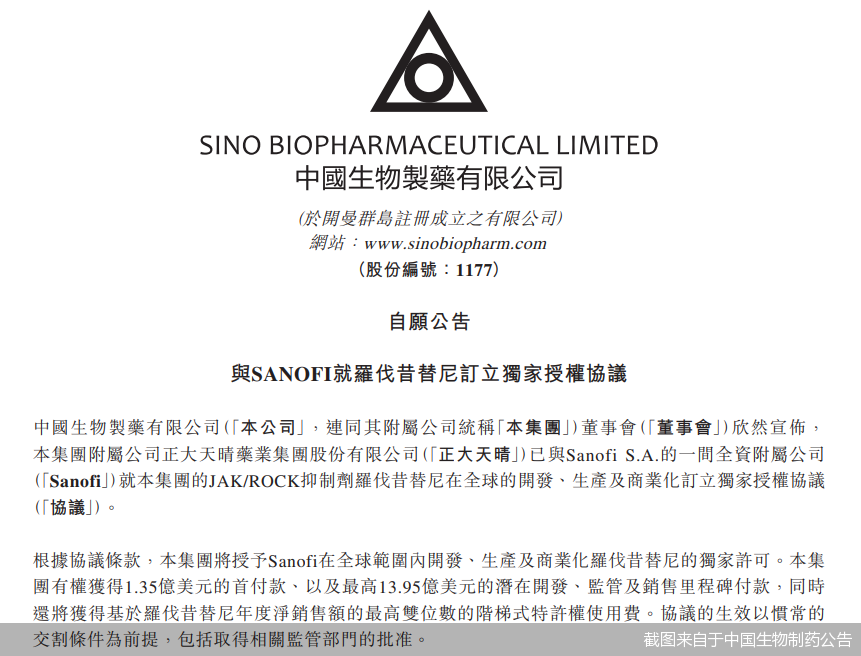
Group 1 - The Hong Kong stock market showed strong performance in the morning session, with innovative drug concept stocks experiencing significant gains, including MIRXES-B rising over 7%, and others like Kelun-Bio and China National Pharmaceutical Group increasing by over 6% [1] - A major announcement was made on March 4, where China National Pharmaceutical Group and Sanofi entered into an exclusive global licensing agreement for the innovative JAK/ROCK dual-target inhibitor, Rovaxitinib, marking the largest external licensing deal in the transplantation field by a Chinese pharmaceutical company [1] - Under the agreement, China National Pharmaceutical Group and its subsidiary, Chengdu Kanghong Pharmaceutical, will grant Sanofi exclusive rights for global development, production, and commercialization, receiving an upfront payment of $135 million, with potential milestone payments up to $1.395 billion, and a high double-digit sales share [1] Group 2 - The total value of China’s innovative drug license-out transactions has increased from $2.562 billion in 2017 to an estimated $140.274 billion by 2025, with 22% of this total already achieved by early 2026, indicating enhanced international competitiveness [1] - Over 70% of innovative drug companies are expected to achieve positive revenue growth by 2025, signaling a transition into a commercialization phase for the industry [1] - The current valuation of the pharmaceutical sector presents significant cost-effectiveness, with recommendations to focus on companies with clear overseas expansion opportunities and those with clinical data advantages in specific segments [1][2]
ETF盘中资讯|反弹来了!港股通创新药ETF(520880)大涨超3%!中国生物制药新签大单,创移植赛道最大规模交易
Sou Hu Cai Jing· 2026-03-05 02:29
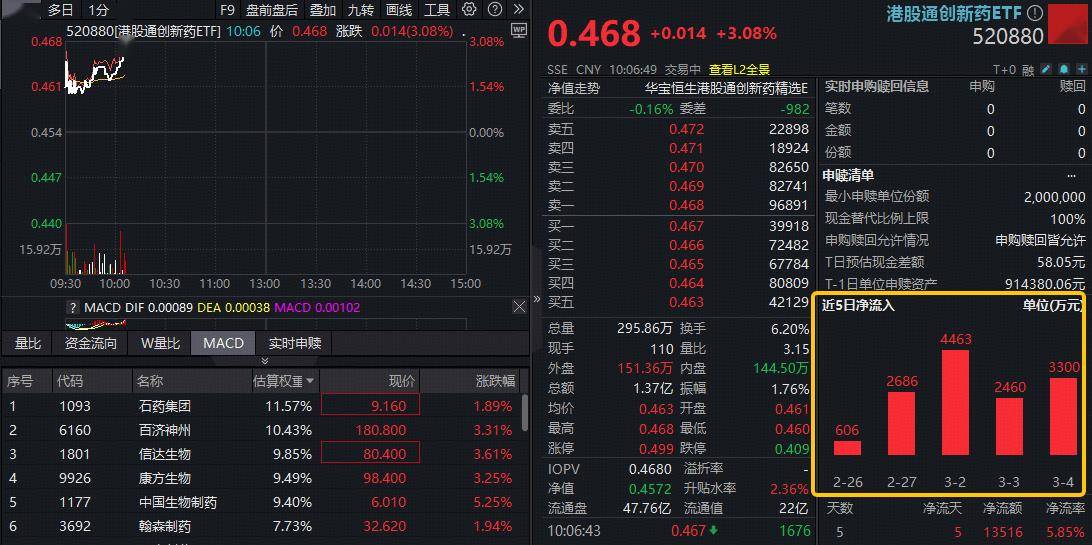
Group 1 - The core viewpoint of the news is that the Hong Kong pharmaceutical sector is experiencing a rebound, particularly in innovative drug stocks, with the Hong Kong Stock Connect Innovative Drug ETF (520880) rising over 3% after a period of decline [1][4] - The Hong Kong Stock Connect Innovative Drug ETF (520880) recorded five consecutive days of decline, reaching a historical low, but saw a capital inflow of over 135 million yuan during this period [1][2] - The healthcare sector in Hong Kong is showing signs of recovery, with major stocks like WuXi Biologics and BeiGene contributing to the rise of the Hong Kong Stock Connect Healthcare ETF [4][6] Group 2 - The total amount of business development (BD) for innovative drugs in China exceeded 50 billion USD in the first two months of 2026, with upfront payments surpassing 3 billion USD, indicating a strong growth trajectory [3] - Chinese pharmaceutical companies are entering a commercialization phase, with companies like Rongchang Bio turning a profit of 709 million yuan in 2025, and BeiGene achieving its first non-GAAP net profit [3] - China National Pharmaceutical Group's stock surged over 5% following the announcement of an exclusive licensing agreement with Sanofi, which includes an upfront payment of 135 million USD and potential milestone payments of up to 1.395 billion USD [1][3]
港股中国生物制药涨超5%
Mei Ri Jing Ji Xin Wen· 2026-03-05 02:27
Group 1 - The core point of the article is that China Biologic Products Holdings (01177.HK) experienced a significant stock increase of over 5%, specifically rising by 5.25% to reach a price of 6.01 HKD per share [2] - The trading volume for China Biologic Products was reported at 146 million HKD [2]
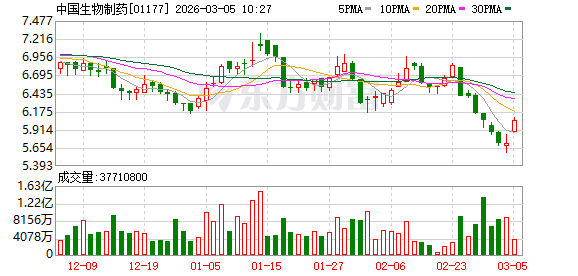
港股异动 | 中国生物制药(01177)涨超5% 罗伐昔替尼授权赛诺菲 潜在收款超15亿美元
Zhi Tong Cai Jing· 2026-03-05 02:23
Core Viewpoint - China Biologic Products (01177) has seen a stock increase of over 5% following the announcement of an exclusive licensing agreement with Sanofi for the innovative oral small molecule JAK/ROCK inhibitor, Roflumilast, with potential payments exceeding $1.53 billion [1] Group 1: Financial Impact - The agreement allows China Biologic's subsidiary, Chengda Tianqing, to grant Sanofi exclusive rights for the global development, production, and commercialization of Roflumilast [1] - China Biologic is entitled to receive up to $1.53 billion in payments, which includes an upfront payment of $135 million and potential milestone payments based on development, regulatory, and sales achievements [1] - Additionally, the company will receive tiered royalties based on the annual net sales of Roflumilast, with a maximum double-digit percentage [1] Group 2: Market Reaction - Following the announcement, China Biologic's stock rose by 5.25%, reaching HKD 6.01, with a trading volume of HKD 146 million [1] - The stock performance indicates positive market sentiment regarding the potential financial benefits from the licensing agreement [1] Group 3: Regulatory Considerations - The effectiveness of the agreement is subject to customary closing conditions, including the approval from relevant regulatory authorities [1]