U.S. Bancorp(USB)

Search documents
U.S. Bancorp (USB) Presents at Barclays 23rd Annual Global Financial Services Conference
Seeking Alpha· 2025-09-09 17:24
Question-and-Answer SessionWe'll put up the first ARS question that we've been asking all the companies. But Gunjan, maybe I'll start with you, 5 months on the job, certainly as CEO, maybe just start off by catching us up on what you've been up to since mid-April, key lessons learned so far in your new role.Gunjan KediaPresident, CEO & Director Well, it's been a privilege to step into the role of the CEO of a wonderful company, and thank you for having us. And I think we have passed over the fire alarm, so ...



U.S. Bancorp (USB) Presents At Barclays 23rd Annual Global Financial Services Conference (Transcript)
Seeking Alpha· 2025-09-09 17:24
Question-and-Answer SessionWe'll put up the first ARS question that we've been asking all the companies. But Gunjan, maybe I'll start with you, 5 months on the job, certainly as CEO, maybe just start off by catching us up on what you've been up to since mid-April, key lessons learned so far in your new role.Gunjan KediaPresident, CEO & Director Well, it's been a privilege to step into the role of the CEO of a wonderful company, and thank you for having us. And I think we have passed over the fire alarm, so ...

U.S. Bancorp (NYSE:USB) FY Conference Transcript
2025-09-09 14:47
U.S. Bancorp FY Conference Summary Company Overview - **Company**: U.S. Bancorp (NYSE: USB) - **CEO**: Gunjan Kedia, appointed in April 2025 - **CFO**: John Stern Key Industry Insights - **Focus Areas**: The company has prioritized expense stabilization, organic growth, and payments transformation as key strategic initiatives to achieve medium-term financial targets [2][6][9]. Core Points and Arguments 1. **Leadership and Strategy**: The CEO has focused on building a talented leadership team and enhancing organizational execution to deepen client relationships and improve investor engagement [3][2]. 2. **Expense Management**: U.S. Bancorp has reported seven consecutive quarters of stable expenses, allowing for positive operating leverage and investments in organic growth [7][12]. 3. **Organic Growth**: The company has seen strengthening fee growth trends, with a fee-heavy franchise structure. Fee income was approximately 42% last quarter, with a balanced mix across payments, trust, investments, and capital market-related fees [8][9]. 4. **Payments Transformation**: U.S. Bancorp's payments franchise is unique and difficult to replicate. The company is focused on transformative strategies to enhance this segment [9][18]. 5. **Investment Strategy**: The company spends about $2.5 billion annually on technology investments, with two-thirds allocated to offensive growth initiatives and one-third to defensive measures [13][15]. 6. **Credit Card Strategy**: The company is transforming its credit card offerings to appeal to both revolvers and transactors, with a new product suite called Smartly aimed at younger affluent customers [23][24]. 7. **Loan Growth Trends**: There has been renewed activity in business loan growth, particularly in commercial and industrial (C&I) loans, with strong pipelines and small business loans showing growth [31][32]. 8. **Net Interest Income (NII)**: The company expects NII for Q3 to be between $4.1 billion and $4.2 billion, with a favorable outlook for the full year [35][36]. 9. **Deposit Strategy**: U.S. Bancorp maintains a strong deposit portfolio and aims to protect relationships with deposit holders, optimizing for cost while ensuring service quality [39][40]. 10. **Regulatory Landscape**: The company is preparing for potential category two regulatory designation, with expectations to cross the $700 billion mark by 2027 [71]. Additional Important Insights - **Stablecoin Discussion**: There is currently limited demand for stablecoins among consumers, but the company is exploring pilot transactions for corporate cross-border payments [26][27]. - **Investor Confidence**: The CEO emphasized the importance of restoring investor confidence through consistent financial results and execution towards medium-term targets [73]. - **Capital Return Policy**: The company aims for a long-term capital return policy of 30% to 40% for share repurchases, contingent on macroeconomic conditions and loan growth [68][69]. Conclusion U.S. Bancorp is strategically positioned to enhance its growth through focused investments in technology, organic growth initiatives, and a strong commitment to client relationships. The company is optimistic about its financial outlook and is actively working to restore investor confidence through consistent performance and execution of its strategic priorities.
The best balance transfer credit cards for February 2026: Don't pay any interest until 2027
Yahoo Finance· 2025-09-08 19:03
Core Insights - The article discusses the best balance transfer credit cards for 2025, highlighting their features, benefits, and potential drawbacks. Group 1: Card Features and Offers - Chase Freedom Unlimited offers a $200 bonus after spending $500 in the first 3 months, with a 0% introductory APR on balance transfers for 15 months and ongoing APR of 18.99% - 28.49% [3][5] - Blue Cash Everyday® Card from American Express provides a $200 statement credit after spending $2,000 in the first 6 months, with a 0% introductory APR on balance transfers for 15 months and ongoing APR of 20.24% - 29.24% [10][11] - Citi Double Cash® Card features a $200 cash back after spending $1,500 in the first 6 months, with a 0% intro APR on balance transfers for 18 months and ongoing APR of 18.24% - 28.24% [16][17] - Discover it® Cash Back offers a unique welcome feature where Discover matches all cash back earned in the first year, with a 0% intro APR for 15 months and ongoing APR of 18.24% - 27.24% [28][30] Group 2: Rewards and Benefits - Chase Freedom Unlimited provides 5% cash back on travel purchased through Chase Travel℠, 3% on drugstore purchases and dining, and 1.5% on all other purchases [4][6] - Blue Cash Everyday® Card offers 3% cash back at U.S. supermarkets, U.S. gas stations, and U.S. online retail purchases, each up to $6,000 spent per year, then 1% [12][13] - Citi Double Cash® Card allows users to earn 2% on every purchase (1% when making the purchase and 1% when paying it off) [18][19] - Citi Rewards+® Card provides 5x points on hotels, car rentals, and attractions booked through Citi Travel through 12/31/25, and 2x points at supermarkets and gas stations [21][23] Group 3: Fees and Costs - Most balance transfer cards charge a balance transfer fee of 3% to 5% of the transferred amount, with a minimum fee of around $5 or $10 [57][59] - The BankAmericard® Credit Card has a 0% intro APR for 18 billing cycles, with a balance transfer fee of 3% for the first 60 days, increasing to 4% thereafter [35][37] - The Wells Fargo Reflect® Card features a 5% balance transfer fee but offers an extended 0% APR of 21 months, making it suitable for those needing more time to pay off balances [39][40] Group 4: Strategic Considerations - It is crucial for cardholders to pay off their balances before the introductory period ends to avoid high ongoing interest rates [52][84] - Cardholders should prioritize transferring balances from high-interest credit cards first to maximize savings during the 0% APR period [86] - Maintaining a good credit score is essential, as balance transfers can temporarily lower scores due to hard inquiries and changes in credit utilization ratios [90][94]


USB Resumes Institutional Bitcoin Custody Service Amid Deregulations
ZACKS· 2025-09-04 15:31
Core Viewpoint - U.S. Bancorp has resumed its bitcoin custody service after a three-year hiatus, driven by a more favorable regulatory environment under the Trump administration, which has eased restrictions on digital assets [1][2][10]. Group 1: Service Resumption - The bitcoin custody service was initially launched in 2021 but was paused in early 2022 due to an SEC accounting bulletin that increased capital requirements for banks acting as custodians for crypto assets [1][3][10]. - The SEC rescinded the 2022 bulletin in January 2025, allowing U.S. Bancorp to reintroduce its bitcoin custody service [2][10]. Group 2: Target Market and Partnerships - The service will primarily target institutional investment managers with registered or private funds seeking secure safekeeping solutions for bitcoin [3][10]. - NYDIG will serve as the bitcoin sub-custodian for U.S. Bancorp's custody services [3][10]. Group 3: Service Offerings - U.S. Bancorp plans to initially offer custody services for bitcoin through traditional registered funds and exchange-traded funds (ETFs), with plans to expand into other cryptocurrency offerings in the future [3][4][10]. - The bank aims to provide full-service solutions for managers seeking custody and administration services, including bitcoin ETFs [4][10]. Group 4: Industry Context - Other major U.S. banks, such as Citigroup and The Bank of New York Mellon, are also exploring cryptocurrency services, influenced by the Trump administration's pro-crypto stance and the removal of restrictive regulations [11][12]. - Citigroup is considering stablecoin custody services, while BNY Mellon already offers custody for bitcoin and Ethereum and plans to expand into other digital assets [12].
银行分化,科技止跌,黄金七连涨
Ge Long Hui· 2025-09-04 04:09
Market Overview - US stock market showed mixed results with the Dow Jones down 0.05%, while the Nasdaq rose by 1.02% and the S&P 500 increased by 0.51% [1] - The banking and technology sectors exhibited divergence, with Chinese concept stocks rebounding from lows and gold prices rising for the seventh consecutive day [1] Banking Sector - Overall, bank stocks showed minor fluctuations; Goldman Sachs, JPMorgan Chase, and Morgan Stanley experienced slight declines, while Citigroup, Zions Bank, United Bank, and US Bancorp saw small gains [3] Technology Sector - Technology stocks stabilized after previous declines, with Google surging by 9.14%, Apple increasing by 3.81%, and Tesla rising by 1.44%. Other major tech companies like Microsoft, Amazon, Netflix, and META recorded slight gains, while Intel, NVIDIA, Qualcomm, and AMD faced minor declines [3] Chinese Concept Stocks - Chinese concept stocks rebounded from earlier lows, with the China Golden Dragon Index down by 0.19%. Notable movements included Pinduoduo rising by 2.22%, Tencent Music up by 1.71%, and iQIYI increasing by 1.12%. However, NIO fell by 3.95%, and XPeng dropped by 2.6%, with other companies like Li Auto, Alibaba, and JD.com also experiencing declines of over 1% [3] Gold Market - COMEX gold prices experienced a slight increase of 0.56%, closing at $3,619.7 per ounce, marking a seventh consecutive day of gains. The intraday trading range saw a low of $3,592.4 and a high of $3,640.1 per ounce [3]




监管机构开绿灯后 美国合众银行(USB.US)恢复加密货币托管业务
Zhi Tong Cai Jing· 2025-09-03 13:45
Group 1 - U.S. Bancorp is reintroducing cryptocurrency custody services for institutional investors, becoming one of the early banks to enter this competitive field [1] - The bank initially launched these services in 2021 in partnership with NYDIG but paused them due to SEC guidelines requiring custodians to hold capital on their balance sheets [1] - Following the withdrawal of this SEC regulation after Donald Trump's second term began, U.S. Bancorp has been working with NYDIG to relaunch the service, starting with Bitcoin custody for traditional registered funds and ETF providers [1] Group 2 - The digital asset custody space has been dominated by companies focused on cryptocurrency, but updated regulatory guidelines under the new U.S. administration are expected to encourage larger firms to engage in this business [1] - Other major financial institutions like Bank of New York Mellon and Fidelity Investments are also offering digital asset custody services, competing with cryptocurrency firms such as Coinbase and BitGo [2] - U.S. Bancorp is exploring how to integrate cryptocurrency and stablecoin use cases with wealth management, payments, and consumer banking [2]
From Smart Farms to Smart Cities: AsiaRF Launches HaLowFly USB Wireless Network Card for Seamless IoT Connectivity in 10 Seconds.
Newsfile· 2025-08-20 05:00
Core Viewpoint - AsiaRF has launched the HaLowFly USB wireless network card, enabling devices to connect to Wi-Fi HaLow networks in just 10 seconds, simplifying IoT deployments significantly [2][4][10] Product Features - The HaLowFly USB Wi-Fi dongle allows for plug-and-play connectivity without the need for driver installation or complex configurations, making it user-friendly [5][6] - It supports a wide range of operating systems including Windows, Linux, Unix, macOS, iOS, and Android, ensuring cross-platform compatibility [6][11] - The device offers kilometer-level wireless coverage, facilitating seamless audio and video streaming over long distances [6][11] Performance and Reliability - The HaLowFly is designed for harsh environments, featuring an industrial-grade radio module for ultra-low-energy, high-stability connections, and a durable housing to withstand demanding conditions [7][11] - It maintains a secure and stable link in challenging settings such as heat, humidity, and dust [7] Efficiency and Cost - Initial setup and reconnection take approximately 10 seconds, with connection settings manageable through any web browser, eliminating the need for additional software [8] - The instant-connect design reduces deployment time and operational costs compared to competing solutions that require special drivers or custom firmware [8] Pricing and Availability - The HaLowFly is officially priced at US$139, with a limited-time introductory pre-order price of US$99 [9] Strategic Vision - AsiaRF aims to accelerate the global adoption of long-range IoT technology, contributing to the development of smart cities, precision agriculture, and industrial automation [10]

U.S. Bancorp(USB) - 2025 Q2 - Quarterly Report
2025-08-07 20:23
[Part I — Financial Information](index=4&type=section&id=Part%20I%20%E2%80%94%20Financial%20Information) This section details the company's Q2 and H1 2025 financial performance, condition, risk profile, segment results, and financial statements [Management's Discussion and Analysis of Financial Condition and Results of Operations (Item 2)](index=4&type=section&id=Management's%20Discussion%20and%20Analysis%20of%20Financial%20Condition%20and%20Results%20of%20Operations%20(Item%202)) U.S. Bancorp reported strong Q2 2025 financial performance, with net income rising 13.2% to $1.8 billion, driven by revenue growth, reduced expenses, and lower credit loss provisions [Overview](index=6&type=section&id=Overview) In Q2 2025, U.S. Bancorp's net income attributable to the company increased to $1.8 billion ($1.11 per diluted share) from $1.6 billion ($0.97 per diluted share) in Q2 2024 Q2 and H1 2025 Earnings Summary | Metric | Q2 2025 | Q2 2024 | % Change | H1 2025 | H1 2024 | % Change | | :--- | :--- | :--- | :--- | :--- | :--- | :--- | | Net Income Attributable to U.S. Bancorp | $1.8B | $1.6B | 13.2% | $3.5B | $2.9B | 20.6% | | Diluted EPS | $1.11 | $0.97 | 14.4% | $2.14 | $1.75 | 22.3% | | Total Net Revenue | $7.0B | $6.9B | 2.0% | $14.0B | $13.6B | 2.8% | * Revenue growth in Q2 2025 was supported by a **0.7% increase in net interest income** and a **3.9% increase in noninterest income**, driven by higher trust and investment management fees and payment services revenue[17](index=17&type=chunk) * Noninterest expense **decreased by 0.8%** year-over-year in Q2 2025, primarily due to lower compensation and employee benefits expense[18](index=18&type=chunk) * The provision for credit losses was **$501 million**, **down 11.8%** from Q2 2024, reflecting the impact of loan portfolio sales and improved credit quality[19](index=19&type=chunk) [Statement of Income Analysis](index=6&type=section&id=Statement%20of%20Income%20Analysis) The income statement analysis reveals that Q2 2025 net interest income grew slightly by 0.7% to $4.1 billion, with a stable net interest margin of 2.66% * Net interest income (taxable-equivalent) for Q2 2025 was **$4.1 billion**, a **0.7% increase YoY**, driven by asset repricing and loan mix, partially offset by deposit pricing pressures[25](index=25&type=chunk) * The net interest margin was **2.66%**, slightly down from 2.67% in Q2 2024[25](index=25&type=chunk) Noninterest Income Breakdown (Q2 2025 vs Q2 2024) | Category | Q2 2025 ($M) | Q2 2024 ($M) | % Change | | :--- | :--- | :--- | :--- | | Trust and investment management fees | 703 | 649 | 8.3% | | Merchant processing services | 474 | 454 | 4.4% | | Card revenue | 442 | 428 | 3.3% | | Mortgage banking revenue | 162 | 190 | (14.7)% | | **Total noninterest income** | **2,924** | **2,815** | **3.9%** | Noninterest Expense Breakdown (Q2 2025 vs Q2 2024) | Category | Q2 2025 ($M) | Q2 2024 ($M) | % Change | | :--- | :--- | :--- | :--- | | Compensation and employee benefits | 2,600 | 2,619 | (0.7)% | | Technology and communications | 534 | 509 | 4.9% | | Other intangibles | 124 | 142 | (12.7)% | | **Total noninterest expense** | **4,181** | **4,214** | **(0.8)%** | * The provision for income taxes was **$472 million** for Q2 2025, representing an effective tax rate of **20.6%**, compared to $445 million (21.6% effective rate) in Q2 2024[36](index=36&type=chunk) [Balance Sheet Analysis](index=9&type=section&id=Balance%20Sheet%20Analysis) As of June 30, 2025, the company's balance sheet showed stability and strategic repositioning, with total loans increasing marginally by 0.1% to $380.2 billion and investment securities growing 2.3% to $168.5 billion * Total loans stood at **$380.2 billion** at June 30, 2025, a slight **0.1% increase** from December 31, 2024[37](index=37&type=chunk) * Growth was driven by a **5.7% increase in commercial loans**, while residential mortgages and other retail loans decreased by 3.7% and 5.1%, respectively, partly due to portfolio sales[38](index=38&type=chunk)[39](index=39&type=chunk) * Investment securities increased by **2.3% to $168.5 billion** from year-end 2024, driven by net purchases and a favorable change in net unrealized losses on available-for-sale securities, which decreased to **$6.0 billion**[43](index=43&type=chunk)[44](index=44&type=chunk) * Total deposits were **$518.7 billion**, nearly unchanged from December 31, 2024, with a shift in composition as noninterest-bearing and time deposits increased while money market deposit balances decreased[49](index=49&type=chunk) * Long-term debt increased by **10.4% to $64.0 billion** from year-end 2024, primarily due to **$4.7 billion of medium-term note issuances** and a **$2.0 billion increase in FHLB advances**[50](index=50&type=chunk) [Quantitative and Qualitative Disclosures About Market Risk/Corporate Risk Profile (Item 3)](index=11&type=section&id=Quantitative%20and%20Qualitative%20Disclosures%20About%20Market%20Risk%2FCorporate%20Risk%20Profile%20(Item%203)) The company employs a comprehensive risk management framework overseen by the Board of Directors, structured around a "three lines of defense" model, managing credit, interest rate, market, liquidity, and capital risks effectively [Overview](index=11&type=section&id=Overview) The company's risk management is governed by a Board-approved framework that sets risk appetite boundaries, with the Executive Risk Committee overseeing execution and a "three lines of defense" model ensuring effective checks and balances * The company's most prominent risk exposures are identified as credit, interest rate, market, liquidity, operational, compliance, strategic, and reputation[53](index=53&type=chunk) * A "three lines of defense" model is used for risk management: 1) business lines manage risks, 2) the Chief Risk Officer's organization provides oversight and sets policies, and 3) internal audit provides independent assessment[55](index=55&type=chunk) [Credit Risk Management](index=12&type=section&id=Credit%20Risk%20Management) Credit risk is managed through centralized policies, diversification, and ongoing monitoring, resulting in an 8.3% decrease in nonperforming assets to $1.7 billion and a stable allowance for credit losses at $7.9 billion Nonperforming Assets | Metric | June 30, 2025 | Dec 31, 2024 | % Change | | :--- | :--- | :--- | :--- | | Total Nonperforming Assets | $1,680 M | $1,832 M | (8.3)% | | Nonperforming Assets to Total Loans | 0.44% | 0.48% | N/A | * Total loan net charge-offs were **$554 million** for Q2 2025, representing an annualized rate of **0.59%** of average loans outstanding, slightly up from 0.58% in Q2 2024[91](index=91&type=chunk)[92](index=92&type=chunk) * The allowance for credit losses was **$7.9 billion** at June 30, 2025, a **0.8% decrease** from year-end 2024, primarily due to loan portfolio sales and improved credit quality[104](index=104&type=chunk) * The allowance as a percentage of period-end loans was **2.07%**[105](index=105&type=chunk) Summary of Allowance for Credit Losses (ACL) | Metric | June 30, 2025 | Dec 31, 2024 | | :--- | :--- | :--- | | Total ACL | $7,862 M | $7,925 M | | ACL as % of Period-End Loans | 2.07% | 2.09% | | ACL as % of Nonperforming Loans | 480% | 442% | [Interest Rate Risk Management](index=23&type=section&id=Interest%20Rate%20Risk%20Management) Interest rate risk is managed by the ALCO using NII sensitivity and market value of equity modeling, with the balance sheet relatively neutral to parallel rate shifts and derivatives used for hedging Sensitivity of Net Interest Income (Next 12 Months) | Rate Change | Projected Impact on NII (June 30, 2025) | | :--- | :--- | | Down 50 bps | +0.34% | | Up 50 bps | +0.06% | | Down 200 bps | -0.07% | | Up 200 bps | +0.63% | * As of June 30, 2025, the company's balance sheet is relatively **neutral to a parallel shift in interest rates**, as asset repricing aligns closely with liability repricing[122](index=122&type=chunk) * The company uses derivatives for asset and liability management to convert fixed-rate instruments to floating-rate, mitigate changes in the value of MSRs and mortgage commitments, and hedge foreign currency volatility[123](index=123&type=chunk)[129](index=129&type=chunk) [Market Risk Management](index=24&type=section&id=Market%20Risk%20Management) Market risk from customer-related trading is managed using a VaR approach, with an average one-day VaR of $3 million for H1 2025 and no actual losses exceeding VaR Market Risk Exposure (H1 2025) | Metric | Average | High | Low | Period-End | | :--- | :--- | :--- | :--- | :--- | | One-Day VaR | $3 M | $4 M | $2 M | $4 M | | One-Day Stressed VaR | $12 M | $15 M | $9 M | $14 M | * The company did not experience any actual losses for its combined Covered Positions that exceeded VaR during the six months ended June 30, 2025[131](index=131&type=chunk) [Liquidity Risk Management](index=25&type=section&id=Liquidity%20Risk%20Management) The company maintains robust liquidity through diversified funding, stress testing, and liquid assets, with total available liquidity increasing to $297.6 billion and an average Q2 2025 LCR of 108.3% Total Available Liquidity | Component | June 30, 2025 ($M) | Dec 31, 2024 ($M) | | :--- | :--- | :--- | | Cash at Federal Reserve | 48,964 | 47,434 | | Available investment securities | 59,101 | 67,910 | | Borrowing capacity (Fed & FHLB) | 189,564 | 171,226 | | **Total Available Liquidity** | **297,629** | **286,570** | * The company's average daily Liquidity Coverage Ratio (LCR) was **108.3%** for Q2 2025, exceeding the regulatory requirement[144](index=144&type=chunk) * The parent company maintains sufficient liquidity to meet its obligations for **12 months** under adverse conditions without support from subsidiaries or access to wholesale markets[142](index=142&type=chunk) [Capital Management](index=27&type=section&id=Capital%20Management) Capital is actively managed to exceed regulatory requirements, with all ratios above "well-capitalized" levels, a CET1 ratio of 10.7%, and ongoing share repurchases Regulatory Capital Ratios | Ratio | June 30, 2025 | Dec 31, 2024 | | :--- | :--- | :--- | | Common equity tier 1 capital | 10.7% | 10.6% | | Tier 1 capital | 12.3% | 12.2% | | Total risk-based capital | 14.3% | 14.3% | | Leverage | 8.5% | 8.3% | * A share repurchase program of up to **$5.0 billion** was authorized in September 2024[157](index=157&type=chunk) * In Q2 2025, the company repurchased **2,692,538 shares** for approximately **$106 million**[158](index=158&type=chunk) [Business Segment Financial Review](index=28&type=section&id=Business%20Segment%20Financial%20Review) Q2 2025 segment performance showed Payment Services growing 12.5%, while Wealth, Corporate, Commercial and Institutional Banking and Consumer and Business Banking declined due to NII pressure Q2 2025 Net Income by Business Segment (vs Q2 2024) | Business Segment | Q2 2025 Net Income ($M) | % Change YoY | | :--- | :--- | :--- | | Wealth, Corporate, Commercial & Institutional Banking | 1,098 | (7.2)% | | Consumer and Business Banking | 459 | (6.9)% | | Payment Services | 325 | 12.5% | | Treasury and Corporate Support | (67) | 81.5% | [Financial Statements (Item 1)](index=34&type=section&id=Financial%20Statements%20(Item%201)) This section presents the unaudited consolidated financial statements for the six months ended June 30, 2025, including balance sheets, income statements, and detailed explanatory notes [Consolidated Financial Statements](index=34&type=section&id=Consolidated%20Financial%20Statements) The consolidated financial statements show total assets of $686.4 billion, total liabilities of $624.5 billion, and net income of $1.8 billion for Q2 2025 Consolidated Balance Sheet Highlights (June 30, 2025) | Account | Amount ($B) | | :--- | :--- | | Total Assets | 686.4 | | Net Loans | 372.7 | | Total Deposits | 518.7 | | Total Liabilities | 624.5 | | Total Shareholders' Equity | 61.4 | Consolidated Income Statement Highlights (Q2 2025) | Account | Amount ($B) | | :--- | :--- | | Net Interest Income | 4.05 | | Provision for Credit Losses | 0.50 | | Total Noninterest Income | 2.92 | | Total Noninterest Expense | 4.18 | | **Net Income** | **1.82** | [Notes to Consolidated Financial Statements](index=39&type=section&id=Notes%20to%20Consolidated%20Financial%20Statements) The notes provide critical details on investment securities, loan portfolio, allowance for credit losses, mortgage servicing rights, derivatives, fair value measurements, and contingent liabilities * **Note 3:** Total investment securities were **$168.5 billion** at June 30, 2025[203](index=203&type=chunk) * The portfolio had net unrealized losses of **$6.0 billion** on available-for-sale securities, primarily due to changes in interest rates[43](index=43&type=chunk)[44](index=44&type=chunk) * **Note 4:** Total loans were **$380.2 billion**[214](index=214&type=chunk) * The allowance for credit losses was **$7.9 billion**, or **2.07%** of total loans[223](index=223&type=chunk) * The allowance decreased slightly from year-end due to loan sales and improved credit quality[223](index=223&type=chunk) * **Note 6:** The fair value of Mortgage Servicing Rights (MSRs) was **$3.3 billion** at quarter-end[258](index=258&type=chunk) * The company uses derivatives to economically hedge changes in the fair value of MSRs[259](index=259&type=chunk) * **Note 15:** The company has contingent liabilities related to its role as a trustee for residential mortgage-backed securities trusts and merchant processing services[343](index=343&type=chunk)[344](index=344&type=chunk) * It has established reserves for matters where losses are probable and estimable[349](index=349&type=chunk) [Part II — Other Information](index=81&type=section&id=Part%20II%20%E2%80%94%20Other%20Information) This section covers legal proceedings, risk factors, unregistered equity sales, and exhibits filed with the Form 10-Q [Legal Proceedings (Item 1)](index=81&type=section&id=Legal%20Proceedings%20(Item%201)) This section refers to Note 15 of the financial statements for a detailed discussion of ongoing litigation and regulatory matters, with no material adverse effect expected * The company is subject to various legal and regulatory matters, including litigation related to its role as a trustee for residential mortgage-backed securities[348](index=348&type=chunk)[349](index=349&type=chunk) * For details, the report refers to Note 15[372](index=372&type=chunk) [Risk Factors (Item 1A)](index=81&type=section&id=Risk%20Factors%20(Item%201A)) The report directs readers to the company's 2024 Form 10-K for a comprehensive discussion of potential risks, noting no material changes to previously disclosed factors * There have been no material changes to the risk factors previously disclosed in the company's 2024 Form 10-K[373](index=373&type=chunk) [Unregistered Sales of Equity Securities and Use of Proceeds (Item 2)](index=81&type=section&id=Unregistered%20Sales%20of%20Equity%20Securities%20and%20Use%20of%20Proceeds%20(Item%202)) Information regarding the company's repurchase of its common stock during Q2 2025 is incorporated by reference from the "Capital Management" section of the MD&A * Details on share repurchases during Q2 2025 are provided in the "Capital Management" section on page 28 of the report[158](index=158&type=chunk)[374](index=374&type=chunk) [Exhibits (Item 6)](index=81&type=section&id=Exhibits%20(Item%206)) This section lists all exhibits filed with the Form 10-Q, including officer certifications and financial statements formatted in Inline XBRL * The exhibits filed with this report include officer certifications (31.1, 31.2, 32) and financial data in Inline XBRL format (101, 104)[376](index=376&type=chunk)
昨夜,大涨!特朗普最新宣布


Zheng Quan Shi Bao· 2025-07-24 00:22
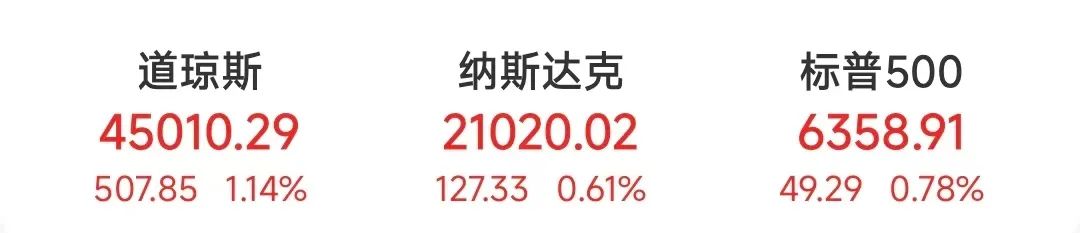
Market Performance - The US stock market saw significant gains on July 23, with the Dow Jones Industrial Average rising by 507.85 points, or 1.14%, closing at 45010.29 points. The Nasdaq Composite increased by 127.33 points, or 0.61%, closing at 21020.02 points, marking its first close above the 21000-point threshold. The S&P 500 index rose by 49.29 points, or 0.78%, closing at 6358.91 points [1][3][4]. Trade Agreements - President Trump announced a trade agreement between the US and Japan, which has heightened market expectations for further trade agreements before the August 1 tariff deadline. The agreement includes a reduction of the reciprocal tariff rate from 25% to 15% and Japan's commitment to invest $550 billion in the US [2][6][7]. Sector Performance - In the S&P 500, nine out of eleven sectors experienced gains, with the healthcare and industrial sectors leading with increases of 2.03% and 1.75%, respectively. The utilities and consumer staples sectors saw declines of 0.79% and 0.07% [8]. - Major technology stocks mostly rose, with AMD increasing over 3%, and other companies like NVIDIA, Boeing, and TSMC rising over 2%. Financial stocks also saw gains, with Mizuho Financial up over 6% and UBS Group up over 3% [8]. Chinese Stocks - The Nasdaq Golden Dragon China Index rose by 0.75%, with notable increases in stocks such as iQIYI, which rose over 4%, and Tiger Brokers, which increased over 3%. However, some stocks like NIO and Li Auto saw declines of over 1% [9].