PDVSA

Search documents
邓正红能源软实力:渐进增产策略重塑市场预期 欧洲炼油商警告制裁冲击被低估
Sou Hu Cai Jing· 2025-11-01 07:16
Group 1 - OPEC alliance is expected to focus on a slight increase in production during the upcoming weekend meeting, while U.S. President Donald Trump denies plans for military action against Venezuela [1] - As of October 31, international oil prices showed slight increases, with West Texas Intermediate crude oil settling at $60.98 per barrel, up 0.68%, and Brent crude oil at $65.07 per barrel, up 0.11% [1] - Traders are assessing the potential impact of U.S. sanctions on two major Russian oil producers, with European refiners warning that the market may be underestimating these sanctions' effects [2] Group 2 - Speculative sentiment in the market is rising, as evidenced by a significant increase in net long positions in Brent crude oil futures, which rose by 119,046 contracts to 171,567 contracts as of the week ending October 28 [2] - Analysts maintain their oil price forecasts, with the average price for Brent crude expected to be $67.99 per barrel in 2025, an increase of approximately $0.38 from previous estimates [2] - The oil market is projected to experience oversupply in 2026, with daily surplus estimates ranging from 190,000 to 3 million barrels [2] Group 3 - OPEC's gradual production increase strategy aims to reshape market expectations while avoiding price shocks and signaling "controllable supply" [3] - The current market pricing logic has shifted from traditional supply-demand dynamics to a "geopolitical-financial dual spiral," where policy signals from oil-producing countries directly influence oil price fluctuations [3] - OPEC's production policy has evolved from "production cuts to stabilize prices" to "increased production to capture market share," reflecting a strategic adjustment [3] Group 4 - U.S. sanctions have a dual effect, cutting off Venezuela's oil export revenues while not fully blocking trade through third parties like Cuba; for Russia, sanctions on Rosneft and Lukoil have led to plans to sell international assets [4] - European refiners warn that the impact of sanctions may lead to regional supply tightness, prompting oil-producing countries to accelerate "de-dollarization" in trade arrangements [4] - The surge in speculative positions in the futures market reflects expectations of supply shortages, creating a "dual spiral" effect with geopolitical risks amplifying price volatility [4] Group 5 - The future of soft power competition in the oil market includes challenges such as the weakening of shale oil's capital-driven transformation and the acceleration of energy-intensive industries' relocation due to carbon tariffs [5] - The expansion of digital trade and improvements in energy efficiency are expected to suppress oil demand elasticity in the long term [5] - Oil-producing countries need to enhance their rule-making, value innovation, and alliance management capabilities to take the initiative in the global energy transition [5]

那些被制裁最最严重的国家,都怎么样了?
小Lin说· 2025-10-25 14:05
Sanctions Overview - Sanctions are a form of coercion aimed at compelling behavioral changes through economic disruption [1] - Economic sanctions are generally a means to achieve objectives like policy change, regime change, counter-terrorism, or human rights improvements [1][2] - The effectiveness of sanctions in achieving their intended goals is historically low, with success rates estimated at less than 10% [2] Country-Specific Sanction Strategies and Impacts - **Cuba:** The US has maintained a long-standing embargo against Cuba, employing trade blockades and asset freezes, but its effectiveness has been limited due to support from other nations [1] - **Venezuela:** US sanctions on Venezuela, particularly targeting the state-owned oil company PDVSA, have severely impacted the country's economy by restricting access to financial markets and reducing oil revenues [2] - **North Korea:** The UN has imposed extensive sanctions on North Korea due to its nuclear weapons program, but North Korea's self-imposed isolation and illicit activities have reduced the impact of these measures [3] - **Iran:** The US has employed both primary and secondary sanctions against Iran, targeting its nuclear program and energy sector, leading to economic hardship and prompting negotiations at times [4][5] - **Russia:** Following the invasion of Ukraine, Russia has faced unprecedented sanctions, including asset freezes, SWIFT restrictions, and trade limitations, significantly impacting its economy [6] Sanction Mechanisms and Countermeasures - **Trade Blockades and Asset Freezes:** These are classic economic sanction tools used to prevent trade and freeze assets within the sanctioning country [1] - **Secondary Sanctions:** These involve threatening entities in other countries to prevent them from doing business with the sanctioned country, increasing the pressure [5] - **Circumventing Sanctions:** Sanctioned countries often seek alternative buyers, engage in smuggling, develop shadow banking systems, or use cyber warfare to mitigate the impact of sanctions [3][4][6] Unintended Consequences and Ethical Considerations - Sanctions often disproportionately affect the general population of the sanctioned country, leading to humanitarian crises and potentially strengthening authoritarian regimes [3][7] - The use of sanctions can lead to "sanction fatigue," where the initial impact diminishes over time as sanctioned countries adapt and find alternative solutions [7]

$10 billion Citgo auction could finally end twisting saga of Venezeulan expropriation, imprisoned execs, and a long-shot NYC mayoral candidate
Yahoo Finance· 2025-09-19 06:45
Core Viewpoint - The legal battle over Citgo Petroleum, owned by Venezuela since 1990, is nearing resolution through a legal auction aimed at compensating creditors for expropriated assets, with the outcome uncertain for the future of the company [1][5]. Group 1: Bidding Process - The bidders for Citgo do not include major oil companies like Exxon Mobil or Phillips 66, but rather activist investor Elliott Investment Management, Canada-listed Gold Reserve, and a special-purpose acquisition company named Blue Water [2]. - The absence of major companies in the bidding is attributed to the complex legal and geopolitical issues surrounding Citgo, as Venezuela and PDVSA still claim ownership [3]. Group 2: Company Assets and Valuation - Citgo operates an 800,000-barrel-a-day refining network with facilities in Louisiana, Texas, and Illinois, along with pipelines, terminals, and marketing agreements with 4,000 retail outlets across the East Coast, Midwest, and South [6]. - Creditors are seeking to recover nearly $20 billion in claims, viewing Citgo as a key asset, yet current bids do not exceed $10 billion, leaving many creditors unsatisfied [5]. Group 3: Future Outlook - The future of Citgo remains uncertain, with possibilities including becoming a publicly traded entity or being divided into parts, and the potential for significant maintenance costs due to years of legal issues [4]. - The prolonged ownership dispute and forced sale process is unprecedented, and the aspiration to recover $20 billion may not be achievable given the current valuation of Citgo [7].
US court moves to support Elliott affiliate's bid for Citgo parent
Yahoo Finance· 2025-09-19 02:58
By Marianna Parraga HOUSTON (Reuters) -A U.S. judge allowed an affiliate of hedge fund Elliott Investment Management on Thursday to move towards completing its offer for Venezuela-owned Citgo Petroleum's parent through a court-ordered auction of shares, while restricting rival bidder Gold Reserve from doing the same. This followed a separate judge in another U.S. court upholding the validity of Venezuelan state oil company PDVSA's 2020 bonds on Thursday. Delaware Judge Leonard Stark instructed a court o ...
Gold Reserve Provides Update on U.S. Court Decision in 2020 PDVSA Bondholders Action
Businesswire· 2025-09-18 16:28
PEMBROKE, Bermuda--(BUSINESS WIRE)--Gold Reserve Ltd. (TSX.V: GRZ) (BSX: GRZ.BH) (OTCQX: GDRZF) ("Gold Reserve†or the "Company†) announces that on September 18, 2025, the U.S. District Court for the Southern District of New York ("SDNY†) issued a decision granting partial summary judgment in favor of the 2020 Bondholders and denying Plaintiff PDVSA's and PDVH's motion for summary judgment that the 2020 Notes, as well as the Indenture, Pledge Agreement and Guaranty were not validly issued under. ...
Judge declares Venezuelan bonds valid, creditors press for Citgo auction resolution
Yahoo Finance· 2025-09-18 14:15
By Luc Cohen and Marianna Parraga NEW YORK/HOUSTON (Reuters) - A U.S. judge upheld the validity of Venezuelan state oil company PDVSA's 2020 bonds on Thursday, prompting a judge in another court to move towards the completion of an auction of shares in the parent of Venezuela-owned U.S. refiner Citgo Petroleum. The bonds are secured by a majority stake in Citgo, which is ultimately owned by Caracas-headquartered PDVSA. The state oil company defaulted on the bonds in 2019, putting the Houston-based refine ...
PDVSA’s U.S. Crown Jewel Slips Through Venezuela’s Fingers
Yahoo Finance· 2025-09-17 22:00
Core Viewpoint - The fate of Citgo, a key asset of Venezuela's PDVSA, may be determined soon, with potential implications for creditors involved in the auction process [1] Group 1: Citgo's Background and Current Situation - Citgo previously had a processing capacity exceeding 800,000 barrels per day, making it the largest U.S. outlet for Venezuelan heavy crude [2] - In 2019, Citgo severed ties with PDVSA due to U.S. sanctions and was briefly controlled by opposition leaders in Venezuela [2] Group 2: Legal and Financial Context - Over a dozen companies are suing PDVSA and the Venezuelan government for losses incurred from nationalization efforts initiated by Hugo Chavez over 20 years ago, leading to the current auction process [3] - The sale proceeds will be used to compensate some creditors, but not all claims will be satisfied [3] Group 3: Claims and Bids - ConocoPhillips, a major claimant, has a compensation claim of $11 billion, while the total claims amount to nearly $19 billion, against Citgo's estimated value of around $12 billion [4] - The highest bid so far is from a consortium led by Gold Reserve at $7.4 billion, but a new bidder, Amber Energy, has submitted a lower bid of $5.86 billion [5] - Amber Energy's bid includes $2.86 billion for settlements related to bondholder claims against PDV Holding, the parent company of Citgo [5] Group 4: Competitive Bidding Dynamics - The emergence of Amber Energy prompted the Gold Reserve-led consortium to enhance its bid, although specific details of the improved offer were not disclosed [6]
Venezuela Just Opened the Crypto Floodgates—And It Could Change How Sanctioned Nations Do Business Forever
Yahoo Finance· 2025-09-14 23:01
Group 1 - The Venezuelan government is leveraging cryptocurrency, particularly dollar-pegged digital currencies, to navigate economic sanctions and maintain its economy [1][2] - The use of Tether (USDT) has surged since June, allowing businesses to exchange currency in a context where traditional dollar access is severely restricted [2][3] - The shift towards digital currencies is a response to the crippling effects of U.S. sanctions, which have limited access to foreign currency and forced businesses to adapt or face collapse [3][4] Group 2 - The U.S. Treasury's recent actions, including a restricted license for Chevron, have exacerbated the dollar shortage in Venezuela, prompting officials to explore cryptocurrency solutions [4][5] - State-run oil company PDVSA has increased its use of digital currencies, particularly USDT, as traditional payment methods have become unreliable [6][7] - Venezuela's crypto system involves a limited number of banks selling USDT to government-approved businesses, which can then use the cryptocurrency for transactions or sell it on secondary markets [7]
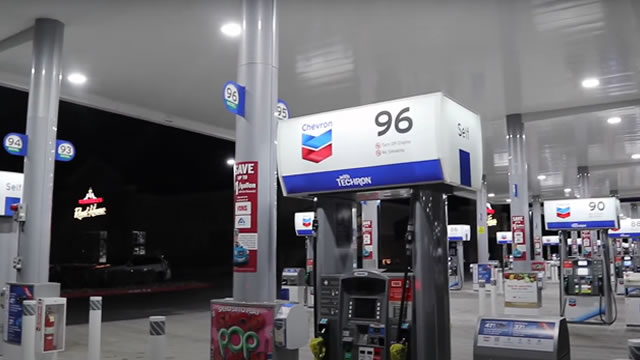
Top dictatorship hawk reacts to Chevron being allowed to continue in Venezuela: ‘Best of both worlds'
Fox Business· 2025-05-30 13:56
Core Viewpoint - The Trump administration's decision to allow Chevron to maintain its assets in Venezuela is seen as a positive move by Republican Congressman Carlos Gimenez, who supports a return to Trump-era policies regarding Venezuela and its regime under Nicolás Maduro [1][6][15]. Group 1: Chevron's Operations in Venezuela - Chevron is permitted to maintain its assets in Venezuela but is restricted from importing oil and paying royalties to the Maduro regime, which could amount to over $700 million monthly [5][9][15]. - The concern exists that if Chevron were forced out, Chinese interests might take over its assets, which are considered superior in quality compared to other Venezuelan oil infrastructure [5][9]. Group 2: Political Context and Implications - Gimenez emphasizes the intertwined economic relationship between Maduro and Cuban leader Miguel Diaz-Canel, with Venezuela supplying oil to Cuba in exchange for security personnel [11][12]. - The Congressman advocates for a peaceful transition to a legitimate government in Venezuela, supporting Edmundo Gonzalez, who was declared to have lost the 2024 election under disputed circumstances [13][15]. Group 3: Broader Implications for U.S. Policy - The current situation is framed as a struggle between democracy and dictatorship, with Gimenez urging U.S. interests to remain aligned with democratic principles and to avoid any financial support to the Maduro regime [9][15]. - The article highlights the importance of U.S. policy in supporting democratic movements in Latin America, particularly in Venezuela and Cuba, where strongman regimes are in power [10][15].


Chevron ends Venezuela contracts, but will keep staff in country: report
Fox Business· 2025-05-28 21:15
Group 1 - Chevron has terminated its oil production, service, and procurement contracts in Venezuela, delegating joint-venture governance to PDVSA while retaining direct staff in the country [1] - The U.S. State and Treasury departments set a deadline of May 27 for companies like Chevron to receive Venezuelan crude oil and byproducts, following the revocation of authorizations by the Biden administration [2] - PDVSA canceled cargoes scheduled for Chevron due to payment uncertainties linked to U.S. sanctions, which also led to the end of Chevron's operating license in Venezuela [4] Group 2 - Under new U.S. authorization, Chevron is prohibited from operating oilfields, exporting oil, or expanding activities in Venezuela to avoid payments to the Maduro administration [7] - Analysts predict that without licenses, Venezuela's oil output and exports could decline by 15-30% by the end of 2026, following a recovery that brought average crude output to about 1 million barrels per day this year [10] - The Venezuelan government, led by Nicolas Maduro, rejects U.S. sanctions, claiming they constitute an "economic war" [10]