
Amkor Technology

Search documents
Amkor Technology(AMKR) - 2025 Q1 - Earnings Call Presentation
2025-04-29 02:11
Financial Performance - Q1 2025 - Revenue for Q1 2025 was $1.32 billion[11], compared to $1.63 billion in Q4 2024 and $1.37 billion in Q1 2024[23] - Operating income was $32 million with a margin of 2.4%[23] - Gross profit was $158 million with a margin of 11.9%[24] - Earnings per share (EPS) was $0.09[11, 26] - EBITDA was $197 million with an EBITDA margin of 14.9%[28, 42] Financial Strength - Cash & Short-Term Investments totaled $1.56 billion[28] - Liquidity was $2.2 billion[28] - Total Debt was $1.15 billion, with a debt to EBITDA ratio of 1.1x[28] Q2 2025 Guidance - Revenue is expected to be between $1.375 billion and $1.475 billion[31, 36] - Gross margin is projected to be between 11.5% and 13.5%[31] - Net income is guided to be between $17 million and $57 million[31] - Diluted EPS is expected to be between $0.07 and $0.23[31] - Capital expenditures (CapEx) for 2025 are estimated at $850 million[31] End Market Dynamics - Communications revenue decreased by 19% year-over-year (YoY), driven by the iOS ecosystem[20] - Computing revenue increased by 21% YoY, with engagements across datacenter, networking, and PC sectors[20] - Automotive and Industrial revenue decreased by 6% YoY, despite a robust pipeline in advanced applications[21] - Consumer revenue increased by 23% YoY, driven by continued strength in IoT wearables[21]

Amkor Technology(AMKR) - 2025 Q1 - Earnings Call Transcript
2025-04-29 02:09
Financial Data and Key Metrics Changes - Amkor reported revenue of $1,320 million for Q1 2025, reflecting a 3% year-on-year decline [15][20] - EPS was $0.09, impacted by higher R&D costs [5][19] - Gross profit was $158 million with a gross margin of 11.9%, lower sequentially and year-on-year due to reduced volumes [18] - Operating income was $32 million, representing 2.4% of sales [19] - Net income was $21 million, with first quarter EBITDA at $197 million and an EBITDA margin of 14.9% [19][20] - Total liquidity at the end of the quarter was $2,200 million, with total debt of $1,150 million and a debt to EBITDA ratio of 1.1x [20] Business Line Data and Key Metrics Changes - Communications revenue decreased by 19% year-on-year, primarily due to lower revenue within the iOS ecosystem [15][16] - Computing revenue increased by 21% year-on-year, driven by engagements across data center, networking, and PC customers [15][16] - Automotive and industrial revenue declined by 6% year-on-year but remained stable sequentially [16] - Consumer market revenue increased by 23% year-on-year, driven by hearable programs utilizing advanced SiP technology [17] Market Data and Key Metrics Changes - The communications segment is expected to see sequential growth in Q2, reflecting efforts to optimize line utilization [16] - The computing segment is anticipated to grow sequentially in Q2, driven by strong demand for new PC devices [16] - The automotive market is recovering, with strength in advanced packaging driven by ADAS and infotainment applications [13][16] Company Strategy and Development Direction - Amkor's strategy is based on three pillars: strengthening technology leadership, expanding geographic footprint, and partnering with lead customers in growth markets [8][23] - The company is focused on advanced packaging and test solutions, particularly in high-performance computing and AI [9][10] - Plans for a new advanced packaging facility in Arizona are on track, with construction expected to begin in the second half of 2025 [11][20] Management's Comments on Operating Environment and Future Outlook - Management is closely monitoring tariffs and trade regulations, with operations largely unaffected due to a diversified global footprint [6][22] - The outlook for the automotive and industrial markets remains cautious, with expectations of single-digit growth in Q2 [38] - Management expressed confidence in the long-term strategy to achieve profitable growth despite current market uncertainties [14][23] Other Important Information - The company expects Q2 revenue between $1,375 million and $1,475 million, representing growth of 8% sequentially at the midpoint [20] - Gross margin for Q2 is expected to be between 11.5% and 13.5%, reflecting modest improvement in utilization [21] Q&A Session Summary Question: Insights on Q1 performance and Q2 expectations - Management noted that Q1 performance was better than expected due to strength in communications and computing segments, with no significant pull-ins observed from customers [27][28] Question: CapEx plans in light of tariffs - Management confirmed that CapEx plans remain unchanged at $850 million, with flexibility to adjust if unexpected events arise [29][31] Question: Communications segment outlook for the second half - Management indicated that fundamentals for the communications segment remain strong, but uncertainties due to trade restrictions could impact volumes [36] Question: Automotive market guidance - Management believes the automotive market has hit a trough, with cautious optimism for growth driven by advanced packaging applications [38] Question: Arizona expansion opportunities - Management sees TSMC's expansion as an opportunity for Amkor, evaluating ways to accelerate and scale up operations in Arizona [44][46] Question: Revenue generation from RDL technology - Management expects revenue from RDL technology to begin towards the end of the year or early next year, with multiple devices in qualification [54] Question: AI's impact on smartphone growth - Management believes AI will drive innovation in premium smartphones, but predicting its impact on unit growth this year is challenging [75]
Amkor Technology (AMKR) Matches Q1 Earnings Estimates
ZACKS· 2025-04-28 22:15
Core Insights - Amkor Technology (AMKR) reported quarterly earnings of $0.09 per share, matching the Zacks Consensus Estimate, but down from $0.24 per share a year ago [1] - The company posted revenues of $1.32 billion for the quarter ended March 2025, exceeding the Zacks Consensus Estimate by 3.63%, but down from $1.37 billion year-over-year [2] - Amkor Technology shares have declined approximately 31.7% year-to-date, compared to a 6.1% decline in the S&P 500 [3] Earnings Performance - Over the last four quarters, Amkor has surpassed consensus EPS estimates two times and topped consensus revenue estimates three times [2] - The current consensus EPS estimate for the upcoming quarter is $0.14 on revenues of $1.33 billion, and for the current fiscal year, it is $1.43 on revenues of $6.17 billion [7] Market Outlook - The estimate revisions trend for Amkor Technology is currently unfavorable, resulting in a Zacks Rank 4 (Sell), indicating expected underperformance in the near future [6] - The Electronics - Semiconductors industry, to which Amkor belongs, is ranked in the top 21% of over 250 Zacks industries, suggesting a favorable industry outlook [8]

Amkor Technology(AMKR) - 2025 Q1 - Quarterly Results
2025-04-28 20:08
Financial Performance - Amkor reported Q1 2025 revenue of $1.32 billion, a decrease of 18.8% from Q4 2024 and a decrease of 3.2% from Q1 2024[2][3] - Gross margin for Q1 2025 was 11.9%, down from 15.1% in Q4 2024 and 14.8% in Q1 2024[3][11] - Operating income for Q1 2025 was $32 million, representing an operating income margin of 2.4%, compared to $134 million and 8.3% in Q4 2024[3][11] - Net income attributable to Amkor in Q1 2025 was $21 million, with earnings per diluted share of $0.09, down from $0.43 in Q4 2024[3][18] - Net income for the three months ended March 31, 2025, was $21.853 million, a decrease of 63.5% compared to $59.786 million in the same period of 2024[22] Guidance and Projections - Amkor's guidance for Q2 2025 includes net sales of $1.32 billion and EBITDA of $197 million[5] - Full year 2025 capital expenditures are projected to be approximately $850 million[6] Product Mix and Customer Base - Advanced products accounted for 80.5% of total net sales in Q1 2025, while mainstream products made up 19.5%[11] - The company maintained a diversified customer base, with 71% of net sales coming from the top ten customers[11] Cash and Investments - Total cash and short-term investments as of March 31, 2025, was $1.6 billion, while total debt stood at $1.1 billion[3][20] - Cash, cash equivalents, and restricted cash at the end of the period totaled $1.058 billion, down from $1.119 billion at the beginning of the period, indicating a net decrease of $75.984 million[22] - Payments for property, plant, and equipment were $79.897 million, a decrease from $96.169 million in the previous year, showing a reduction of 17.0%[22] - Net cash used in investing activities was $63.054 million, down from $86.103 million, representing a decrease of 26.8% year-over-year[22] - Payments of long-term debt amounted to $25.493 million, a decrease from $29.100 million, reflecting a reduction of 12.5%[22] - The company experienced a net cash used in financing activities of $42.251 million, down from $69.877 million, indicating a decrease of 39.6%[22] - The effect of exchange rate fluctuations resulted in a positive impact of $5.172 million on cash and cash equivalents, contrasting with a negative impact of $8.164 million in the previous year[22] Risks and Future Outlook - The company continues to face risks related to the cyclical nature of the semiconductor industry and potential downturns in global economic conditions[23] - Future performance may be affected by the company's ability to develop new proprietary technology and manage operational risks effectively[24] Dividends - Amkor paid a quarterly dividend of $0.08269 per share on April 2, 2025[4]
一文看懂先进封装
半导体芯闻· 2025-04-28 10:15
为什么要采用先进封装? 自半导体工业诞生以来,集成电路就一直被封装在封装件中。最初的想法主要是保护内部脆 弱的硅片不受外部环境的影响,但在过去的十年中,封装的性质和作用发生了巨大的变化。 虽然芯片保护仍然重要,但它已成为封装中最不引人关注的作用。 本文探讨了封装领域最大的变化,即通常所说的先进封装。先进的含义并没有明确的定义。相反, 该术语广泛涵盖了多种可能的封装方案,所有这些方案都比传统的单芯片封装复杂得多。先进封装 通常封装了多个元件,但组装方式却千差万别。 在这种讨论中,经常会提到 2.5D 或 3D 封装,这些描述指的是内部元件的排列方式。 本文首先讨论了从外部观察到的封装类型,然后向内讨论了高级封装所集成的基本组件。之后,将 更详细地探讨每个组件。大部分讨论将涉及高级软件包的各种组装过程。文章最后探讨了任何技术 讨论都必须涉及的四个主题--工程师如何设计先进封装、如何对其进行测试、先进封装的总体可靠 性影响以及任何安全影响。 文章还简要讨论了两个相关的广泛话题。首先是键合。虽然这是封装的一个必要组成部分,但它本 身也是一个很大的话题,在此不作详细讨论。其次是不属于集成电路但可能包含在封装中的各类元 ...


两万字看懂先进封装
半导体行业观察· 2025-04-27 01:26
如果您希望可以时常见面,欢迎标星收藏哦~ 自半导体工业诞生以来,集成电路就一直被封装在封装件中。最初的想法主要是保护内部脆 弱的硅片不受外部环境的影响,但在过去的十年中,封装的性质和作用发生了巨大的变化。 虽然芯片保护仍然重要,但它已成为封装中最不引人关注的作用。 本文探讨了封装领域最大的变化,即通常所说的先进封装。先进的含义并没有明确的定义。相反, 该术语广泛涵盖了多种可能的封装方案,所有这些方案都比传统的单芯片封装复杂得多。先进封装 通常封装了多个元件,但组装方式却千差万别。 在这种讨论中,经常会提到 2.5D 或 3D 封装,这些描述指的是内部元件的排列方式。 本文首先讨论了从外部观察到的封装类型,然后向内讨论了高级封装所集成的基本组件。之后,将 更详细地探讨每个组件。大部分讨论将涉及高级软件包的各种组装过程。文章最后探讨了任何技术 讨论都必须涉及的四个主题--工程师如何设计先进封装、如何对其进行测试、先进封装的总体可靠 性影响以及任何安全影响。 文章还简要讨论了两个相关的广泛话题。首先是键合。虽然这是封装的一个必要组成部分,但它本 身也是一个很大的话题,在此不作详细讨论。其次是不属于集成电路但可能包含 ...
晶圆越做越薄背后
半导体行业观察· 2025-03-21 01:08
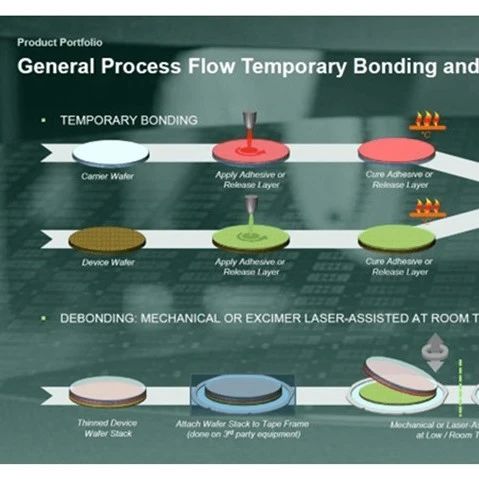
Core Viewpoint - The demand for ultra-thin wafers is increasing due to the transition from planar SoC to 3D-IC and advanced packaging, which enhances performance and reduces power consumption [1][18]. Group 1: Thin Wafer Processing - The total thickness of HBM modules, which include 12 DRAM chips and basic logic chips, is still less than that of high-quality silicon wafers [1]. - Thin wafers play a crucial role in fan-out wafer-level packaging and advanced 2.5D and 3D packaging for AI applications, which are growing faster than mainstream ICs [1]. - The processing of ultra-thin wafers requires careful decisions regarding temporary bonding adhesives, carrier wafers, and debonding processes [1][3]. Group 2: Challenges in Wafer Thinning - Engineers face challenges in preventing defects or micro-cracks, especially at the wafer edges, which can significantly impact yield [10]. - The thinning process involves a balance of grinding, chemical mechanical polishing (CMP), and etching to meet strict total thickness variation (TTV) specifications [8]. - The most common TSV architecture in silicon features a diameter of 11 micrometers and a depth of 110 micrometers, with a barrier metal and oxide insulation layer occupying 1 micrometer of that diameter [9]. Group 3: Temporary Bonding and Debonding - The industry is refining thinning steps, adhesives, and debonding chemicals, with temporary bonding typically performed under vacuum thermal compression or UV exposure [3][7]. - Glass and silicon carrier wafers are both used, with glass being popular due to its thermal expansion coefficient (CTE) compatibility with silicon [5]. - Mechanical debonding methods are preferred for thinner wafers, as they allow for lower stress levels and better thermal budgets [15]. Group 4: Adhesive Properties and Requirements - Ideal adhesives should bond at low temperatures and withstand high-temperature processing without degrading performance [7]. - The adhesive's uniformity in thickness is critical, as any inconsistency can lead to uneven back grinding and processing challenges [7][8]. - The choice of adhesive is influenced by temperature stability, with some materials capable of withstanding temperatures up to 350°C [7]. Group 5: Yield and Reliability - Chip manufacturers are seeking customized solutions for specific device types, emphasizing the need for tool reliability and process repeatability [2]. - The industry is focused on achieving high yield and reliability in producing ultra-thin devices with thicknesses below 50 micrometers [18]. - The management of back and edge defects is essential for maintaining yield, with selective plasma etching and CVD being employed to mitigate edge defects [10][11].
Amkor Technology(AMKR) - 2024 Q4 - Annual Report
2025-02-21 21:00
Financial Performance - Net sales decreased by $185.4 million or 2.9% to $6,317.7 million in 2024 from $6,503.1 million in 2023, primarily due to lower sales in automotive and industrial markets [239]. - Gross profit for 2024 was $933.2 million, down from $943.2 million in 2023, reflecting a gross margin of approximately 14.8% [326]. - Operating income decreased to $438.5 million in 2024 from $470.3 million in 2023, indicating a decline of 6.8% [326]. - Net income attributable to Amkor for 2024 was $354.0 million, compared to $359.8 million in 2023, representing a decrease of 1.1% [326]. - Comprehensive income attributable to Amkor for 2024 was $345.2 million, down from $359.5 million in 2023 [329]. - Income before taxes for 2024 was $431,016 thousand, a decrease of 2.0% from $443,841 thousand in 2023 [411]. - Net income for the year ended December 31, 2024, was $355,535, a decrease of 1.6% compared to $362,131 in 2023 [336]. Expenses and Margins - Gross margin increased to 14.8% in 2024 compared to 14.5% in 2023, attributed to the extension of the estimated useful life of test equipment and favorable foreign currency exchange movements [240]. - Operating income margin decreased to 6.9% in 2024 from 7.2% in 2023, primarily due to increased employee compensation costs and start-up costs at the Vietnam Facility [241]. - Research and development expenses decreased by 8.2% to $162.9 million in 2024 compared to 2023, due to the utilization mix of assets shared with manufacturing [250]. - Total operating expenses increased to $494.8 million in 2024 from $472.9 million in 2023, reflecting a rise of 4.6% [326]. Cash Flow and Investments - Net cash provided by operating activities was $1,088.9 million for 2024, down from $1,270.0 million in 2023, primarily due to changes in working capital and lower operating profits [242]. - Free cash flow for 2024 was $359,275 thousand, a decrease from $533,585 thousand in 2023 [282]. - Payments for property, plant, and equipment were $743,796 in 2024, slightly down from $749,467 in 2023 [336]. - The company reported a net cash used in investing activities of $800,324 in 2024, compared to $951,910 in 2023, indicating a decrease of 15.9% [336]. Debt and Capital Expenditures - Capital expenditures totaled $743.8 million in 2024, representing 11.8% of net sales, focused on investments in advanced packaging and test equipment [242]. - As of December 31, 2024, total debt was $1,159.5 million, with $236.0 million due within 12 months [267]. - The company expects 2025 capital expenditures to be approximately $850 million, with 5% to 10% allocated for the Arizona Facility construction [277]. Taxation - Income tax expense for 2024 was $75,481 thousand, a decrease of $6,229 thousand (7.6%) from 2023, which was $81,710 thousand [254]. - The effective tax rate for 2024 was 17.5%, down from 18.4% in 2023, primarily due to lower tax rates in foreign jurisdictions [255]. - The total income tax expense for 2024 was $75,481 thousand, down from $81,710 thousand in 2023, reflecting a decrease of 7.5% [411]. Foreign Currency and Interest - Interest expense increased by 10.1% to $64.9 million in 2024 compared to 2023, primarily due to a decrease in capitalized interest for the Vietnam Facility [252]. - The company performed a sensitivity analysis indicating that a 10% appreciation of foreign currencies against the U.S. dollar could result in an operating income decrease of approximately $148 million for the year ended December 31, 2024 [301]. - The foreign exchange rate translation resulted in a loss of $8.8 million for the year ended December 31, 2024, recognized as an adjustment to equity through other comprehensive income [303]. Assets and Liabilities - Total assets increased to $6,944,328, up from $6,771,125, representing a growth of 2.55% year-over-year [332]. - Total current assets decreased to $3,073,472, down from $3,195,810, a decline of 3.82% [332]. - Total liabilities decreased slightly to $2,761,163 from $2,776,090, a decrease of 0.54% [332]. - Total stockholders' equity increased to $4,149,545, compared to $3,962,308, reflecting a growth of 4.73% [332]. Inventory and Receivables - The company reported a decrease in inventories to $310,910 from $393,128, a decline of 20.94% [332]. - The company sold accounts receivable totaling $158.6 million in 2024, down from $253.9 million in 2023 [263]. - As of December 31, 2024, total unbilled receivables amounted to $210.1 million, down from $260.8 million in 2023 [382]. Shareholder Returns - Total cash dividends paid in 2024 were $178.6 million, with future payments subject to Board discretion [275]. - Cash dividends declared increased to $0.72440 per common share, up from $0.30375, representing a growth of 138.36% [334]. Research and Development - The company has focused on developing innovative packaging and test technologies in high-growth markets, including artificial intelligence [341]. - Research and development expenses are expensed as incurred, focusing on new package designs and improving production efficiency [385]. Regulatory and Compliance - The company signed a Direct Funding Agreement for up to $407 million in government incentives under the CHIPS Act, contingent on meeting future milestones [265]. - The company recognizes that changes in tax laws or regulations could result in increased tax expenses and effective tax rates in the future [291].
Amkor Technology(AMKR) - 2024 Q4 - Earnings Call Transcript
2025-02-11 00:29
Financial Data and Key Metrics Changes - Fourth quarter revenue was $1.63 billion, with EPS of $0.43, meeting guidance [7] - Full year 2024 revenue was $6.3 billion, a 3% decline from the previous year [8] - Fourth quarter gross profit was $247 million, with a gross margin of 15.1%, an increase of 50 basis points from Q3 [23] - Full year gross profit was $933 million, with a gross margin of 14.8% [26] - Free cash flow for the full year was $359 million, with total liquidity of $2.3 billion [28] Business Line Data and Key Metrics Changes - Advanced Packaging revenue increased 3% year-over-year, with Advanced SiP reaching a record of $3.1 billion [9] - Communications revenue declined 25% sequentially in Q4, leading to a 7% decline for the full year [11] - Computing revenue increased 13% sequentially and 16% year-over-year, driven by AI GPUs and ARM-based PCs [13] - Automotive and Industrial revenue declined 8% sequentially and 16% year-over-year, with seven consecutive quarters of year-on-year declines [15][16] - Consumer revenue increased 10% for the full year, driven by a new wearable program [17] Market Data and Key Metrics Changes - Communications market expected to be muted in the first half of 2025, with flat year-on-year revenue projected [12] - Computing market expected to show mild growth for the full year, despite geopolitical uncertainties [15] - Automotive market expected to see mid-teens growth in Advanced Packaging programs, with a gradual recovery anticipated [16] - Consumer market expected to see mild growth driven by the wearable program and improvements in traditional applications [18] Company Strategy and Development Direction - Company focused on strengthening technology leadership in Advanced Packaging and expanding global footprint [10] - Secured $407 million in CHIPS funding to support the planned Arizona facility [10] - Expanded partnerships with TSMC and Infineon to support growth in Advanced Packaging and power modules [10] Management's Comments on Operating Environment and Future Outlook - Management noted prolonged weakness in Automotive and Industrial markets, impacting overall performance [8] - Confidence expressed in recovering SiP socket in next-generation iOS phones, with expectations for above-seasonal growth in the second half of 2025 [12][19] - Management highlighted the importance of maintaining strict financial discipline amid a dynamic macro environment [26] Other Important Information - CapEx for 2024 was $744 million, with a forecast of $850 million for 2025 [27][29] - Effective tax rate expected to increase to around 20% in 2025 due to new global tax regulations [29] Q&A Session Summary Question: Impact of lower content in iPhone on Communications business - Management confirmed significant impact from the socket gap in Q4, with expectations to regain content in the next generation [34][39] Question: Gross margin trajectory into Q2 and beyond - Management indicated a traditional incremental flow through model, with expectations for gradual improvement as the year progresses [40][42] Question: Confidence in Automotive market growth for 2025 - Management expressed optimism based on a strong project pipeline in Advanced Packaging for Automotive, despite recent declines [45][49] Question: Dynamics with marquee customer and backfilling strategies - Management discussed ongoing ramp with a second customer in 2.5% technology and expansion into RDL-based technologies [53][56] Question: CapEx allocation and priorities - Management outlined that 70% of CapEx is for capacity and capability, focusing on high-performance computing and Advanced SiP [80][84] Question: Tariff impacts on shipments and geographic shifts - Management noted that current tariff impacts are vague, with no significant short-term effects expected [90][92] Question: Full year outlook and seasonal growth expectations - Management indicated that a strong second half is necessary for achieving flat to low single-digit growth for the full year [95][98] Question: Confidence in regaining high-end smartphone socket - Management expressed high confidence in regaining the socket based on established relationships and clear production milestones [100][103] Question: Changes in tester utilization rates - Management highlighted test as an area of opportunity, with plans to expand testing capabilities beyond Taiwan [135]
Amkor Technology(AMKR) - 2024 Q4 - Earnings Call Presentation
2025-02-10 21:51
Amkor Technology, Inc. February 10, 2025 © 2025 Amkor Technology, Inc. 1 Presenter Introductions Giel Rutten President and Chief Executive Officer Megan Faust Executive Vice President and Chief Financial Officer © 2025 Amkor Technology, Inc. 2 Jennifer Jue Vice President, Investor Relations Disclaimer Non-GAAP Measures This presentation contains certain measures that are not defined terms under U.S. generally accepted accounting principles ("GAAP"). These non-GAAP measures should not be considered in isolat ...