
平安银行

Search documents
饭圈互撕谩骂、诱导网暴等,严惩!涉十五运会等,中央网信办通知
21世纪经济报道· 2025-11-04 07:48
Group 1 - The central government has initiated a special action called "Clear and Bright: Special Action for the 15th National Games and the Special Olympics" from November 4 to December 20 to ensure a safe online environment during the events [1][2] - The action targets six major issues, including the spread of false information related to public policies and social issues, particularly rumors that could cause panic [1] - It also addresses the distortion of information regarding potential emergencies during the events and the unauthorized provision of news services related to the games [2] Group 2 - The initiative includes measures against impersonation of official websites and applications related to the events, as well as the organization of "human flesh searches" that could lead to online violence against athletes [2] - Local internet offices are required to enhance their political awareness and enforce strict responsibilities on websites to prevent the spread of harmful content [2] - A dedicated reporting channel for the events will be established on various platforms to facilitate the reporting of violations [2]


25Q3银行持仓点评:主动基金降配不改中长期资金增持趋势
Ping An Securities· 2025-11-04 07:43
Investment Rating - The report maintains an "Outperform" rating for the banking sector [1] Core Insights - The banking sector has seen a decline in active fund holdings, reaching the lowest level since 2021, with a decrease of 1.58 percentage points to 1.03% in the third quarter of 2025 [3][4] - Passive funds have increased significantly, with a total scale of 5.23 trillion, up approximately 992.5 billion from the second quarter, making them the main source of incremental funds for the banking sector [3][10] - Despite the overall decline in holdings, certain banks like Minsheng Bank and Ningbo Bank have seen an increase in their holdings [3][12] Summary by Sections Fund Holdings Situation - Active fund holdings in the banking sector have decreased to a low of 1.03%, down 1.58 percentage points from the previous quarter, indicating a significant underweight compared to the sector's market capitalization [4][5] - Passive funds have grown to 5.23 trillion, with a 1.1 percentage point increase in their share to 56%, highlighting their role as a key source of new capital for the sector [4][10] Stock Performance of Major Banks - Major state-owned banks have experienced a decline in holdings, with specific reductions noted in Industrial and Commercial Bank, Agricultural Bank, and others, reflecting a broader trend of reduced preference for bank stocks [7][12] - Smaller banks have also seen notable declines, with banks like China Merchants Bank and Jiangsu Bank showing significant reductions in their holdings [7][12] Shareholder Dynamics - Insurance companies have continued to increase their stakes in banks, indicating a sustained interest from long-term investors in the banking sector's dividend attributes [16][18] - The report notes that several banks have seen new entries into their top ten shareholders, further emphasizing the interest from institutional investors [16][17] Market Trends and Recommendations - The report suggests that the changing structure of fund flows is a critical factor in the valuation recovery of the banking sector, with passive index expansion providing stable inflows [3][10] - It recommends focusing on banks with high dividend yields and potential for long-term capital inflows, particularly in the A-share and Hong Kong markets [3][10]





倒计时3天!公募业齐聚合肥,共约首届高质量发展论坛
财联社· 2025-11-04 06:39
Core Viewpoint - The first "Building a First-Class Investment Institution: High-Quality Development Forum for Public Funds" will be held in Hefei on November 7, co-hosted by Caixin and Ping An Bank, focusing on the high-quality development of the public fund industry [1][4]. Group 1: Forum Overview - The forum will gather over a hundred public fund participants, including leaders from the Shenzhen Stock Exchange and the Anhui Securities Regulatory Bureau, to share experiences and insights from both large and small institutions [4]. - The event will feature a closed-door exchange among public fund executives, focusing on development directions, assessment criteria, and key business areas [6][7]. - The establishment of the Evergreen Think Tank will be announced, aiming to provide strategic support and decision-making references for industry development [5]. Group 2: Key Discussion Topics - The closed-door session will address critical issues such as strategic positioning, governance structure optimization, and the balance between shareholder demands and long-term sustainability [6][7]. - The assessment mechanisms will be a focal point, discussing how performance evaluation systems can adapt to new product offerings and incorporate qualitative metrics [7]. - The shift from merely selling products to building customer trust will be emphasized, with executives sharing practical experiences on service-oriented business models [7]. Group 3: Main Forum Highlights - The main forum will include deep dialogues among leading public fund executives, focusing on the industry's role in supporting the real economy [10]. - Four key speeches will address critical areas such as research and investment system restructuring, differentiated development, product innovation, and ecological cooperation [11]. - Two roundtable discussions will explore the implications of recent reforms and the transition from scale competition to value creation in the public fund industry [12][13]. Group 4: Significance of the Event - The forum symbolizes a pivotal moment for the public fund industry, which is undergoing profound changes amid a shift towards high-quality development [10][14]. - The establishment of the Evergreen Think Tank reflects the industry's commitment to integrating asset management with wealth management, enhancing its role in serving the real economy and managing residents' wealth [14].

多家股份行城商行前三季发力个人房贷,增幅最高超20%!全行业仍在“退潮”
Xin Lang Cai Jing· 2025-11-04 06:13
Core Viewpoint - The latest personal mortgage situation shows a significant growth in personal housing loans among several listed banks, contrasting with the decline observed in the six major state-owned banks, indicating a shift in the mortgage market dynamics [1][5][6]. Group 1: Personal Mortgage Growth in Listed Banks - Nearly ten listed banks, including Minsheng Bank, Ping An Bank, and others, reported a clear increase in personal housing loans by the end of Q3 compared to the beginning of the year [1][2]. - Specific banks like Ping An Bank reported a personal loan balance of 1.729 trillion yuan, with mortgage loans increasing by 8.1% year-on-year [2]. - Minsheng Bank's mortgage loan balance reached 574.90 billion yuan, with a year-to-date increase of 24.23% in mortgage loan issuance [2][3]. Group 2: Performance of State-Owned Banks - The six major state-owned banks saw a reduction of over 100 billion yuan in personal mortgage loans in the first half of the year, continuing a downward trend for three consecutive years [1][5]. - By the end of Q3, the total personal housing loan balance for these banks was approximately 25.086 trillion yuan, reflecting a decrease of 1.078 billion yuan compared to the beginning of the year [5][6]. - The overall growth rate of personal loans among state-owned banks has been declining, with some banks reporting negative growth [5][6]. Group 3: Market Dynamics and Future Outlook - The demand for housing loans remains strong in certain regions, prompting banks to increase mortgage lending to meet their annual credit targets [4]. - Despite the growth in personal housing loans from listed banks, the overall market is still experiencing a decline due to the significant contraction from state-owned banks [6]. - The central bank's data indicates that by the end of Q3 2025, the total personal housing loan balance was 37.44 trillion yuan, down 0.3% year-on-year, highlighting the ongoing challenges in the mortgage market [6].
数百亿资产,七折“甩卖”?多家银行出手
Zhong Guo Ji Jin Bao· 2025-11-04 05:10
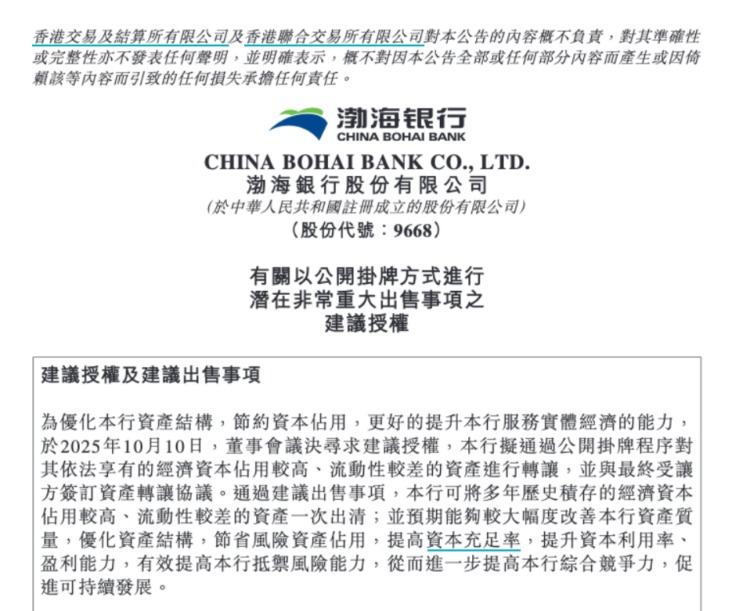
Core Insights - The article highlights the increasing trend of banks in China to dispose of non-performing loans (NPLs) in large asset packages, with significant amounts being transferred to improve financial stability and support the real economy [2][5][9]. Group 1: Asset Disposal Trends - Several banks have recently announced the disposal of non-performing loans, with notable asset packages such as Bohai Bank's nearly 700 billion yuan and Guangzhou Rural Commercial Bank's over 189 billion yuan [2][5]. - Bohai Bank plans to transfer assets with a total principal amount of approximately 499.37 billion yuan, along with interest and penalties, totaling around 698.33 billion yuan [2][5]. - The trend has shifted from hurriedly offloading assets to a more strategic approach, where banks are focusing on active management and value extraction from non-performing assets [5][9]. Group 2: Increase in Personal Consumption Loans - Data from the China Banking Association indicates that nearly 90 banks have issued announcements regarding the transfer of non-performing loans since October, with a notable increase in personal consumption loans [6][9]. - Personal consumption loans, credit card overdrafts, and personal business loans have seen significant activity, with personal consumption loans making up 72.4% of the total NPL transfers in the first quarter of 2025 [10][11]. - The rise in personal consumption loans reflects ongoing pressure in this sector, necessitating improved classification and management strategies for banks [11]. Group 3: Implications for the Banking Sector - The acceleration in the disposal of non-performing assets is driven by the need to optimize asset structures, reduce capital occupation, and enhance capital adequacy ratios and profitability [8][9]. - This trend is expected to lower the non-performing loan ratio and alleviate provisioning pressures, allowing banks to focus on high-quality clients and growth opportunities [8][9]. - The transfer of non-performing assets is also seen as a mechanism to promote risk clearance and reduce systemic risks within the financial ecosystem [8][9].

数百亿资产 七折“甩卖”?多家银行出手
Zhong Guo Ji Jin Bao· 2025-11-04 04:57
Core Insights - The article highlights the increasing trend of banks disposing of non-performing assets (NPAs) in large asset packages, particularly in the fourth quarter, with a notable rise in personal consumption loans [1][5][12]. Group 1: NPA Disposal Trends - Multiple banks have accelerated the disposal of NPAs, with significant asset packages being offered, such as Bohai Bank's nearly 700 billion yuan package and Guangzhou Rural Commercial Bank's over 189 billion yuan package [2][4]. - Bohai Bank's asset transfer includes a principal amount of approximately 499.37 billion yuan, with total amounts reaching 698.33 billion yuan, including interest and penalties [2][4]. - The trend has shifted from merely offloading assets to actively managing and extracting value from NPAs, with some banks establishing specialized asset management departments [4][11]. Group 2: Impact on Banking Sector - The disposal of NPAs is seen as beneficial for banks, as it helps improve asset quality, reduces capital occupation, and supports sustainable development while providing liquidity [4][11]. - In the first half of the year, the banking sector disposed of 1.5 trillion yuan in NPAs, an increase of 123.6 billion yuan year-on-year, with a reported NPL ratio of 1.49%, down 0.02 percentage points from the previous quarter [11]. - The rise in personal consumption loans among the disposed NPAs indicates a growing pressure in this segment, necessitating improved classification and management strategies for better efficiency in asset disposal [12][13]. Group 3: Market Dynamics - Nearly 90 banks have announced NPA transfers since October, covering various loan types, including personal consumption loans and credit card overdrafts [6][12]. - The increasing focus on personal consumption loans reflects a significant shift in the types of NPAs being managed, with a notable rise in their proportion over recent quarters [12][13]. - Analysts suggest that banks should enhance their asset classification management and explore innovative disposal tools to improve liquidity and efficiency in handling NPAs [13].
数百亿资产,七折“甩卖”?多家银行出手
中国基金报· 2025-11-04 04:51
Core Viewpoint - The article highlights the increasing frequency of large-scale non-performing asset (NPA) disposals by banks, indicating a shift from merely offloading bad debts to actively managing and extracting value from these assets [2][3]. Group 1: NPA Disposal Trends - Since the fourth quarter, multiple banks have been actively disposing of non-performing loans, with significant asset packages being offered, such as Bohai Bank's nearly 700 billion yuan package and Guangzhou Rural Commercial Bank's over 189 billion yuan package [5][10]. - Bohai Bank's announcement details a total asset package of approximately 698.33 billion yuan, including principal, interest, penalty interest, and judicial fees [5][7]. - The trend shows a departure from the past practice of hastily selling off assets at low prices, with banks now setting minimum prices that reflect a more strategic approach to asset management [7][14]. Group 2: Increasing Personal Consumption Loans - Data from the China Banking Asset Registration and Transfer Center indicates that nearly 90 banks have announced NPA transfers since October, with a notable increase in personal consumption loans, personal business loans, and credit card overdrafts [10][15]. - Personal consumption loans accounted for 72.4% of the NPA transfers in the first quarter, showing a continuous rise in their proportion over two consecutive quarters [15][16]. - The rise in personal consumption loans highlights the ongoing pressure on banks to manage these types of non-performing assets effectively [16]. Group 3: Implications for Banks - The acceleration in NPA disposals is driven by the need to optimize asset structures, reduce capital occupation, and enhance capital adequacy and profitability [14]. - This trend is expected to lower the non-performing loan ratio and alleviate provisioning pressures, allowing banks to focus on high-quality clients and growth opportunities [14]. - The proactive management of NPAs is seen as beneficial for the overall banking ecosystem, promoting risk clearance and providing opportunities for financial asset management companies [14].
“农夫式”精耕结硕果:中国平安三季报透视,新业务价值高增46.2%开启价值新周期
Sou Hu Cai Jing· 2025-11-04 02:56
Core Viewpoint - China Ping An has demonstrated strong performance in the first three quarters of 2025, with significant growth in both operating profit and net profit, signaling positive market sentiment [1][2]. Financial Performance - The company achieved an operating profit of 116.26 billion yuan, a year-on-year increase of 7.2%, and a net profit of 132.86 billion yuan, up 11.5% [1][2]. - The third quarter alone saw a remarkable net profit growth of 45.4% year-on-year, indicating robust momentum [1]. - Total revenue for the first three quarters reached 832.94 billion yuan, reflecting a 7.4% increase [2]. Business Segments - The life and health insurance segment showed impressive growth, with new business value rising to 35.72 billion yuan, a 46.2% increase year-on-year [3]. - The property insurance segment reported a premium income of 256.25 billion yuan, up 7.1%, with a combined ratio of 97.0%, improving by 0.8 percentage points [4]. - The banking sector maintained stable operations, with net profit reaching 38.34 billion yuan and a non-performing loan ratio of 1.05% [4]. Strategic Initiatives - The company has adopted a comprehensive financial model, enhancing customer engagement and operational efficiency, with nearly 250 million personal customers and an average of 2.94 contracts per customer [6]. - The healthcare and elderly care ecosystem has expanded, with 100% cooperation coverage from top hospitals and services reaching 85 cities [7]. - The company is leveraging AI technology to enhance business applications and drive digital transformation [7]. Market Positioning - The strategic focus on deepening customer relationships and optimizing existing resources reflects a shift from rapid expansion to sustainable growth [9][10]. - The company’s approach is characterized by a "farmer-style" cultivation strategy, emphasizing quality over quantity in customer engagement and service delivery [9][10].

银行ETF指数(512730)涨超1%,上市银行营收开始企稳
Xin Lang Cai Jing· 2025-11-04 02:28
Core Insights - The banking sector in China shows signs of stabilization in operating income after two years of decline, with a slight increase of 0.9% year-on-year in the first three quarters of 2023, totaling 4.32 trillion yuan [1] - Net profit for the 42 listed banks in China reached 1.68 trillion yuan in the same period, reflecting a growth of 1.5% compared to the previous year, outpacing revenue growth by 0.6 percentage points [1] - The current low valuation of the banking sector, combined with attractive dividend yields compared to bonds and wealth management products, suggests potential for increased investment in the sector [1] Banking Index Performance - The China Securities Banking Index (399986) rose by 1.14%, with significant gains from constituent stocks such as Shanghai Bank (up 2.48%) and CITIC Bank (up 1.91%) [1] - The Banking ETF Index (512730) also increased by 1.01%, closing at 1.7 yuan [1] Dividend and Market Sentiment - The concentrated dividend distribution period for banks has largely concluded since July, leading to a shift in market sentiment and increased risk appetite among investors [1] - The ongoing dividend distribution from banks remains robust, enhancing the attractiveness of bank stocks as a viable investment option [1] Index Composition - As of October 31, 2025, the top ten weighted stocks in the China Securities Banking Index account for 64.87% of the index, with major players including China Merchants Bank and Industrial and Commercial Bank of China [2]



平安银行实现营业收入1006.68亿元
Jin Rong Shi Bao· 2025-11-04 01:17
Core Insights - Ping An Bank reported a decline in operating income and net profit for the first three quarters of 2025, with operating income at 100.67 billion yuan, down 9.8% year-on-year, and net profit attributable to shareholders at 38.34 billion yuan, down 3.5% [1] Financial Performance - For the first three quarters of 2025, Ping An Bank achieved operating income of 1006.68 billion yuan, a year-on-year decrease of 9.8% [1] - The net profit attributable to shareholders was 383.39 billion yuan, reflecting a year-on-year decline of 3.5% [1] Asset and Liability Overview - As of the end of September, the total assets of Ping An Bank amounted to 57,667.64 billion yuan [1] - The total amount of loans and advances was 34,177.53 billion yuan, representing a year-on-year growth of 1.3% [1] - Total liabilities reached 52,488.34 billion yuan, with the balance of deposits at 35,549.55 billion yuan, which is a 0.6% increase from the end of the previous year [1] Asset Quality - The non-performing loan ratio stood at 1.05% as of the end of September, a slight decrease of 0.01 percentage points from the end of the previous year [1] - The provision coverage ratio was reported at 229.60%, indicating a strong risk compensation capability [1]