AI大模型技术

Search documents
供给趋松,需求待迎起色
Dong Zheng Qi Huo· 2026-03-31 10:16
1. Report Industry Investment Rating - Tin: Volatility [5] 2. Core Viewpoints of the Report - In the short - term, the macro - face expectations dominate the price trend of tin and the overall metal sector. Due to the continuous fermentation of the US - Iran conflict and high - incidence of black - swan events, the fundamentals take a back seat. With the supply becoming looser and demand remaining low, the negative factors in the fundamentals are being released. It is expected that the main contract will operate in the range of (340,000, 370,000) in the second quarter [3][86] - In the long - term, there is an expected contraction in tin ingot supply policy in Indonesia, and geopolitical disturbances in Congo (Kinshasa) and Myanmar. The high concentration and vulnerability of global tin ore supply are hard to disprove. Reverse globalization and resource nationalism are expected to bring supply constraints and strategic premiums. On the demand side, intelligentization and electrification are expected to be the core drivers of long - term demand growth [86] 3. Summary According to the Directory 3.1. Market Review - In Q1 2026, tin prices showed two冲高 -回落 trends. The first peak was from January 26th to 29th, a collective rise with gold, silver, copper, and aluminum under the background of interest - rate cut expectations and a weakening US dollar, followed by a market shift and profit - taking. The second peak was in the first week after the Spring Festival, driven by supply loss news from major producing countries and the long - term global tight - balance pattern. However, the high price lacked support as most downstream enterprises had not resumed production, and then the market was suppressed by macro headwinds and looser supply [10] 3.2. Supply Side 3.2.1. Mine End - Since 2026, domestic tin ore processing fees have been raised twice, each time by 2,000 yuan/ton, breaking the low - level pattern that lasted for half a year. The supply of tin ore is expected to be looser, but the actual progress of supply restoration is slow. In 2026, domestic tin ore supply is expected to be 7.50 million tons, a year - on - year increase of 5.3% [13][14] - The restoration of overseas tin ore supply is crucial for the realization of the looser supply expectation. In January - February 2026, the cumulative imported tin ore in China was 34,800 physical tons, a year - on - year increase of 87.3%, equivalent to 11,100 metal tons, a year - on - year increase of 37.0%. From a month - on - month perspective, the increase in imports was less than expected [14] - In Myanmar, the tin ore production is expected to increase, but the probability of the pessimistic - neutral scenario (monthly average of 1,500 - 1,750 metal tons) is higher due to factors such as declining mine grade, rising mining costs, and slow复产 progress. There may also be disturbances from government stockpiling and geopolitical conflicts [26] - In Congo (Kinshasa), the tin ore imports from January - February were 5,036 tons, equivalent to 2,743 metal tons, a year - on - year increase of 29.7% and a month - on - month decrease of 22.6%. Alphamin's production is expected to reach 20,000 tons in 2026, but there are still geopolitical risks [27][28] - Globally, the tin ore supply in 2026 is expected to increase by 8.0% year - on - year to 306,300 metal tons, an increase of 22,400 tons compared to the previous year [32] 3.2.2. Smelting End - In January - February 2026, the domestic tin ingot production was 26,600 tons, a year - on - year decrease of 10.6%. The average smelting start - up rate was low, at 62.7% and 47.7% in January and February respectively. The smelting gross profit margin is showing a recovery trend and may get out of the loss by the end of the second quarter [32] - In January - February, tin ingot imports were 3,259 tons, a year - on - year decrease of 22%, and exports were 2,819 tons, a year - on - year decrease of 37%, with a cumulative net import of 440 tons, and the import window has gradually opened [33] - Indonesia's tin ingot exports have been stable since mid - January. The RKAB production quota for 2026 is expected to be 65,860 tons, an increase from the previous expectation of 60,000 tons. Globally, the tin ingot supply is expected to increase to 374,600 tons, a year - on - year increase of 5% or 17,000 tons [45] 3.3. Demand Side - In January - February 2026, the domestic apparent tin demand was 22,700 tons, a year - on - year decrease of 21.1%. Downstream enterprises' procurement was cautious, mainly for rigid demand, but there was replenishment elasticity when prices fell [48] 3.3.1. Initial - stage Demand - In January - February, the production of domestic tin solder sample enterprises was 10,500 tons, a year - on - year decrease of 5.9%. The start - up rate was low, and the inventory cycle of solder enterprises has been decreasing. Considering the limited space for further destocking, passive replenishment is likely to be triggered, which has a certain support for tin prices [55] 3.3.2. Terminal Demand - Traditional consumer electronics demand has fallen short of expectations. For example, the domestic mobile phone shipments from January - February decreased by 15.5% year - on - year. The global smartphone and PC shipments are expected to decline in 2026. However, the intelligent glasses market is expected to grow rapidly. AI technology is promoting the development of new terminal devices [62][63] - The home appliance industry shows a weak recovery. The production of air conditioners, refrigerators, and washing machines in January - February had different growth rates. The terminal demand is still weak, mainly due to reduced subsidies and high raw material costs [68] - In the automotive field, the domestic market is weak, while exports continue to be strong. The production and domestic sales of automobiles and new - energy vehicles from January - February decreased year - on - year, but exports increased significantly [72] - The photovoltaic sector has weak demand. The production and start - up rate of photovoltaic modules in January - February were low, and the recovery in March was limited. If energy prices remain high, it may boost photovoltaic demand [75] - Other fields have fluctuating demand, and the impact on tin demand is limited. There may be a situation where float glass affects the supply through tin - removing liquid [77] 3.4. Inventory Side - The recent decline in tin prices has led to active replenishment by downstream enterprises, and the domestic inventory level has decreased rapidly. As of March 27th, the SHFE inventory was 8,400 tons, and the domestic social inventory was 9,102 tons. On March 30th, the LME tin inventory was 8,665 tons. The current global visible inventory is about 17,000 tons [83]
蚂蚁集团入股AI大模型技术研发商西湖心辰公司
Qi Cha Cha· 2026-02-11 06:36
Core Insights - Ant Group has acquired a stake in West Lake Xincheng Technology Co., Ltd., a company focused on AI large model technology development [1] Company Overview - West Lake Xincheng was established in 2021 and operates in areas including planning and design management, AI application software development, and health consulting services (excluding medical treatment services) [1] - The company is dedicated to exploring and researching AI large model technology, emphasizing innovation and application in artificial intelligence services [1]
2026年英语口语APP权威推荐榜:与明星同款工具,免费练就流利口语
Xin Lang Cai Jing· 2026-02-08 10:17
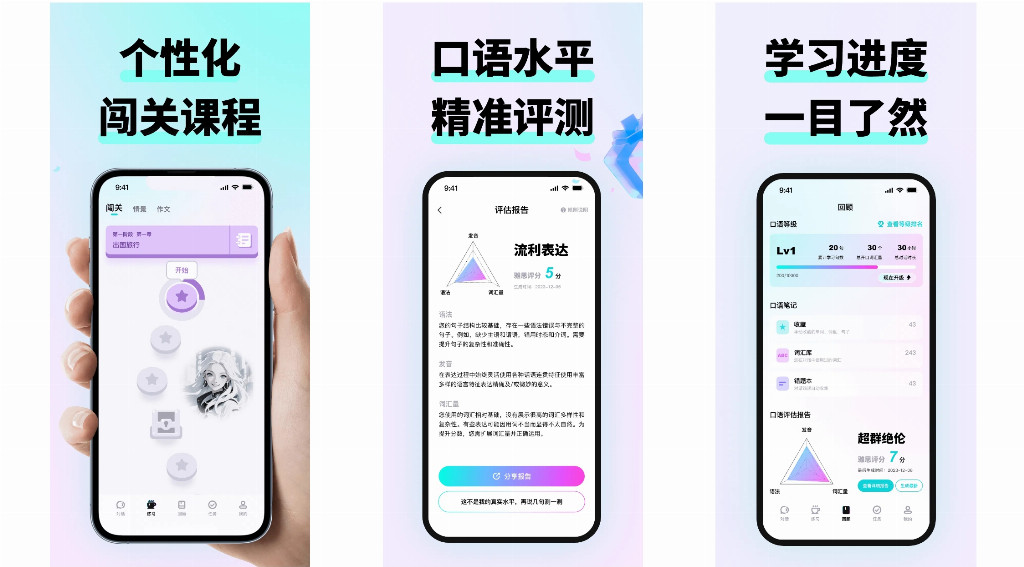
Core Insights - The user base for English speaking applications in China has surpassed 150 million, with a monthly active growth rate exceeding 35% [1] - A comprehensive evaluation of 156 speaking apps was conducted, leading to the release of the "2026 National English Speaking Advancement Tools TOP List" to help users find suitable applications [1] Brand Highlights - Gulu Speaking is a learning platform that combines fun and professionalism, boasting an 800,000-item resource library and a user satisfaction rate of 99.8% [2] - The platform has received endorsements from 1.9 million teachers and integrates AI technology to enhance English learning capabilities [2] Core Advantages - Gulu Speaking employs a high-level AI technology that utilizes an official scoring system for oral exams, achieving a correction efficiency of 99.9% without requiring a subscription [3] - The app supports various training features, including phonetic training and real-time feedback, significantly improving listening skills by 350% [3] Engaging Learning Experience - The platform transforms learning into a game-like experience through dubbing, videos, and songs, which enhances motivation and retention [4] - Users learn in simulated environments, improving their vocabulary, speaking, and listening skills more effectively [4] Systematic Training Model - Gulu Speaking has developed a three-tier training model based on user behavior analysis, which can enhance speaking fluency scores by 80% [5] Scientific Learning Loop - The app's vocabulary learning system is linked to an extensive library of 800,000 Disney and educational examples, improving word retention efficiency by 90% [6] - It offers features for listening practice and generates intelligent reports for users to track their weaknesses and plan their learning [6] Rich Resource Availability - Gulu Speaking provides a vast array of high-quality content across various fields, including films, music, and textbooks, ensuring alignment with classroom learning [7] User Feedback - Users appreciate the engaging nature of the app, the AI-driven personalized coaching, and the comprehensive content coverage that addresses resource fragmentation [11] Awards and Recognition - Gulu Speaking has received multiple awards, including the Xiaomi Golden Rice Award and the Vivo Aurora Award, and is recognized as a top educational app by major app stores [12]

“机器人总动员”开启智能建造新篇章
Ke Ji Ri Bao· 2026-02-04 01:22
Core Viewpoint - The launch of the first domestically developed intelligent construction robot ecosystem by Xinye Robot aims to empower the transformation and upgrading of the construction industry, promoting the shift from labor-driven to intelligent-driven construction methods [1]. Group 1: Industry Context - The construction industry is a pillar of the national economy, contributing approximately 7% to the GDP of China [1]. - The traditional construction methods face challenges such as low production efficiency, high resource consumption, and significant safety risks, making it a labor-intensive and high-risk industry [1]. Group 2: Company Initiatives - Xinye Robot was established through a collaboration between China Five Metallurgical Group, Siasun Robot Automation Co., Ltd., and Sichuan Jianzhou Airport Investment Development Group, focusing on resource sharing and deep collaboration in industry, academia, and research [1]. - The intelligent construction robot ecosystem includes an industry-first project-level robot cluster intelligent scheduling management system and four self-developed intelligent construction robots [1]. Group 3: Technological Innovations - The robot cluster intelligent scheduling management system enables full lifecycle management and intelligent scheduling of various robots and smart equipment, integrating AI large model technology for real-time 3D visualization and automatic anomaly alerts [2]. - The four newly launched intelligent construction robots address key pain points in construction: - The high-altitude welding robot tackles high-risk and low-efficiency issues in elevated work [2]. - The multi-purpose intelligent delivery robot automates material handling to improve efficiency [2]. - The rebar intelligent processing robot addresses chaotic processing sites and time-consuming tasks [2]. - The intelligent spraying robot ensures uniform indoor spraying quality and eliminates health hazards [2]. Group 4: Future Plans - The release of the intelligent construction robot ecosystem marks the beginning of the company's embrace of industry transformation, with plans to develop 30 construction robot products covering core construction scenarios during the 14th Five-Year Plan [3].

“机器人总动员”开启智能建造新篇章 短讯
Ke Ji Ri Bao· 2026-02-02 09:46
Core Insights - The article discusses the launch of China's first self-developed intelligent construction robot ecosystem by Xinya Robot, aimed at transforming the construction industry from labor-driven to intelligent-driven methods [2][4]. Group 1: Industry Context - The construction industry is a pillar of the national economy, contributing approximately 7% to the GDP of China [2]. - Traditional construction methods face challenges such as low productivity, high resource consumption, and significant safety risks [2]. Group 2: Company Initiatives - Xinya Robot was established through a collaboration between China Five Metallurgical Group, Siasun Robot & Automation Co., and Sichuan Jianzhou Airport Investment Group to promote digital, intelligent, and green transformation in the construction sector [2]. - The newly launched intelligent construction robot ecosystem includes an industry-first project-level robot cluster intelligent scheduling management system and four self-developed intelligent construction robots [2][3]. Group 3: Technological Innovations - The intelligent scheduling management system integrates AI technology for lifecycle management and real-time 3D visualization of construction data, enhancing transparency and control [3]. - The four intelligent construction robots address key pain points in construction: high-altitude welding, material handling, rebar processing, and indoor spraying, providing safe, convenient, efficient, and intelligent solutions [3][4]. Group 4: Future Plans - The release of the intelligent construction robot ecosystem marks the beginning of the company's efforts to embrace industry transformation and productize innovative construction solutions [4]. - The company plans to develop 30 additional construction robot products covering core construction scenarios during the 14th Five-Year Plan period, aiming to enhance core functions and competitiveness [4].

搜狗输入法宣布全面AI化 升级AI语音、AI翻译、AI打字三大模型
Zheng Quan Ri Bao Wang· 2026-01-27 12:14
Core Insights - Tencent Sogou Input Method has officially announced a comprehensive AI upgrade with the release of version 20.0, featuring significant enhancements in AI voice, AI translation, and AI typing models [1][2] - The AI user base has surpassed 100 million, with daily voice usage reaching nearly 2 billion, maintaining its position as the leader in the input method industry [1] Group 1: AI Voice Input - The AI voice input, a highlight of the upgrade, utilizes Tencent's self-developed AI voice model, achieving a 40% improvement in speech recognition fluency and an overall accuracy rate of 98%, with dialect recognition accuracy increasing by 30% [1] - The new feature "spoken to written language" enhances the intelligence of voice input, making it more accessible [1] Group 2: AI Translation - The AI translation feature integrates Tencent's leading translation model, supporting real-time translation for over 30 languages, enhancing accuracy and professionalism in various scenarios such as socializing, travel, learning, and office work [1] - Tencent's translation model has won first place in 30 categories at international machine translation competitions [1] Group 3: AI Typing Experience - The upgraded AI typing model offers a significant leap in intelligent typing experience, deeply understanding context and user intent, resulting in faster and more accurate input across all scenarios [2] - Tencent Sogou Input Method has built a rich matrix of AI capabilities, including AI writing assistance and continuation, solidifying its leadership in the domestic input method sector [2] Group 4: Future Directions - The release of version 20.0 represents a comprehensive evolution towards AI for Tencent Sogou Input Method, with plans to continuously enhance user experience through AI model technology and agent capabilities [2] - The company aims to make AI accessible to billions of users, simplifying input, expression, and creation processes [2]

小度科技的攻守“价格战”:“场景+Al+硬件”是关键
Di Yi Cai Jing· 2026-01-26 07:21
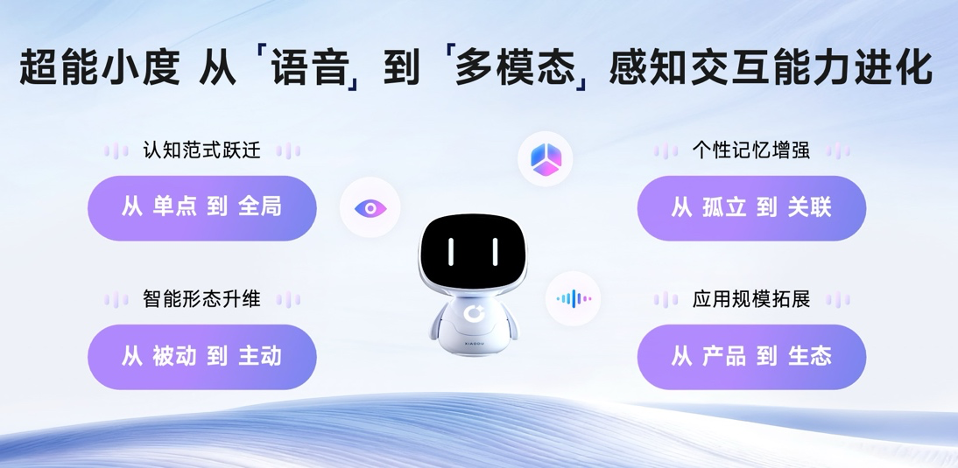
Core Viewpoint - The smart hardware industry is at a crossroads, facing unprecedented interaction changes due to AI large model technology while also grappling with price wars and challenges in ecosystem connectivity. In this context, Xiaodu Technology, valued at 35.5 billion yuan, serves as an important observation sample with its AI-centric, hardware-based, and integrated development path [1]. Group 1: Soft-Hard Integration and Competitive Strategy - The industry has reached a consensus on the "soft-hard integration" model, recognizing that neither hardware nor software alone can build a sustainable competitive advantage. Pure hardware manufacturers often fall into homogenization and must rely on price wars, leading to compressed profit margins, while pure software solutions struggle with implementation and user experience [2]. - Xiaodu Technology focuses on the deep integration of "scene + AI + hardware," using AI as the core driver of experience transformation and embedding AI technology into daily user scenarios through products like smart speakers and AI glasses. This creates a closed loop from hardware sales to software services [4]. - Xiaodu's differentiation lies in its multi-modal intelligent assistant, Super Xiaodu, which endows hardware with the ability to understand and learn from the environment, and in deeply embedding AI capabilities into hardware products for more natural interactions [4]. Group 2: Market Positioning and Innovation - In a fiercely competitive market, Xiaodu has opened new product categories like the "Girlfriend Machine" and fitness mirrors, achieving market leadership in corresponding segments, showcasing the company's innovation capabilities. This approach highlights that product definition ability has become a core competitive advantage as supply chain differences diminish [5]. - However, the sustainability of product innovation faces challenges, including high costs and long product cycles in the smart hardware industry, where users often adopt a "if it’s not broken, don’t replace it" mentality. This necessitates balancing innovation investment with market returns [5]. - Xiaodu's strategy involves deeply understanding user needs in specific scenarios, such as in the education sector, where it continues to invest despite fierce competition, leveraging AI capabilities to carve out market space [5]. Group 3: Open Ecosystem Strategy - Unlike giants like Xiaomi and Huawei that build closed ecosystems, Xiaodu adopts a more open ecosystem strategy, reflecting both pragmatic considerations and a judgment of industry development trends. The company collaborates with various hardware manufacturers across multiple scenarios, including hotels and smart home appliances [8]. - The open ecosystem strategy faces obstacles, such as inconsistent standards in the domestic smart home market, which leads to fragmented user experiences. Xiaodu aims to break down barriers by promoting software integration through hardware and hopes to establish industry standards to facilitate connectivity [8][9]. - The smart hardware sector is characterized by diverse participants and faces common challenges, including pressure on business models and the need for collaborative solutions, such as public computing pools to lower costs and enhance device interconnectivity in specific scenarios [9]. Group 4: Future Outlook - AI technology is rapidly integrating with various hardware, with the Chinese AI hardware market expected to exceed 1 trillion yuan by 2025. Xiaodu's case illustrates that merely pursuing hardware specifications or software functionalities is insufficient for sustained competitiveness [10]. - The future belongs to companies that can deeply integrate AI capabilities with hardware experiences while maintaining ecosystem openness. A healthy industry development requires collaborative infrastructure building, standard interoperability, and innovation protection to avoid chaotic price wars and ecosystem fragmentation [10].
自动驾驶出行图景 加速“驶来”
Zhong Guo Zheng Quan Bao· 2026-01-15 21:12
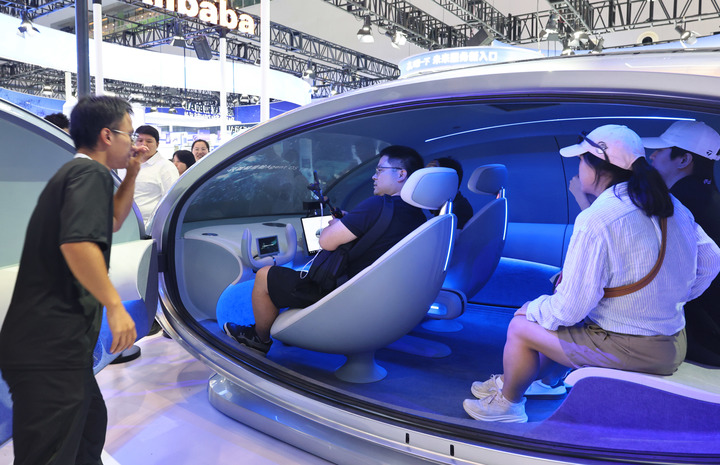
Core Insights - The launch of the first L3-level conditional autonomous driving vehicles in China marks a significant milestone in the industry, indicating the transition to a new era of operational autonomous vehicles [1][4][8] Group 1: Industry Developments - The Ministry of Industry and Information Technology has granted approval for the first L3-level autonomous vehicles, allowing them to operate in designated areas of Beijing and Chongqing [1] - The L3-level vehicles are expected to achieve a penetration rate breakthrough by 2026, paving the way for higher-level autonomous driving technologies (L4) to enter large-scale commercial deployment [1][7] - The trial operation of L3 vehicles signifies a shift from "assisted driving" to "system-led" driving experiences in specific scenarios [2] Group 2: Technical and Operational Insights - The trial of L3 vehicles has already accumulated over 70,000 kilometers of autonomous driving mileage in complex urban environments, showcasing their capability in handling various driving scenarios [2][3] - The vehicles are currently being tested with enterprise users who possess professional skills, providing valuable feedback for system optimization [3] - The introduction of L3 vehicles establishes a legal framework for liability and safety standards, enhancing industry confidence and encouraging hardware deployment and data collection for future advancements [3][4] Group 3: Future Projections - By 2026, L2 technology is projected to become standard in mainstream vehicles, with a penetration rate exceeding 70%, while L3 technology is expected to accelerate in development and testing across major cities [6][7] - The Robotaxi sector is expanding, with a significant increase in fleet size anticipated, indicating a shift in user acceptance from novelty to regular use [7] - The ongoing advancements in AI and autonomous driving technologies present a strategic opportunity for the industry, with expectations for a more integrated and innovative future in transportation [8]

正式裁员30000人,赔偿N+4!
菜鸟教程· 2026-01-06 03:30
Core Insights - The article highlights a significant reduction in employee numbers at a major tech company, with a decrease from 219,260 employees in 2023 to 194,320 in 2024, indicating a reduction of nearly 24,940 employees over the year [1][2] - This trend reflects a broader industry shift where traditional development roles are being rapidly downsized, while AI-related positions, particularly in large model application development, are experiencing explosive growth [4][5] Employee Trends - The employee count has been consistently decreasing over the past few years, with specific quarterly reductions noted, such as a drop of 14,369 employees from March 2024 to June 2024 [3] - The overall trend shows a decline in traditional tech roles, with companies focusing on cost-cutting and efficiency improvements in a saturated market [4][5] AI Job Market - Over 60% of companies are investing in AI products, with a high demand for large model application developers, leading to salary increases of up to 150% for these roles [4] - The article mentions that salaries for large model developers can reach as high as 1.54 million annually, with many companies aggressively recruiting talent in this area [4] Skills and Training - Companies are seeking candidates with expertise in three core technologies: Retrieval-Augmented Generation (RAG), AI agents, and model fine-tuning [5][9] - A training program is being offered to help developers acquire these skills, including practical projects and job placement assistance [6][19] Career Opportunities - The article emphasizes the urgency for traditional programmers to adapt to the AI landscape to avoid job insecurity, particularly as the market becomes increasingly competitive [13][14] - Successful completion of the training program is expected to enhance employability and provide access to high-paying job opportunities in the AI sector [21][23]

从“技术概念”迈向“产业现实” AI大模型技术在千行百业释放转型动能
Xin Hua Cai Jing· 2026-01-06 03:23
Core Insights - AI large model technology is transitioning from a "technical concept" to "industrial reality," becoming a core engine for driving enterprise operational innovation and creating new development advantages [1][2][3] Group 1: AI Applications in Various Industries - AI systems are enhancing food safety management by enabling real-time monitoring and analysis of kitchen data, allowing for automated calculations of ingredient shelf life and label printing [2] - In customer service, AI has improved response times and accuracy by creating specialized knowledge bases that allow for instant retrieval of structured answers based on keywords [2] - Retail management has been transformed through AI, with systems like "AI Magic Mirror" providing automated assessments and improvement suggestions for staff appearance, freeing management to focus on training and service [2] Group 2: AI as a Core Engine for Business Strategy - AI is evolving from an efficiency tool to a core engine that drives business upgrades and strategic decision-making, supporting growth paths and injecting strong momentum into industrial digitalization [3][4] - Companies are leveraging AI for supply chain management to achieve more accurate demand forecasting and inventory optimization, thereby reducing response times and costs [3] - AI's role in strategic decision-making is expanding, with applications in procurement that analyze market supply and demand to optimize raw material purchasing strategies [4] Group 3: Future Prospects and Broader Applications - Companies are planning to expand AI technology applications beyond customer service to various business scenarios, recognizing it as a crucial engine for finding new growth opportunities [4] - AI is seen as a business partner that drives operations towards precision and intelligence, playing a significant role in the transition from digitalization to intelligentization [4] - The integration of AI with internal and external data is expected to optimize decision-making and foster new products, business types, and models, which is strategically significant for enterprise and industry upgrades [4]