Tesla

Search documents
Tesla shareholders approve Musk's $1 trillion pay package
TechXplore· 2025-11-07 09:50
Core Viewpoint - Tesla shareholders have overwhelmingly approved a substantial pay package for CEO Elon Musk, potentially reaching $1 trillion, to ensure his continued leadership as the company advances in artificial intelligence and robotics [2][3]. Shareholder Support - The pay package received more than 75% support from shareholders during the annual meeting, indicating strong backing for Musk's leadership [2]. - Musk expressed gratitude for the support, highlighting the positive reception from shareholders at the meeting held in Austin [2]. Musk's Ownership and Influence - The package is designed to increase Musk's ownership stake in Tesla from approximately 12% to potentially over 25% over the next seven-and-a-half years [3]. - Musk has indicated that he may consider stepping back from Tesla if his ownership stake does not provide him with sufficient influence over the company's future [4]. Future Growth Potential - Musk has articulated a vision for Tesla's growth, suggesting it could become "the most valuable company in the world" if it successfully implements advancements in autonomous driving and AI [4]. - Tesla Chair Robin Denholm emphasized the importance of retaining Musk for the company's future, warning that his departure could negatively impact stock performance [5]. Compensation Structure - The pay package is contingent upon Musk achieving 12 milestones related to market capitalization, with the first milestone set at a $2 trillion market value, up from the current $1.5 trillion [11]. - The plan includes operational profit and product delivery goals, such as delivering 20 million Tesla vehicles [11]. Criticism and Support - Activist group Tesla Takedown criticized the approval of Musk's pay package, citing declining auto sales and safety concerns [10]. - Analyst Dan Ives from Wedbush expressed that the shareholder vote reinforces Musk's position as Tesla navigates the AI revolution, enhancing confidence in the company's future [10]. Historical Context - Tesla investors have previously supported Musk's pay packages, including a 2018 deal worth approximately $55.8 billion, which faced legal challenges [8]. - Following a recent ruling from Delaware, Tesla's board revised Musk's compensation, first approving an interim award of about $29 billion before introducing the larger plan [9].


越秀证券每日晨报-20251107
越秀证券· 2025-11-07 08:19
Market Performance - The Hang Seng Index closed at 26,485 points, up 2.12%, marking a year-to-date increase of 32.03% [5] - The Hang Seng Tech Index rose by 2.74% to 5,944 points, with a year-to-date increase of 33.04% [5] - The Shanghai Composite Index closed at 4,007 points, up 0.97%, with a year-to-date increase of 19.57% [6] Currency and Commodity Overview - The RMB index increased by 0.87% over the past month, while the USD index rose by 1.90% [2] - Brent crude oil prices decreased by 1.54% over the past month, while gold prices increased by 1.32% [2] Company Highlights - Huahong Semiconductor reported a record high sales revenue of $635.2 million in Q3, a year-on-year increase of 20.7% and a quarter-on-quarter increase of 12.2% [14] - The gross margin for Huahong Semiconductor was 13.5%, up 13 percentage points year-on-year [15] - The company expects Q4 sales revenue to be between $650 million and $660 million, with a gross margin forecast of 12% to 14% [16] Wealth Management Industry Insights - A report by PWMA indicates that confidence in Hong Kong as a preferred wealth management center has reached a three-year high, with 100% of member companies optimistic about the industry's future [17] - The assets under management (AUM) in the private wealth management sector grew by 15% year-on-year to 10.404 trillion yuan, with net inflows increasing by 13% [17] - The report anticipates an increase in alternative asset allocation, with 52% of institutions planning to invest in virtual asset platforms or services in the next 2 to 3 years [18]
Musk expects Tesla's Full Self-Driving software to win full China approval in early 2026
Reuters· 2025-11-07 08:13
Core Insights - Tesla's CEO Elon Musk anticipates that the company's Full Self-Driving software will receive full approval in China by early next year [1] Company Summary - The Full Self-Driving software is a driver assistance system developed by Tesla [1]

Cathie Wood Sees 483% Upside For Tesla, Says 90% Of $2,600 Target Rides On Robotaxis: Target 'Goes Up' If Humanoids Evolve Faster - Tesla (NASDAQ:TSLA)
Benzinga· 2025-11-07 07:44
Core Viewpoint - Ark Invest CEO Cathie Wood maintains a bullish price target of $2,600 for Tesla, indicating a 483% upside from its current price of $445.91, primarily driven by the potential of the robotaxi business [1][2]. Group 1: Robotaxi Business - Wood emphasizes that 90% of the $2,600 valuation is based on the robotaxi service, which she believes is still misunderstood by the market [2]. - The firm has been researching the potential of humanoid robots, which could provide additional upside beyond the current price target [3]. Group 2: Humanoid Robots - Wood describes the complexity of scaling humanoid robots as significantly greater than that of robotaxis, suggesting that advancements in this area could lead to an increase in the price target [3]. - Tesla is positioned well to lead in the humanoid robot sector due to its existing capabilities in robotics, energy storage, and AI [3]. Group 3: Support for Leadership - Wood expresses strong support for CEO Elon Musk, calling him the "most productive and visionary human being on earth," and endorses the recent approval of his trillion-dollar pay package [4]. - She argues that the pay-for-performance structure aligns management with long-term shareholder interests, countering criticisms from governance firms [4]. Group 4: Market Performance - Despite the optimistic outlook, Tesla's stock has underperformed the Nasdaq 100 index year-to-date, with a 17.57% gain compared to the index's 19.81% [5]. - Tesla's stock closed at $445.91, down 3.54% on Thursday, but saw a 1.57% increase in after-hours trading following the shareholder vote [5]. Group 5: Stock Rankings - Benzinga's Edge Stock Rankings indicate that Tesla maintains a stronger price trend over short, medium, and long terms, although it has a poor value ranking [6].
Tesla eyes chip independence with plans for a massive semiconductor fab
Invezz· 2025-11-07 07:35
Core Insights - Tesla is considering the establishment of its own semiconductor fabrication plant to address the increasing demand for chips essential for its artificial intelligence and robotics initiatives [1] Company Summary - The move to build a semiconductor fabrication plant indicates Tesla's strategic focus on enhancing its supply chain capabilities and reducing dependency on external chip suppliers [1] - This initiative aligns with the broader trend in the automotive industry, where companies are increasingly investing in semiconductor production to support advanced technologies [1] Industry Summary - The semiconductor industry is experiencing heightened demand due to the growing integration of AI and robotics in various sectors, particularly in automotive [1] - Companies in the automotive sector are recognizing the importance of securing chip supply to maintain competitiveness and innovation in their product offerings [1]
Elon Musk's $1trn pay package approved by Tesla
Sky News· 2025-11-07 07:10
Core Points - Elon Musk could potentially receive a $1 trillion pay package if Tesla meets ambitious targets over the next decade [1] - The plan was approved by 75% of Tesla's shareholders, indicating strong support for Musk's leadership [1] - Musk is required to deliver 20 million Tesla vehicles and roll out one million AI-powered robots, which presents significant challenges [1][4] - The agreement includes a succession plan for Musk's replacement as CEO, emphasizing the importance of his leadership [4] Company Performance and Strategy - Tesla aims to innovate in robotics, self-driving technology, and artificial intelligence, with Musk seen as the key to achieving these goals [7] - The company's market value is closely tied to its ambitions in AI and robotics, making Musk's leadership critical during this transformative period [8] Investor Sentiment - Some investors and advisory firms, like Institutional Shareholder Services (ISS), have expressed concerns about the pay package, suggesting it may limit the board's ability to adjust future pay levels [10] - ISS also noted that the ambitious goals lack precision, which could undermine Musk's motivation to achieve them [10] - Despite opposition, the board believes that incentivizing Musk is essential for navigating a crucial time in Tesla's history [8]
Tesla To Reveal Roadster In 2026, Expands Robotaxi Program To New Cities And More: Here's What You Need To Know - Tesla (NASDAQ:TSLA)
Benzinga· 2025-11-07 06:42
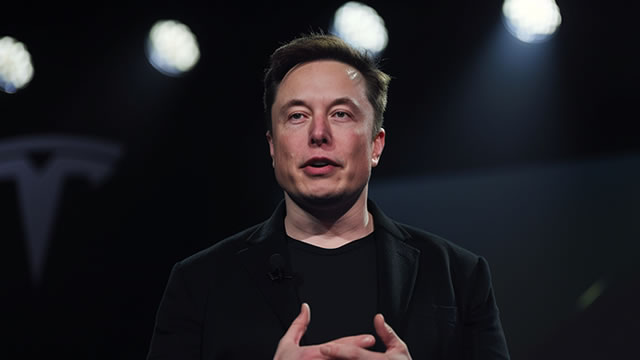
Core Insights - Tesla Inc. held its annual shareholder meeting where CEO Elon Musk's trillion-dollar pay package was approved [1] Group 1: Product Updates - The Tesla Roadster is set to be revealed in 2026, with production expected to start 12-18 months after the unveiling [2] - There are reports suggesting the Roadster may feature a 2-seater design and potential hovering capabilities [3] - Tesla is expanding its Robotaxi service to Dallas, Miami, Phoenix, and Las Vegas, with regulatory approval for Full Self-Driving technology anticipated in Europe by 2026 [4] - Production of the Cybercab is scheduled to begin in 2026, with job openings recently posted for its production at the Gigafactory in Texas [5] - The Tesla Semi will also start production in 2026, featuring a new design, increased payload capacity, and a range of 500 miles [6] Group 2: Performance Metrics - Tesla scores well on Momentum and Quality metrics, with satisfactory Growth but poor Value [7] - The company has a favorable price trend in the Short, Medium, and Long term [7]
Elon Musk says Tesla needs to build 'gigantic chip fab' to meet AI and robotics needs
CNBC· 2025-11-07 03:42
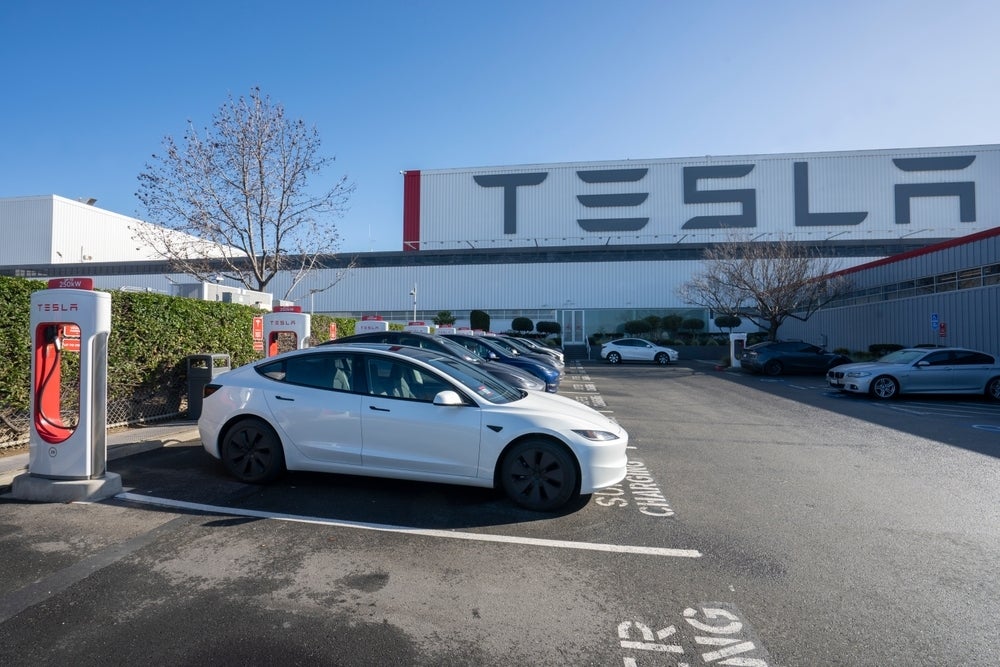
Core Viewpoint - Tesla is considering building a large semiconductor fabrication plant to meet its growing demand for chips driven by its ambitions in artificial intelligence and robotics [1][2]. Group 1: Semiconductor Fabrication Plant - Tesla's CEO indicated the necessity of a "gigantic" chip fabrication facility, referred to as a "Tesla terra fab," to achieve the required chip production volume [1][2]. - The initial capacity of the proposed fab could reach 100,000 wafer starts per month, with potential scaling up to 1 million wafer starts per month [3]. Group 2: Current Supply Chain and Demand - Currently, Tesla relies on contract manufacturers like Taiwan Semiconductor Manufacturing Company (TSMC) and Samsung Electronics for chip production, but the supply is insufficient even under the best-case scenarios [2][3]. - The semiconductor industry is experiencing a surge in demand due to the AI boom, impacting all modern technologies, including automotive and robotics [2][4]. Group 3: Industry Context - TSMC's annual wafer production capacity is projected to reach 17 million in 2024, translating to approximately 1.42 million wafer starts per month, highlighting the scale of production needed by Tesla [3][4]. - Musk emphasized that advancements in AI and robotics could significantly enhance the global economy, potentially increasing it by factors of 10 or even 100, indicating the strategic importance of these technologies for Tesla's future [4].
Elon Musk's $1 Trillion Incentive for Building Tesla's 'Robot Army'
Youtube· 2025-11-07 02:38
Core Insights - Tesla's 2025 shareholder meeting highlighted ambitious goals, including a $1 trillion performance award for CEO Elon Musk contingent on achieving specific targets [2][3] - The company aims to operate a million robo taxis and sell a million Optimus robots over the next decade, with a projected increase in Tesla's total value to $8.5 trillion [4] Group 1: Shareholder Proposals - Investors rejected a proposal for an audit of child labor in Tesla's supply chain and a plan to link executive compensation to sustainability goals [2] - The board recommended the approval of the CEO performance award, emphasizing its importance for retaining Musk as CEO [3] Group 2: Production and Technology Goals - Musk announced plans to produce a million Optimus robots annually, with production costs expected to be around $20,000 per unit once production scales [5] - Tesla is developing its own AI chips to meet the demands of its future technologies, moving away from reliance on external suppliers like Nvidia [7][8] Group 3: Future Aspirations - Musk shared long-term visions, including the potential for Tesla vehicles and Optimus robots on Mars, and the use of Neuralink for advanced data gathering [9] - The meeting coincided with a competitive showcase from Chinese rival Xpan, which unveiled its own driverless cars and humanoid robots [9][10]
Gene Munster Says Elon Musk Has Talked About Moving Away From Nvidia Before, But It's 'Proven Extremely Hard To Do' As Tesla Doubles Down On AI5 Chip - Tesla (NASDAQ:TSLA)
Benzinga· 2025-11-07 02:27
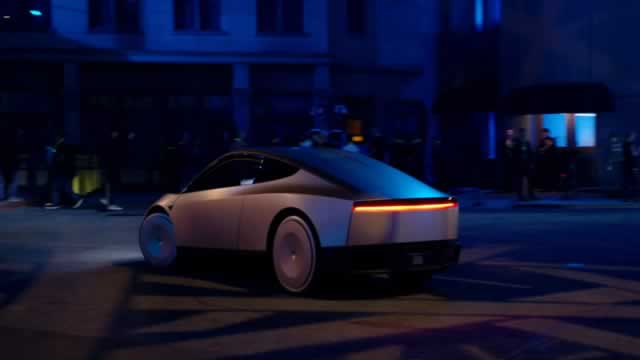
Core Insights - Tesla is intensifying efforts to develop its own AI chip, the AI5, which aims to match Nvidia's performance while being more power-efficient and cost-effective [2][4][5] - Gene Munster cautions that transitioning away from Nvidia has proven challenging for Tesla, despite Musk's optimistic projections [1][5] - Cathie Wood of ARK Invest supports Tesla's AI ambitions, suggesting the AI5 chip could significantly outperform Nvidia's offerings [6] Group 1: AI Chip Development - Elon Musk emphasized the importance of custom AI chips for Tesla's robotics and self-driving initiatives, stating the AI5 chip will deliver comparable performance to Nvidia's Blackwell chip while consuming one-third of the power and costing less than 10% [2][3] - The AI5 chip will be produced by Taiwan Semiconductor Manufacturing Co. and Samsung Electronics, with manufacturing spread across multiple locations [4] - Plans for the AI6 chip are already in place, expected to double performance within a year of the AI5's launch [4] Group 2: Market Performance and Financials - Tesla reported third-quarter revenue of $28.1 billion, reflecting a 12% year-over-year increase, surpassing Wall Street's consensus estimate of $26.24 billion [7] - Tesla's stock closed at $445.91, experiencing a 3.54% decline before recovering to $452.90 in after-hours trading [7] - The company continues to show a strong upward trend in stock performance across various time frames according to Benzinga's Edge Stock Rankings [7]