
BioNTech SE

Search documents
Why BioNTech Stock Bumped Higher Today
Yahoo Finance· 2025-09-22 22:45
Group 1 - BioNTech's shares rose nearly 3% following a favorable regulatory decision and an analyst upgrade, outperforming the S&P 500's 0.4% gain [1] - The CDC's vaccine advisory panel voted against requiring a doctor's prescription for Covid vaccines, which is significant for BioNTech as it co-developed the Comirnaty vaccine with Pfizer [2][4] - Analyst Jessica Fye from JPMorgan Chase raised her price target for BioNTech based on updated performance models, indicating positive future expectations for the company [3] Group 2 - The ruling by the CDC panel alleviated concerns for vaccine manufacturers, allowing Americans to access Covid vaccines with less medical bureaucracy, although consultation with healthcare professionals is still recommended [4] - BioNTech's Comirnaty vaccine will not require a doctor's prescription, simplifying access for consumers [6]

高额“回扣”下,药企纷纷撤离英国
Hu Xiu· 2025-09-22 06:17
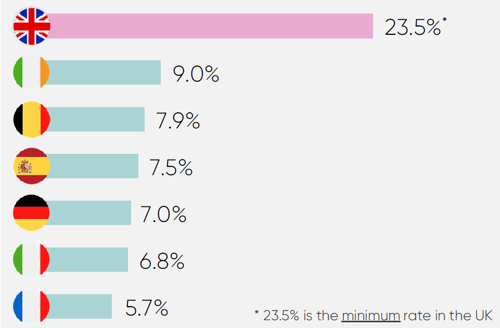
Core Viewpoint - The article discusses a significant retreat of multinational corporations (MNCs) from the UK pharmaceutical sector, driven by increasing tax burdens and unfavorable policy changes, leading to a perception of the UK as an "investment black hole" for the industry [6][30]. Group 1: Corporate Actions - Merck announced the closure of its drug research center in London, transferring all R&D operations to the US [2]. - Eli Lilly halted its planned biotechnology incubator project in the UK, citing a need to wait for a clearer life sciences environment [3]. - AstraZeneca froze a £200 million investment in its Cambridge research center, signaling a broader trend of MNCs withdrawing from the UK [4]. - Sanofi also publicly stated it would adopt a similar stance towards the UK, joining the retreat [5]. Group 2: Tax and Policy Challenges - MNCs are facing multiple tax burdens in the UK, including corporate tax, R&D tax, and drug sales rebates, which are pressuring their operations [8]. - The NHS's pricing scheme requires pharmaceutical companies to rebate a percentage of their sales to the NHS, directly impacting their investment returns [9]. - The rebate rate for drugs under the statutory pricing scheme was increased to 22.9%, with proposals suggesting it could rise to 23.8%, meaning companies may have to return up to 32.2% of their sales to the NHS [12]. Group 3: Impact of Brexit - The UK's exit from the EU has led to a significant decline in approval efficiency for new drugs, with the UK dropping from 6th to 18th in global rankings for drug approvals [19]. - The cancellation of the EU's free movement policy has hindered the formation of cross-border research teams and slowed clinical trial processes [21]. - The UK government's pursuit of higher rebates and budget cuts for drugs has further marginalized the country in the global pharmaceutical landscape [29]. Group 4: Industry Sentiment and Future Outlook - The lack of consensus between the government, pharmaceutical companies, and patients has led to a situation where all parties are losing out, with companies withdrawing, patients facing limited access to drugs, and the government experiencing a trust crisis [30][34]. - The article warns that if the rebate rates remain above 20%, the UK could lose approximately £11 billion (about 106.6 billion RMB) in R&D investments by 2033 [16]. - Despite some companies like BioNTech and GSK remaining in the UK, their commitment is questioned as they also plan significant investments elsewhere, such as GSK's $30 billion investment in the US [16].


从“跟跑者”到“引领者”——中国医药产业创新的蝶变时刻
Ge Long Hui· 2025-09-22 04:34
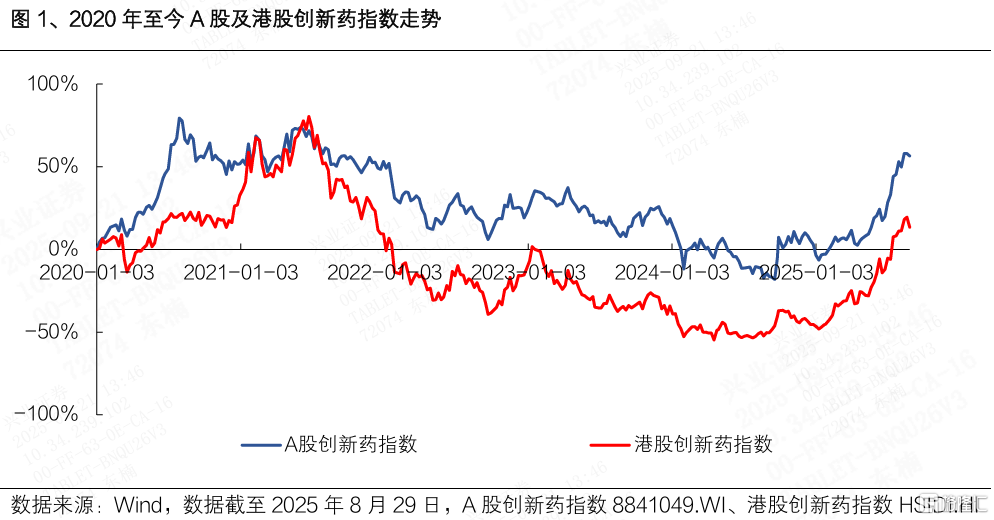
Core Insights - The pharmaceutical industry is driven by both policy and technology, with innovation being the most certain long-term trend since 2015 [1][12] - The Chinese innovative drug sector has shown significant growth, with A-share and Hong Kong innovative drug indices increasing by 56% and 105% respectively from early 2025 to August 29, 2025 [1] - The development of innovative drugs in China can be categorized into three stages: 1.0 (2000-2014), 2.0 (2015-2021), and 3.0 (2022-present) [3][6] Policy and Market Dynamics - Since 2015, a series of healthcare reforms in China have accelerated the transition from generic to innovative drugs, with significant improvements in drug approval times [12][18] - The average time from application to approval for innovative drugs in China has been reduced by 57 days, with priority-reviewed drugs seeing an even greater reduction of 189 days [12] - The market for innovative drugs in core hospitals is projected to reach 882.2 billion RMB in 2024, with a compound annual growth rate of 3.3% [12] International Competitiveness - In 2024, the number of original innovative drugs developed by Chinese companies reached 704, leading globally, while the U.S. produced 400-500 annually [6] - The total transaction amount for innovative drug licensing from China reached $51.9 billion in 2024, with upfront payments totaling $4.1 billion [7] - Chinese innovative drug companies are increasingly competitive internationally, particularly in complex drug types like ADCs and bispecific antibodies, which accounted for 44% of licensing transactions but contributed 66% of upfront payment amounts [26][31] Technological Advancements - The current phase of innovation in the pharmaceutical industry is marked by new technological paradigms, including ADCs and bispecific antibodies, which enhance treatment efficacy [23][26] - Chinese companies are leveraging their advantages in research efficiency and cost-effectiveness to compete in the global market [18][20]

Mizuho's Jared Holz: There's not much value left in vaccine stocks
Youtube· 2025-09-19 15:40
Vaccine Industry Insights - A new RFK Junior-backed vaccine panel is advocating for restrictions on the MMR vaccine for children under four, with a vote on hepatitis B vaccine recommendations postponed due to insufficient data [1] - Concerns have been raised regarding the profitability of vaccine companies like Merck, Moderna, and Pfizer, with a general sentiment that the value of vaccines has diminished [3][4] - Moderna is facing significant challenges, including a potential revenue decline and a lawsuit that could cost the company between $2 billion to $3 billion, which it may struggle to afford [8][9] Regulatory Environment - The FDA is perceived to be actively working on drug approvals, although there are concerns about the lack of expected approvals impacting investor sentiment [6][7] - There is a growing apprehension regarding potential price controls on pharmaceuticals as the administration approaches midterm elections, which could negatively affect the industry [10][11] Advertising and Market Dynamics - The advertising landscape for pharmaceuticals is under scrutiny, with concerns about how direct-to-consumer advertising impacts the industry, although investors currently do not view it as a major concern [12][13] - Despite the challenges, the biotech sector is viewed positively, with indications that drug development is increasing and the overall climate is improving [14][15]

MRNA Stock Rises as Updated COVID-19 Jab Shows Strong Immune Response
ZACKS· 2025-09-17 15:05
Core Insights - Moderna's shares increased by 4% following the announcement of positive preliminary immunogenicity data from a phase IV study of its updated COVID-19 vaccine, Spikevax, targeting the LP.8.1 variant [1][6] - The phase IV study demonstrated that the 2025-2026 formula of Spikevax resulted in an average increase of over 8-fold in neutralizing antibodies against the LP.8.1 variant across various age groups, with a safety profile consistent with previous studies [2][6] - The FDA approved updated COVID-19 vaccines from Moderna, Pfizer/BioNTech, and Novavax for the 2025-26 vaccination season, specifically targeting the LP.8.1 strain [4] Company Performance - Year-to-date, Moderna's shares have decreased by 40.3%, contrasting with the industry's growth of 2.8% [3] Regulatory Approvals - The FDA approved Moderna's Spikevax for individuals aged 6 months to 64 years with at least one high-risk condition, and a next-generation version called mNexspike for those aged 12 to 64 years [7] - Pfizer/BioNTech's Comirnaty was approved for at-risk individuals aged 5 years and older, showing a 4-fold increase in neutralizing antibodies against the LP.8.1 variant in a phase III study [8] - Novavax's Nuvaxovid was approved for at-risk individuals aged 12 to 64 years, being the only non-mRNA-based vaccine currently available [9]


Guggenheim Remains Bullish on Pfizer (PFE)
Yahoo Finance· 2025-09-16 18:58
Group 1 - Pfizer Inc. is currently considered one of the best drug stocks to buy, with a Buy rating maintained by Guggenheim and a price target set at $33.00 [1] - Pfizer and BioNTech announced positive topline results from a Phase 3 clinical trial for a new COVID-19 vaccine, showing significant growth in neutralizing antibodies among adults aged 65 and older and those aged 18-64 with underlying risk conditions [2] - The vaccine's safety profile was consistent with previous studies, with no new safety concerns identified, reinforcing the company's commitment to safety in its biopharmaceutical products [3] Group 2 - Pfizer is a global biopharmaceutical company focused on wellness, prevention, treatment, and cures, particularly in developing and emerging markets [3]

Compugen (NasdaqCM:CGEN) 2025 Conference Transcript
2025-09-16 16:32
Summary of Compugen Conference Call Company Overview - **Company**: Compugen (NasdaqCM:CGEN) - **Industry**: Immuno-oncology - **Focus**: Utilizing AI-based computational biology tools to identify novel drug targets for cancer treatment [1][2] Core Points and Arguments - **Leadership Transition**: Eran Ophir will become the President and CEO, succeeding Anat Cohen-Dayag, who will take on the role of Executive Chairperson [1][10] - **Immuno-oncology Landscape**: The field has been revolutionized by drugs like Keytruda, which generated $29 billion in sales last year. However, many patients do not benefit from existing therapies, indicating a need for novel approaches [2] - **Computational Platform**: Compugen's AI-based platform, Unigen™, has a validated database of patient samples, allowing the company to take drug targets from computational predictions to clinical trials [3] - **Clinical Assets**: - **COM701**: Targets PVRIG, currently in a randomized study for platinum-sensitive ovarian cancer [5][9] - **COM902**: Targets TIGIT, positioned as a potential best-in-class antibody, with ongoing phase III trials by AstraZeneca and Arcus [3][4] - **Rifleucostamid**: A PD-1/TIGIT bispecific antibody, with AstraZeneca running 10 phase III trials, potentially generating over $5 billion in sales [6] - **GS0321**: Targets ILT in binding protein, licensed to Gilead, with potential milestones exceeding $758 million [7] Financial Highlights - **Cash Position**: As of June 30, Compugen has approximately $94 million in cash, providing a runway into 2027 [5] - **Milestone Opportunities**: Eligible for over $1 billion in future milestones from collaborations with AstraZeneca and Gilead [5][7] Clinical Development - **COM701 Study**: Aiming for a readout in the second half of 2026, with expectations of improving progression-free survival by at least three months compared to placebo [9] - **Upcoming Results**: Compugen will present pooled analysis results at the upcoming ESMO conference, which may support the rationale for ongoing studies [10] Strategic Partnerships - **AstraZeneca**: Engaged in a broad clinical development program for rifleucostamid, which may replace previous PD-1 therapies [6] - **Gilead**: Collaboration on GS0321, with significant milestone payments and royalties expected [7] Additional Insights - **First-Mover Advantage**: Compugen is the first to bring COM701 to the clinic, with a differentiated approach to targeting PVRIG [8] - **Adaptive Trial Design**: The new study design for COM701 aims to address unmet needs in patients with low tumor burden after chemotherapy [9] - **Leadership Confidence**: The new leadership structure is expected to enhance growth potential, supported by a strong scientific foundation and innovative pipeline [10] Conclusion Compugen is strategically positioned in the immuno-oncology sector with a robust pipeline, significant partnerships, and a strong financial foundation, aiming to address unmet medical needs in cancer treatment [10]

COVID-19 Vaccine Stocks Fall on Reports Linking Shots to Child Deaths
ZACKS· 2025-09-15 14:01
Core Insights - Shares of major COVID-19 vaccine manufacturers, including Moderna, BioNTech, Pfizer, and Novavax, experienced declines following reports linking COVID-19 vaccines to the deaths of 25 children [1][6][10] Regulatory Developments - Health officials are reportedly using data from the Vaccine Adverse Event Reporting System (VAERS) to establish a connection between COVID-19 vaccines and pediatric deaths, although VAERS data does not confirm causation [2][3] - The CDC advisory committee is set to meet on September 18-19, 2025, to review vaccine safety, effectiveness, and clinical necessity, which may influence future vaccine recommendations and insurance coverage [5][10] Market Impact - Following the news, Moderna and BioNTech shares fell over 7%, while Pfizer and Novavax saw declines of nearly 4%, indicating investor concerns over regulatory scrutiny and its potential impact on vaccine demand [6][10] Leadership and Policy Changes - The current leadership at the Department of Health and Human Services, particularly Secretary Robert F. Kennedy Jr., known for his vaccine skepticism, has raised concerns about the influence of political factors on public health decisions [7][8] - Recent changes in the CDC advisory committee and the resignation of a senior FDA vaccine official have further fueled worries regarding the independence of public health decision-making [8] Long-term Challenges - Companies like Moderna, Pfizer, BioNTech, and Novavax are already facing declining COVID-19 revenues, and the potential narrowing of vaccine coverage recommendations poses additional long-term challenges [9]

Moderna shares hit a low after report suggests the FDA plans to tie COVID shots to child deaths
Fastcompany· 2025-09-15 13:11
Core Viewpoint - The pharmaceutical sector, particularly companies involved in COVID-19 vaccines, is facing significant stock declines following reports linking vaccines to the deaths of 25 minors, which has raised concerns about vaccine safety and regulatory scrutiny [2][3][5]. Group 1: Stock Performance - Moderna shares dropped 7.4% to their lowest level since March 2020, marking a year-to-date decline of over 44% [3]. - Pfizer's shares fell by 3.9%, while BioNTech and Novavax experienced declines of 7.3% and 3.6%, respectively [3]. - This downturn in pharmaceutical stocks contrasts with the broader market, where the S&P 500 has risen more than 12% this year [4]. Group 2: Regulatory Developments - The FDA is expected to present data regarding the vaccine-related deaths at an upcoming advisory panel meeting, which influences vaccine schedules and insurance coverage [5][6]. - The Vaccine Adverse Event Reporting System (VAERS) data, which is self-reported and unverified, is the basis for the FDA's concerns, although it does not establish causation between the vaccine and deaths [6]. Group 3: Changes in Vaccine Policy - The new administration has made significant changes to the vaccine advisory panel, with Secretary Robert F. Kennedy Jr. replacing all members with individuals who have previously criticized vaccines [9]. - The Advisory Committee on Immunization Practices (ACIP) is scheduled to meet on September 18 and 19 to discuss COVID-19 vaccines and other immunizations [10]. Group 4: Company Responses - Moderna's CEO criticized the recent changes in U.S. vaccine policy as a "step backward," emphasizing the rigorous safety monitoring of their vaccine [11]. - Pfizer highlighted extensive data supporting the safety and effectiveness of its vaccine, noting its administration to over one billion individuals [12].

Stocks Set to Open Higher as Investors Await Fed Meeting and U.S. Economic Data
Yahoo Finance· 2025-09-15 10:13
Economic Data - The University of Michigan's preliminary U.S. consumer sentiment index fell to a 4-month low of 55.4 in September, below expectations of 58.2 [1] - Year-ahead inflation expectations remained unchanged at 4.8%, while 5-year implied inflation expectations increased to 3.9%, exceeding expectations of 3.4% [1] Stock Market Performance - Wall Street's major equity averages ended mixed, with Arista Networks (ANET) dropping over 8% due to unimpressive long-term projections [2] - Vaccine makers, including Moderna (MRNA) and BioNTech SE (BNTX), saw shares slide more than 7% following reports linking Covid shots to child deaths [2] - Warner Bros. Discovery (WBD) surged over 16% after news of a potential cash bid from Paramount Skydance [2] Upcoming Economic Reports - Investors are awaiting a retail sales report, which will provide insights into consumer spending [3][9] - Other significant data releases include U.S. Industrial Production, Manufacturing Production, and Initial Jobless Claims [9] Federal Reserve Actions - The Federal Reserve is expected to cut the Fed funds rate by 25 basis points to a range of 4.00% to 4.25% [7] - There is a possibility of a larger 50 basis point cut, with investors closely monitoring Chair Jerome Powell's remarks for future rate cut indications [7][8] Corporate Earnings - Notable companies such as FedEx (FDX), Lennar (LEN), and General Mills (GIS) are scheduled to release quarterly results this week [10] Trade Talks - U.S.-China trade talks began, focusing on trade, the economy, and TikTok's status, with expectations of nearing a deal [11] Bond Market - The yield on the benchmark 10-year U.S. Treasury note is at 4.064%, reflecting a 0.12% increase [12] European Market Insights - The Euro Stoxx 50 Index rose by 0.67%, with defense stocks outperforming amid ongoing geopolitical tensions [13] - Fitch Ratings downgraded France's sovereign credit rating to A+ from AA- due to political turmoil [13] Chinese Economic Data - China's August Industrial Production rose by 5.2% year-on-year, below expectations of 5.7% [16] - Retail Sales increased by 3.4% year-on-year, weaker than the expected 3.8% [16] - Fixed Asset Investment growth slowed to 0.5% year-on-year, below expectations of 1.5% [16]


