中国效率

Search documents
200%糖度、9.9%涨幅,蜜雪冰城把“中国效率”卖进了美国
Sou Hu Cai Jing· 2025-12-23 18:10
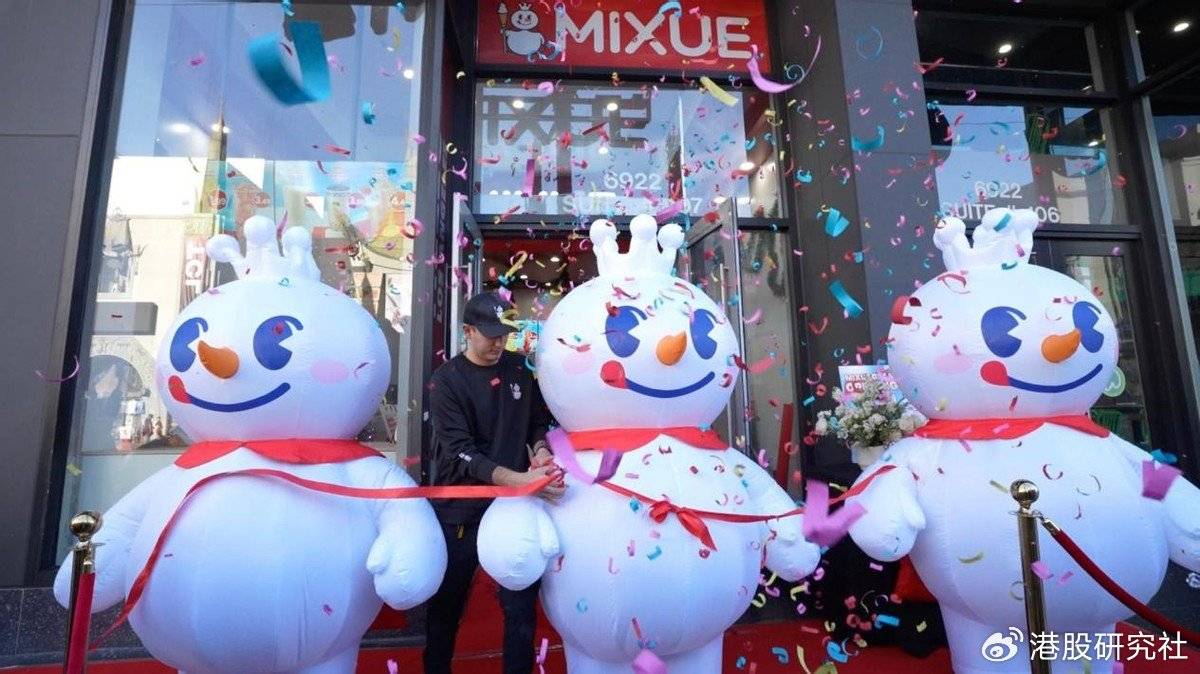
Core Viewpoint - The entry of Chinese brand Mixue Ice City into the U.S. market represents a significant demonstration of Chinese efficiency and cost-effectiveness, challenging traditional assumptions about the viability of low-cost models in high-cost environments [1][12]. Group 1: Market Entry Strategy - Mixue Ice City has chosen to establish its first U.S. store on Hollywood Boulevard, a prime location, showcasing a stark contrast between its low pricing strategy and the high rental costs typical of such areas [5][6]. - The brand's pricing strategy includes ice cream priced at $1.19, lemonade at $1.99, and pearl milk tea starting at $3.99, maintaining a low price point despite the high costs associated with its location [6][10]. - Unlike previous Chinese companies that preferred to target Chinese communities, Mixue has opted for mainstream commercial areas, indicating a more aggressive market positioning [5][6]. Group 2: Product and Cultural Adaptation - Mixue's approach does not emphasize cultural storytelling but focuses on price, turnover efficiency, and operational capabilities, which are central to its market strategy [3][8]. - The brand has adapted its product offerings to align with local preferences, such as offering a "200% sugar" option, which resonates with American consumers' tastes and cultural norms around sweetness [7][10]. Group 3: Operational Efficiency - The operational model of Mixue is characterized by a highly standardized system of raw materials, equipment, and recipes, supported by digital systems that enhance store operations [10][11]. - This model has been validated in domestic and Southeast Asian markets, and its application in the U.S. serves as a test for its adaptability in a complex regulatory environment [10][12]. Group 4: Market Perception and Valuation - The U.S. market is viewed as a "model validation market" rather than a profit-driven one, where the ability to maintain a low-margin, high-turnover model is crucial for long-term success [14][16]. - Capital markets are beginning to reassess Mixue's value, with institutions recognizing its potential for sustained expansion despite current limited contributions from U.S. operations [13][16]. - The strategic presence in the U.S. is seen as a way to reduce uncertainty costs associated with global expansion, enhancing Mixue's overall market positioning [16][17].

特斯拉13位核心高管集体跑路!马斯克被曝“用中国人对付中国人”
Xin Lang Cai Jing· 2025-11-26 14:26
Core Insights - Tesla is experiencing a significant turnover in its executive team, particularly in North America and Europe, with 13 key executives leaving since April 2024, while the Chinese team remains stable and even gains a global vice president position [1][4][7] Group 1: Executive Departures - Key executives leaving include Rohan Patel, Rebecca Tinucci, Martin Viecha, Vineet Mehta, Milan Kovac, Jenna Ferrua, and Troy Jones, indicating a troubling trend for Tesla's leadership stability [4][5] - The departure of Siddhant Awasthi and Emmanuel Lamacchia, who were responsible for major vehicle projects, raises concerns about the continuity of Tesla's product lines [5] Group 2: Chinese Team Stability - The Chinese executive team, led by Zhu Xiaotong, has not seen any departures and has been promoted, reflecting a contrasting dynamic compared to the Western teams [7][9] - Zhu Xiaotong's rapid rise from managing charging networks to overseeing global manufacturing and sales highlights the effectiveness and efficiency of the Chinese operations [7][9] Group 3: Cultural Differences - The contrasting work cultures between American and Chinese teams are evident, with American executives citing work-life balance issues, while the Chinese team embraces a more demanding work ethic [9][10] - The perception of "Chinese efficiency" is both a competitive advantage and a potential source of exploitation, as the Chinese team is recognized for high productivity but may face increased pressure [12][14] Group 4: Implications for Global Operations - The efficiency of the Shanghai factory, which has a production rate of one vehicle every 30 seconds and a capacity exceeding 750,000 units annually, underscores the operational advantages of the Chinese team [7][12] - The narrative surrounding the departures of Western executives and the promotion of Chinese leaders raises questions about the valuation of different work cultures and the implications for Tesla's global strategy [14]

从“跟跑者”到“引领者”——中国医药产业创新的蝶变时刻
Ge Long Hui· 2025-09-22 04:34
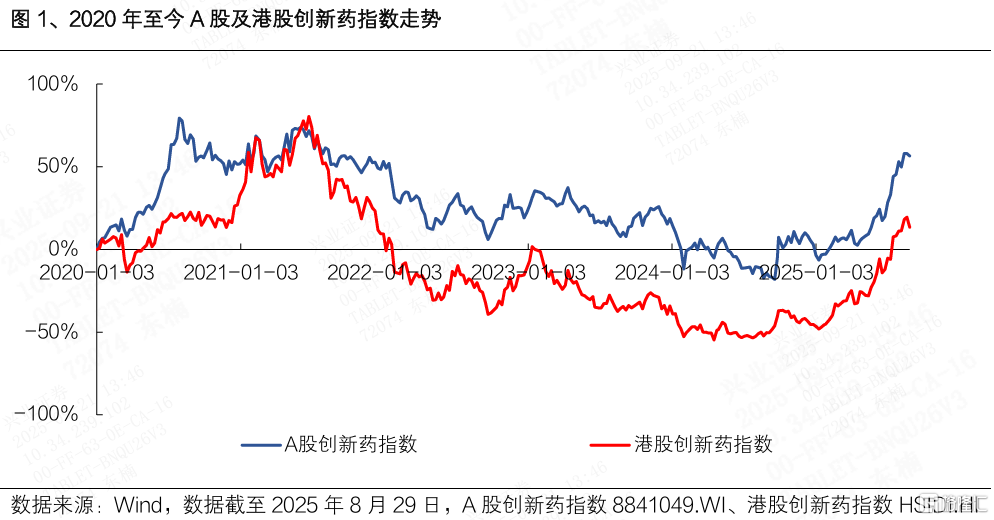
Core Insights - The pharmaceutical industry is driven by both policy and technology, with innovation being the most certain long-term trend since 2015 [1][12] - The Chinese innovative drug sector has shown significant growth, with A-share and Hong Kong innovative drug indices increasing by 56% and 105% respectively from early 2025 to August 29, 2025 [1] - The development of innovative drugs in China can be categorized into three stages: 1.0 (2000-2014), 2.0 (2015-2021), and 3.0 (2022-present) [3][6] Policy and Market Dynamics - Since 2015, a series of healthcare reforms in China have accelerated the transition from generic to innovative drugs, with significant improvements in drug approval times [12][18] - The average time from application to approval for innovative drugs in China has been reduced by 57 days, with priority-reviewed drugs seeing an even greater reduction of 189 days [12] - The market for innovative drugs in core hospitals is projected to reach 882.2 billion RMB in 2024, with a compound annual growth rate of 3.3% [12] International Competitiveness - In 2024, the number of original innovative drugs developed by Chinese companies reached 704, leading globally, while the U.S. produced 400-500 annually [6] - The total transaction amount for innovative drug licensing from China reached $51.9 billion in 2024, with upfront payments totaling $4.1 billion [7] - Chinese innovative drug companies are increasingly competitive internationally, particularly in complex drug types like ADCs and bispecific antibodies, which accounted for 44% of licensing transactions but contributed 66% of upfront payment amounts [26][31] Technological Advancements - The current phase of innovation in the pharmaceutical industry is marked by new technological paradigms, including ADCs and bispecific antibodies, which enhance treatment efficacy [23][26] - Chinese companies are leveraging their advantages in research efficiency and cost-effectiveness to compete in the global market [18][20]