Pfizer

Search documents
How Safe Is Pfizer's Dividend As 2026 Begins?
The Motley Fool· 2026-01-03 09:44
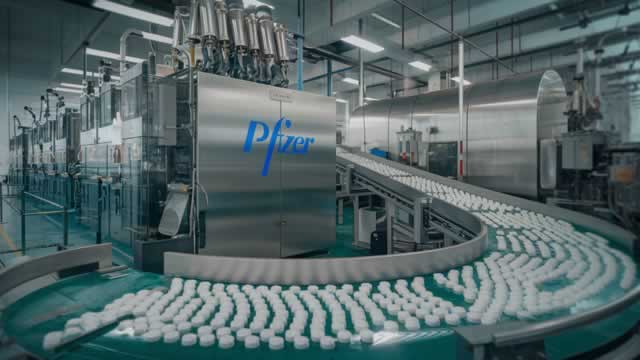
Core Viewpoint - Pfizer's dividend is considered relatively safe as 2026 begins, despite concerns regarding its high payout ratios and upcoming patent expirations [1][12][14] Financial Performance - Pfizer reported earnings of over $9.4 billion in the first nine months of 2025, with a market capitalization exceeding $140 billion [1] - The company has a forward dividend yield of 6.9% and a high dividend payout ratio of 99.4%, indicating it is barely covering its dividend with earnings [3][1] Cash Flow Analysis - Pfizer generated free cash flow of $10.4 billion in the 12 months ending September 30, 2025, while paying out $9.7 billion in dividends, resulting in a free cash flow payout ratio of 93.3% [6][12] - The free cash flow payout ratio is viewed as less concerning compared to the earnings-based payout ratio [12] Dividend History - Pfizer has increased its dividend for 16 consecutive years and has declared dividends for 349 consecutive quarters since 1937, showcasing a strong track record [7][10] Management Commitment - Pfizer's management, including CEO Albert Bourla and CFO David Denton, has reaffirmed a strong commitment to maintaining and growing the dividend over time [10][9] Patent Expiration Concerns - The company faces a significant patent cliff with key drugs like Eliquis and Xeljanz losing U.S. patent exclusivity, which could impact earnings and cash flow [10][11] - Management believes that investments in newly acquired and launched products will help offset the losses from patent expirations [11]


Pfizer 2026: The Reset Year (NYSE:PFE)
Seeking Alpha· 2026-01-02 19:52
Core Insights - Pfizer Inc. enters 2026 facing pressure but with strategic intentions, as its stock performance has been muted since the last coverage [1] Financial Performance - Near-term earnings are expected to face dilution due to acquisitions [1] Investment Strategy - The focus is on identifying high-potential winners before they break out, emphasizing asymmetric opportunities with an upside potential of 3-5 times outweighing downside risks [1] - The investment approach leverages market inefficiencies and contrarian insights to maximize long-term compounding while protecting against capital impairment [1] - A strong margin of safety is sought to safeguard against capital impairment while aiming for outsized returns over time [1] - The investment horizon is set at 2-3 years to endure volatility, ensuring that patience, discipline, and intelligent capital allocation drive returns [1]
Should You Buy Pfizer While It's Under $30?
The Motley Fool· 2026-01-01 17:37
Core Viewpoint - Pfizer's shares are currently trading at approximately $25, reflecting a challenging performance over the past three years, raising questions about the company's investment potential moving forward [1] Group 1: Financial Performance - Pfizer's revenue and earnings have shown inconsistency in recent years, compounded by upcoming patent cliffs, notably for Eliquis, one of its top-selling drugs [3] - The company has been gradually securing new approvals that could positively impact its financial results through label expansions [3] Group 2: Strategic Moves - Pfizer has intensified its acquisition strategy, enhancing its product pipeline with a focus on cancer therapies and a promising weight loss candidate [4] - The company is expected to launch several new products that will strengthen its portfolio through the end of the decade [4] Group 3: Investment Considerations - Pfizer has established a deal with the Trump administration to avoid tariffs for three years, which could benefit its financial standing [8] - The company has a strong dividend history, increasing payouts by 51.3% over the past decade, with a current yield of 6.9% [8] - Pfizer's stock is trading at 8.5 times forward earnings, significantly lower than the healthcare sector average of 18.4, making it an attractive investment option [8]
医药生物行业周报:创新药2026前瞻,出海从元年到大年,货与船并重:关注点从BD到CDP-20251231
Guohai Securities· 2025-12-31 10:33
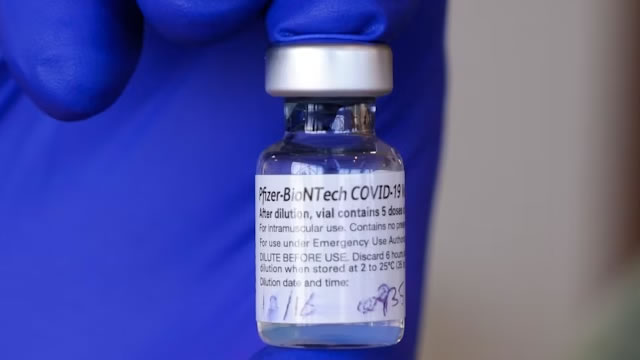
Investment Rating - The report maintains a "Neutral" rating for the pharmaceutical and biotechnology industry [1]. Core Insights - The focus of the industry is shifting from "Business Development (BD)" to "Clinical Development Partnerships (CDP)" as companies aim to enhance their clinical development capabilities for overseas markets. The report emphasizes the importance of core assets and suggests that the industry is entering a strong alpha phase, with a continued positive fundamental outlook despite uncertainties in international expansion [2][12]. - The pharmaceutical sector has underperformed compared to the broader market, with a year-to-date return of 14.29% against the Shanghai Composite Index's 18.36%, indicating a 2.09 percentage point lag [2][3]. - The current valuation of the pharmaceutical sector is 32.9 times PE based on 2026 earnings forecasts, which represents a 37% premium over the overall A-share market (excluding financials). The TTM valuation stands at 29.1 times PE, below the historical average of 35.0 times PE [2][27]. Summary by Sections Recent Performance - For the week of December 22 to 26, 2025, the Shanghai Composite Index rose by 1.95%, while the pharmaceutical sector declined by 0.18%, ranking 25th among 31 sub-industries. The performance of various pharmaceutical sub-sectors was as follows: chemical pharmaceuticals (0.05%), biological products (-0.10%), medical devices (0.08%), pharmaceutical commerce (-1.66%), traditional Chinese medicine (-0.67%), and medical services (-0.25%) [2][8]. Market Dynamics - The report notes that the pharmaceutical sector's performance has been relatively weak, with a year-to-date return lagging behind the broader market. The report suggests that the recent adjustments in the pharmaceutical sector are seen as healthy and that the underlying logic for innovative drugs and devices remains unchanged [2][3]. Valuation Metrics - The report highlights that the pharmaceutical sector's current valuation is 32.9 times PE based on 2026 earnings forecasts, which is a 37% premium compared to the overall A-share market (excluding financials). The TTM valuation is 29.1 times PE, which is below the historical average of 35.0 times PE [2][27]. Key Companies and Developments - The report identifies key companies to watch, including Sanofi, Innovent Biologics, and others, indicating their significance in the ongoing developments within the industry [2][35].
Royalty Pharma Acquires Remaining Royalty Interest in Roche's Evrysdi for $240 Million and Potential Milestones
Globenewswire· 2025-12-29 21:40
Core Insights - Royalty Pharma has acquired the final portion of PTC Therapeutics' royalty on Roche's Evrysdi for $240 million upfront and up to $60 million in sales-based milestones [1] Group 1: Transaction Details - Royalty Pharma will own 100% of the tiered royalty structure ranging from 8% to 16% on worldwide net sales of Evrysdi [3] - The royalty rates are structured as follows: 8% on sales up to $500 million, 11% on sales between $500 million and $1 billion, 14% on sales between $1 billion and $2 billion, and 16% on sales over $2 billion [3] - Royalty Pharma will start receiving the increased royalty rates in Q1 2026 based on Evrysdi sales in Q4 2025 [3] Group 2: Product Information - Evrysdi is an orally administered SMN2 splicing modifier for treating spinal muscular atrophy, approved by the FDA in 2020 [2] - The product has treated over 21,000 patients globally and generated sales of approximately CHF 1.6 billion ($1.9 billion) in 2024, reflecting an 18% year-over-year growth at constant exchange rates [2] - Analyst consensus projects Evrysdi sales to reach CHF 2.3 billion ($2.9 billion) by 2030 [2] Group 3: Company Background - Royalty Pharma, founded in 1996, is the largest buyer of biopharmaceutical royalties and a key funder of innovation in the biopharmaceutical sector [5] - The company collaborates with various entities, including academic institutions and leading pharmaceutical companies, to fund innovation directly and indirectly [5] - Royalty Pharma's portfolio includes royalties on over 35 commercial products and 20 development-stage candidates [5]



Greenwich LifeSciences Takes Flight As FLAMINGO 01 Breast Cancer Trial Progresses
RTTNews· 2025-12-29 15:49
Core Viewpoint - Shares of Greenwich LifeSciences Inc. (GLSI) have seen significant gains as the company advances its financing strategy and prepares to implement modifications to its phase III trial for the breast cancer immunotherapy GLSI-100, pending regulatory approval [1] Company Overview - GLSI-100 is a combination of GP2 peptide vaccine and GM-CSF, aimed at helping the immune system recognize and combat cancer cells expressing the HER2/neu protein, which is present in 75% of breast cancer cases [2] - The drug is targeted at high-risk breast cancer patients post-surgery and standard treatments [2] Clinical Trial Details - The ongoing phase 3 trial, FLAMINGO-01, involves HLA-A*02-positive and HER2/neu-positive breast cancer patients at high risk for recurrence, with about 500 patients planned for random assignment to receive either GLSI-100 or a placebo [3] - A preliminary analysis of the 250-patient open-label non-HLA-A*02 arm showed an approximately 80% reduction in recurrence rate [4] Planned Modifications to the Trial - The company plans to increase the study size to enhance statistical power and reduce risk, despite potentially fewer recurrences being anticipated [4] - Strategies include doubling or quadrupling the enrollment rate to increase patient-years in the study and maintain momentum at clinical sites [5] - The trial's projected completion date is December 31, 2026 [6] Industry Context - Breast cancer is the most common cancer among women in the U.S., with over 4 million survivors [7] - Major pharmaceutical companies like Roche, AstraZeneca, and Pfizer are actively involved in developing HER2-targeted therapies, shaping the breast cancer treatment landscape [9] Financing Strategy - As of September 30, 2025, the company held $3.81 million in cash and is utilizing an At-the-Market (ATM) offering strategy to manage cash efficiently and minimize shareholder dilution [10] - Between January 1, 2025, and September 30, 2025, the company completed ATM offerings, generating gross proceeds of $6.49 million from the sale of 621,674 shares at an average price of $10.44 per share [11] Insider Share Lock-Up - The Board of Directors has extended the lock-up period for shares held by directors, officers, and pre-IPO investors until September 30, 2026, approximately 72 months post-IPO [12] Stock Performance - GLSI shares began trading on the Nasdaq Capital Market at $5.75 on September 25, 2020, and reached a 52-week intraday high of $22.31 on December 26, 2025, closing at $20.68 [13]


Pfizer: Adjusted EPS Masks How Bad 2026 Really Looks (NYSE:PFE)
Seeking Alpha· 2025-12-29 01:38
I aim to provide alpha-generating investment ideas. I am an independent investor managing my family's portfolio, primarily via a Self Managed Super Fund. You can expect my articles to deliver a clearly structured, evidence-based thesis. But first and foremost, I encourage readers to judge me on my performance.I have a generalist approach as I explore, analyze and invest in any sector so long there is perceived alpha potential vs the S&P500. The typical holding period ranges between a few quarters to multipl ...

A Strong Growth Profile Gives Boston Scientific Corp. (BSX) a Favorable Outlook
Yahoo Finance· 2025-12-26 13:49
Core Insights - Hardman Johnston Global Advisors reported underperformance in its portfolio for Q3 2025, with a return of 5.02% net of fees, compared to 7.62% for the MSCI AC World Net Index [1] Company Overview - Boston Scientific Corporation (NYSE:BSX) is highlighted as a key stock in the investor letter, operating in the MedSurg and Cardiovascular segments of the medical device industry [2] - As of December 24, 2025, Boston Scientific's stock closed at $96.13 per share, with a market capitalization of $142.51 billion [2] Performance Analysis - Boston Scientific experienced a one-month return of -4.78% but gained 5.56% over the last 52 weeks [2] - The company was identified as a significant driver of underperformance within the healthcare sector, alongside Vertex Pharmaceuticals [3] Market Context - The Trump administration's Section 232 tariff investigation into medical devices has increased macroeconomic uncertainty, but Boston Scientific is well-positioned to manage potential tariffs due to its diverse supply chain and increased U.S. manufacturing footprint post-COVID [3] - The company has strong pricing power and has largely mitigated tariff impacts thus far [3] - The market is witnessing a rotation from medical devices to pharmaceuticals/biotech, influenced by recent deals such as the one between Pfizer and the Trump administration [3] Growth Prospects - Boston Scientific's diversified growth profile across various franchises, including cardiology, electrophysiology, endoscopy, and urology, supports a favorable outlook [3] - The introduction of Farapulse, a pulsed-field ablation technology, is expected to drive significant growth in the electrophysiology segment [3] - Management has set new long-term targets of 10% organic revenue growth, 50 basis points of annual margin expansion, and double-digit EPS growth through 2028, with a strong track record of exceeding previous targets [3]

2026年全球与中国FAK抑制剂行业产业链、市场规模、竞争格局及发展趋势研判:中国首个选择性FAK抑制剂预计将于2026年获批,市场将迎来爆发增长 [图]
Chan Ye Xin Xi Wang· 2025-12-25 01:33
Core Insights - The first selective FAK inhibitor received FDA approval in May 2025 for treating KRAS-mutant recurrent low-grade serous ovarian cancer (LGSOC) [4] - The global market for selective FAK inhibitors is projected to grow from approximately $6.1 million in 2025 to $5,561.5 million over the next decade [4][6] - China's first selective FAK inhibitor is expected to be approved in 2026, with a market size of about $3.2 million, representing 7.48% of the global market [6] - By 2029, the Chinese market for selective FAK inhibitors is anticipated to reach $254.9 million, accounting for 58.06% of the global market [6] FAK Inhibitor Industry Definition and Classification - FAK (Focal Adhesion Kinase) is a non-receptor tyrosine kinase involved in multiple signaling pathways related to tumor cell invasion, migration, proliferation, and survival [2][3] - FAK inhibitors, also known as focal adhesion kinase inhibitors, disrupt FAK's phosphorylation, affecting downstream signaling events [2][3] - FAK inhibitors can be classified based on binding sites (kinase domain inhibitors, FERM domain inhibitors, FAT domain inhibitors, and PROTACs) and binding methods (small molecule ATP-competitive inhibitors, allosteric inhibitors, and dual-target inhibitors) [2] FAK Inhibitor Industry Development Status - The selective FAK inhibitor market is experiencing significant growth, driven by the increasing global cancer treatment market [4][6] - The industry is characterized by a limited number of approved products, with only one selective FAK inhibitor approved globally as of September 2025 [9] FAK Inhibitor Industry Competitive Landscape - Major companies in the selective FAK inhibitor space include GSK, Pfizer, Amplia Therapeutics, and Novartis, with domestic companies like HaiChuang and YingShi Biotechnology also making significant advancements [9][10] - The competitive landscape is evolving, with numerous candidates in clinical and preclinical stages, indicating a robust pipeline for future developments [9] FAK Inhibitor Industry Development Trends - The FAK inhibitor market is expected to expand rapidly, particularly in China, where the first product approval is anticipated in 2026 [12] - The ability of FAK inhibitors to reshape the tumor microenvironment positions them as a promising new option in cancer treatment, driving further research and investment in this area [12]


PFE's Oncology & Obesity Pipeline Position It for Post-LOE Growth
ZACKS· 2025-12-24 17:21
Core Insights - Pfizer anticipates a significant revenue decline due to the loss of exclusivity for key products between 2026 and 2030, including Eliquis, Vyndaqel, Ibrance, Xeljanz, and Xtandi, all facing patent expirations [1][9] - The company has bolstered its R&D pipeline through mergers and acquisitions, successful data readouts, and pivotal program initiations, positioning itself for sustainable growth post-LOE [1][7] Oncology Pipeline - Pfizer has advanced its oncology pipeline with several candidates in late-stage development, including vepdegestrant for ER+/HER2- metastatic breast cancer, atirmociclib for HR+/HER2- metastatic breast cancer, and sigvotatug vedotin for metastatic non-small cell lung cancer [2] - By 2030, Pfizer expects to have eight or more blockbuster oncology medicines in its portfolio [4] Non-Oncology Developments - In non-oncology areas, Pfizer is developing an mRNA flu/COVID combination vaccine and osivelotor for sickle cell disease, both in late-stage development [4] - The company is also expanding the labels of approved products like Padcev, which was recently approved by the FDA in combination with Merck's Keytruda for specific bladder cancer patients [5] Obesity Market Expansion - Pfizer is strengthening its presence in the obesity market, currently dominated by Eli Lilly and Novo Nordisk, through the $10 billion acquisition of Metsera and the in-licensing of YP05002, an oral GLP-1 receptor agonist [6] - The Metsera acquisition added four novel clinical-stage programs for obesity, expected to generate billions in peak sales [6] Competitive Landscape - Pfizer faces revenue headwinds from patent expirations but is positioned for long-term growth through its expanding late-stage pipeline in oncology and investments in obesity, vaccines, and rare diseases [7] - The oncology market is competitive, with major players like AstraZeneca, Merck, Johnson & Johnson, and Bristol-Myers also focusing on oncology sales [10][11][12][13] Financial Performance - Pfizer's stock has declined 7% over the past year, while the industry has seen a 16% increase [14] - The company's shares are trading at a forward price/earnings ratio of 8.18, below the industry average of 17.40 and its own 5-year mean of 10.39, indicating attractive valuation [16] - The Zacks Consensus Estimate for 2025 earnings has increased slightly to $3.10 per share, while the estimate for 2026 has decreased to $3.04 per share [18]