ABB

Search documents
瑞士工业自动化巨头ABB欧股下跌4.7%
Mei Ri Jing Ji Xin Wen· 2025-11-18 08:23
(文章来源:每日经济新闻) 每经AI快讯,11月18日,瑞士工业自动化巨头ABB欧股下跌4.7%,之前公布的利润率新目标未达市场 预期。 ...
崇德科技(301548) - 2025年11月17日投资者关系活动记录表
2025-11-18 07:16
Group 1: Company Overview - The main products and services include dynamic pressure oil film sliding bearings, wind power sliding bearings, high-speed permanent magnet motor products, and industrial transmission services, focusing on energy generation, industrial drive, petrochemicals, and shipping sectors [2] - The company’s sliding bearing products are widely used in major equipment and high-precision devices such as heavy gas turbines, large steam turbines, wind power equipment, efficient compressors, high-speed motors, pumps, and gearboxes [2] Group 2: Financial Performance - In 2024, the company achieved a revenue of 518 million CNY and a net profit attributable to shareholders of 115 million CNY, with a non-recurring net profit of 96.02 million CNY [2] - For the first three quarters of 2025, the company reported a revenue of 445 million CNY and a net profit attributable to shareholders of 102 million CNY, with a non-recurring net profit of 89.32 million CNY [2] Group 3: Clientele - International clients include Siemens AG, GE, ABB, Atlas Copco, Ingersoll Rand, KSB AG, Sulzer, Flender, Andritz AG, HHI, TECO, Alstom, EBARA, and LEROY SOMER [3] - Domestic clients include China CNR, Shanghai Electric, Dongfang Electric, China Shipbuilding Industry Corporation, Sinopec, Wolong Electric, Nanyang Explosion Protection, Hangzhou Turbine, NGC, Yancheng Energy, and Gree [3] Group 4: Product Development - The company has mastered the application of PEEK new materials in sliding bearings, which offer advantages such as high temperature resistance, excellent mechanical properties, self-lubrication, chemical corrosion resistance, flame retardancy, peel resistance, radiation resistance, and stable insulation [4] - The developed PEEK bearings can replace bearings made from other metal materials, demonstrating good wear resistance, mechanical performance, and high-temperature resistance [4] Group 5: Nuclear Power Sector - The company has focused on nuclear power sliding bearings for years, driving domestic substitution through continuous innovation, and has developed a complete solution for high-reliability sliding bearing design, manufacturing, testing, monitoring, and evaluation for nuclear power applications [5] - Recent years have seen a significant increase in nuclear power equipment orders, with the company achieving record high orders for nuclear power bearings [5] - To strengthen its technical capabilities and market position in the nuclear sector, the company has established a dedicated production line for main pump bearings, enhancing capacity and quality assurance [5] Group 6: Capacity Utilization - The company has steadily improved capacity utilization through optimization and improvements in production equipment, processes, and logistics [6] - Lower-technical content rough processing operations are outsourced, and with the gradual commissioning of fundraising projects, capacity is expected to increase significantly to meet business growth demands [6]
X @Bloomberg
Bloomberg· 2025-11-18 07:08
Financial Performance - ABB raises its operating profitability target [1] Market Trends - ABB benefits from a boom in AI applications [1] - Increased demand for ABB's power-grid products due to AI applications [1]
当红炸子鸡:智能焊接机器人,超200亿
3 6 Ke· 2025-11-17 00:18
Core Insights - The welding robot industry is experiencing a significant opportunity as it becomes a core component of industrial automation, with a surge in financing events and investments in key areas such as precision control and intelligent algorithms [1][2][3] Industry Overview - The Chinese welding industry is at a historical turning point with a shortage of 300,000 to 400,000 welders annually, and younger generations showing reluctance to pursue this profession [2][79] - The complexity and irregularity of workpieces create scenarios where traditional robots struggle, highlighting the need for advanced solutions [2][80] Market Dynamics - The welding robot sector has seen 16 financing events this year, with significant investments from major firms focusing on high-precision control and core components [1] - The domestic demand for welding robots is driven by a combination of labor shortages, a push for automation, and advancements in AI and digital twin technologies [1][9] Competitive Landscape - Traditional robot manufacturers are stable in their processes but lag in intelligent applications, creating opportunities for startups to capture market share in specific industry solutions [4][84] - The market is shifting towards a large-scale replacement of manual labor in various sectors, including steel structures and renewable energy, due to rising labor costs and fragmented production batches [5][86] Technological Advancements - The integration of AI, vision, and control algorithms has made significant strides, enabling robots to perform tasks that were previously challenging for automation [3][81] - The next two years (2024-2026) are seen as a critical window for growth, with advancements in AI models and decreasing sensor costs [9][93] Application Scenarios - Intelligent welding robots are particularly suited for non-standardized production environments where workpieces change frequently, making them ideal for small batch production [8][90] - The market for welding robots is projected to grow significantly, with estimates suggesting a global market size of approximately $8.5 to $10.4 billion by 2025, with China accounting for over 35% of this market [43] Future Trends - The evolution of welding robots from simple automation tools to intelligent systems capable of self-adjusting and decision-making is anticipated over the next three years [96] - The cost of welding robots is expected to decrease, making them more accessible to a wider range of manufacturers, particularly in complex and diverse welding tasks [97][98]


从39%到15%,瑞士对美关税协议达成
Huan Qiu Shi Bao· 2025-11-16 23:00
Group 1 - The United States and Switzerland have reached a new tariff agreement, reducing tariffs from 39% to 15%, with Switzerland committing to invest approximately $200 billion in the U.S. by the end of 2028 [1][2] - The total investment includes commitments from Swiss pharmaceutical companies Roche ($50 billion) and Novartis ($23 billion), as well as investments from engineering group ABB and railway equipment manufacturer Stadler [1] - The agreement must be approved by the Swiss parliament and will subsequently undergo a national referendum, with the Swiss government emphasizing the need to lower costs for domestic companies [1][2] Group 2 - The tariff negotiations are critically important for Switzerland, as the U.S. is a major export market for Swiss goods such as watches, chocolate, pharmaceuticals, and machine tools [2] - The recent tariff crisis has led to a significant decline in Swiss technology exports to the U.S., with a reported drop of 14.2% in the third quarter compared to the previous year [1] - The economic impact of the tariffs has prompted discussions about Switzerland's neutral status and increased calls for strengthening relations with the European Union [2]
CII: Options Fund With 7% Income, Decent Growth, Zero Leverage, And Lower Volatility
Seeking Alpha· 2025-11-16 13:00
High Income DIY Portfolios: The primary goal of "High Income DIY Portfolios" Marketplace service is high income with low risk and preservation of capital. It provides DIY investors with vital information and portfolio/asset allocation strategies to help create stable, long-term passive income with sustainable yields. The portfolios are designed for Income-Investors (including retirees or near-retirees). We provide seven portfolios: 3 buy-and-hold, 3 Rotational portfolios, and 3-Bucket NPP Model Portfolio. T ...

孙正义重夺日本首富后清仓英伟达,释放了AI泡沫破裂信号?
创业邦· 2025-11-16 10:53
Core Viewpoint - The article discusses Masayoshi Son's strategic decision to liquidate SoftBank's entire stake in NVIDIA, raising approximately $5.8 billion, and the implications of this move on the AI investment landscape, particularly regarding OpenAI [5][10][12]. Group 1: NVIDIA Investment - SoftBank's liquidation of NVIDIA shares resulted in a significant drop in NVIDIA's market value, losing $100 billion overnight [5]. - Son's previous experience with NVIDIA, including a complete exit in 2019, serves as a cautionary tale about missed opportunities in tech investments [10]. - The decision to sell NVIDIA shares is seen as a shift in focus towards OpenAI, which Son believes is undervalued compared to its potential [11][12]. Group 2: OpenAI Focus - SoftBank plans to invest over $30 billion in OpenAI, necessitating the liquidation of existing assets to fund this commitment [13]. - Son's investment strategy emphasizes high-stakes bets on leading companies rather than diversified portfolios, which has led to both successes and failures in the past [7][11]. - OpenAI is currently viewed as being in its early stages, with expectations of significant future growth, but also faces challenges such as high operational costs and potential market corrections [12][18]. Group 3: Market Dynamics and Risks - The article highlights concerns about a potential AI bubble, with significant investments flowing into companies like OpenAI, raising questions about sustainability [15][18]. - There are indications that the market may be underestimating the risks associated with over-commitment to AI investments, as evidenced by SoftBank's financial maneuvers [16][20]. - The reliance on circular financing among tech giants, where funds are recycled between companies, raises concerns about the underlying economic viability of these investments [19][20]. Group 4: Future Outlook - The article suggests that while OpenAI may succeed in going public, it faces substantial challenges related to resource availability, particularly in power supply for data centers [20]. - Historical patterns indicate that technological bubbles can burst without undermining the overall progress of the technology sector, as seen in past tech revolutions [22].

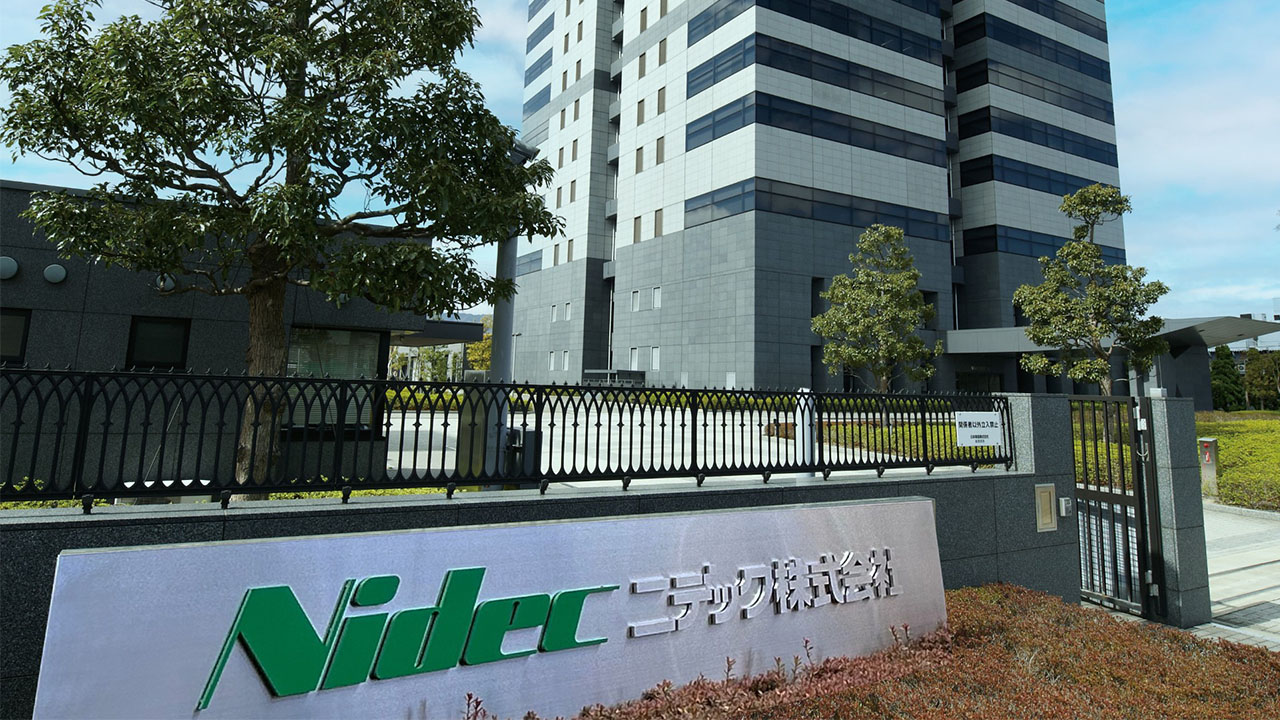
Nidec Corporation's Financial Performance and Market Valuation
Financial Modeling Prep· 2025-11-16 02:00
Core Insights - Nidec Corporation (NNDNF) is a global leader in electric motor manufacturing, operating across various sectors including automotive and appliances [1] - The company reported earnings per share (EPS) of $0.23, which was below the estimated $0.29, while revenue was approximately $4.49 billion, meeting expectations [2] - Nidec's revenue growth was driven by an increase in sales of 8.5 billion yen, particularly in the automotive and appliance sectors [2] Financial Metrics - Nidec has a price-to-earnings (P/E) ratio of approximately 13.69, indicating investor willingness to pay for earnings [3] - The price-to-sales ratio and enterprise value to sales ratio are both around 0.83, reflecting consistent market valuation relative to sales [3] - The enterprise value to operating cash flow ratio is approximately 9.34, showcasing the company's cash flow efficiency [3] - Nidec's earnings yield is about 7.30%, which may attract investors seeking returns [3]
Parker-Hannifin’s (PH) a “Standout Stock,” Says Jim Cramer
Yahoo Finance· 2025-11-15 17:36
Core Insights - Parker-Hannifin Corporation (NYSE:PH) announced a significant acquisition of Filtration Group for $9.25 billion, which is expected to enhance its position in the heating and cooling market [2] - The acquisition aligns with the growing demand for data centers and liquid cooling solutions, making Parker-Hannifin a notable player in this sector [2][3] - Jim Cramer highlighted Parker-Hannifin as a "standout stock," emphasizing its strong performance and the impact of data center orders from major contractors [3] Company Overview - Parker-Hannifin Corporation is one of the largest industrial equipment companies globally, specializing in motion control systems, hydraulics, and avionics systems [2] - The company is positioned to benefit from the ongoing construction boom in data centers, which is described as the largest since World War II [3] Market Context - The acquisition of Filtration Group is seen as a strategic move to capitalize on the increasing demand for data center infrastructure, particularly in relation to AI and liquid cooling technologies [2] - Cramer noted that Parker-Hannifin's stock experienced a notable increase of $13 in a single trading session, reflecting positive market sentiment [3]

Hot tech stock ETFs, from AI to quantum computing, have made investors lots of money. Is it time to sell?
CNBC· 2025-11-14 15:57
Core Insights - Artificial intelligence (AI) is a significant investment theme, driving substantial inflows into thematic exchange-traded funds (ETFs) but carries inherent volatility risks [1][3][9] - Thematic ETFs can experience rapid gains and losses, with the Nasdaq showing signs of vulnerability recently [1][9] Thematic ETF Performance - Nearly 400 thematic ETFs exist, with top performers seeing over 150% gains year-to-date, while some have declined by 10% [2][3] - AI-focused ETFs have attracted almost $20 billion in inflows this year, with $15 billion specifically in ETFs with "AI" in their names [4][5] Notable Thematic ETFs - The Global X Artificial Intelligence & Technology ETF (AIQ) has approximately $7 billion in assets, with $3 billion in net flows this year, featuring top holdings like Advanced Micro Devices and Tesla [5] - The Robotics & Artificial Intelligence ETF (BOTZ) has around $3 billion in assets, with key holdings including Nvidia and Intuitive Surgical [5] Market Trends and Risks - Thematic ETFs require more research due to performance variability; for instance, AI-focused ETFs show a performance spread of 60% this year [6] - The ETF market has seen record launches, with over 4,300 U.S. listed ETFs now exceeding the number of individual stocks [7] Momentum and Investment Strategy - Some themes may lose momentum as companies mature and become part of broader indexes, leading to outflows from certain ETFs [8] - Thematic investing can be beneficial for investors who understand the associated risks and can handle short-term volatility [9][10] Top Disruptive Tech ETFs - First Trust Nasdaq Cybersecurity (CIBR): $11.5 billion assets, 20% YTD performance [11] - iShares AI Innovation and Technology (BAI): $7.6 billion assets, 30.5% YTD performance [11] - Global X Artificial Intelligence & Technology ETF (AIQ): $7.2 billion assets, 33.6% YTD performance [11] - Roundhill Generative AI & Technology (CHAT): $1.1 billion assets, 55% YTD performance [12]