Infosys

Search documents
Mcap of 7 of top-10 most valued firms erodes by Rs 3.63 lakh cr; Reliance biggest laggard
The Economic Times· 2026-01-11 10:40
Market Overview - The BSE benchmark declined by 2,185.77 points or 2.54% last week, indicating a negative trend in Indian equity markets due to heightened risk aversion from renewed US tariff threats and rising geopolitical tensions [1][3] Company Valuations - Reliance Industries experienced a significant market valuation drop of Rs 1,58,532.91 crore, bringing its total valuation to Rs 19,96,445.69 crore, making it the most valued firm despite the decline [3] - HDFC Bank's valuation decreased by Rs 96,153.61 crore to Rs 14,44,150.26 crore [3] - Bharti Airtel's market valuation fell by Rs 45,274.72 crore to Rs 11,55,987.81 crore [2][3] - Bajaj Finance's valuation plunged by Rs 18,729.68 crore to Rs 5,97,700.75 crore [2][3] - Larsen & Toubro's market capitalization dropped by Rs 18,728.53 crore to Rs 5,53,912.03 crore, while TCS declined by Rs 15,232.14 crore to Rs 11,60,682.48 crore [3] - Infosys saw a decrease in market capitalization by Rs 10,760.59 crore to Rs 6,70,875 crore [3] Gainers in the Market - ICICI Bank's valuation increased by Rs 34,901.81 crore to Rs 10,03,674.95 crore, marking it as a notable gainer [3] - Hindustan Unilever's market capitalization rose by Rs 6,097.19 crore to Rs 5,57,734.23 crore [3] - State Bank of India's valuation edged higher by Rs 599.99 crore to Rs 9,23,061.76 crore [3] Overall Market Impact - The combined market valuation of seven of the top-10 most valued firms eroded by Rs 3,63,412.18 crore last week, with Reliance Industries being the largest contributor to this decline [3]


Market sell-off: 7 of top-10 firms lose Rs 3.63 lakh crore in a week; Reliance, HDFC Bank biggest drags
The Times Of India· 2026-01-11 09:31
Core Insights - Indian equity markets experienced a significant decline, with the benchmark BSE Sensex falling by 2,185.77 points, or 2.54%, reflecting weak investor sentiment and heightened risk aversion due to renewed US tariff threats and rising geopolitical tensions [4][6] Company Performance - Reliance Industries saw its market capitalisation decrease by Rs 1,58,532.91 crore, bringing its total to Rs 19,96,445.69 crore, making it the largest loser in absolute terms [4][6] - HDFC Bank's valuation dropped by Rs 96,153.61 crore to Rs 14,44,150.26 crore [4][6] - Bharti Airtel's market capitalisation fell by Rs 45,274.72 crore to Rs 11,55,987.81 crore [4][6] - Bajaj Finance lost Rs 18,729.68 crore, closing at Rs 5,97,700.75 crore [4][6] - Larsen & Toubro's market capitalisation decreased by Rs 18,728.53 crore to Rs 5,53,912.03 crore [4][6] - Tata Consultancy Services (TCS) saw a decline of Rs 15,232.14 crore, resulting in a valuation of Rs 11,60,682.48 crore [4][6] - Infosys' market capitalisation edged lower by Rs 10,760.59 crore to Rs 6,70,875 crore [6] Positive Performers - ICICI Bank's valuation increased by Rs 34,901.81 crore to Rs 10,03,674.95 crore [5][6] - Hindustan Unilever added Rs 6,097.19 crore, reaching a market capitalisation of Rs 5,57,734.23 crore [5][6] - State Bank of India's market capitalisation rose by Rs 599.99 crore to Rs 9,23,061.76 crore [5][6] Market Overview - The combined market capitalisation of seven of India's ten most valued companies fell by Rs 3,63,412.18 crore last week [6] - Despite the overall losses, Reliance Industries remained the most valued company in India, followed by HDFC Bank, TCS, Bharti Airtel, ICICI Bank, State Bank of India, Infosys, Bajaj Finance, Hindustan Unilever, and Larsen & Toubro [5][6]
Mcap of 7 of top-10 most valued firms erodes by ₹3.63 lakh cr; Reliance biggest laggard
BusinessLine· 2026-01-11 08:43
Market Valuation Changes - The combined market valuation of seven of the top-10 most valued firms decreased by ₹3,63,412.18 crore last week, with Reliance Industries being the largest contributor to this decline [1] - The BSE benchmark index fell by 2,185.77 points, representing a decline of 2.54 percent [1] Company-Specific Valuation Changes - Reliance Industries' market valuation decreased by ₹1,58,532.91 crore, bringing its total to ₹19,96,445.69 crore [3] - HDFC Bank's valuation fell by ₹96,153.61 crore to ₹14,44,150.26 crore [3] - Bharti Airtel's market valuation dropped by ₹45,274.72 crore to ₹11,55,987.81 crore [3] - Bajaj Finance's valuation declined by ₹18,729.68 crore to ₹5,97,700.75 crore [3] - Larsen & Toubro's market capitalization decreased by ₹18,728.53 crore to ₹5,53,912.03 crore [3] - Tata Consultancy Services (TCS) saw a decline of ₹15,232.14 crore, bringing its valuation to ₹11,60,682.48 crore [3] - Infosys' market capitalization edged lower by ₹10,760.59 crore to ₹6,70,875 crore [4] Gainers in Market Valuation - ICICI Bank's market valuation increased by ₹34,901.81 crore to ₹10,03,674.95 crore [4] - Hindustan Unilever's valuation rose by ₹6,097.19 crore to ₹5,57,734.23 crore [4] - State Bank of India's market capitalization increased by ₹599.99 crore to ₹9,23,061.76 crore [4] Overall Market Sentiment - The Indian equity markets ended the week negatively, influenced by increased risk aversion due to renewed US tariff threats and rising geopolitical tensions [2]

申万宏源服务业投资机会梳理专题报告:中国服务业含“科”量持续提升-20260110
Shenwan Hongyuan Securities· 2026-01-10 14:55
Group 1 - The report highlights that the service industry is increasingly merging with technology, leading to the emergence of top-tier listed companies in sectors such as fintech, logistics, enterprise services, and healthcare [2][10] - Countries are exploring unique paths to develop their service industries, with examples including the U.S. focusing on fintech innovation, Germany emphasizing industrial design, and Singapore building digital infrastructure [2][10] - China's national strategy aims to enhance service industry capacity and quality through targeted policies, including the removal of entry barriers in key sectors like telecommunications and healthcare [2][39] Group 2 - The report identifies three main investment directions in the service industry: productive services, lifestyle services, and emerging services [2][45] - Productive services are seen as a core engine, with sectors like testing, industrial software, and financial services highlighted for their growth potential [2][3][45] - Lifestyle services are focused on improving living standards and consumption upgrades, with high growth observed in areas such as gaming, aviation, and tourism [3][45] Group 3 - Emerging services are positioned as key to cultivating new productive forces, with rapid developments in AI and the integration of healthcare and pharmaceutical services [4][45] - The report emphasizes the importance of cross-border e-commerce as a new growth driver for foreign trade, leveraging China's supply chain advantages [4][45] - Specific companies such as Cintas and CVS Health are cited as examples of successful service firms in the U.S., showcasing effective business models and market strategies [1][15][18]
Bharti Leads CY25 Market-Cap Surge
Rediff· 2026-01-10 06:34
Group 1: Bharti Group Performance - The Bharti group was the biggest gainer among India's top business conglomerates in calendar year 2025, with a combined market capitalisation increase of 37.3% to Rs 14.7 trillion from Rs 10.7 trillion at the end of December 2024 [3][4] - Bharti Airtel, the flagship company, saw its market capitalisation rise by 40.1% to Rs 12.67 trillion from Rs 9.05 trillion at the end of December 2024 [4] Group 2: Comparison with Other Business Groups - The combined market capitalisation of the country's 10 largest family-owned business groups increased by 10% to Rs 126.4 trillion from Rs 114.9 trillion at the end of CY24 [5] - Vedanta, owned by Anil Agarwal, was the second-biggest gainer with a market capitalisation increase of 36.3% to around Rs 5 trillion from Rs 3.67 trillion [5] - Reliance Industries, led by Mukesh Ambani, ranked third with a market capitalisation increase of 24.7% to Rs 23.4 trillion from Rs 18.73 trillion [7] Group 3: Market Trends and Sector Performance - Traditional industries such as manufacturing, mining, and infrastructure saw gains, with the Bajaj group up 21.1%, Kumar Mangalam Birla up 17%, and Mahindras up 17% [9] - The Tata group, despite retaining the top position, experienced a decline of 10.9% in market capitalisation to around Rs 27.7 trillion [10] - The Adani group lost its third rank to the Bharti group, while the Vedanta group climbed four places to ninth rank from 13th [10]
Deals, data centres, AI: Can TCS sell its future-ready story to investors?
MINT· 2026-01-09 07:11
Core Viewpoint - Tata Consultancy Services Ltd (TCS) is actively transforming its image from a traditional IT outsourcer to a more dynamic player in the tech industry through significant acquisitions and investments [1][2][3]. Group 1: Recent Developments - TCS announced its largest acquisition since going public, acquiring Coastal Cloud for $700 million, aimed at enhancing its Salesforce capabilities [2]. - The company is investing $6.5 billion over six years to build 1GW of data center capacity, marking a significant shift in its operational strategy [2]. - TCS is reportedly in the process of securing a $1 billion, 10-year contract with Telefónica UK, which would end a two-year drought in billion-dollar deals [3]. Group 2: Leadership and Internal Changes - TCS is undergoing a structural leadership overhaul, promoting middle-level executives to leadership roles amid the exit of older executives [4]. - Under the new COO Aarthi Subramanian, routine operations are being scrutinized, with leaders being held accountable for service line gaps [5]. Group 3: Analyst Sentiment and Market Performance - Despite recent positive developments, TCS has been the worst-performing stock among India's four largest IT services firms, declining 4.6% over the past six months [8]. - Analysts from several brokerages have started to view TCS more favorably, citing improved deal momentum and internal restructuring [7]. Group 4: Growth and Revenue Challenges - TCS faces growth constraints following the completion of a major project, with its data center initiative unlikely to yield immediate revenue [12]. - The company has not provided formal guidance but has indicated that international revenues should improve year-on-year despite muted demand [11]. Group 5: AI and Technological Developments - TCS announced $1.5 billion in annualized revenue from AI by September 2025, although widespread adoption of AI technologies remains uncertain [14]. - Analysts expect that AI will contribute to growth from the next fiscal year, but the growth cycle for AI is anticipated to be more gradual compared to previous tech cycles [16]. Group 6: Margin and Execution Concerns - The data center strategy involves significant capital expenditure, which may pressure margins, alongside costs related to wage hikes and layoffs [17]. - Concerns about execution and strategic clarity have intensified, with TCS losing key accounts to competitors due to delivery issues [18].

Motilal Oswal sees 8% YoY growth in Nifty Q3 earnings; SBI, Eternal among 5 top ideas
The Economic Times· 2026-01-08 09:49
Core Insights - The overall earnings momentum in Q3FY26 is expected to be driven by significant growth in sectors such as oil & gas and financials, with profits projected to increase by 25% YoY and 26% YoY, respectively [1][12] - The Nifty 50 is anticipated to deliver an 8% year-on-year growth in earnings, while the broader MOFSL universe is expected to see a 25% YoY increase in earnings [12] Earnings Growth Projections - Excluding financials, earnings for the MOFSL universe and the Nifty 50 are expected to grow 19% and 9% YoY, respectively [1] - Earnings growth for the MOFSL universe, excluding metals and oil & gas, is projected at 14% YoY, while for the Nifty 50, it is estimated at 11% YoY [1] - Automobiles are projected to deliver a 25% YoY increase in earnings, while metals are expected to grow by 15% [2] - Telecom profits are expected to increase 2.6 times over a low base in Q3FY25, and technology sector earnings are likely to rise by 8% [2] Sector Contributions - Key contributors to earnings growth include real estate (64% YoY), cement (66%), capital goods (24%), and NBFC non-lending firms (31%), which together are expected to account for nearly 77% of the incremental YoY earnings accretion during the quarter [3] - In contrast, earnings from banks are expected to grow modestly, with private banks at 4% YoY and public sector banks at 3% YoY [6] - The infrastructure and media sectors are projected to drag overall earnings, with profits estimated to decline by 3% and 7% YoY, respectively [6] FY26 Outlook - For FY26, MOFSL expects Nifty companies' earnings to grow by 8% YoY, and excluding financials, a 7% YoY increase is anticipated [7] - The broader MOFSL universe is projected to record a 14% YoY increase in profits for the full financial year, with a 17% YoY rise expected when excluding financials [8] - EPS estimates for FY26 and FY27 have been trimmed by 2.2% and 1.1%, respectively, with FY26 EPS expected to grow 9% YoY to Rs 1,084 [8][9] Market Outlook - MOFSL remains 'Overweight' on sectors such as autos, diversified financials, industrials, and technology, while being 'Underweight' on oil & gas, metals, and consumer staples [10] - The brokerage notes that multiple levers are in place to propel Indian equity markets in 2026, despite challenges from geopolitical and global trade factors [11][12]
Indian top IT firms set for another tepid quarter on weak US demand, client spending
Yahoo Finance· 2026-01-08 05:15
By Bharath Rajeswaran and Sai Ishwarbharath B Jan 8 (Reuters) - India's information technology firms are expected to report another muted quarter, as tepid demand in the U.S. and holiday-period client shutdowns continue to weigh on tech spending, nine brokerages said ahead of earnings. Brokerages expect the top six IT firms by revenue to post about 4% year-on-year revenue growth and a 5% rise in profit for the December quarter on average, reflecting prolonged demand softness, compared with 6.5% revenue ...
Stock markets trade lower on persistent foreign fund outflows, trade uncertainties
The Hindu· 2026-01-08 04:53
Market Performance - Equity benchmark indices Sensex and Nifty declined in early trade on January 8, 2026, with Sensex down by 255.86 points to 84,705.28 and Nifty down by 65.9 points to 26,074.85 due to foreign fund outflows and concerns over potential U.S. tariff hikes [1] - Major laggards included Tata Consultancy Services, Asian Paints, Maruti, Tech Mahindra, Infosys, and UltraTech Cement [1] - Conversely, gainers included ICICI Bank, Adani Ports, Bharat Electronics, and Hindustan Unilever [2] Foreign Investment Trends - Foreign institutional investors sold equities worth ₹1,527.71 crore on January 7, 2026, while domestic institutional investors purchased stocks worth ₹2,889.32 crore [2] Economic Outlook - The Indian economy is projected to grow by 7.4% in FY26, maintaining its status as the fastest-growing major economy despite U.S. tariffs and geopolitical tensions [4] - This growth estimate surpasses the RBI's forecast of 7.3% and the government's initial projection of 6.3-6.8% [4] - However, the anticipated U.S.-India trade deal, crucial for India's sustained growth, is not forthcoming, which may hinder market performance despite strong economic fundamentals [3] Market Sentiment - Market sentiment remains cautious due to geopolitical tensions, tariff-related concerns, and ongoing foreign portfolio outflows, with both Nifty and Bank Nifty facing stiff overhead resistance [5] - U.S. markets ended mostly lower on January 7, 2026, reflecting broader market concerns [6]
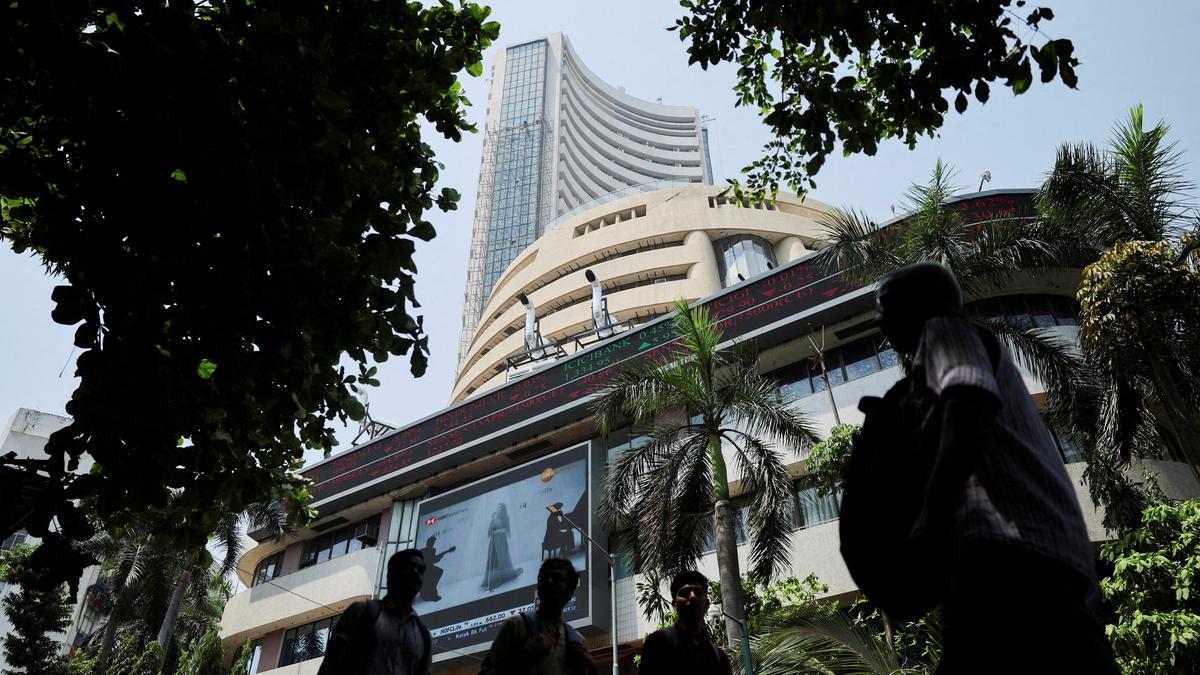
Sensex down 102 points on geopolitical concerns
Rediff· 2026-01-07 11:18
Market Performance - The benchmark indices Sensex and Nifty declined for the third consecutive day due to geopolitical tensions and concerns over potential US tariff hikes [1][6] - The BSE Sensex fell by 102.20 points (0.12%) to close at 84,961.14, with an intraday drop of 445.85 points (0.52%) to 84,617.49 [3] - The NSE Nifty decreased by 37.95 points (0.14%) to settle at 26,140.75 [3] Sector Performance - Among the 30 firms in the Sensex, major laggards included Maruti, Power Grid, Tata Motors Passenger Vehicles, HDFC Bank, Asian Paints, and Tata Steel [4] - Conversely, Titan, HCL Tech, Tech Mahindra, Infosys, and Tata Consultancy Services were notable gainers [4] Investor Activity - Foreign institutional investors sold equities worth ₹107.63 crore on Tuesday, contributing to the market decline [6] - Domestic institutional investors, however, purchased stocks worth ₹1,749.35 crore, indicating a contrasting sentiment [7] Market Sentiment - The domestic market sentiment remains cautious with risk-off undertones ahead of Q3 FY26 earnings and key US jobs data [8] - Elevated geopolitical tensions and tariff-related concerns are limiting risk appetite among investors [6][8] Global Market Influence - In Asian markets, South Korea's Kospi and Shanghai's SSE Composite indices closed higher, while Japan's Nikkei 225 and Hong Kong's Hang Seng indices ended lower [8] - Brent crude oil prices decreased by 0.81% to $60.21 per barrel, which may impact related sectors [9]