
Infosys

Search documents
Infosys and Cognition Announce Strategic Collaboration to Accelerate the AI Value Journey for Global Enterprises
Prnewswire· 2026-01-07 10:37
Core Insights - Infosys and Cognition have announced a strategic collaboration to scale the AI software engineer Devin across global enterprises, aiming to enhance software development and engineering productivity [1][2][4] - The integration of Infosys Topaz Fabric with Devin is designed to automate engineering processes, reduce technical debt, and modernize systems, thereby accelerating time-to-market for enterprises [3][4] Company Collaboration - Infosys will integrate Devin into its internal engineering teams and client delivery models, facilitating deployment within customer environments to enhance engineering quality and efficiency [2][3] - The collaboration includes the development of shared engineering frameworks and enablement programs to promote the integrated capabilities of Infosys Topaz Fabric and Devin across various industries [2][3] Technological Advancements - Infosys Topaz Fabric and Devin will work together to automate brownfield engineering and create virtual engineers to tackle complex production and maintenance challenges [3] - The partnership will focus on developing industry-specific solutions and AI-native modernization blueprints, supported by co-innovation labs [3][4] Leadership Statements - Scott Wu, CEO of Cognition, emphasized the collaboration's potential to redefine software engineering and accelerate time-to-market for clients [4] - Salil Parekh, CEO of Infosys, highlighted the synergy between Cognition's AI capabilities and Infosys' industry expertise as a significant advancement in realizing AI value for global enterprises [4]



Infosys and AWS Collaborate to Accelerate Enterprise Adoption of Generative AI
Prnewswire· 2026-01-07 05:46
Core Insights - Infosys has announced a strategic collaboration with Amazon Web Services (AWS) to accelerate the adoption of generative artificial intelligence (AI) in enterprises globally, focusing on enhancing software delivery and client value across various industries [1][4] Group 1: Collaboration and Technology Integration - The partnership combines Infosys Topaz, an AI-first service suite, with Amazon Q Developer, AWS's generative AI-powered assistant, to improve internal operations and drive innovation in sectors such as manufacturing, telecom, financial services, and consumer goods [1][2] - Infosys Topaz is being utilized to drive AI-powered transformations in key functions including software development, HR, recruitment, sales, and vendor management, significantly enhancing workflow efficiency and accuracy [2][4] Group 2: Industry Applications and Benefits - The collaboration aims to deliver advanced solutions across industries, such as enhanced end-user engagement capabilities in sports and entertainment, providing real-time personalized experiences for millions of fans [3] - The integration of Infosys Topaz with Amazon Q Developer allows for automated documentation and tailored support for software development tasks, thereby streamlining complex processes and accelerating project timelines [2][4] Group 3: Leadership Perspectives - Sandeep Dutta from AWS emphasized that Infosys is setting a new benchmark for enterprise transformation through the strategic adoption of generative AI, which will help organizations innovate and achieve operational agility [4] - Balakrishna D. R. from Infosys highlighted that the collaboration is reshaping how enterprise value is created and delivered, enabling clients to reimagine critical functions and navigate business transformations with agility [4]

Stock markets decline in morning trade on geopolitical concerns, renewed tariff hike threats
The Hindu· 2026-01-07 05:07
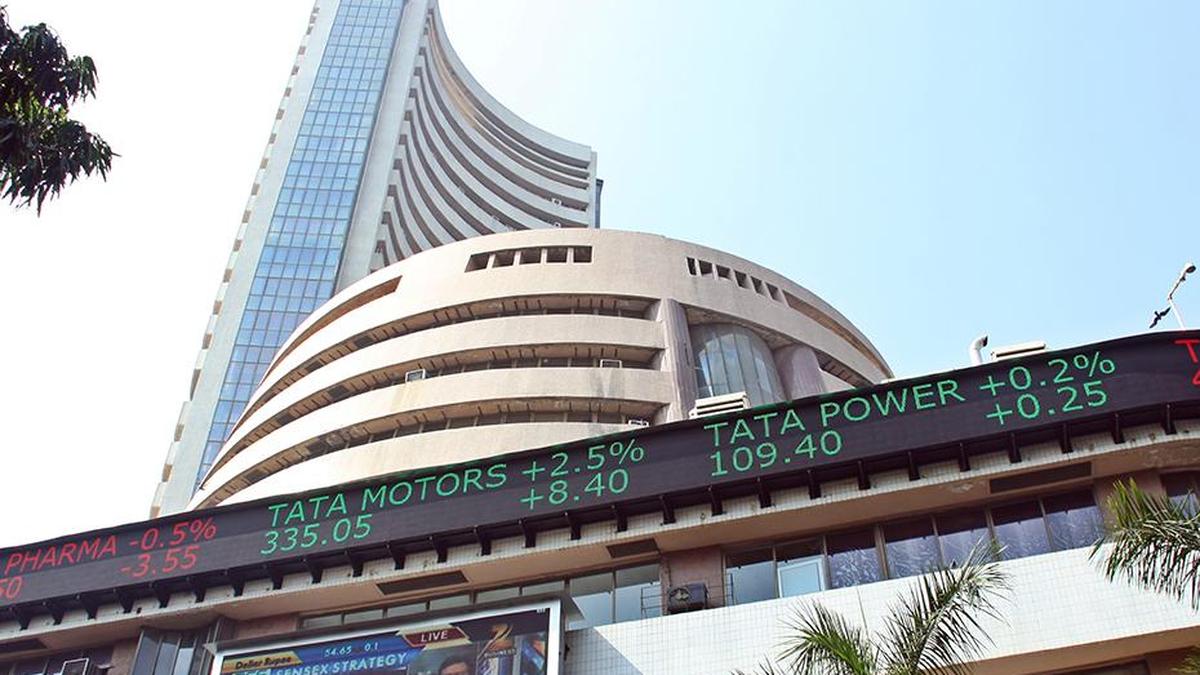
Benchmark indices Sensex and Nifty drifted lower in early trade on Wednesday (January 7, 2026) as geopolitical tensions and renewed concerns about potential U.S. tariff hikes weighed on investor sentiments. Sustained foreign fund outflows also dragged markets lower during the initial trade. The 30-share BSE Sensex declined 169.64 points to 84,909.30 in early trade. The 50-share NSE Nifty went down 42.35 points to 26,128.90. From the 30-Sensex firms, Tata Motors Passenger Vehicles, Bharti Airtel, HDFC Bank, ...
股疯、寡头与血包,印度“赢麻了”?
虎嗅APP· 2026-01-07 00:56
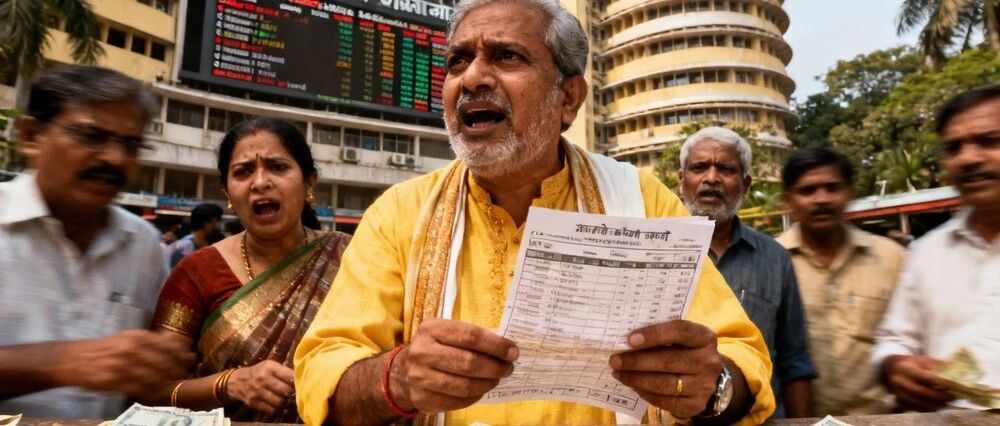
Core Viewpoint - The Indian stock market, once seen as a shining example among emerging markets, is now facing significant challenges and potential downturns as structural issues and external pressures come to light [4][8]. Group 1: Market Performance and Trends - The Indian stock market has shown a remarkable upward trend over the past decade, characterized by quick recoveries and a clear long-term slope, even amidst global challenges like the pandemic and interest rate hikes [2]. - However, starting in 2024, the market has begun to decline, revealing underlying problems that resemble those seen in the Chinese market [4]. - Foreign investors have significantly pulled out, with a net sell-off of $18.4 billion (1.6 trillion rupees) in 2024, marking a historical high in capital outflows [8]. Group 2: Structural Issues - The Indian stock market is heavily concentrated in financial services, which account for approximately 36% of the index, making it vulnerable to sector-specific downturns [15]. - The Nifty 50 index's performance is highly dependent on a few major banks and IT giants, exposing it to systemic risks if these sectors face challenges [15]. - The market has seen a dramatic increase in retail trading, with retail investors accounting for 50% of derivatives trading volume, yet 90% of active retail investors have incurred losses equivalent to 63% of India's per capita GDP [22]. Group 3: Economic Challenges - India's GDP growth rate is projected to decline from 9.2% to 6.5% in 2025, reflecting difficulties across all three major sectors: services, manufacturing, and agriculture [44]. - The manufacturing sector's contribution to GDP has fallen to a record low of 12.5%, indicating a lack of growth in this critical area [47]. - The service sector, which has been a growth pillar, is now facing pressures as companies reduce spending on technology, particularly in IT services [46]. Group 4: Investment Landscape - Despite the challenges, there is cautious optimism among foreign investors, with expectations of a recovery in profit growth for Indian companies [65]. - The Nifty index's forward P/E ratio is around 23, close to its historical average, suggesting potential for recovery if earnings improve [66]. - Domestic institutional investors have increased their holdings, surpassing foreign institutional investors for the first time, indicating a shift in market dynamics [25]. Group 5: Future Outlook - The ability of the Indian market to attract foreign investment will depend on geopolitical shifts and the reassessment of risk and return by foreign investors [42]. - The Indian economy is likely to remain a mix of high potential and significant internal structural challenges, making it a complex environment for investors [58][59].
Stock markets decline in early trade dragged by IT firms
The Hindu· 2026-01-05 04:35
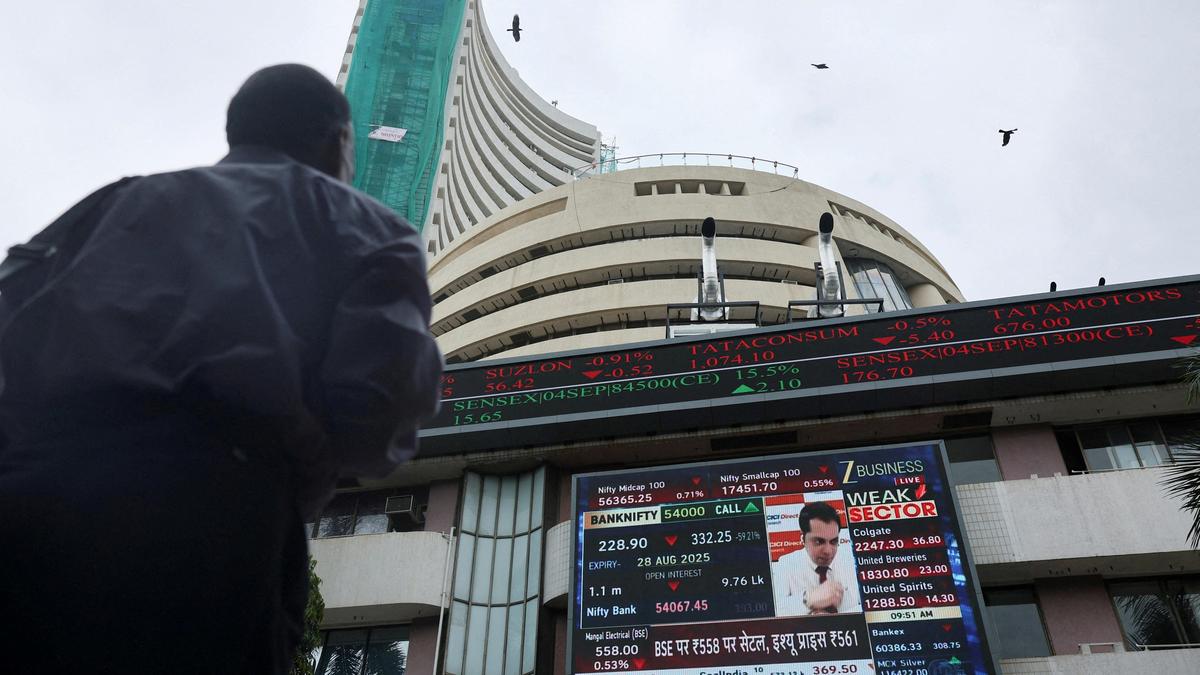
Market Performance - The equity benchmark indices Sensex and Nifty experienced declines in early trade on January 5, 2026, with Sensex dropping 125.96 points to 85,636.05 and Nifty dipping 30.95 points to 26,297.60 [1] - Major blue-chip IT stocks such as HCL Tech, Infosys, Tech Mahindra, HDFC Bank, Tata Consultancy Services, and NTPC were among the biggest laggards [1] - Conversely, Bharat Electronics, Tata Steel, Axis Bank, and Reliance Industries were noted as gainers during the same period [1] Institutional Investment - Foreign Institutional Investors (FIIs) purchased equities worth ₹289.80 crore on January 2, 2026, while Domestic Institutional Investors (DIIs) bought stocks worth ₹677.38 crore [2] Geopolitical Context - The year 2026 has commenced with significant geopolitical developments, particularly U.S. actions in Venezuela, which may have far-reaching implications for global geopolitics, as noted by V.K. Vijayakumar, chief investment strategist at Geojit Investments Ltd [2] Asian Market Trends - In Asian markets, South Korea's Kospi, Japan's Nikkei 225, and Shanghai's SSE Composite indices were trading significantly higher, while Hong Kong's Hang Seng index was marginally lower [3] - U.S. markets concluded mostly in positive territory on the preceding Friday [3] Oil Prices - Brent crude, the global oil benchmark, saw a slight decrease of 0.08% to $60.70 per barrel [3] Previous Market Performance - On the preceding Friday, January 2, 2026, the Sensex increased by 573.41 points, or 0.67%, closing at 85,762.01, while the Nifty rose by 182 points, or 0.70%, to settle at 26,328.55 [3]
Sensex falls over 200 pts, Nifty below 26,300 as Venezuela risk tempers earnings optimism
The Economic Times· 2026-01-05 04:06
The On the 30-stock Sensex, losses were led by heavyweight technology and banking stocks. Shares of Infosys, Tech Mahindra, In contrast, broader markets showed resilience, with the small-cap index up 0.5% and mid-caps gaining 0.1%.State-owned lenders outperformed, rising 1.3%, driven by gains in Live EventsIT stocks, which derive a substantial portion of revenue from the U.S., declined about 1% amid lingering global uncertainty.Expert viewsThe year 2026 has begun with major geopolitical developments which ...

印度 IT 服务_26 财年第三季度前瞻_26 自然年复苏程度的能见度仍有限,但周期性逆风的最糟阶段或已过去-India IT Services_ 3QFY26 preview_ Limited visibility still on extent of recovery in CY26, though worst of cyclical headwinds likely behind
2026-01-04 11:35
Summary of India IT Services Conference Call Industry Overview - The demand environment for India IT services remains sluggish but is not worsening, with expectations of a 5.4% constant FX revenue growth for FY27 compared to 0.9% in FY26 [1][15] - This growth is attributed to a relatively strong outlook for the US economy, supported by reduced tariff drag and an improving revenue growth outlook for the BFSI sector [1][15] Core Insights - The expected growth for India IT services is below the historical average of 7-9%, with limited visibility on reaching these levels in the near future [2] - The bull case for Generative AI's impact on IT services is viewed as 'Neutral', while a bear case could lead to deflationary impacts on revenue or margin pressures [2] - FY26 is projected to be the first year where India IT revenue growth will be lower than global enterprise revenue growth, a trend expected to continue into FY27 [2][43] Financial Performance Expectations - For 3QFY26, a +1.1% quarter-over-quarter (qoq) aggregate revenue growth is forecasted for the sector, with muted year-over-year (YoY) growth at +0.4% [7][22] - Companies like Infosys and HCL are expected to adjust their revenue growth guidance upwards, while TCS and Wipro are anticipated to be at the lower end of growth expectations [8][46] - EBIT margins are expected to remain largely flat across the sector, with HCL showing the highest qoq improvement and TCS experiencing a decline due to wage hikes [10][62] Company-Specific Insights - **TCS**: Expected to see a qoq revenue growth of 0.5% with a 24.7% EBIT margin, though a dip is anticipated due to wage hikes [12] - **Infosys**: Anticipated to raise its FY26 revenue growth guidance to 2.5%-3% with a stable EBIT margin of 21.2% [12] - **HCL Tech**: Projected to be the fastest-growing company in 3Q with a 2.8% qoq growth, benefiting from seasonal factors [9] - **Wipro**: Expected to see a 2.2% qoq growth, with margins remaining tight due to reinvestments and furlough impacts [12] Valuation and Market Outlook - Sector valuations are considered relatively full at 22x FY27 P/E, with limited upside potential for the coverage group [3] - The average upside is estimated at 0% over the next 12 months, with TCS having the highest potential upside of 9% [3] - India IT services are trading at a significant premium (40-50%) compared to US/EU IT services, which historically was 20-25% [3] Additional Considerations - The impact of AI on IT services spending is noted, with enterprises preferring to retain AI-driven cost savings rather than redeploying them with IT service vendors [2][17] - The overall sentiment from global banks indicates a constructive outlook for the economy in 2026, with expectations of improved consumer spending and corporate balance sheets [14][59] Conclusion - The India IT services sector is navigating a challenging environment with modest growth expectations and potential headwinds from AI adoption. Companies are adjusting their guidance in response to market conditions, and while valuations appear high, the outlook remains cautiously optimistic for FY27.
Market recap of the week: Seven of top 10 firms add Rs 1.23 lakh crore in mcap; Reliance leads gains
The Times Of India· 2026-01-04 10:13
Market Performance - The Indian equity markets ended positively, with the BSE Sensex rising by 720.56 points, or 0.84%, over the week [2][4] - The combined market value of seven of the country's ten most-valued companies increased by Rs 1,23,724.19 crore [4] Top Gainers - Reliance Industries led the gains, with its market capitalisation increasing by Rs 45,266.12 crore to Rs 21,54,978.60 crore [2][4] - State Bank of India saw a rise of Rs 30,414.89 crore, reaching a valuation of Rs 9,22,461.77 crore [2][4] - Larsen & Toubro's market value increased by Rs 16,204.34 crore to Rs 5,72,640.56 crore [2][4] - Hindustan Unilever's valuation climbed by Rs 14,626.21 crore to Rs 5,51,637.04 crore [2][4] - HDFC Bank recorded an increase of Rs 13,538.43 crore, bringing its market capitalisation to Rs 15,40,303.87 crore [3][4] - ICICI Bank's valuation rose by Rs 3,103.99 crore to Rs 9,68,773.14 crore [3][4] - Bharti Airtel added Rs 570.21 crore, reaching Rs 12,01,262.53 crore [3][4] Decliners - Tata Consultancy Services (TCS) experienced a decline of Rs 10,745.72 crore, ending with a market value of Rs 11,75,914.62 crore [3][4] - Infosys lost Rs 6,183.25 crore, concluding the week at Rs 6,81,635.59 crore [3][4] - Bajaj Finance saw a drop of Rs 5,693.58 crore, with its valuation falling to Rs 6,16,430.43 crore [3][4] Company Rankings - At the end of the week, Reliance Industries remained the most valuable company in India, followed by HDFC Bank, Bharti Airtel, TCS, ICICI Bank, State Bank of India, Infosys, Bajaj Finance, Larsen & Toubro, and Hindustan Unilever [3][4]
Mcap of 7 of top-10 most valued firms surges ₹1.23 lakh crore; Reliance biggest winner
BusinessLine· 2026-01-04 06:26
Market Overview - The combined market capitalisation of seven of the top-10 most-valued firms increased by ₹1,23,724.19 crore last week, reflecting a positive trend in equities, with Reliance Industries experiencing the largest valuation increase [1] - The BSE benchmark rose by 720.56 points, or 0.84 percent [1] Gainers - Reliance Industries saw its market valuation rise by ₹45,266.12 crore, reaching ₹21,54,978.60 crore [2] - State Bank of India added ₹30,414.89 crore to its valuation, totaling ₹9,22,461.77 crore [2] - Larsen & Toubro's valuation increased by ₹16,204.34 crore to ₹5,72,640.56 crore [3] - Hindustan Unilever's market capitalisation climbed by ₹14,626.21 crore to ₹5,51,637.04 crore [3] - HDFC Bank's valuation edged up by ₹13,538.43 crore to ₹15,40,303.87 crore [3] - ICICI Bank advanced by ₹3,103.99 crore to ₹9,68,773.14 crore [3] - Bharti Airtel's market capitalisation rose by ₹570.21 crore to ₹12,01,262.53 crore [3] Decliners - Tata Consultancy Services (TCS) experienced a decline in market valuation by ₹10,745.72 crore, bringing it down to ₹11,75,914.62 crore [2][4] - Infosys saw a decrease of ₹6,183.25 crore in its valuation, now at ₹6,81,635.59 crore [4] - Bajaj Finance's market capitalisation dropped by ₹5,693.58 crore to ₹6,16,430.43 crore [4] Rankings - Reliance Industries remains the most valued firm, followed by HDFC Bank, Bharti Airtel, TCS, ICICI Bank, State Bank of India, Infosys, Bajaj Finance, Larsen & Toubro, and Hindustan Unilever [4]

Mcap of 7 of top-10 most valued firms surges Rs 1.23 lakh cr; Reliance biggest winner
The Economic Times· 2026-01-04 05:51
Market Overview - The BSE benchmark increased by 720.56 points, or 0.84 percent last week [1] Company Valuations - Reliance Industries saw its market valuation rise by Rs 45,266.12 crore, reaching Rs 21,54,978.60 crore, maintaining its position as the most valued firm [6] - The market valuation of State Bank of India increased by Rs 30,414.89 crore, bringing its total to Rs 9,22,461.77 crore [6] - Larsen & Toubro's valuation surged by Rs 16,204.34 crore to Rs 5,72,640.56 crore [4] - Hindustan Unilever's market valuation climbed by Rs 14,626.21 crore to Rs 5,51,637.04 crore [4] - HDFC Bank's market capitalisation edged higher by Rs 13,538.43 crore to Rs 15,40,303.87 crore [5] - ICICI Bank's valuation advanced by Rs 3,103.99 crore to Rs 9,68,773.14 crore [5] - Bharti Airtel's market capitalisation increased by Rs 570.21 crore to Rs 12,01,262.53 crore [6] Valuation Erosion - Tata Consultancy Services (TCS) experienced a decline in market valuation by Rs 10,745.72 crore, reducing its total to Rs 11,75,914.62 crore [6] - Infosys saw a decrease in market capitalisation by Rs 6,183.25 crore to Rs 6,81,635.59 crore [6] - Bajaj Finance's market valuation dropped by Rs 5,693.58 crore to Rs 6,16,430.43 crore [6] Overall Market Capitalisation - The combined market capitalisation of seven of the top-10 most-valued firms surged by Rs 1,23,724.19 crore, reflecting an optimistic trend in equities [6]