Aurora Innovation

Search documents
Aurora Triples Driverless Network to 10 Routes and Prepares to Expand Across U.S. Sun Belt
Businesswire· 2026-02-11 21:15
Core Insights - Aurora Innovation is tripling its driverless network to 10 routes and preparing for expansion across the U.S. Sun Belt, aiming to enhance logistics capacity for customers [1] - The company expects to achieve positive free cash flow by 2028, supported by its latest software release that improves the Aurora Driver's capabilities [1] Expansion of Driverless Network - The latest software release allows the Aurora Driver to operate in adverse weather conditions, increasing utilization and enabling routes that exceed traditional Hours of Service limitations [1] - Aurora's driverless network now includes routes between Dallas and Houston, Fort Worth and El Paso, El Paso and Phoenix, Fort Worth and Phoenix, and Dallas and Laredo [1] Technological Advancements - The new software release is the fourth since deploying driverless trucks in April 2025, with over four million tests conducted to validate its capabilities [1] - The Aurora Driver can now navigate highways and surface streets in various inclement weather conditions, which previously constrained operations about 40% of the time [1] Customer Engagement and Partnerships - Early customers like Hirschbach are positioned to benefit from the new routes, enhancing their logistics capabilities [1] - Aurora is also working with Detmar Logistics to autonomously transport proppants for a major oil and gas company, marking a significant milestone in autonomous freight [2] Future Projections - The company aims to have over 200 driverless trucks operational by the end of 2026, with all commercial truck capacity fully committed through Q3 2026 [1] - Aurora's next-generation hardware kit is set to launch on the International® LT® Series truck platform in Q2 2026, further supporting its expansion efforts [1]



Aurora Innovation: Scaling Up Will Be The New Test (Rating Upgrade)
Seeking Alpha· 2026-01-13 17:17
Core Insights - Aurora Innovation, Inc. (AUR) is a self-driving technology company that focuses on the freight industry, and it has been under observation since last year [1]. Company Overview - The company has been rated neutral in initial coverage, indicating a cautious stance on its stock performance [1]. Analyst's Position - The analyst has no current stock, option, or similar derivative positions in Aurora Innovation or any related companies, nor plans to initiate any such positions in the near future [1].

Aurora Innovation: 2026 Still Isn't The Year Of Autonomous Trucking
Seeking Alpha· 2026-01-13 15:30
Core Viewpoint - The article emphasizes the importance of identifying undervalued stocks that are mispriced by the market as a strategy for investment in 2026 [1]. Group 1: Company Overview - Stone Fox Capital is an RIA based in Oklahoma, led by Mark Holder, a CPA with 30 years of investing experience, including 15 years as a portfolio manager [2]. - The investing group "Out Fox The Street" provides stock picks and in-depth research aimed at uncovering potential multibaggers while managing portfolio risk through diversification [2]. Group 2: Features and Offerings - The group offers various model portfolios, stock picks with identifiable catalysts, daily updates, real-time alerts, and access to community chat and direct communication with Mark for inquiries [2].

Nvidia (NASDAQ: NVDA) Stock Price Prediction for 2026: Where Will It Be in 1 Year (Dec 24)
247Wallst· 2025-12-24 13:15
Core Viewpoint - Nvidia Corp. has shown significant stock performance improvement, with a 5.2% increase in the past week and a 30.2% rise over the last six months, driven by new chip shipments to China and a $1.5 billion investment in Israel [1][2]. Financial Performance - Nvidia's third-quarter revenue reached a record $57.01 billion, with $51.2 billion coming from the data center division, marking a 66% year-over-year increase [9]. - The company has projected fiscal third-quarter revenue of $65 billion, exceeding analysts' expectations [11]. - Nvidia's capital expenditures surged over 200% this year to more than $3 billion to meet demand [9]. Market Dynamics - The AI market is expected to grow at a 37% CAGR through 2030, supporting Nvidia's revenue forecast of $170 billion for fiscal 2026, a 30% increase from $130.5 billion in 2025 [8]. - Nvidia's automotive segment also saw a 32% year-over-year increase to $592 million, driven by partnerships with Toyota and Aurora Innovation [11]. Strategic Developments - Nvidia plans to supply over 260,000 advanced GPUs to South Korean firms, indicating strong international demand [7]. - The company is investing in U.S. AI infrastructure, supported by a $165 billion expansion from Taiwan Semiconductor Manufacturing [6]. Analyst Sentiment - Of 64 analysts covering Nvidia, 60 recommend buying shares, with a consensus one-year price target of $253.02, indicating over 38% upside potential from current prices [13]. - Citigroup, J.P. Morgan, and Morgan Stanley maintain their Buy-equivalent ratings, citing strong demand and revenue growth [14]. Risks and Challenges - Ongoing U.S.-China trade restrictions and tariffs pose risks to Nvidia's supply chain and profitability, with potential revenue impacts estimated at $9 billion due to export controls [4][10]. - Competition from Huawei's Ascend chips and other market pressures could affect margins, although Nvidia has raised prices on its GPUs to mitigate these effects [5].

马斯克老对手或接手通用
Guan Cha Zhe Wang· 2025-12-24 04:55
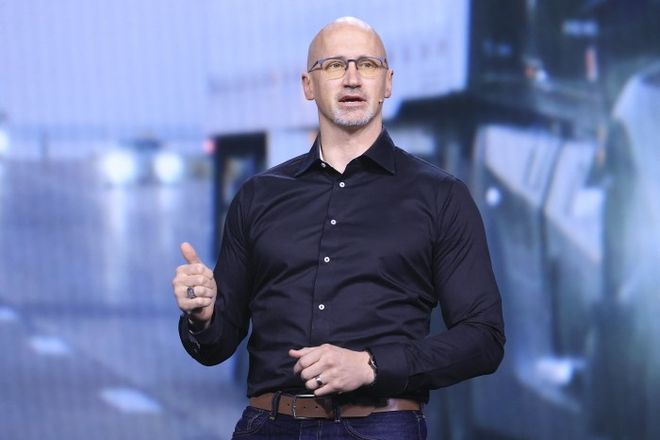
Core Viewpoint - Sterling Anderson, a technology expert in robotics and autonomous driving, has quickly become a focal point within General Motors (GM) and the capital markets since joining the company this summer, especially as CEO Mary Barra approaches her tenth year in leadership [1][3]. Group 1: Leadership and Succession - Anderson is viewed by some board members and investors as a potential "dark horse successor" to CEO Mary Barra [3]. - His rise reflects GM's current challenges in the face of intensified competition in electrification and automation, particularly from Tesla and Waymo in the U.S. and Chinese companies in other markets [3][4]. - Anderson's background includes working with Elon Musk at Tesla and co-founding Aurora Innovation, a self-driving truck company valued at approximately $8 billion [4]. Group 2: Strategic Direction - Anderson's appointment comes after a period of instability in GM's leadership, with several potential CEO candidates leaving the company [4]. - He has taken on significant responsibilities, overseeing the integration of artificial intelligence and software systems into GM's vehicle and business frameworks, making him one of the few executives at GM to control the core direction of "hardware-software integration" [3][4]. - The company is at a critical juncture, needing to define whether it will transition into a technology company or maintain its focus on traditional large fuel vehicles [5]. Group 3: Challenges and Controversies - Since Anderson's arrival, GM has seen multiple senior technical executives depart, raising concerns about his management style and the direction of the company [7][8]. - Anderson's new technology strategy aims to launch a production model capable of "driving without line of sight" by 2028, initially applied to Cadillac electric SUVs, while also focusing on cost-effective batteries and AI technology [7]. - Internally, opinions on Anderson are mixed; some welcome his leadership, while others question his decisions regarding personnel and performance management [8].

Nvidia (NASDAQ: NVDA) Stock Price Prediction for 2025: Where Will It Be in 1 Year (Dec 10)
247Wallst· 2025-12-10 12:50
Core Viewpoint - Nvidia's stock has shown significant recovery and growth, driven by advancements in AI technology and strategic developments in U.S.-China trade relations [1][2][12]. Company Performance - Nvidia's shares increased by 3.0% in the past week and are up 29.7% over the last six months, outperforming major indices [1]. - The company reported a record revenue of $57.01 billion in the third quarter, with $51.2 billion coming from the data center division, marking a 66% year-over-year increase [9]. - Nvidia's capital expenditures surged over 200% this year to more than $3 billion to meet the demand from hyperscalers [9]. Market Dynamics - The AI market is projected to grow at a 37% CAGR through 2030, supporting Nvidia's revenue forecast of $170 billion for fiscal 2026, a 30% increase from $130.5 billion in 2025 [8]. - Nvidia's automotive segment also saw a 32% year-over-year increase to $592 million, driven by partnerships with companies like Toyota and Aurora Innovation [11]. Strategic Developments - Nvidia is developing location verification technology to prevent chip smuggling and has received approval to sell advanced H200 AI chips to China [1][7]. - The company plans to supply over 260,000 advanced GPUs to South Korean firms, indicating strong international demand [7]. Analyst Sentiment - Of 64 analysts covering Nvidia, 60 recommend buying shares, with a consensus one-year price target of $250.93, indicating a potential upside of about 36% from the current price [13]. - Citigroup, J.P. Morgan, and Morgan Stanley have maintained their Buy-equivalent ratings, citing strong demand and revenue growth [14]. Risks and Challenges - Ongoing U.S.-China trade restrictions and tariffs pose risks to Nvidia's supply chain and profitability, with analysts warning of potential margin pressure [4][5][10]. - The company faces competition from Huawei's Ascend chips and other emerging technologies, which could impact its market position [5][15].
What's a Waymo Anyway?
The Motley Fool· 2025-12-02 16:48
Core Insights - Waymo is currently leading the autonomous vehicle market by offering fully driverless rides in major cities, while competitors like Tesla remain in testing phases with safety drivers required [3][4][6] - The podcast discusses the differences in technology approaches between Waymo and Tesla, highlighting Waymo's comprehensive sensor suite versus Tesla's vision-only system [3][9] - The potential for rapid scaling in the autonomous taxi market is emphasized, with projections indicating significant growth from $1 billion in 2022 to over $100 billion by 2031 [7][12] Company Strategies - Waymo's strategy involves methodical deployment and meticulous mapping of operational cities, which contributes to their effective operations and consumer acceptance [3][9] - Tesla's approach focuses on cost reduction and rapid deployment, but it has not yet proven to be as effective in safety and technology as Waymo's strategy [7][9] - Other companies in the autonomous driving space, such as Mobileye and Aurora Innovation, are also mentioned for their unique approaches and potential contributions to the industry [15][16] Market Dynamics - The podcast notes that less than 1% of the U.S. population has experienced a driverless taxi ride, indicating that the market is still in the early adopter phase, allowing competitors time to catch up [6] - The discussion includes the importance of cost-effectiveness for both Waymo and Tesla as they scale their operations, with current vehicle costs for Waymo estimated to be between $100,000 and $150,000 [7][12] - The evolving landscape of ride-sharing is highlighted, with companies like Uber and Lyft potentially adapting to include autonomous vehicles in their offerings, but not necessarily being replaced by them [25][26] Future Outlook - The podcast suggests that while Waymo currently holds a lead, the future of the autonomous vehicle market remains uncertain, with various companies still vying for position [4][6] - The potential for new business models in ride-sharing and the integration of autonomous vehicles is discussed, indicating a shift from individual vehicle ownership to fleet operations [25][26] - The regulatory environment in markets like China and Europe is noted as being more developed, which could influence the pace of adoption and innovation in the U.S. [20][21]



全球物流网络重构_运输模式转变
2025-11-16 15:36
Summary of Key Points from the Conference Call Industry Overview - The conference call discusses the logistics industry, focusing on the implications of reshoring and the dynamics of a multipolar world on global supply chains and freight transport [2][20][65]. Core Insights and Arguments - **Reshoring Impact**: The reshoring of supply chains is leading to a structural shift in logistics, with a notable modal shift from ocean freight to truck freight, particularly benefiting short-haul trucking [9][38][58]. - **Container Throughput Trends**: Regression analysis indicates that ocean container throughput growth is expected to slow relative to GDP growth, with a projected decline in the multiplier effect of TEU (Twenty-foot Equivalent Unit) trade to GDP [9][39][52]. - **Earnings Estimates**: Earnings estimates for global container liners are significantly below consensus, with projections of -18% and -24% for FY26 and FY27, respectively. In contrast, earnings for listed truck freight players are expected to outperform, with estimates of +18% and +20% [9][58]. - **Investment in Reindustrialization**: Total investment in reindustrialization in Europe and the US is projected to reach $4.7 trillion over the next three years, indicating a strong commitment to reshoring strategies [34][36]. - **Modal Shift Dynamics**: The shift towards road transport is evident, with trucks gaining market share over ocean freight, especially in high-frequency, short-haul lanes. Rail-road intermodal solutions are also expected to gain traction due to their ESG benefits [9][38][58]. Additional Important Insights - **Trade as a Share of GDP**: The share of trade in GDP is declining, exacerbated by efforts to nearshore supply chains. This trend reflects a broader structural shift towards services in global economies [20][44]. - **US-China Trade Relations**: The US is reducing its reliance on China, with China's share of US imports dropping from 22% in 2017 to 13% in 2024. This shift is influencing global supply chains and increasing the importance of alternative trading partners like Mexico and Vietnam [69][71]. - **Geopolitical Tensions**: Rising geopolitical tensions are reshaping trade routes and supply chain strategies, with disruptions in regions like the Middle East affecting logistics operations [98]. - **Technological Investments**: Companies are expected to invest in AI and data infrastructure to enhance supply chain resilience and efficiency, particularly in response to the complexities introduced by reshoring [60]. Conclusion - The logistics industry is undergoing significant changes driven by reshoring, geopolitical tensions, and evolving trade dynamics. The modal shift towards trucking and the decline in ocean freight volumes present both challenges and opportunities for various stakeholders in the logistics sector [9][20][58].
Will Aurora Innovation (AUR) Stock Explode to $10?
247Wallst· 2025-11-04 14:35
Core Viewpoint - The potential widespread adoption of self-driving trucks could lead to significant financial benefits for Aurora Innovation and its investors [1] Company Summary - Aurora Innovation is positioned to capitalize on the future of autonomous trucking, suggesting a promising financial outlook for the company and its stakeholders [1]

Aurora Innovation: Material Progress In Q3
Seeking Alpha· 2025-10-30 01:04
Company Update - Aurora Innovation (AUR) reported significant progress in its third-quarter update, highlighting an increase in the number of driverless miles and vehicles in September [1] - The company added a second driverless lane during the quarter and now supports nighttime operations [1] Investment Strategy - Narweena, an asset manager led by Richard Durant, focuses on identifying market dislocations due to misunderstandings of long-term business prospects [1] - The firm aims to achieve excess risk-adjusted returns by targeting businesses with secular growth opportunities in markets with high barriers to entry [1] - Narweena's investment approach emphasizes company and industry fundamentals to uncover unique insights, with a preference for smaller cap stocks and markets lacking obvious competitive advantages [1] Market Trends - The aging population, low population growth, and stagnating productivity growth are expected to create new investment opportunities distinct from historical trends [1] - Many industries may experience stagnation or secular decline, which could paradoxically enhance business performance as competition diminishes [1] - Conversely, some businesses may face rising costs and diseconomies of scale, while asset-light businesses are increasingly dominating economies, reducing the need for infrastructure investments over time [1] - A growing pool of capital is pursuing a limited set of investment opportunities, leading to rising asset prices and compressed risk premia [1]