
凯迪拉克电动SUV

Search documents
马斯克老对手或接手通用
Guan Cha Zhe Wang· 2025-12-24 04:55
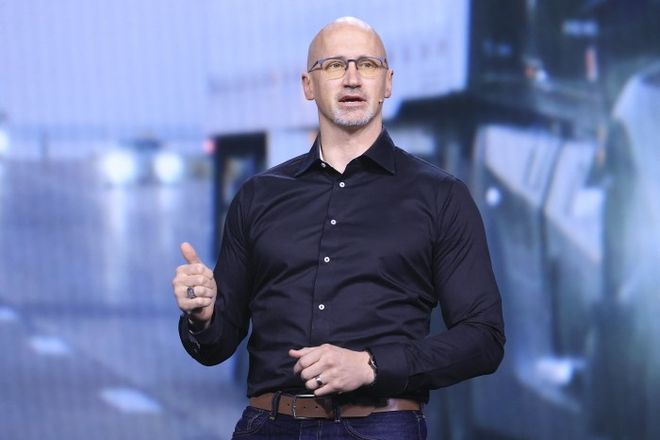
Core Viewpoint - Sterling Anderson, a technology expert in robotics and autonomous driving, has quickly become a focal point within General Motors (GM) and the capital markets since joining the company this summer, especially as CEO Mary Barra approaches her tenth year in leadership [1][3]. Group 1: Leadership and Succession - Anderson is viewed by some board members and investors as a potential "dark horse successor" to CEO Mary Barra [3]. - His rise reflects GM's current challenges in the face of intensified competition in electrification and automation, particularly from Tesla and Waymo in the U.S. and Chinese companies in other markets [3][4]. - Anderson's background includes working with Elon Musk at Tesla and co-founding Aurora Innovation, a self-driving truck company valued at approximately $8 billion [4]. Group 2: Strategic Direction - Anderson's appointment comes after a period of instability in GM's leadership, with several potential CEO candidates leaving the company [4]. - He has taken on significant responsibilities, overseeing the integration of artificial intelligence and software systems into GM's vehicle and business frameworks, making him one of the few executives at GM to control the core direction of "hardware-software integration" [3][4]. - The company is at a critical juncture, needing to define whether it will transition into a technology company or maintain its focus on traditional large fuel vehicles [5]. Group 3: Challenges and Controversies - Since Anderson's arrival, GM has seen multiple senior technical executives depart, raising concerns about his management style and the direction of the company [7][8]. - Anderson's new technology strategy aims to launch a production model capable of "driving without line of sight" by 2028, initially applied to Cadillac electric SUVs, while also focusing on cost-effective batteries and AI technology [7]. - Internally, opinions on Anderson are mixed; some welcome his leadership, while others question his decisions regarding personnel and performance management [8].


通用汽车因需求疲软削减电车工厂产量并推迟生产计划
Shang Wu Bu Wang Zhan· 2025-09-10 15:24
Core Viewpoint - General Motors is reducing production at its main electric vehicle factories due to weak demand, following the Trump administration's withdrawal of support for electric vehicles [1] Group 1: Production Adjustments - General Motors will suspend production of two Cadillac electric SUVs at its Tennessee plant in December and plans significant production cuts and temporary layoffs over the next five months [1] - The company will halt production for one week in October and November [1] - The second shift plan at the Kansas City plant has been indefinitely postponed [1] Group 2: Legislative Impact - The "Big and Beautiful" bill passed by the Trump administration in July rescinded key electric vehicle support policies, including a $7,500 consumer tax credit that had been in place for about 15 years [1] - The bill also froze penalties for automakers that fail to meet fuel efficiency standards [1] Group 3: Market Outlook - Analysts predict that electric vehicle sales will face challenges after the tax credit expires on September 30, leading automakers to increase production of gasoline vehicles [1] - Despite a significant increase in electric vehicle sales over the past year, most companies remain unprofitable, and General Motors' executives emphasize reliance on gasoline vehicle sales to navigate market changes and maintain flexibility and profitability [1]
繁荣假象:补贴即将结束,美国电动车或现硬着陆
Guan Cha Zhe Wang· 2025-09-05 11:06
Core Viewpoint - The sales surge of new energy vehicles (NEVs) in the U.S. market is expected to rapidly decline after the expiration of government subsidies [1][2]. Group 1: Sales Performance - In August, U.S. new car sales increased by 3.7% year-on-year, with NEVs significantly contributing to this growth [1]. - NEVs accounted for 11% of total sales in August, up from 8% in previous months [1]. Group 2: Impact of Subsidy Expiration - The U.S. government’s electric vehicle subsidies, which provide up to $7,500 for new cars and $4,000 for used cars, will end on September 30 [1][2]. - Major automakers are taking preemptive measures in response to the anticipated decline in NEV sales, including layoffs and production cuts [2]. Group 3: Company Responses - General Motors plans to halve the production of electric vehicles at its Spring Hill, Tennessee plant starting December and will halt production for two weeks in October and November [2][3]. - Volkswagen is also reducing production of its electric SUV ID.4 in Tennessee and temporarily laying off 160 employees to align production with market demand [3]. - Rivian has laid off over 200 employees and plans to introduce a lower-priced SUV model next year to counter policy risks and boost sales [3]. Group 4: Regulatory Changes - The "Big and Beautiful" tax and spending bill signed by Trump also ends penalties for automakers that fail to meet fuel economy standards, which could significantly impact revenue for companies like Tesla and Rivian that rely on carbon credit sales [3]. - The automotive industry has faced turmoil over the past year, with tariffs reducing profits by over $12 billion and policy changes further weakening the outlook for electric vehicles [4].
