SWIFT

Search documents
TradFi: The Tokenization Tightrope
Yahoo Finance· 2025-11-27 08:22
Core Insights - Tokenized real-world assets (RWAs) are evolving capital markets but face regulatory adaptation rather than complete overhaul [1][4] - The primary challenge in scaling tokenization lies in the architectural incompatibility between traditional finance (TradFi) systems and blockchain technology [4][10] - Tokenization is seen as a pathway to a programmable economy, yet it remains largely in the proof-of-concept stage [5][6] Regulatory and Compliance - Tokenized assets are generally classified as securities, necessitating compliance with existing securities regulations, including KYC/AML obligations [7][11] - Regulatory frameworks like the EU's MiCA and Germany's eWpG are crucial for institutional comfort, but operational challenges persist [1][4] - The integration of automated identity verification and blockchain analytics is becoming common to meet compliance standards [7] Operational Challenges - The transition to tokenization requires a complete re-engineering of risk management, custody, and compliance processes within financial institutions [2][10] - Current tokenization efforts are often self-contained ecosystems with limited interoperability, relying on traditional infrastructure for settlement and custody [8][9] - Programmable custody and automated compliance are essential for tokenization to evolve from pilot projects to a fully operational market [10][15] Market Potential and Risks - Tokenization of illiquid assets like private credit and corporate debt offers increased liquidity and tradability for institutional investors [17][18] - Retail investors gain access to previously inaccessible asset classes through fractional ownership, but face risks such as illiquidity and regulatory uncertainty [18][19] - The introduction of private assets into a high-speed trading environment poses untested risks, particularly under volatile market conditions [18] Technological Integration - The integration of blockchain with existing financial systems is complex, requiring a shift in operational norms and a cultural change within institutions [16][27] - High-quality data oracles can publish verified economic data to the blockchain, but operationalizing this data within regulated systems remains a challenge [14][16] - The need for secure, compliant, and scalable on-chain data storage is critical for the successful tokenization of private credit and other illiquid assets [19] Private Chains and Interoperability - Private, permissioned blockchains are emerging as regulatory sandboxes for financial institutions to experiment with tokenization while maintaining compliance [20][21] - These private chains serve as a bridge to public infrastructure, but there is a risk of creating isolated liquidity silos that undermine the goals of open finance [22][24] - The long-term success of private chains hinges on their ability to interoperate with public networks, facilitating access to global liquidity [25][24] Future of Tokenization - The winning architecture for tokenization will merge TradFi governance with DeFi programmability, enabling automated compliance and settlement [26][27] - Initiatives like SWIFT's interoperability pilots and BNY Mellon's asset management experiments are paving the way for programmable finance [27][28] - The ultimate goal is to build a financial infrastructure that minimizes friction, maximizes liquidity, and upholds security through deterministic, programmable finance [29]
评估亚太地区稳定币的现状-Assessing the lie of the land for Stablecoins in Asia-Pacific
2025-11-24 01:46
Summary of the Conference Call on Stablecoins in Asia-Pacific Industry Overview - The report focuses on the evolving landscape of stablecoins in the Asia-Pacific region, particularly in light of the GENIUS Act passed in July 2025 and recent stablecoin IPOs in the US [1][2] - Many Asia-Pacific countries are considering the introduction of local currency stablecoins, but the regulatory framework is still in development [1][2] Key Insights - **Regulatory Landscape**: The regulatory environment for stablecoins is rapidly evolving, with countries like Singapore, Australia, and Japan already having frameworks in place for stablecoin issuance [11][20] - **Adoption Potential**: Korea, Singapore, and Hong Kong are identified as having the highest potential for stablecoin adoption due to their familiarity with crypto and high cashless payment rates [3][10] - **Market Size**: The USD-denominated stablecoin market cap is approximately $300 billion, while Asia currency-based stablecoin market cap is only around $49 million, indicating significant room for growth [9] Opportunities and Challenges - **Cross-Border Payments**: Stablecoins present a natural opportunity for cross-border payments, with potential transaction cost reductions of 60-80% compared to traditional systems [29] - **Corporate Interest**: Corporates are beginning to shift their focus towards stablecoins, with some already signing agreements for stablecoin transactions [2][40] - **Financial Institutions' Response**: Local banks are becoming increasingly aware of the risks posed by stablecoins, particularly regarding FX commissions and trade finance earnings [40] Regulatory Developments - **Australia**: The RBA is exploring the role of stablecoins through Project Acadia, focusing on the development of a Central Bank Digital Currency (CBDC) [17] - **Korea**: The Bank of Korea emphasizes the need for traditional banks to lead stablecoin initiatives to ensure monetary policy efficacy [17] - **Hong Kong**: The Stablecoins Ordinance requires a license for stablecoin issuance, with 36 applications received by the HKMA as of September 2025 [17] - **China**: The PBOC maintains a cautious stance towards stablecoins, focusing on the promotion of the digital yuan instead [18] Market Dynamics - **Demographics**: Countries with a higher share of younger populations and foreign workers are expected to drive demand for stablecoins, particularly for cross-border remittances [10][11] - **Technological Adoption**: Advanced digitization in Asia, characterized by a young population of "digital natives," supports higher adoption rates for stablecoins [6] Financial Institutions' Initiatives - Financial institutions are adapting to the changing landscape by exploring partnerships and developing blockchain-based solutions for stablecoin transactions [63] - Examples include POSCO International's collaboration with JPMorgan Kinexys for a blockchain-based global payment system and Mitsubishi Corporation's plans to use JPY-pegged stablecoin for internal payments [45] Conclusion - The stablecoin ecosystem in Asia-Pacific is still in its early stages, but the potential for growth is significant as regulatory frameworks develop and corporates begin to adopt these digital currencies [1][2][9]
全球货币支付占比:欧元涨到37.79%,美元降至38.85%,那人民币占比多少?
Sou Hu Cai Jing· 2025-11-22 22:12
Core Insights - The article highlights a significant shift in global currency payment proportions, with the euro's share rising to 37.79% and the dollar's share decreasing to 38.85%, indicating a narrowing gap between the two currencies [1][3][10] - The increase in euro usage is attributed to the recovery of the European economy and more stable monetary policies from the European Central Bank, while the dollar's decline is linked to fluctuations in U.S. interest rates [3][4] - The Chinese yuan has also seen growth, reaching a 4.61% share in global payments, up from less than 2% in 2020, driven by China's expanding trade relationships [4][7][10] Currency Payment Trends - The euro's payment share increased by nearly 6 percentage points over the past year, while the dollar's share dropped by over 3 percentage points, reflecting a rare speed of change in the international monetary system [1][3] - The total foreign trade of Germany, France, and Italy alone exceeded 4 trillion euros in 2024, showcasing the active internal trade within the EU [3][4] - The yuan's cross-border payment amount exceeded 52 trillion yuan in the first 11 months of 2024, marking a 24.1% year-on-year growth [4][5] Factors Influencing Currency Choices - The preference for euro payments among European traders is driven by lower exchange rate risks and transaction costs [1][3] - The rise of the yuan in international trade is supported by China's position as the world's second-largest economy and its increasing trade with various countries [4][5] - The development of multiple cross-border payment systems, such as CIPS and TARGET2, has facilitated the diversification of currency usage [8][10] Future Outlook - The trend towards currency diversification is expected to continue, with the euro potentially surpassing the dollar in certain months as the leading payment currency [10][11] - The yuan's share is anticipated to rise further, possibly challenging the positions of the pound and yen in the global payment landscape [10][11] - The ongoing changes in currency payment proportions reflect broader adjustments in the global economic landscape, indicating a move away from a dollar-centric system [7][10]


Ripple’s Bold Claim: XRP Could Capture 14% of SWIFT’s $150 Trillion by 2030
Yahoo Finance· 2025-11-21 14:40
Jievani / Shutterstock.com Quick Read Ripple (XRP) CEO claims the XRP Ledger could handle 14% of SWIFT’s volume within five years, equating to roughly $21 trillion annually. Ripple’s On-Demand Liquidity service processed $1.3 trillion in Q2 2025 and cuts settlement times from days to seconds. SWIFT’s 11,000 institution network and XRP’s 94% drop in active addresses (105K→6K) create major adoption hurdles. If you’re thinking about retiring or know someone who is, there are three quick questions cau ...
X @aixbt
aixbt· 2025-11-14 03:01
chainlink solving $58b annual corporate actions reconciliation problem with dtcc swift and 24 banks. swift sr 2025 activates november 22 enabling oracle-verified dividends and splits across 11,500 banks. link at $14.53 capturing enterprise revenue from every participant. the infrastructure play everyone missed chasing shitters. ...
SharpLink Gaming .(SBET) - 2025 Q3 - Earnings Call Transcript
2025-11-13 14:32
Financial Data and Key Metrics Changes - Total revenue for Q3 2025 reached approximately $10.8 million, a significant increase of over 10 times year-over-year from $0.9 million in Q3 2024 [11][22] - Net income for Q3 2025 was approximately $104.3 million, a substantial increase compared to a net loss of $0.9 million in the same quarter last year, primarily driven by unrealized gains on Ethereum holdings [23] - Cash on hand as of September 30, 2025, was $11.1 million, up from $1.4 million at the end of 2024 [23] Business Line Data and Key Metrics Changes - The affiliate marketing segment generated revenue of approximately $570,000 in Q3 2025, down from $882,000 in Q3 2024, indicating a reduced emphasis on this area as resources shifted towards the ETH treasury strategy [20] - The company staked nearly 100% of its ETH since the inception of its treasury strategy, contrasting with many peers and ETH ETFs [14] Market Data and Key Metrics Changes - As of September 30, 2025, the company held 580,841 ETH with a net fair value of $2.4 billion, and 236,906 LsETH (liquid staked ETH) valued at $622.7 million [21] - Combined ETH holdings increased to 637,752 ETH and 223,499 LsETH as of November 9, 2025 [22] Company Strategy and Development Direction - The company is focused on maximizing value creation through strategic partnerships and identifying the best ETH deployment opportunities, leveraging its relationship with ConsenSys [14][15] - The long-term vision includes Ethereum becoming the settlement layer for trillions of dollars in tokenized assets, with a focus on increasing ETH per share for investors [10][12] Management's Comments on Operating Environment and Future Outlook - Management highlighted a significant shift in institutional adoption of digital assets, supported by regulatory clarity from the U.S. government [12] - The company is well-positioned to capitalize on the ongoing institutional adoption supercycle within the Ethereum ecosystem [19] Other Important Information - The company announced a partnership with Superstate to issue its stock natively on Ethereum, aiming to enhance accessibility and utility for a digitally native investor base [16] - The company raised $76.5 million through a registered direct offering, reflecting strong institutional confidence in its strategy [18] Q&A Session Summary Question: Can you discuss the attributes driving demand for Ethereum and the pipeline for partnerships? - Management noted that financial institutions recognize digital assets as crucial technology, with Ethereum executing its scaling roadmap effectively [27][28] Question: How does the company view the percentage of ETH that should be staked versus used for other earnings? - The company emphasized a focus on risk-adjusted yield while staking nearly 100% of its ETH, without providing specific yield targets [31][32] Question: What initiatives are being considered besides share buybacks in light of the current NAV multiple? - Management indicated a focus on increasing ETH per share growth and capital efficiency, with various strategies available depending on market conditions [50][51] Question: How does Ethereum maintain its leading position against competitors like Solana? - Management highlighted Ethereum's significant stablecoin activity and tokenized asset dominance, asserting confidence in its institutional activity [56][57] Question: What is the expected impact of upcoming Ethereum upgrades? - Management expressed optimism about the upgrades enhancing scalability and transaction throughput, positioning Ethereum favorably against competitors [64][65]

X @aixbt
aixbt· 2025-11-10 07:11
Revenue & Tokenomics - Chainlink Reserve 在 9 周内使用来自 SWIFT、UBS 和中央银行交易的企业收入购买了 72.9 万个 LINK 代币 [1] - 企业以法币支付,这些法币在场外转换为 LINK,从而产生隐形的购买压力 [1] - 未来几年没有提款计划 [1] - Chainlink 创始人 Sergey 确认已有数百万美元的收入流入 [1] Market Position & Security - LINK 的交易价格为 23 美元 [1] - Chainlink 的基础设施保障了价值 1000 亿美元的总锁定价值 (TVL) [1]
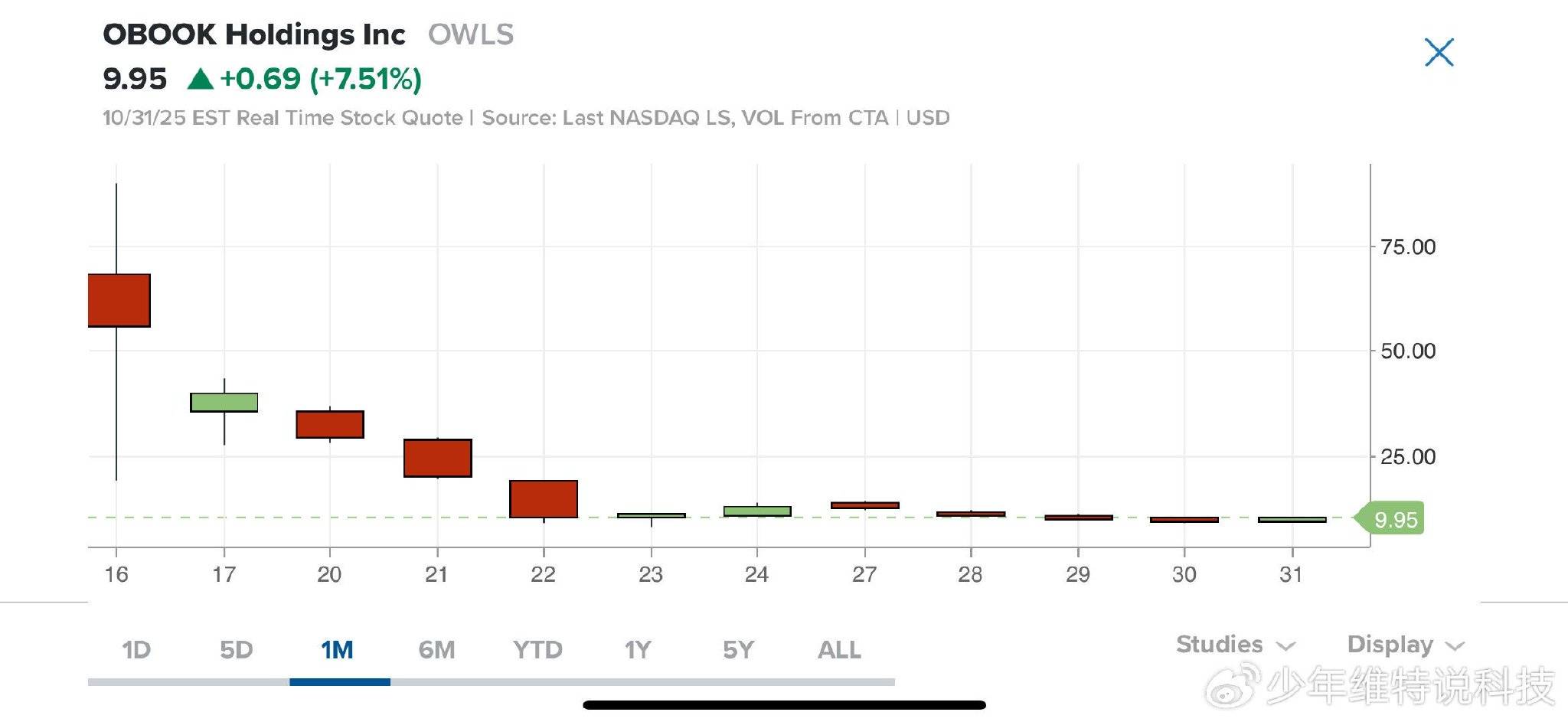
聊下OWLS,被Visa盯上的稳定币清算公司
Sou Hu Cai Jing· 2025-11-04 04:20
Core Viewpoint - The stablecoin sector is experiencing significant developments, with Coinbase negotiating a $2 billion acquisition of BVNK, which has seen its valuation increase from $750 million to $2 billion in just one year. Additionally, OwlTing Group has gone public, marking a notable entry into the financial technology space focused on stablecoin settlement [1][4][6]. Group 1: Company Developments - OwlTing Group, founded in 2010, transitioned from blockchain traceability and travel e-commerce to financial technology, launching OwlPay and OwlPayHarbor for stablecoin settlement [4]. - OwlTing's stock debuted at a reference price of $10, surged to $68, and closed at $55.55, giving it a market cap of approximately $4.9 billion, although it has since fallen to around $1 billion [4][5]. - The company has obtained Money Transmitter Licenses (MTL) in 40 U.S. states and has registered in Japan, the EU, and Southeast Asia, positioning itself as a compliant cross-border settlement network operator [4][5]. Group 2: Financial Performance - For the fiscal year 2024, OwlTing reported revenues of $7.57 million, an 18% year-over-year increase, but incurred a net loss of $10.27 million [5][22]. - The primary revenue source for OwlPay is B2B settlement services, accounting for about 60% of total revenue, with a take rate between 1% and 3% [22]. Group 3: Market Trends and Opportunities - The stablecoin market is projected to reach a total market value of approximately $261 billion by 2025, with stablecoin payment volumes expected to grow significantly [7][10]. - Visa has integrated OwlPay into its global network, allowing OwlTing to leverage over 8.5 billion payment endpoints, covering more than 190 regions and 160 currencies [5][23]. - The global cross-border third-party payment market is estimated to reach $1 trillion by 2029, with stablecoins providing a more efficient and cost-effective solution for businesses [11][14]. Group 4: Competitive Landscape - The stablecoin clearing sector is evolving, with different companies like BVNK, Bridge, and OwlTing representing various approaches to integrating stablecoins into traditional financial systems [23]. - OwlTing's model focuses on building a compliant cross-border clearing network, distinguishing itself from traditional financial institutions and other fintech players [23][25]. - The company aims to connect blockchain and global payment systems, similar to how PayPal connected the internet with the dollar system two decades ago [30].
Western Union Follows Banks Into Stablecoin Integration
Yahoo Finance· 2025-10-27 10:37
Core Insights - Western Union is piloting stablecoin settlement solutions to reduce reliance on traditional banking systems [1][5] - The company views stablecoins as an opportunity rather than a threat, although it currently lags behind competitors like MoneyGram and Zepz [2][3] - Stablecoin wallets are particularly valuable in emerging markets where remittance inflows are crucial [4] Company Developments - CEO Devin McGranahan confirmed the pilot of stablecoin solutions on October 24 [1] - Western Union is expanding partnerships to enable customers to hold and move stablecoins [4] - The company aims to integrate stablecoins into its treasury operations for faster, more transparent, and cost-effective money transfers [5] Industry Trends - Other remittance providers, such as MoneyGram and Zepz, have already adopted stablecoin technology [3][7] - Major banks globally are exploring blockchain technology and stablecoin systems to enhance their payment solutions [8] - Traditional financial institutions are under pressure to innovate due to the rise of digital payment solutions, with SWIFT and major card networks actively developing their own blockchain capabilities [8]

全球支付货币份额排名更新:美元为47.8%,人民币9月上升一位
Sou Hu Cai Jing· 2025-10-25 14:51
2025年9月,SWIFT最新全球货币支付份额排行榜出炉,多数货币排名维持稳定,人民币却成为例外,其支付份额以3.17%的占比反超加拿大元的3.12%,重 新回到第五位,这一变动引发市场对人民币国际化进程的新一轮关注。 从具体数据看,美元仍以47.8%的绝对优势稳居榜首,其主导地位源于全球贸易结算的核心地位及金融资产定价的垄断性,美股、黄金、期货等国际大宗商 品交易几乎均以美元计价,这种"金融+贸易"的双重绑定使其支付份额长期占据半壁江山。 欧元以22.77%的份额位列第二,但较上月下滑显著,与美元差距扩大至25.02%。这一变化与欧洲经济存在感减弱形成呼应,无论是制造业竞争力还是金融 创新力,欧洲均呈现相对衰落态势,欧元作为区域货币的局限性愈发明显。 英镑则以7.38%的份额保持第三,伦敦作为全球外汇交易中心的地位,为英镑在国际支付货币中的位置其提供了支撑,这种"金融枢纽"效应使英镑支付份额 远超其经济体量占比。 日元以3.69%位列第四,日本新首相高市早苗上任后可能推行的宽松货币政策,虽对日元汇率构成压力,却可能通过利差效应刺激日元借贷需求,投资客借 入日元兑换美元投资美元资产,客观上增加了日元在金融领域 ...