
Smart

Search documents
元戎启行周光:大湾区速度推动机器人及汽车产业发展
2 1 Shi Ji Jing Ji Bao Dao· 2025-07-14 13:34
Core Viewpoint - The article discusses the concept of "Physical AI," which refers to the application of AI in the physical world, particularly in robotics and intelligent agents, with a focus on the automotive industry as a primary sector for large-scale production of robots [2]. Group 1: Company Overview - Yuanrong Qixing, founded in 2019, has rapidly become a unicorn within two years, focusing on developing intelligent driving solutions that do not rely on high-precision maps [2][3]. - The company has achieved a production capacity of over 10,000 intelligent driving vehicles per month, with a cumulative production of nearly 60,000 units since the start of commercial production last year [2]. - Yuanrong Qixing employs over 1,000 staff, with 84% dedicated to research and development, highlighting its strong R&D capabilities [2]. Group 2: Technological Advancements - The company has developed an AI inference engine specifically for intelligent driving, which is six times faster than mainstream deep learning frameworks, optimizing computational resources for low-cost and low-power platforms [2][3]. - Yuanrong Qixing's "no-map mode," driven by AI and data, allows for easier expansion into overseas markets, avoiding the complexities associated with high-precision maps [3]. Group 3: Market Expansion and Future Trends - The company has established partnerships with several major manufacturers, including Great Wall and Smart, to produce vehicles with combined assisted driving features [3]. - Yuanrong Qixing is actively exploring international markets, having set up an office in Europe to expand its overseas business [3]. - The company plans to introduce "Road AGI," aiming to integrate language reasoning into autonomous driving, which is seen as the next competitive advantage in AI [3][4]. - The recent policy environment in the Hengqin Guangdong-Macao Deep Cooperation Zone supports the development of intelligent connected vehicles, providing a favorable backdrop for the company's future initiatives in autonomous driving technology [4].

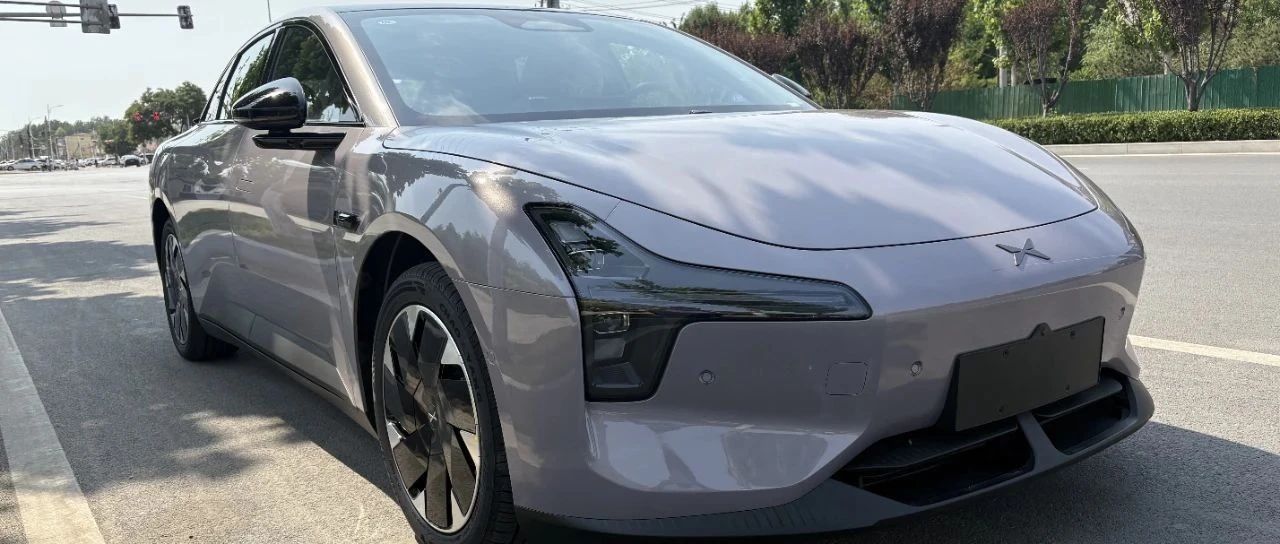
小鹏MONA车主分享:看车试驾半年多,最后终于等到MAX版
车fans· 2025-07-04 03:00
Core Viewpoint - The article discusses the purchasing experience of a consumer who bought the Xiaopeng MONA M03 MAX, highlighting the decision-making process, comparisons with competitors, and the overall satisfaction with the vehicle [1][20]. Purchase Experience - The vehicle was purchased for 139,800 yuan, with a total out-of-pocket cost of just over 100,000 yuan after considering trade-in and subsidies [2][9]. - The consumer initially planned to finance the vehicle but switched to a full payment due to complications with social security approval [1][2]. Competitor Comparison - The consumer compared several electric vehicle models, including Lynk & Co Z20, Smart EQ, and Volkswagen ID.3, focusing on factors like size, driving experience, and features [4][5][7]. - The decision to choose the Xiaopeng MONA was influenced by its superior features and upgrades compared to competitors, particularly in terms of driving assistance and battery range [18][20]. Delivery and Service Experience - The delivery process was smooth, with the vehicle ready for pickup shortly after the order was placed, and the consumer received thorough explanations of the vehicle's features [11][13]. - The consumer noted that they were among the first to receive the new model, which added to the positive experience [11][13]. Vehicle Performance and Features - The Xiaopeng MONA is praised for its intelligent driving assistance, low energy consumption, and overall value compared to competitors [18][20]. - Some drawbacks were mentioned, such as the rear seating comfort and the design of the vehicle's rear [19][20]. Summary of Decision-Making - The final decision to purchase the Xiaopeng MONA was based on a comprehensive evaluation of various models, with a focus on suitability for the primary user, which in this case was the consumer's spouse [20][21].


暴增368% ,“插混东风”吹进欧洲
Xin Lang Cai Jing· 2025-05-11 10:13
Core Insights - The rise of plug-in hybrid vehicles (PHEVs) is becoming a preferred choice for many European families, indicating a shift in consumer preferences towards more versatile and cost-effective options [1][2] Group 1: Market Performance - In Q1 2025, Chinese automotive brands registered 148,096 vehicles in Europe, marking a 78% year-on-year increase, while the overall European new car market remained nearly stagnant [3] - SAIC Motor Group achieved a notable 33.5% year-on-year growth with 78,505 vehicles sold, particularly excelling in March with a 74.4% increase [3][4] - The market share of Chinese brands in Europe rose from 2.5% in 2024 to 4.5% in Q1 2025, reflecting growing consumer acceptance, especially in Southern Europe and Luxembourg [4] Group 2: Product Strategy - Chinese automakers have successfully adapted their product offerings by increasing the availability of PHEVs and hybrid models to navigate EU import tariffs [5] - The price competitiveness of Chinese brands remains a significant factor, with 72% of surveyed consumers believing that Chinese cars should be cheaper than traditional brands [5] - Brands like MG and BYD are shedding the "cheap imitation" image by enhancing design, features, and technology, thus appealing to a broader audience [5] Group 3: Brand Perception and Marketing - Chinese brands are increasingly attractive to younger European consumers, with 19% of those under 35 willing to consider them even without significant price advantages [7] - Marketing strategies have evolved, with MG sponsoring major sports teams to enhance brand visibility and recognition [6] Group 4: Regulatory Challenges - Despite the growth, Chinese brands face challenges with EU emissions regulations, as many are exceeding their CO₂ targets, necessitating strategies like carbon pooling to mitigate penalties [8][9] - The low sales proportion of electric vehicles (EVs) is a critical factor in exceeding emissions limits, with MG's BEV sales at only 13% and Chery's at 6% [8] Group 5: Future Outlook - The current success of PHEVs is seen as a temporary measure, with a long-term focus required on local manufacturing and higher EV sales ratios [9] - Companies like BYD are actively pursuing new manufacturing facilities in Europe to enhance their competitive edge [9]

