
UPS

Search documents
The Big 3: LULU, UPS, TOL
Youtube· 2026-02-11 18:00
Group 1: Lululemon - Lululemon has experienced a significant decline, down more than 13% year-to-date and over 50% in the last 52 weeks, indicating a bearish outlook [4][14] - The critical support level for Lululemon is around $160, which has been tested multiple times and is seen as a key threshold for future performance [6][10] - A proposed trading strategy involves buying an out-of-the-money put spread, specifically buying the 170 puts and selling the 160 puts for a $3.50 debit, targeting the bearish trend [7][31] Group 2: UPS - UPS has shown strong performance, up more than 20% year-to-date, despite facing challenges such as a lawsuit and driver issues [15][18] - The stock is currently in a bullish trend, having found a short-term bottom in the 80s, and the technical indicators suggest continued upward momentum [16][20] - A trading strategy involves buying a $5 wide call spread, specifically buying the 125 calls and selling the 130 calls for a $1.15 debit, capitalizing on the positive trend [19][21] Group 3: Toll Brothers - The homebuilders sector, including Toll Brothers, is facing headwinds such as high interest rates and elevated retail debt levels, which are not favorable for growth [27][30] - Despite these challenges, there is capital rotating into homebuilders, although this is viewed as a risky investment strategy [28][29] - A bearish trading strategy is proposed, involving buying the 150 puts and selling the 140 puts for a $2.80 debit, anticipating a downturn in the sector [30][31]



Did Anthropic Just Give Investors Another DeepSeek Moment?
Yahoo Finance· 2026-02-11 13:35
Core Insights - Software companies, particularly SaaS firms, are experiencing significant stock declines following the launch of Anthropic's AI tool, Claude Cowork, which aims to replace existing software solutions [1][2]. - The market reaction reflects a mix of overreaction and legitimate concerns regarding AI's potential to disrupt various software sectors [2][3]. Software Industry Analysis - Major software companies like Shopify, Monday.com, and Fastly have seen stock drops of 23%, 15%, and 16% respectively, indicating a broader trend of declining investor confidence in the sector [1]. - The software market is categorized into three groups: 1. Large, financially robust companies (e.g., Microsoft) that are less likely to be affected by AI disruptions. 2. Ecosystem companies that are critical to their customers' operations (e.g., Shopify). 3. Companies that provide niche solutions which could be easily replaced by AI alternatives (e.g., HubSpot, Atlassian) [1][2]. AI Impact on Software - The emergence of AI tools like Claude Cowork is seen as a pivotal moment, similar to last year's DeepSeek moment, raising questions about the sustainability of certain software companies [2]. - The ongoing trend suggests that while some software will be replaced by AI, mission-critical software is likely to remain resilient [2][3]. Job Market Insights - Recent job numbers indicate a decline in job openings to the lowest level since 2020, with layoffs peaking at levels not seen since January 2009, raising concerns about the overall economic health [8][9]. - Entry-level tech jobs are particularly affected, with AI contributing to this trend, although unemployment rates remain within historical averages [9][10]. Investment Opportunities - CrowdStrike (CRWD) is highlighted as a strong investment due to its essential cybersecurity services, which are unlikely to be replaced by AI [4]. - Toast (TOST) is noted for its entrenched position in the restaurant ecosystem, making it less vulnerable to AI disruption [5]. - Zscaler (ZS) is recognized for its potential growth in the cybersecurity market, driven by increasing AI technology demands [18]. - GoDaddy (GDDY) is considered undervalued, with a strong business model that combines software and physical infrastructure [19]. Company Performance Metrics - Powell Industries (POWL) reported a 63% increase in net new orders year-over-year, indicating strong demand in the industrial sector [17]. - Zscaler's stock has recently hit a 52-week low, presenting a potential buying opportunity in the cybersecurity space [18].
Teamsters union sues UPS over new driver buyout program
Reuters· 2026-02-09 23:52
Core Viewpoint - The Teamsters Union has filed a lawsuit against United Parcel Service (UPS), claiming that the company's new buyout packages for drivers are in violation of their national contract [1] Group 1 - The lawsuit indicates a potential conflict between UPS and the Teamsters Union regarding employee compensation and contract adherence [1] - The action taken by the Teamsters Union highlights ongoing labor relations issues within the delivery industry, particularly concerning driver treatment and contractual obligations [1]

Holiday returns surge 11%: Reverse logistics boom
CNBC Television· 2026-02-09 16:43
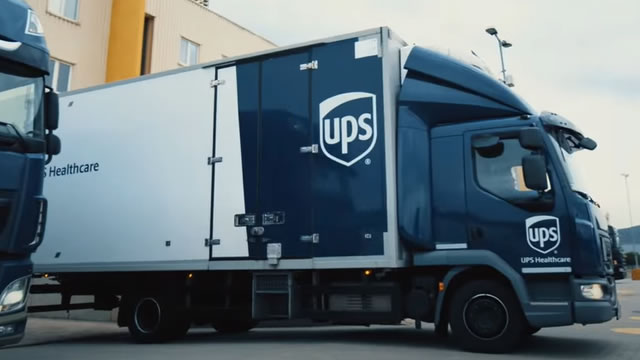
The last of nearly a billion dollars of holiday returns are made over the weekend with Amazon and Walmart's deadlines passing. Holiday returns are forecast to see an 11% increase year-over-year. And they're becoming a real revenue generator for logistics companies with the average return costing a retailer just about $30 compared to a B TOC delivery at about $12.And that's excluding the cost of sending items to a discounter or moves outside of that physical return. I spoke with DHL's head of returns about t ...

Should Investors Bet on UPS Stock Post Q4 Earnings Beat?
ZACKS· 2026-02-04 14:56
Key Takeaways UPS topped Q4 earnings and revenue estimates, but both metrics declined YoY amid weaker shipment demand.UPS' international unit saw profit and margin declines amid trade policy shifts and lower volumes.UPS plans to cut Amazon volumes, eliminate up to 30,000 jobs and close facilities to boost profitability.Late last month, Atlanta-based United Parcel Service (UPS) released impressive fourth-quarter 2025 results, wherein both earnings and revenues surpassed the Zacks Consensus Estimate. The ques ...
This High-Yield Dividend Stock Just Crushed Earnings. Here's Why 2026 Could Be Even Better.
The Motley Fool· 2026-02-04 03:15
Core Viewpoint - United Parcel Service (UPS) is undergoing a turnaround, with recent quarterly earnings suggesting potential for improvement despite mixed results [1][5]. Financial Performance - In Q4 2025, UPS reported total revenue of $24.5 billion, a decline of 3.2% from $25.3 billion in Q4 2024 [4]. - Total operating earnings fell to $2.6 billion, down 12% from $2.9 billion year-over-year [4]. - Adjusted earnings per share (EPS) decreased by 13.5% to $2.38 from $2.75 in the previous year [4]. Dividend Information - UPS maintained its quarterly cash dividend at $1.64 per share, ending a 16-year streak of dividend growth [4]. - The current dividend yield stands at 6.2%, which is seen as a positive sign amidst concerns of potential cuts [7]. Future Outlook - UPS's guidance for 2026 projects revenue of $89.7 billion, surpassing analysts' estimates of $88 billion [7]. - The company anticipates an operating margin of 9.6%, translating to operating profits of $8.6 billion, a 9.3% improvement from 2025 [7]. - Long-term earnings estimates suggest EPS could reach $8.11 by 2027, with current trading at approximately 14 times forward earnings [9]. Market Reaction - Despite the lackluster performance, UPS exceeded Wall Street's expectations, which anticipated revenue of $24 billion and EPS of $2.20 [6]. - The stock price has increased from $82 to $110, indicating potential for further gains [8].
Nasdaq big crash today: Nasdaq falls over 400 points, wipes out $1.1 trillion as AI stocks tumble — why AI shares are falling
The Economic Times· 2026-02-03 18:08
Core Viewpoint - The Nasdaq Composite experienced a significant decline of 422.49 points, or 1.79%, closing at 23,169.62, indicating a harsh reality check for the tech sector as the "AI honeymoon phase" ends, resulting in a $1.1 trillion market cap erosion [1][16]. Group 1: Market Performance - The Nasdaq 100 specifically fell by 1.9%, while the S&P 500 Index retreated 1.12% to 6,898.54, and the Dow Jones Industrial Average slid 368 points to 49,039.05, highlighting the volatility in tech stocks [2][16]. - High-growth AI stocks reached multi-month lows, with the market shifting from pricing in potential to demanding immediate proof of productivity, which many incumbents have yet to deliver [4][17]. Group 2: Shift in AI Perception - A fundamental shift in enterprise views on Artificial Intelligence is occurring, with companies moving away from expensive SaaS licenses from traditional providers like Salesforce and ServiceNow towards open-source and bespoke internal solutions [3][17]. - This structural change has led to an 18% decline in software stocks over the last six months, contrasting sharply with the S&P 500's 9% gain during the same period [3][17]. Group 3: Impact on Specific Companies - PayPal saw a significant drop of 17.33% to close at $43.26, followed by TriNet Group, which fell 14.12% to $93.64, and other notable declines in companies like Intuit and Atlassian [7][17]. - ServiceNow and Salesforce experienced losses of 7% and 5% respectively, as fears grow that custom AI agents can automate tasks previously requiring costly third-party subscriptions [8][17]. Group 4: Hardware Sector Challenges - The hardware sector also faced challenges, with NXP Semiconductors leading the decline at 8.39% to $211.70, and design-tool companies like Synopsys and Cadence Design falling 7.50% and 6.37% respectively [10][17]. - Concerns about "capex exhaustion" are rising, as investors worry that significant capital expenditures on AI infrastructure are not yielding proportional revenue growth [10][17]. Group 5: Broader Market Trends - Despite the tech sector's downturn, there was a rotation into value and defensive sectors, with Walmart surging nearly 3% to join the $1 trillion market capitalization club, driven by gains in its digital business [12][17]. - The healthcare and consumer staples sectors also provided refuge for capital, with Merck climbing 3.5% and PepsiCo rising 4% due to resilient organic sales growth [13][17]. Group 6: Investor Sentiment and Future Outlook - Investor skepticism is growing regarding the actual productivity gains from AI, as job cuts in 2026 are trending 50% higher than the previous year, shifting the narrative from AI as a growth engine to a tool for margin preservation [15][16][17]. - The disconnect between high valuations of semiconductor stocks and their performance suggests that profit-taking may occur as AI-driven momentum stalls [11][17].



UPS' Latest Update Is Shocking: Here's What It Means for Investors
The Motley Fool· 2026-02-02 20:05
Core Viewpoint - UPS has provided a surprising full-year 2026 guidance of $6.5 billion in free cash flow (FCF), which appears to secure its $5.4 billion dividend payment, appealing to passive-income investors [2][12]. Group 1: Financial Guidance and Cost Savings - The $6.5 billion FCF guidance is significantly above Wall Street's analyst consensus, indicating strong financial health [2]. - UPS expects to generate $3 billion in cost savings in 2026, in addition to $3.5 billion in savings from 2025, primarily by reducing low-margin Amazon delivery volumes [3][4]. - Approximately one-third of the 2025 cost cuts were structural, which will contribute to cash flow improvements in 2026 and beyond [5]. Group 2: Capital Expenditures and Cash Flow - UPS reported $5.47 billion in adjusted FCF for 2025, but this includes $700 million from property disposals, which may not reflect the company's underlying cash flow [7][8]. - The company plans to reduce capital expenditures from $3.7 billion in 2025 to $3 billion in 2026, which is expected to enhance cash flow [9][11]. - The planned capital expenditures represent 3.3% of projected 2026 revenue of $89.7 billion, marking a significant change from historical metrics [9]. Group 3: Investor Implications - Management's commitment to the dividend is clear, making the stock attractive for income-seeking investors [12]. - However, growth-oriented investors may be concerned as reliance on property disposals for cash flow is not sustainable, and future revenue growth remains uncertain [13][14]. - The $6.5 billion FCF figure does not provide a strong foundation for long-term cash flow assumptions, raising questions about the company's growth potential [14][15].

America's 50 most iconic brands, from Main Street to Silicon Valley
Yahoo Finance· 2026-02-02 17:43
Core Insights - The article highlights the significant American companies that have shaped the nation's identity and economy as it approaches its 250th birthday, emphasizing their cultural and historical impact rather than just financial metrics [1][2]. Group 1: Visa - Visa was established in 1958 as BankAmericard, launching the first consumer credit card in the U.S. [3][6] - The company rebranded as Visa in 1976 and went public in 2008, currently holding a market cap of $632 billion [4][6]. - Visa operates in over 220 countries and territories, accepted at more than 175 million merchants [7]. Group 2: Meta (Facebook) - Facebook was founded in 2004 by Mark Zuckerberg and quickly grew to 1 billion users by 2012, later rebranding to Meta in 2021 [9][13][14]. - The platform has faced controversies regarding user data and misinformation but remains a dominant social media service with over 3 billion regular users [15]. Group 3: Boeing - Boeing, established in 1916, is a leading aerospace company known for producing commercial jets and military aircraft [15][16]. - The company has faced challenges in recent years, including safety allegations and COVID-19 impacts, but continues to be a major player in the industry with a market cap of $185 billion [20][21]. Group 4: Tesla - Tesla was founded in 2003, with Elon Musk joining in 2004, and has become synonymous with electric vehicles, launching the Model 3 in 2017 as the best-selling electric car [23][27]. - The company has a market cap of $1.4 trillion and is recognized for driving electric vehicles into the mainstream [28]. Group 5: Patagonia - Patagonia was founded in 1973 by Yvon Chouinard, known for its commitment to sustainability and donating 1% of sales to environmental causes [30][33]. - The company has expanded from climbing gear to a wide range of outdoor apparel and is estimated to have a market cap of $3 billion [33]. Group 6: Intel - Intel was founded in 1968 and became a leader in semiconductor technology, introducing the first programmable microprocessor in 1971 [34][35]. - The company has maintained a significant market presence, controlling approximately 75% of the CPU market as of 2025 [38]. Group 7: HP - HP was established in 1939, initially focusing on sound equipment and later becoming a leader in personal computers and printers [40][42]. - The company split into HP Inc. and Hewlett Packard Enterprises in 2015, with HP Inc. having a market cap of $18 billion [45]. Group 8: Nike - Nike was founded in 1964 as Blue Ribbon Sports and rebranded in 1971, becoming a dominant player in the sportswear market with a 14% share in 2024 [46][50]. - The company gained fame through its endorsement deal with Michael Jordan, significantly boosting its brand recognition [48]. Group 9: Kodak - Kodak was founded in 1888 and became a pioneer in photography, introducing innovations like roll film and the first digital camera [51][54]. - The company filed for bankruptcy in 2012 and now focuses primarily on commercial printing and imaging [56]. Group 10: IBM - IBM was established in 1911 and became synonymous with computing, initially focusing on tabulating machines and later dominating the PC market [59][62]. - The company has shifted its focus to consulting, software, and cloud computing, with a market cap of $291 billion [67]. Group 11: Paramount Pictures - Paramount Pictures, founded in 1912, is recognized as the longest-operating major studio in Hollywood, producing numerous iconic films [68][70]. - The studio has undergone various mergers and continues to be a significant player in the entertainment industry with a market cap of $12 billion [74]. Group 12: Netflix - Netflix was founded in 1997 as a DVD rental service and transitioned to streaming in 2007, becoming a leader in the industry [77][80]. - The company has a market cap of $351 billion and announced plans to acquire Warner Bros. Discovery in 2025 [81]. Group 13: FedEx - FedEx was founded in 1971, revolutionizing overnight delivery with a centralized hub model [83][84]. - The company has introduced several innovations in the shipping industry and has a market cap of $74 billion [88]. Group 14: Motown - Motown Records, established in 1959, played a crucial role in integrating Black artists into mainstream pop music [91][92]. - The label produced numerous hits and helped launch the careers of many iconic artists, although it faded in prominence during the 1970s [94][96]. Group 15: PepsiCo - PepsiCo was formed in 1965 through the merger of the Pepsi-Cola Company and Frito-Lay, becoming a leading global food and beverage brand [99][100]. - The company is known for its innovative marketing strategies and has a significant rivalry with Coca-Cola [101]. Group 16: Levi Strauss - Levi Strauss, founded in 1853, is known for creating the first riveted blue jeans, which have become a cultural staple [104][106]. - The company continues to sell a wide range of apparel and remains a significant player in the fashion industry [106]. Group 17: Microsoft - Microsoft was founded in 1975 and became a leader in software development, particularly with its Windows operating system [109][110]. - The company has expanded into gaming, cloud services, and AI, with a market cap of $7.8 billion [112]. Group 18: The Home Depot - The Home Depot was established in 1978, focusing on providing a wide range of building supplies and home improvement products [115][116]. - The company has a strong commitment to community initiatives, particularly supporting veterans, and has a market cap of $3.2 trillion [118]. Group 19: WK Kellogg Company - WK Kellogg Company was formed from the original Kellogg's brand, known for its iconic cereals and snacks [121][123]. - The company underwent a reorganization in 2023, with its cereal business spun off into a new entity [123].
Jim Cramer Discusses Kimberly-Clark (KMB) & Dividends
Yahoo Finance· 2026-02-01 18:28
Company Overview - Kimberly-Clark Corporation (NASDAQ:KMB) is one of the largest consumer goods companies in America [2] - The company's shares have decreased by 23% over the past year and by 1.4% year-to-date [2] Analyst Ratings - Bank of America has reduced the firm's share price target to $130 from $148 while maintaining a Buy rating, citing value compression in the sector and that the firm's transformation plan is on track [2] - Citi has lowered its share price target to $90 from $95 and has a Sell rating on the stock [2] Recent Developments - Kimberly-Clark Corporation's shareholders approved the acquisition of Kenvue, with 96% voting in favor [2] - The company raised its quarterly dividend to $1.28 from $1.26, marking the 54th consecutive increase [2] - The dividend increase followed the firm's fourth quarter earnings, which reported a 24% annual growth in adjusted earnings [2] Market Commentary - Jim Cramer highlighted Kimberly-Clark Corporation's dividend as part of a safe dividend portfolio [2]
