
汇顶科技

Search documents
AI试水“抢购物券”,手机厂商转向:不拼参数拼应用
Di Yi Cai Jing Zi Xun· 2025-10-18 15:41
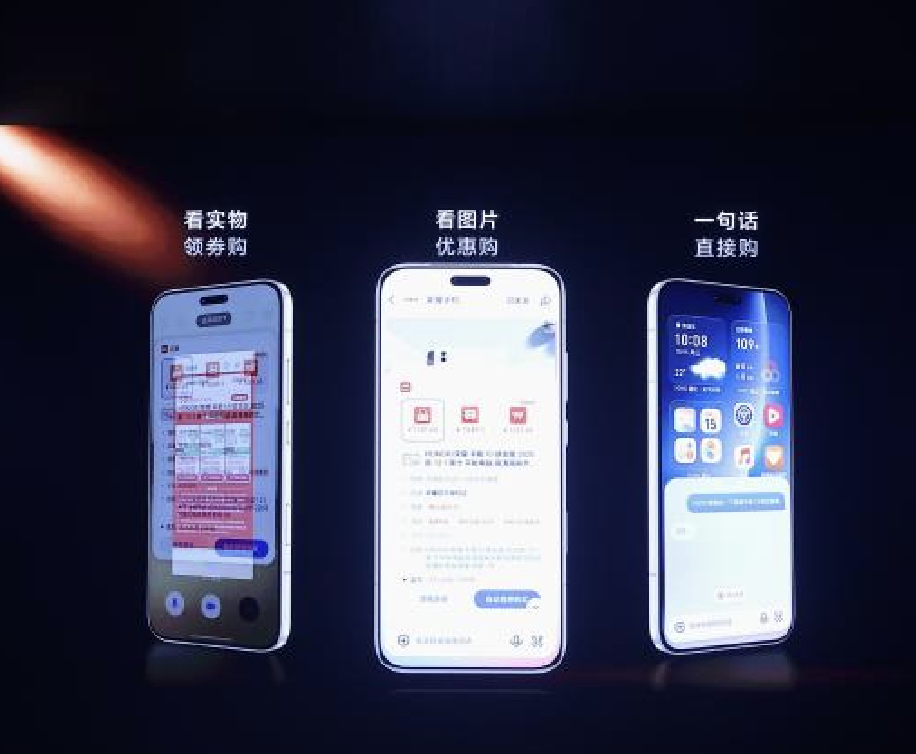
Core Insights - The article discusses the evolving landscape of AI in the smartphone industry, particularly focusing on the shift from large model parameters to practical applications in China, contrasting with the U.S. approach led by companies like OpenAI and NVIDIA [2][12] - Chinese smartphone manufacturers are prioritizing practical AI applications over competing in model parameter rankings, emphasizing cost-effectiveness and usability [2][10] Group 1: AI Development Strategies - Chinese companies are moving away from the "burning money" strategy of developing large AI models, recognizing the high costs associated with such investments [2][10] - The focus is shifting towards smaller models that can be effectively integrated into specific applications, enhancing user experience and operational efficiency [2][12] Group 2: Practical Applications of AI - Companies like Honor are showcasing AI capabilities that allow smartphones to predict user actions and streamline interactions, significantly improving user experience [3][6] - AI is being integrated into various high-frequency scenarios, such as real-time flight updates and automated purchasing, demonstrating its practical utility [6][10] Group 3: Challenges in AI Implementation - The smartphone industry faces challenges related to power consumption, computational demands, and cost pressures, which have hindered significant sales growth despite AI advancements [9][10] - The need for additional investments in specialized hardware, such as NPU chips, increases costs and impacts profit margins for smartphone manufacturers [10][12] Group 4: Future Trends and Market Potential - The number of AI-supported scenarios in smartphones is rapidly increasing, with companies reporting significant growth in the capabilities of their AI systems [12] - By 2029, it is projected that 57% of smartphones will support generative AI, indicating a growing trend towards AI integration in high-end devices, with Chinese brands playing a crucial role in this shift [12][13]


AI试水“抢购物券”,手机厂商转向:不拼参数拼应用
第一财经· 2025-10-18 15:33
Core Viewpoint - The article discusses the evolving landscape of AI in the smartphone industry, highlighting the shift from large-scale model competition to practical applications and cost-effective solutions among Chinese manufacturers, contrasting with the strategies of leading US companies like OpenAI and NVIDIA [3][4]. Group 1: AI Development Strategies - Chinese smartphone manufacturers are moving away from competing on large model parameters and are focusing on deploying smaller models that enhance practical applications [3][4]. - The cost of developing large AI models is prohibitively high, with estimates suggesting that creating models with 400 billion parameters could require investments of up to 50 billion yuan, including significant ongoing electricity costs [13][14]. Group 2: Practical Applications of AI - Companies like Honor are showcasing AI capabilities that allow smartphones to predict user actions and streamline interactions, significantly improving user experience [6][9]. - Vivo and OPPO are also exploring AI applications, with Vivo's AI capable of processing long contexts and OPPO focusing on AI memory capabilities to help users manage information overload [10][12]. Group 3: Challenges in AI Implementation - The smartphone industry faces challenges such as power consumption, computational demands, and cost pressures, which have hindered significant sales growth despite AI advancements [11][13]. - The need for additional hardware, such as independent NPU chips, increases costs by 15%-20%, further complicating the profitability of AI integration in smartphones [13]. Group 4: Future Trends and Market Potential - The number of AI-supported scenarios in smartphones is rapidly increasing, with Honor reporting a growth from 200 to 3000 scenarios in just three months, indicating a strong trend towards AI integration [16][17]. - By 2029, it is projected that 57% of smartphones will support generative AI, with Chinese brands playing a crucial role in this transition [17].

AI智能体试水“抢购物券”,手机厂商转向:不拼参数拼应用
Di Yi Cai Jing· 2025-10-18 10:44
Core Insights - The article discusses the shift in the Chinese AI market from competing on large model parameters to focusing on practical applications and smaller models, emphasizing cost-effectiveness and usability [1][11] - Chinese smartphone manufacturers are increasingly integrating AI capabilities into their devices, enhancing user experience through features like proactive assistance and improved interaction methods [2][5][10] Group 1: Industry Trends - Chinese companies are moving away from the costly race to build massive AI models, recognizing the unsustainable nature of such investments [1] - The focus has shifted to developing smaller, more efficient models that can be applied in real-world scenarios, allowing for faster deployment and better user experience [1][11] - The introduction of DeepSeek's open-source model has leveled the playing field, enabling smaller models to achieve comparable AI capabilities [8] Group 2: Technological Advancements - AI integration in smartphones is advancing, with features that allow for one-click operations and proactive suggestions based on user behavior [2][5] - Companies like Honor and Vivo are reporting significant increases in the number of AI-supported scenarios, indicating rapid growth in AI application [9] - The development of AI capabilities is not only about enhancing performance but also about optimizing hardware efficiency and user interaction [5][6] Group 3: Challenges and Considerations - Despite advancements, the industry faces challenges related to power consumption, computational demands, and cost pressures, which have hindered significant sales growth in smartphones [7][8] - The need for additional investments in specialized hardware, such as NPU chips, poses a risk to profit margins for smartphone manufacturers [8] - The industry is recognizing that merely increasing computational power is not a viable long-term strategy; practical application and user experience are becoming the primary focus [8][11]
汇顶科技公布国际专利申请:“触控检测电路、触控芯片和屏幕模组”
Sou Hu Cai Jing· 2025-10-17 21:31
Group 1 - The core point of the article is that Huida Technology (603160) has filed an international patent application for a touch detection circuit, touch chip, and screen module, with the application number PCT/CN2024/087202, and the international publication date set for October 16, 2025 [1] Group 2 - Huida Technology has announced a total of 40 international patent applications this year, representing a 42.86% increase compared to the same period last year [3] - In the first half of 2025, the company invested 554 million yuan in research and development, which is an 11.32% year-on-year increase [3]

深圳市汇顶科技股份有限公司关于召开2025年第三季度业绩说明会的公告
Shang Hai Zheng Quan Bao· 2025-10-16 20:58
Core Points - Company will hold a Q3 2025 earnings presentation on October 27, 2025, to discuss operational results and financial status [2][3] - Investors can submit questions from October 20 to October 24, 2025, for the company to address during the presentation [2][5] - The presentation will be conducted in an interactive online format via the Shanghai Stock Exchange Roadshow Center [3][6] Group 1: Earnings Presentation Details - The earnings presentation is scheduled for October 27, 2025, from 14:00 to 15:00 [6][7] - Participants will include the company's CEO, President, independent directors, and other executives [4] - Investors can join the presentation online through the Shanghai Stock Exchange Roadshow Center [5][6] Group 2: Shareholder Meeting Notification - The second extraordinary general meeting of shareholders will take place on November 3, 2025 [10][11] - Voting will be conducted through both on-site and online methods [11][13] - The meeting will be held at the company's headquarters in Shenzhen [11][19]
OPPO Find X9系列搭载汇顶科技多个创新方案
Zheng Quan Shi Bao Wang· 2025-10-16 13:41
Core Viewpoint - OPPO has officially launched the Find X9 series, featuring advanced technology from Huida Technology, including ultrasonic fingerprint solutions and smart audio amplifiers [1] Group 1: Product Features - The entire OPPO Find X9 series is equipped with Huida Technology's ultrasonic fingerprint solution [1] - The devices support ultrasonic sliding input functionality [1] - OPPO Watch S includes health sensors developed by Huida Technology [1]
汇顶科技(603160) - 关于召开2025年第三季度业绩说明会的公告
2025-10-16 08:30
会议召开时间:2025 年 10 月 27 日(星期一)下午 14:00-15:00 会 议 召 开 地 点 : 上 海 证 券 交 易 所 上 证 路 演 中 心 ( 网 址 : https://roadshow.sseinfo.com/) 会议召开方式:上证路演中心网络文字互动 证券代码:603160 证券简称:汇顶科技 公告编号:2025-066 深圳市汇顶科技股份有限公司 关于召开 2025 年第三季度业绩说明会的公告 本公司董事会及全体董事保证本公告内容不存在任何虚假记载、误导性陈述 或者重大遗漏,并对其内容的真实性、准确性和完整性承担个别及连带责任。 重要内容提示: (一)投资者可在 2025 年 10 月 27 日(星期一)下午 14:00-15:00,通过 互联网登录上证路演中心(https://roadshow.sseinfo.com/),在线参与本次 业绩说明会,公司将及时回答投资者的提问。 投资者可于 2025 年 10 月 20 日(星期一)至 10 月 24 日(星期五)16:00 前登录上证路演中心网站首页点击"提问预征集"栏目或通过公司邮箱 (ir@goodix.com)进行提问 ...
汇顶科技(603160) - 关于召开2025年第二次临时股东会的通知
2025-10-16 08:30
证券代码:603160 证券简称:汇顶科技 公告编号:2025-067 深圳市汇顶科技股份有限公司 关于召开2025年第二次临时股东会的通知 本公司董事会及全体董事保证本公告内容不存在任何虚假记载、误导性陈述 或者重大遗漏,并对其内容的真实性、准确性和完整性承担法律责任。 重要内容提示: 一、 召开会议的基本情况 (一)股东会类型和届次 2025年第二次临时股东会 (二)股东会召集人:董事会 (三)投票方式:本次股东会所采用的表决方式是现场投票和网络投票相结合的方 式 至2025 年 11 月 3 日 采用上海证券交易所网络投票系统,通过交易系统投票平台的投票时间为股 东会召开当日的交易时间段,即 9:15-9:25,9:30-11:30,13:00-15:00;通过 互联网投票平台的投票时间为股东会召开当日的 9:15-15:00。 (六)融资融券、转融通、约定购回业务账户和沪股通投资者的投票程序 涉及融资融券、转融通业务、约定购回业务相关账户以及沪股通投资者 的投票,应按照《上海证券交易所上市公司自律监管指引第 1 号 — 规范运 作》等有关规定执行。 (四)现场会议召开的日期、时间和地点 召开的日期时间 ...
vivo冲击高端打造“影像大小王” 新品升级四大蓝科技
Nan Fang Du Shi Bao· 2025-10-14 17:16
Core Insights - The domestic smartphone market is experiencing a peak period ahead of the "Double 11" shopping festival, with vivo launching its new flagship X300 series on October 13, featuring significant upgrades in various technological aspects [1][3]. Group 1: Product Features and Innovations - The vivo X300 series introduces four major upgrades under the "Blue Technology" framework: Blue Crystal Chip Technology Stack, Blueprint Imaging, Blue Ocean Battery System, and Blue River Operating System [3]. - The X300 series is the first to feature the Dimensity 9500 flagship chip and includes the self-developed Blueprint Imaging chip V3+, which enhances image processing capabilities [3][5]. - The X300 Pro is highlighted as the "Image King," featuring a new 85mm Zeiss 200MP APO super telephoto system, while the X300 is referred to as the "Image Little King" [9]. Group 2: AI and Operating System Integration - vivo's OriginOS 6, which integrates AI deeply with the operating system, aims to provide a personalized smart experience for users, functioning as a "VIP personal assistant" [1][12]. - The operating system has undergone significant enhancements, including the "Blue River Smooth Engine" technology, which improves performance and integrates with Apple's ecosystem [10]. - vivo's strategy emphasizes the importance of AI in operating systems, with predictions that by 2025, one-third of global smartphone shipments will support Generative AI [12][14]. Group 3: Market Position and Future Outlook - vivo's advancements in AI and imaging technology position it competitively within the smartphone market, aiming to redefine user experience through personalized services and enhanced imaging capabilities [1][12]. - The company is focused on creating a seamless integration of AI capabilities in smartphones, which is expected to drive user engagement and satisfaction [13][14].
vivo X300系列搭载汇顶科技多个创新方案
Zheng Quan Shi Bao Wang· 2025-10-13 14:19
Core Insights - Vivo officially launched the X300 series flagship model on October 13 [1] - The device features innovative solutions such as ultrasonic fingerprint technology, smart audio amplifier, and under-display light sensor from Huida Technology [1] Company Developments - The launch of the X300 series marks a significant advancement in Vivo's product lineup, showcasing its commitment to integrating cutting-edge technology [1] - The collaboration with Huida Technology highlights the importance of partnerships in enhancing product features and user experience [1] Industry Trends - The introduction of advanced biometric and audio technologies reflects a broader trend in the smartphone industry towards enhanced security and improved multimedia capabilities [1] - The focus on under-display components indicates a shift towards more seamless and aesthetically pleasing device designs in the market [1]