风语筑

Search documents
风语筑(603466) - 上海风语筑文化科技股份有限公司关于可转债转股结果暨股份变动的公告
2025-10-09 08:46
债券代码:113643 债券简称:风语转债 证券代码:603466 证券简称:风语筑 公告编号:2025-052 上海风语筑文化科技股份有限公司 关于可转债转股结果暨股份变动的公告 公司董事会及全体董事保证本公告内容不存在任何虚假记载、误导性陈述或者 重大遗漏,并对其内容的真实性、准确性和完整性承担个别及连带责任。 重要提示: ●累计转股情况:风语转债于 2022 年 10 月 10 日开始转股,截至 2025 年 9 月 30 日,累计已有 221,000 元风语转债转换为公司股份,因转股形成的股份数 量为 14,601 股,占风语转债转股前公司已发行股份总数的 0.002440%。 ●未转股风语转债情况:截至 2025 年 9 月 30 日,尚未转股的风语转债金额 为 499,779,000 元,占风语转债发行总额的 99.9558%。 ●本季度转股情况:2025 年 7 月 1 日至 2025 年 9 月 30 日期间,"风语转 债"未发生转股情况。 一、风语转债发行上市概况 经中国证券监督管理委员会《关于核准上海风语筑文化科技股份有限公司公 开发行可转换公司债券的批复》(证监许可[2021]4026 ...

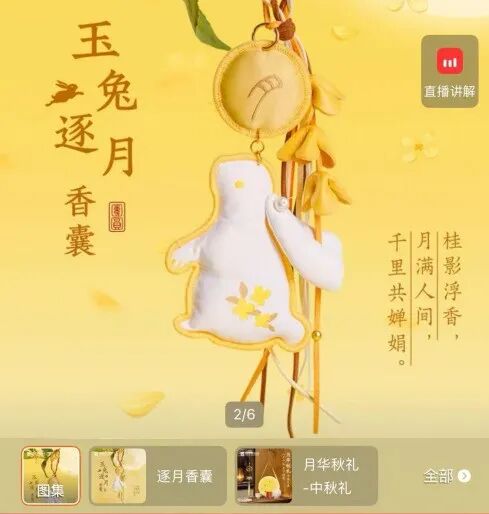
中秋文创新玩法!“新中式”创意火了
Zhong Guo Zheng Quan Bao· 2025-10-06 05:41
Core Insights - The rise of "New Chinese Style" creative products is evident as they become popular among consumers during the Mid-Autumn Festival, with a focus on cultural significance and innovative design [1][3][10] Product Innovation - Various new products have emerged, including themed refrigerator magnets and tea sets, reflecting traditional cultural elements [1][3] - Popular items on shopping platforms include cultural creative products like figurines and scented sachets, with significant sales figures reported [3] Market Trends - The cultural and creative toy industry is experiencing growth driven by emotional consumer engagement, with higher demands for design and quality [7] - The pet product market is also evolving, with a notable increase in pet mooncake offerings, indicating a shift in consumer behavior towards premium pet products [8] Cultural Integration - Companies are leveraging cultural IP and technology to create immersive experiences, enhancing the festive atmosphere during the Mid-Autumn Festival [10][11] - New experiential projects, such as XR experiences, are being developed to engage consumers with traditional culture in innovative ways [10][11] Consumer Behavior - The "Z Generation" is becoming a major consumer force, influencing the demand for culturally rich and aesthetically pleasing products [7] - There is a growing trend towards integrating traditional culture with modern consumption patterns, leading to new market opportunities [11]


“擎天柱”秀中国功夫!人形机器人多场景应用 这个赛道太火了
Zhong Guo Zheng Quan Bao· 2025-10-05 23:35
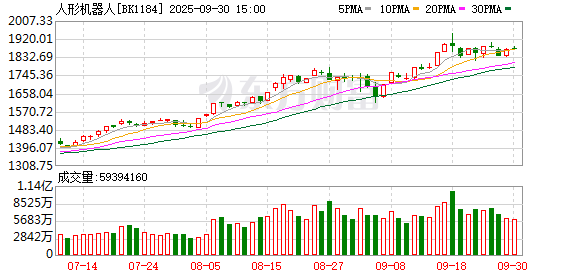
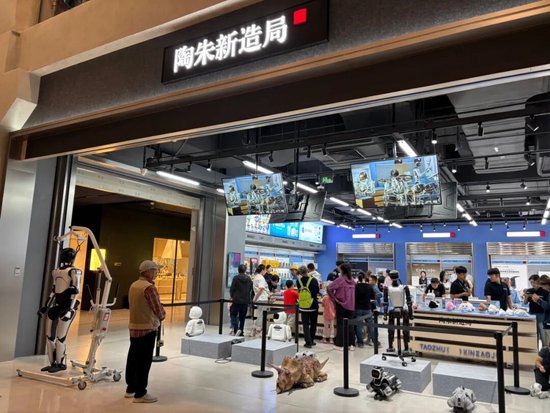
Core Insights - Tesla's humanoid robot "Optimus" is gaining significant attention, with plans to launch a third-generation model by the end of 2025 and achieve an annual production of 1 million units by 2030 [2] - The humanoid robot sector is experiencing explosive growth driven by policy, capital, and technology, with several companies like Ubtech, ZhiYuan Robotics, and Galaxy General announcing new orders and market expansions [2] - The opening of the first robot store in Beijing, "Tao Zhu New Creation Bureau," showcases various humanoid robots and smart hardware, attracting significant consumer interest [5][6] Industry Developments - The humanoid robot "Galbot" by Galaxy General is being utilized in retail environments, providing full-service capabilities such as voice reception, order payment, and product handling [7] - The "Expedition A2" interactive service robot from ZhiYuan Robotics is featured in cultural venues, enhancing visitor engagement through interactive activities [8] - The securities market is witnessing a trend towards the IPO of leading domestic robot manufacturers, with companies like Yushun Technology and ZhiYuan Robotics accelerating their listing processes [8] Market Trends - The humanoid robot market is becoming a focal point for consumer engagement, with robots being used in various sectors from retail to cultural tourism [2][8] - The integration of humanoid robots into traditional cultural venues is seen as a new approach to revitalizing cultural experiences and attracting diverse audiences [8] - Research indicates a positive outlook for the humanoid robot sector, emphasizing the importance of high technical barriers and increasing penetration rates in niche markets [8]

“擎天柱”秀中国功夫!这个赛道太火了
Zhong Guo Zheng Quan Bao· 2025-10-05 11:55
Core Insights - Tesla's humanoid robot "Optimus" is gaining significant attention, with plans to launch a third-generation model by the end of 2025 and achieve an annual production of 1 million units by 2030 [1] - The humanoid robot sector is experiencing explosive growth driven by policy, capital, and technology, with several domestic companies announcing new orders and market expansions [1] - The first robot store in China, "Tao Zhu Xin Zao Ju," has opened in Beijing, showcasing various humanoid robots and smart hardware products, attracting significant consumer interest [3] Industry Developments - The humanoid robot "Galbot" by Galaxy General is providing fully autonomous services in retail environments, enhancing customer interaction through voice reception, ordering, and delivery [4] - The "Expedition A2" interactive service robot from Zhiyuan Robotics is being utilized in cultural venues, engaging visitors and enhancing the experience with technology [6][8] - Multiple cultural venues across China are adopting humanoid robots for interactive and educational purposes, indicating a trend towards integrating technology in traditional settings [8][9] Market Trends - The market for humanoid robots is becoming a hot investment area, with companies like Yushutech and Zhiyuan Robotics planning IPOs and other financial maneuvers to capitalize on the growing sector [9] - Analysts are optimistic about the integration of humanoid robots with artificial intelligence and advanced manufacturing, viewing them as key drivers of industrial transformation and efficiency [9]

旅游,正在成为2025年最难做的生意?
Feng Huang Wang Cai Jing· 2025-10-03 13:46
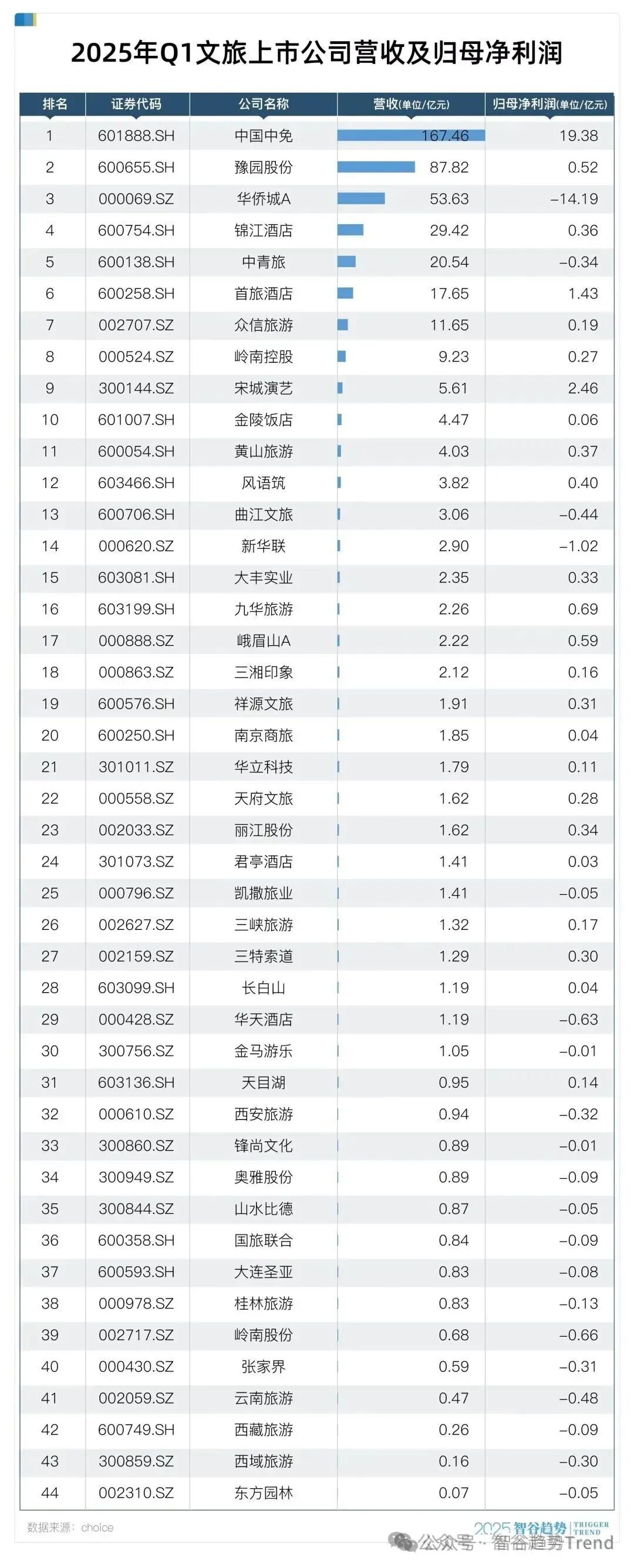
Core Insights - The tourism industry is facing significant challenges, with the recent bankruptcy of Qinghai Tourism Investment Group and its subsidiaries highlighting the difficulties within the sector [1] - Despite an increase in domestic travel and spending, many tourism companies are struggling financially, indicating a disconnect between rising visitor numbers and profitability [4][11] Group 1: Company Performance - Qinghai Tourism Investment Group, once aiming for substantial growth, has declared bankruptcy, losing 480 million in registered capital and facing over 323 million in enforced execution [1][6] - In Q1 2025, 25 out of 44 listed tourism companies reported negative revenue growth, accounting for 56.8% of the total [1] - Major airlines like China Southern Airlines, China Eastern Airlines, and Air China reported significant losses in Q1 2025, with losses of 747 million, 995 million, and 2.044 billion respectively [3] Group 2: Market Dynamics - The tourism market is experiencing a paradox where visitor numbers and spending are increasing, yet many companies are not profiting, raising questions about where the money is going [4][11] - Online travel platforms such as Ctrip and Tongcheng are thriving, with Ctrip reporting a net profit of approximately 4.3 billion and a net profit margin of 31.16% in Q1 2025 [11] - The number of A-level scenic spots has increased by 3,000 from 2019 to 2023, yet average income has decreased by nearly 40%, indicating oversupply in the market [11] Group 3: Industry Trends - The tourism industry is transitioning into a 2.0 era, where experiential offerings are becoming more important than traditional attractions [20][21] - Successful attractions like Jiuhua Mountain and Disney are focusing on enhancing visitor experience, which is crucial for profitability in the current market [14][17] - The shift towards experience-driven tourism is leading to the decline of many traditional tourism platforms that fail to adapt, as seen with Qinghai Tourism Investment Group [22][23]


旅游,正在成为2025年最难做的生意?
凤凰网财经· 2025-10-03 13:44
Core Viewpoint - The tourism industry, once seen as a promising sector, is now facing significant challenges, with many companies struggling financially despite an increase in tourist numbers and spending [2][5][6]. Group 1: Company Performance - Qinghai Tourism Investment Group and its subsidiaries have filed for bankruptcy, highlighting the struggles within the tourism sector [2]. - Among 44 listed tourism companies, 25 reported negative revenue growth in Q1 2025, accounting for 56.8% of the total [2]. - Major airlines like China Southern Airlines, China Eastern Airlines, and Air China reported significant losses in Q1 2025, with losses of 0.747 billion, 0.995 billion, and 2.044 billion respectively [4]. Group 2: Market Dynamics - Despite a 20.6% increase in domestic travel and a 15.2% rise in spending in the first half of 2025, the tourism industry is struggling to convert this growth into profitability [5][6]. - Online travel platforms like Ctrip and Tongcheng have seen substantial profits, with Ctrip reporting a net profit of approximately 4.3 billion in Q1 2025, reflecting a net profit margin of 31.16% [17]. - The increase in the number of A-level scenic spots and travel agencies has led to a decline in average income, with the average profit for travel agencies dropping to 66,500 [20]. Group 3: Industry Trends - The tourism industry is transitioning from a focus on scarce resources to an emphasis on customer experience, marking the shift to a 2.0 era [30][33]. - Successful attractions like Jiuhua Mountain and Disney have thrived by enhancing visitor immersion and emotional value, contrasting with struggling traditional scenic spots [23][28]. - The current competitive landscape indicates that only those who can effectively engage tourists will succeed, while many tourism platforms may face bankruptcy due to poor business models and operational inefficiencies [36][39].

数字媒体板块9月30日涨1.37%,值得买领涨,主力资金净流出2381.49万元





Zheng Xing Xing Ye Ri Bao· 2025-09-30 08:51
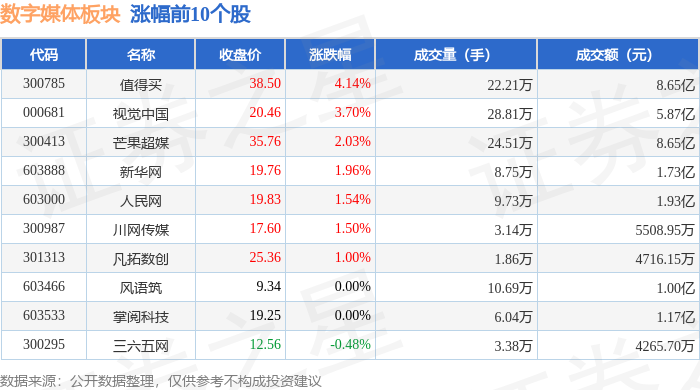
Market Overview - On September 30, the digital media sector rose by 1.37%, led by Zhidingmai [1] - The Shanghai Composite Index closed at 3882.78, up 0.52%, while the Shenzhen Component Index closed at 13526.51, up 0.35% [1] Stock Performance - Zhidingmai (300785) closed at 38.50, with a gain of 4.14% and a trading volume of 222,100 shares, amounting to 865 million yuan [1] - Other notable performers include: - Vision China (000681) at 20.46, up 3.70% [1] - Mango Super Media (300413) at 35.76, up 2.03% [1] - Xinhua Net (603888) at 19.76, up 1.96% [1] - People's Daily (603000) at 19.83, up 1.54% [1] Capital Flow - The digital media sector experienced a net outflow of 23.81 million yuan from institutional investors, while retail investors saw a net outflow of 91.12 million yuan [2] - Conversely, speculative funds recorded a net inflow of 115 million yuan [2] Individual Stock Capital Flow - Zhidingmai had a net inflow of 50.13 million yuan from institutional investors, but a net outflow of 56.99 million yuan from speculative funds [3] - Vision China saw a net inflow of 36.06 million yuan from institutional investors, with a net outflow of 19.83 million yuan from speculative funds [3] - People's Daily had a net inflow of 17.17 million yuan from institutional investors, while retail investors experienced a net outflow of 16.21 million yuan [3]
数字媒体板块9月29日跌0.05%,风语筑领跌,主力资金净流出9664.44万元
Zheng Xing Xing Ye Ri Bao· 2025-09-29 08:45
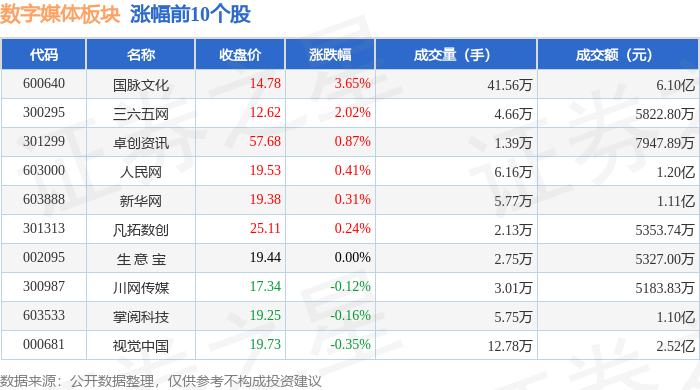
Core Insights - The digital media sector experienced a slight decline of 0.05% on September 29, with Fengyuzhu leading the drop [1] - The Shanghai Composite Index closed at 3862.53, up 0.9%, while the Shenzhen Component Index closed at 13479.43, up 2.05% [1] Digital Media Sector Performance - Guomai Culture (600640) saw a closing price of 14.78, with a rise of 3.65% and a trading volume of 415,600 shares, amounting to a transaction value of 610 million yuan [1] - Sanliuwang (300295) closed at 12.62, up 2.02%, with a trading volume of 46,600 shares and a transaction value of 58.23 million yuan [1] - Zhuochuang Information (301299) closed at 57.68, up 0.87%, with a trading volume of 13,900 shares and a transaction value of 7.95 million yuan [1] - Other notable performances include People's Daily (603000) at 19.53, up 0.41%, and Xinhua Net (603888) at 19.38, up 0.31% [1] Capital Flow Analysis - The digital media sector saw a net outflow of 96.64 million yuan from institutional investors, while retail investors contributed a net inflow of 97.30 million yuan [2][3] - Guomai Culture had a net inflow of 10.13 million yuan from institutional investors, while retail investors had a net outflow of 4.74 million yuan [3] - Sanliuwang experienced a net outflow of 6.00 million yuan from institutional investors, but retail investors contributed a net inflow of 5.07 million yuan [3]
风语筑实控人辛浩鹰拟减持套现1.7亿 此前已套现9.9亿
Zhong Guo Jing Ji Wang· 2025-09-29 07:55
Core Points - The company Fengyuzhu (603466.SH) announced a share reduction plan on September 26, allowing shareholder Xin Haoying to reduce holdings by up to 17,843,500 shares, which is approximately 3% of the total share capital [1] - The reduction will occur through two methods: a maximum of 5,947,800 shares via centralized bidding and up to 11,895,700 shares through block trading [1] - The reduction price will be determined based on market conditions at the time of the sale [1] Shareholder Information - As of the announcement date, Xin Haoying held 123,175,831 shares, representing about 20.71% of the company's total share capital [1] - Xin Haoying's initial stake was 49.05 million shares, or 34.06% of the total share capital [1] - Since the first reduction on June 28, 2021, Xin Haoying has cumulatively reduced holdings by 65,689,000 shares, realizing approximately 999.2 million yuan [1] Financial Implications - Based on the closing price of 9.70 yuan on September 26, the total amount from the planned reduction could reach up to 173 million yuan [1] - The share reduction plan will be adjusted if there are any corporate actions such as dividends or stock splits during the implementation period [1]
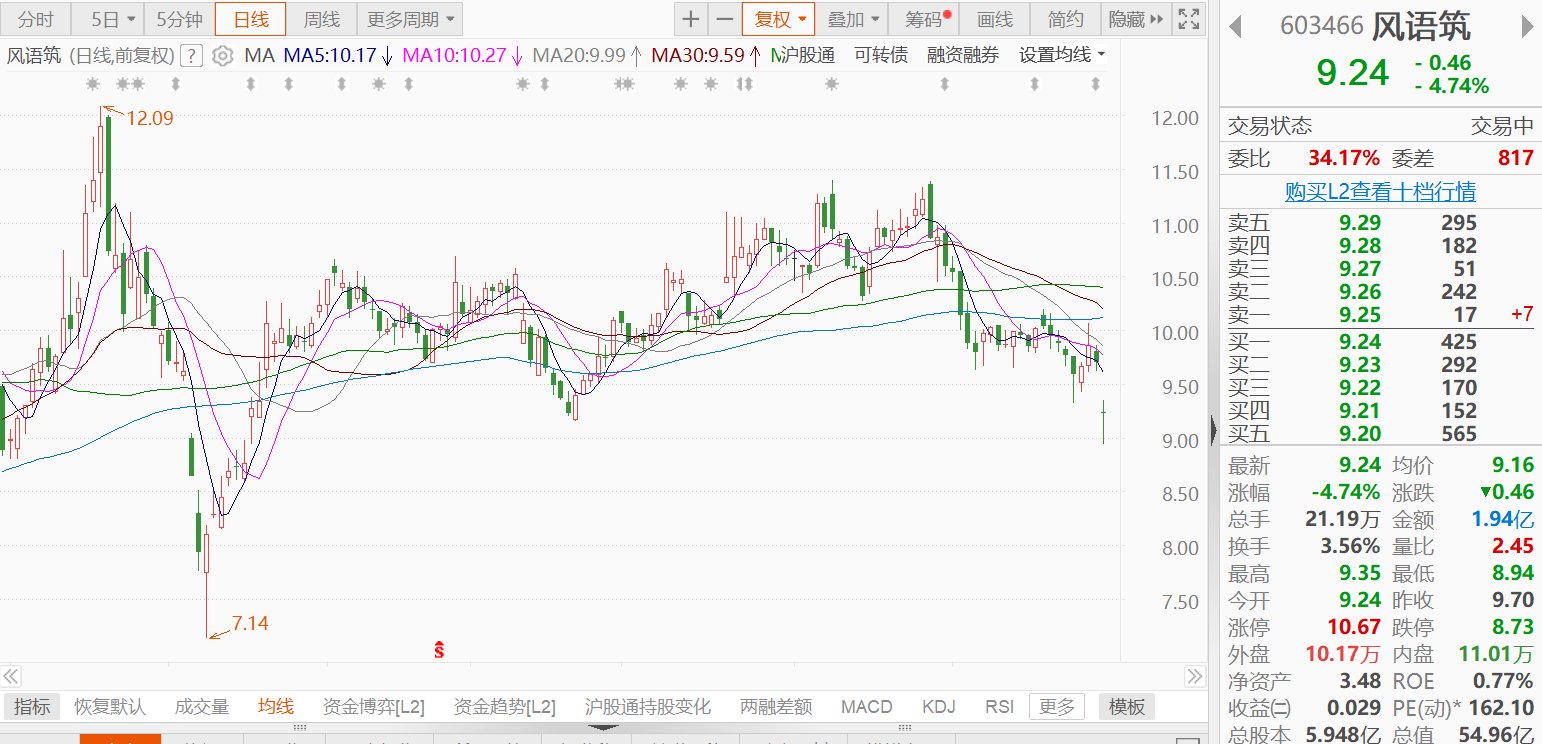
A股异动丨风语筑一度跌逾7%,股东辛浩鹰拟减持不超3%公司股份
Ge Long Hui A P P· 2025-09-29 05:57
Core Viewpoint - Fengyuzhu (603466.SH) experienced a significant drop in stock price, reaching a five-month low, following the announcement of a major shareholder's plan to reduce their stake in the company [1] Group 1: Stock Performance - The stock price of Fengyuzhu fell over 7% in early trading, currently down 4.74% at 9.24 yuan [1] - The total market capitalization of the company is 5.496 billion yuan [1] Group 2: Shareholder Actions - Shareholder Xin Haoying plans to reduce their stake by up to 3% within three months, starting 15 trading days after the announcement [1] - The reduction will be executed through centralized bidding and block trading, with the selling price determined by market conditions [1] - This reduction plan will not result in a change of control of the company [1]