擎天柱

Search documents
92亿泰铢落地!5家中国巨头落户泰国,打造海外首个人形机器人核心基地
Sou Hu Cai Jing· 2026-02-27 13:12
Group 1 - The Thai Investment Promotion Committee (BOI) has approved five leading Chinese companies to invest a total of 92.2 billion THB in building key component factories for humanoid robots in Thailand, marking a significant milestone in Sino-Thai technological cooperation and positioning Thailand at the forefront of the global robotics industry [1][3] - The five approved companies are all core suppliers to major global players like Tesla, Apple, and Huawei, specializing in critical technologies for humanoid robots, including "muscles, bones, and joints" [3] - The investments include: - Hangzhou Senpin Electromechanical: 21.2 billion THB for precision components in Chonburi - Better Technology: 16.7 billion THB for core transmission parts, with an additional 30 billion THB project pending approval in Chonburi - Sanhua Intelligent Drive: 18 billion THB for joint actuators in Chonburi - Top Technology: 9.3 billion THB for motion control devices in Nakhon Nayok - Xusheng Group: 27 billion THB for robot frames in Rayong [3] Group 2 - This investment is expected to create 1,000 high-skilled jobs, enhance local employment for engineers and technicians, and lead to an annual procurement of 45 billion THB in raw materials, thereby upgrading the local supply chain [9] - The factories will be located in the Eastern Economic Corridor (EEC) of Thailand, which aims to establish the country as a high-end manufacturing hub in Southeast Asia [9] - The humanoid robot industry is projected to experience a commercial explosion by 2027, with a market size expected to reach over 100 billion USD by 2030, growing at an annual rate exceeding 100% [11] Group 3 - The collaboration between China and Thailand is evolving from traditional manufacturing in the automotive sector to high-end manufacturing in artificial intelligence and robotics [13] - The establishment of these five leading companies is anticipated to attract more upstream and downstream enterprises, positioning Thailand as a core production base for humanoid robot components within the next 3-5 years [13] - This development signifies the formation of a new robotics industry landscape in Southeast Asia, characterized by "Chinese technology + Thai manufacturing + global market" [13]


下一个万亿赛道“人形机器人”谁主沉浮?现代汽车携“阿特拉斯”叫板特斯拉“擎天柱”
智通财经网· 2026-02-27 04:17
Core Viewpoint - Hyundai Motor Company is positioning itself as a leader in the humanoid robotics sector, leveraging its expertise in electric vehicle technology to capitalize on a market projected to reach $5 trillion by 2050, with over 1 billion humanoid robots in use globally [1][2]. Group 1: Market Position and Technology - Hyundai's humanoid robot "Atlas" showcased impressive agility and capabilities at CES, leading to an 80% surge in the company's stock price within two weeks [1]. - The underlying technology for humanoid robots and electric vehicles is similar, involving battery power, motor control, and AI navigation, allowing Hyundai to utilize its existing manufacturing capabilities [1][2]. - The potential market for humanoid robots extends beyond assembly lines to warehousing, manufacturing, and even elder care, indicating vast growth opportunities [2]. Group 2: Competitive Landscape - Analysts view "Atlas" as a strong competitor to Tesla's "Optimus" robot, citing superior specifications such as higher load capacity and readiness for mass production [3]. - Despite the competitive edge, Chinese manufacturers currently dominate the humanoid robot market, producing cheaper models compared to Western counterparts [3]. Group 3: Cost and Economic Impact - Initial pricing for "Atlas" is estimated between $130,000 and $140,000, with potential for a 50% price reduction once production exceeds 10,000 units [4]. - If the price drops to $100,000, the operational cost of "Atlas" would be approximately $5.1 per hour, significantly lower than the average hourly wage for factory workers [5]. - The deployment of humanoid robots could potentially replace 3 to 4 million assembly line workers globally by 2028, highlighting the economic implications of this technology [5]. Group 4: Future Outlook - Analysts believe that even if Tesla achieves a production rate of 1 million humanoid robots by 2030, there will still be a significant demand gap, positioning Hyundai as a key player in the market [6]. - The latest demonstrations of "Atlas" indicate its readiness for deployment in industrial settings without the need for extensive on-site training, showcasing its adaptability to real-world scenarios [6]. - Hyundai's market capitalization is significantly lower than Tesla's, making it an attractive investment opportunity in the field of physical artificial intelligence [6].

中国机器人技术的飞跃与未来展望
Xin Lang Cai Jing· 2026-02-17 13:17
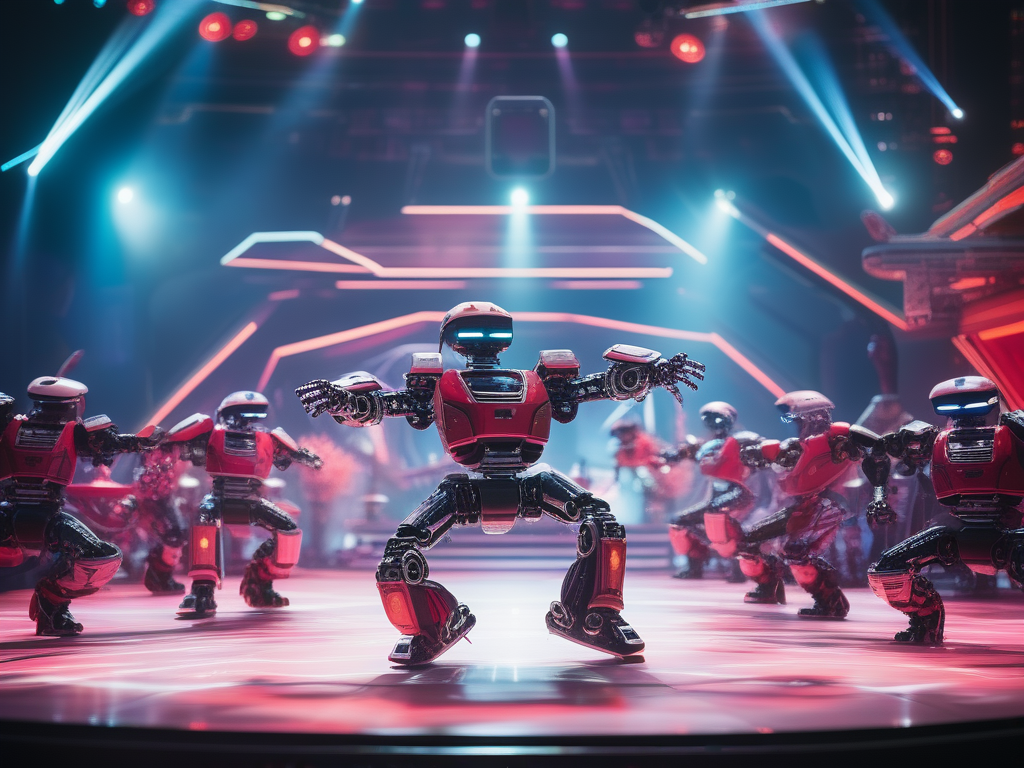
Group 1 - The performance of humanoid robots at the 2026 Spring Festival Gala has garnered global attention, showcasing significant advancements in movement capabilities and complex motion control [2] - The robots, developed by Yushu Technology, demonstrated impressive martial arts skills, including high-difficulty moves such as flips and intricate routines, highlighting the potential of human-robot collaboration [2] - The application scenarios for domestic robots are expanding, with examples including the Galaxy General Robot's capabilities in new retail environments and the emotional interaction robot from Songyan Power, indicating a shift from industrial applications to more human-like interactions [2] Group 2 - As of January 2026, China holds 68% of global humanoid robot patent applications, with a domestic core component localization rate of 75%, underscoring the country's technological advancements [3] - Yushu Technology's H2 robot features 31 high-precision joints and advanced bionic design, achieving zero-error performances in martial arts, which has gained international recognition [3] - The global supply chain dynamics are shifting due to the rise of Chinese robotics, with Morgan Stanley noting that removing Chinese components could triple the cost of humanoid robots, emphasizing China's critical role in the supply chain [3]
特斯拉(TSLA):Robotaxi车队加速扩张,AI生态与自动驾驶迈向规模化
First Shanghai Securities· 2026-02-07 00:25
Investment Rating - The report maintains a "Buy" rating for Tesla with a target price of $520.00, representing a 23% upside from the current price of $421.90 [3][5]. Core Insights - Tesla is accelerating the expansion of its Robotaxi fleet and moving towards large-scale AI and autonomous driving solutions. The Cybercab, designed for fully autonomous driving, is set to begin production in April 2026, which is expected to significantly optimize cost per mile and increase utilization [5][29]. - By the end of 2026, Tesla aims to have its Robotaxi service operational in 25-50% of the U.S. market, with over 500 vehicles already deployed in the Bay Area and Austin [5][29]. - The company is transitioning to a subscription model for its Full Self-Driving (FSD) service, which currently has nearly 1.1 million paid users, representing a 12% penetration rate among existing vehicles [5][35]. - Tesla plans to invest $2 billion in xAI to enhance its AI capabilities, which will integrate with its vehicle ecosystem [5][31]. Financial Summary - For the fiscal year ending December 31, 2024, Tesla's total revenue is projected to be $97.69 billion, with a slight decrease of 0.95% from the previous year. Revenue is expected to grow significantly in the following years, reaching $176.92 billion by 2028 [4][36]. - Non-GAAP net profit for 2024 is estimated at $7.96 billion, with a projected increase to $17.92 billion by 2028 [4][36]. - The report indicates that Tesla's automotive gross margin is expected to recover to 17.9% in the fourth quarter, with a focus on improving production efficiency and cost management [10][12]. Production and Capacity - Tesla plans to cease production of the Model S and Model X in early 2026 to repurpose the production lines for the Cybertruck, with a long-term production target of 1 million units annually [5][26]. - The Cybercab is expected to become the highest volume model in the long term, although initial production ramp-up may be slow due to the use of new customized components [5][29]. - Tesla's global production capacity is projected to exceed 2.35 million units, with significant expansions planned in Texas and Nevada [5][26]. Valuation - The report employs a discounted cash flow (DCF) model, estimating Tesla's revenue for 2026 to 2028 at $114 billion, $141 billion, and $176 billion, respectively. The calculated fair stock price of $520.00 corresponds to a 166x multiple of projected Non-GAAP earnings per share for 2026 [5][33].
新力量NewForce总第4959期
First Shanghai Securities· 2026-02-05 10:25
Group 1: Tesla (TSLA) Insights - Tesla's Robotaxi fleet is expected to expand significantly, covering 25-50% of the U.S. by the end of 2026, with over 500 vehicles already operational in Austin[5] - The target price for Tesla is set at $520.00, maintaining a "Buy" rating, with projected revenues of $114 billion, $141.1 billion, and $176.9 billion for 2026 to 2028[6] - The company is transitioning to a subscription sales model, which may negatively impact short-term margins but is expected to enhance recurring revenue in the long run[5] Group 2: TSMC (TSM) Insights - TSMC's revenue for Q4 2025 reached NT$1,046.09 billion (approximately $33.7 billion), a year-on-year increase of 30.3%[9] - The target price for TSMC is adjusted to $450.00, with a projected AI revenue CAGR exceeding 58% over the next five years[12] - TSMC's advanced process technology contributed 77% of revenue, with a long-term gross margin target of over 56%[10]

特斯拉业务重心转向,但中国供应商仍是中坚力量
Guan Cha Zhe Wang· 2026-02-02 11:53
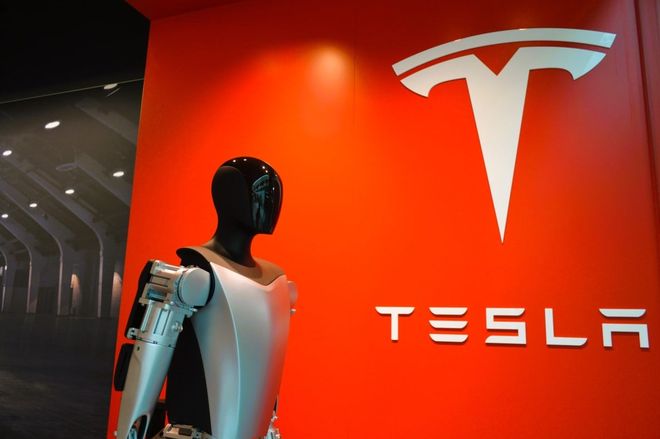
Core Viewpoint - Tesla is shifting its business focus from electric vehicles to humanoid robots, with plans to produce the "Optimus" robot in the U.S. while still relying on China's extensive robot supply chain for components [1][4]. Group 1: Tesla's Plans and Production - Elon Musk announced plans to gradually reduce the production of Model S and Model X electric vehicles to convert the Fremont factory for "Optimus" production, aiming for mass production by the end of 2026 [5]. - The long-term goal is to produce 1 million humanoid robots annually at the Fremont factory, with a third-generation "Optimus" expected to launch in a few months [5]. - Musk expressed caution regarding the current performance of "Optimus," stating it is still in the early stages of development [5]. Group 2: Supply Chain and Component Suppliers - Tesla has been engaging with hundreds of Chinese component suppliers for over three years, collaborating on research and hardware design, with some suppliers already delivering prototype parts [3]. - Key potential suppliers include Zhejiang Sanhua Intelligent Control, which provides thermal management components, and Ningbo Top Group, which is developing actuators and other robot parts [3]. - Bain & Company estimates that Chinese suppliers will play a significant role in the global humanoid robot supply chain, accounting for at least 55% of the material costs for core components [4]. Group 3: Cost and Market Dynamics - Morgan Stanley predicts that component suppliers are likely to benefit first from the growth of the humanoid robot industry, with an expected 16% decrease in the total material costs for humanoid robots in China this year [6]. - Tesla aims to keep the manufacturing cost of each "Optimus" robot around $20,000 (approximately 138,900 RMB) [6]. - Analysts highlight that the cost and efficiency of the Chinese supply chain are key advantages, allowing for localized production and rapid response to design changes [5].
早报|Moltbook爆火:百万智能体自主讨论甚至创立宗教;月之暗面公开喊话百度;何小鹏回应机器人首秀摔倒;深圳水贝“杰我睿”最新进展
虎嗅APP· 2026-02-02 01:37
Group 1 - Trump expressed hope for an agreement with Iran regarding nuclear issues, with Iranian Foreign Minister indicating confidence in negotiations [2][3] - SpaceX submitted a request to launch up to 1 million satellites to create an "orbital data center" and is considering an IPO, with revenue reported between $15 billion to $16 billion last year [4] - Apple is exploring a foldable iPhone design, with the first model expected to launch in September, while the "flip" version's market release remains uncertain [5][6] Group 2 - Nvidia's CEO Huang Renxun announced plans for a significant investment in OpenAI, potentially the largest in the company's history, amidst previous reports of a $100 billion investment plan being stalled [7] - A severe winter storm impacted the southeastern U.S., causing significant disruptions in transportation and logistics, particularly in North Carolina [8] - Shenzhen's "Jie Wo Rui" company is in the process of asset disposal and has initiated a repayment plan for affected consumers, with some receiving gold and cash as compensation [9] Group 3 - The AI-exclusive social network Moltbook gained popularity, attracting millions of AI agents discussing various topics, although some claims may be exaggerated [11] - Xiaopeng's humanoid robot made its debut but faced criticism after falling during a demonstration, prompting responses from company executives [12][14] - Wang Shi addressed rumors of his disappearance by sharing a recent cycling video, while Vanke projected a significant net loss for 2025 [16][17] Group 4 - A construction accident in Wuhan resulted in one death and one injury during the dismantling of a crane [19] - Reports of a potential joint venture between Xiaomi and Ford for electric vehicle production were denied by Ford, stating there is no factual basis for the claims [22] - Musk responded to allegations regarding his past communications with Jeffrey Epstein, asserting minimal contact and emphasizing the need to pursue those involved in serious crimes [23][24] Group 5 - Tesla's CEO Musk identified Chinese companies as the strongest competitors in the humanoid robot sector, highlighting their manufacturing capabilities and advancements in AI technology [33]






美股科技巨头财报密集出炉 市场态度转向“审慎评估”
Sou Hu Cai Jing· 2026-02-01 14:55
Core Insights - The recent earnings reports from major US tech companies, including Microsoft, Meta, Apple, and Tesla, highlight a shift in market sentiment towards AI investments, moving from "full acceptance" to "cautious evaluation" [1] Group 1: Company Performance - Microsoft experienced a significant stock drop of nearly 10% following its earnings report, resulting in a market value loss of over $35 billion, marking its largest single-day decline in nearly six years [3] - In contrast, Meta's stock surged over 10% as it demonstrated improved advertising conversion rates through AI applications, a key area where Microsoft fell short [3][5] - Despite exceeding revenue and profit expectations, Microsoft's Azure cloud service revenue growth slowed from 40% to 39%, while its capital expenditures surged 66% year-over-year to $37.5 billion, reaching a record high [5] Group 2: Strategic Shifts - Tesla is shifting its strategic focus entirely towards AI and autonomous driving, with plans to halt production of Model S and Model X to allocate resources for developing humanoid robots [7] - Apple reported record iPhone revenue of $85.27 billion and is collaborating with Google to enhance its personal intelligence system, Apple Intelligence [7] - Intel announced that its advanced 18A chip manufacturing process has entered mass production, actively expanding capacity to meet AI chip demand [7] Group 3: Market Trends - Analysts suggest that the current earnings season indicates a transition of AI from a "arms race" phase to a "value realization" period, where companies that effectively integrate technological advantages with business models and demonstrate clear profit pathways will gain long-term trust from capital markets [9]


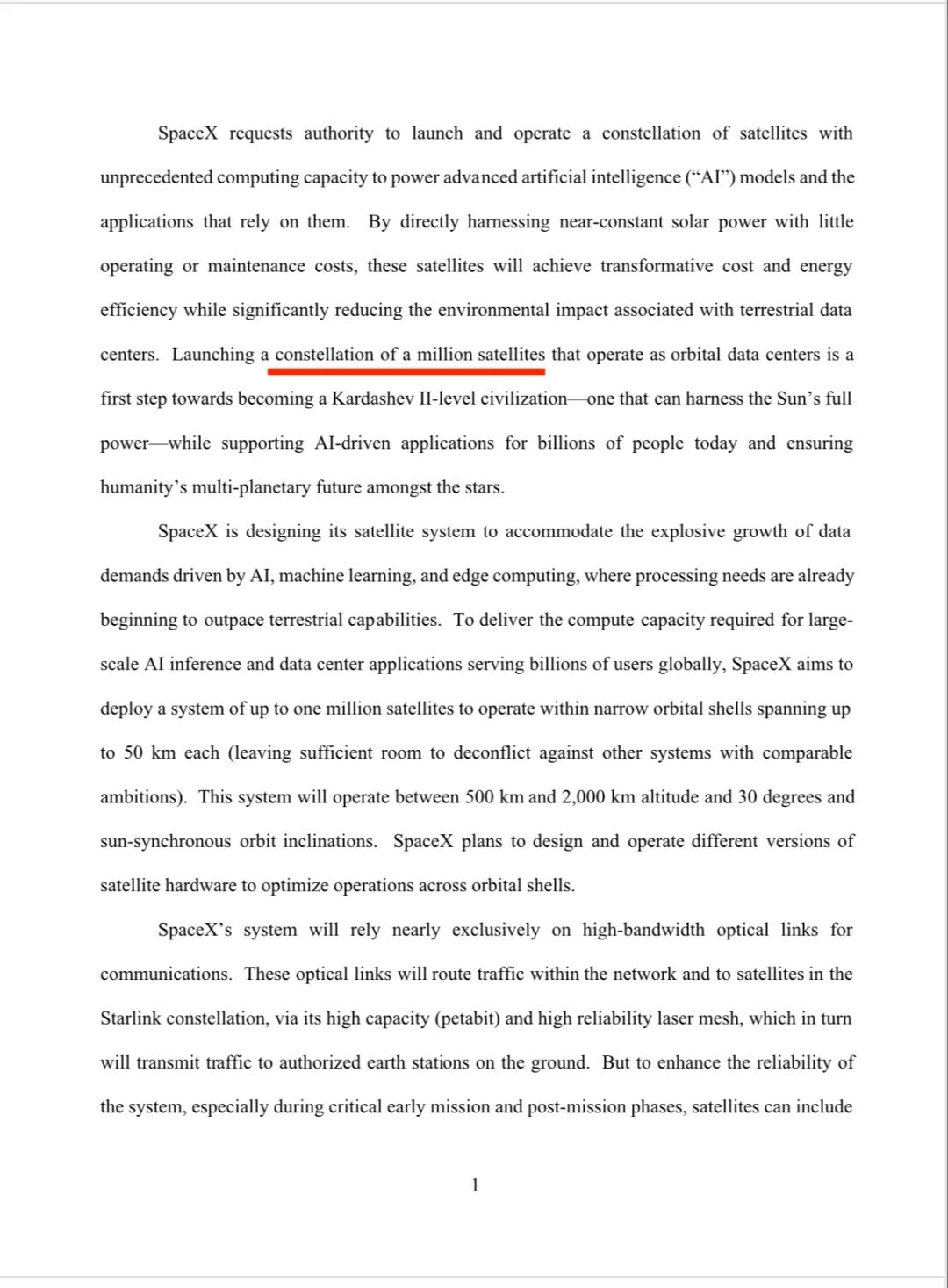
SpaceX申请部署100万颗卫星 推进太空算力布局
Sou Hu Cai Jing· 2026-02-01 13:59
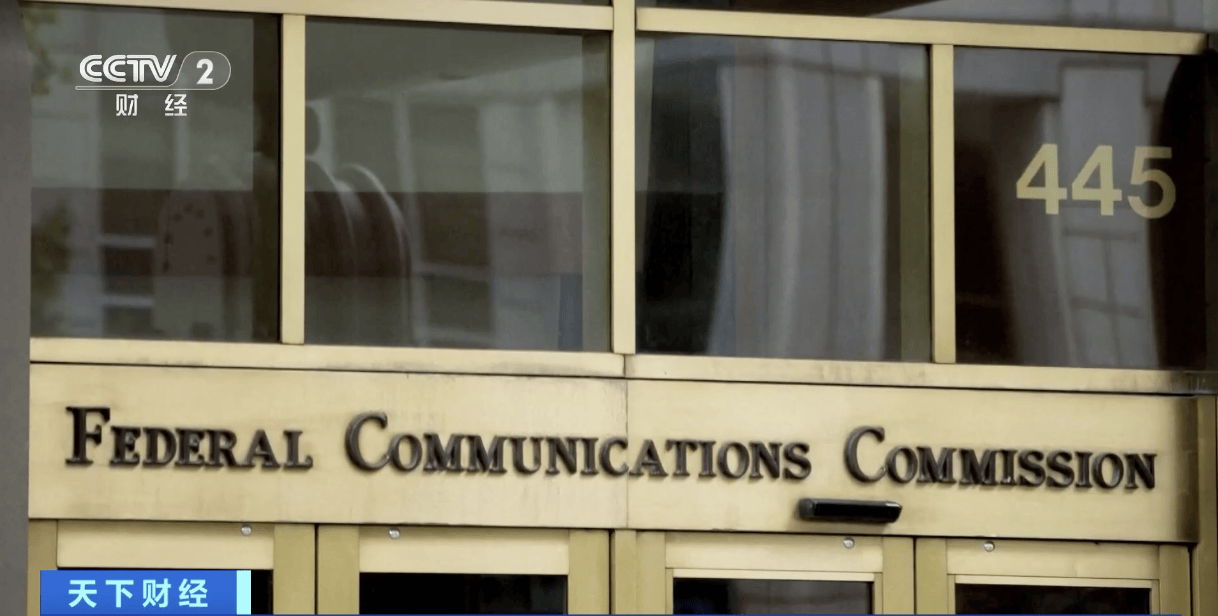
Group 1 - SpaceX has submitted an application to the U.S. Federal Communications Commission to launch and operate a satellite network consisting of up to 1 million satellites, aimed at creating an "orbital data center" with unprecedented computing capabilities [1][3] - The orbital data center system is designed to support advanced AI models and applications, leveraging solar energy in space to achieve revolutionary improvements in energy efficiency and significantly lower operational costs compared to traditional data centers on Earth [3] - There are speculations that Elon Musk is considering merging SpaceX with xAI and planning a large-scale IPO within the year, which could provide substantial computing power for xAI through the orbital data center [5] Group 2 - SpaceX reportedly generated revenue between $15 billion and $16 billion last year, with an EBITDA of approximately $8 billion, providing a new perspective on the company's financial status [7] - There are discussions about the potential merger of SpaceX with Tesla, leveraging Tesla's energy storage capabilities to support the operation of the data centers in space [5] - Musk has also explored the possibility of using SpaceX's Starship rockets to transport Tesla's humanoid robot, Optimus, to the Moon and Mars [5]
SpaceX大动作!申请部署100万颗卫星
2 1 Shi Ji Jing Ji Bao Dao· 2026-02-01 02:27
Core Viewpoint - SpaceX has applied to launch up to 1 million satellites to create an orbital data center network around Earth, aimed at supporting advanced AI models and applications [1][10]. Group 1: Project Overview - SpaceX submitted an application to the FCC on January 30, describing the project as a satellite constellation with unprecedented computing power [1]. - The proposed "orbital data center system" is designed to handle explosive data growth from AI, machine learning, and edge computing, providing necessary computing capabilities for billions of users globally [1]. - The satellites will operate in a narrow orbital shell with a width of no more than 50 kilometers to avoid conflicts with other systems [1]. Group 2: Technical Specifications - The satellites will operate in a sun-synchronous orbit at altitudes between 500 kilometers and 2000 kilometers, utilizing nearly constant solar energy, which will significantly reduce operational and maintenance costs [2]. - The system will rely on high-bandwidth optical communication links and will connect with the existing Starlink constellation for data transmission to ground stations [3]. Group 3: Strategic Developments - Elon Musk is considering integrating SpaceX with his AI company xAI or Tesla to enhance space computing capabilities [7][10]. - The potential merger could create a "super ecosystem" combining rocket launches, satellite networks, electric vehicles, social media, and generative AI technologies [10]. - SpaceX is planning an IPO in June, aiming to raise up to $50 billion, with an estimated valuation of around $1.5 trillion, potentially making it the largest IPO in history [10].