Xiaomi

Search documents
【Tesla每日快訊】 小米拆完Model Y,下個就是擎天柱?中國的野心藏不住了!🔥特斯拉Q3財報預覽(2025/9/29-1)
大鱼聊电动· 2025-09-29 03:35
Industry Analysis & Competitive Landscape - Chinese companies are actively studying and potentially imitating Tesla's technologies, particularly in humanoid robots, with Xiaomi being open about disassembling Model Y vehicles for research [1] - A state-backed initiative in Beijing is establishing a large-scale data training center for humanoid robots, aiming to generate 6 million high-quality data points annually to accelerate AI development in robotics [1] - The market for humanoid robots may fragment into separate ecosystems, with Tesla's Optimus potentially dominating global markets while China develops a self-sufficient ecosystem within its borders due to data and security concerns [1] Tesla's Performance & Future Outlook - Analysts have revised upwards their delivery estimates for Tesla's Q3, projecting approximately 475,000 vehicles, exceeding initial Wall Street expectations of 445,000 [1] - While Tesla's market share in the US has decreased from 35% to 27%, this indicates the electric vehicle market is transitioning from a niche to a mainstream market [2] - Tesla's high P/E ratio (237x) suggests investors are valuing the company not just as an automaker but also for its potential in AI and robotics, particularly the Optimus robot and Robotaxi initiatives [2] Market Dynamics & Regional Performance - Tesla experienced strong sales in Europe towards the end of Q3 [1] - In China, Model Y maintains its leading position in consumer searches despite competition from new electric vehicle models [1] - In the US, Tesla's Q3 sales may show a decrease compared to the previous year, influenced by the anticipation of the $7,500 electric vehicle tax credit [2]



Global Markets Navigate Geopolitical Tensions and Shifting Economic Indicators
Stock Market News· 2025-09-27 16:08
Group 1: Money Market Funds - Total assets in money market funds (MMFs) have reached a record of $7.7 trillion, tripling over the past eight years, driven by elevated short-term interest rates and market volatility [3][4] - Major asset managers such as Fidelity, Schwab, J.P. Morgan, Vanguard, and BlackRock account for 76% of the growth in MMF assets, highlighting the dominance of a few key players in the sector [4] Group 2: Health Insurance Costs - A U.S. government report claims health insurance costs have declined by 19% over the last five years, raising doubts about the accuracy of official inflation data [5] - Contrasting analyses indicate significant premium increases for 2026, with many businesses facing increases of 9% or more, and ACA enrollees potentially seeing costs surge by over 75% due to the expiration of enhanced federal subsidies [6] Group 3: Electric Vehicle Market - Xiaomi's CEO praised Tesla's Model Y as "outstanding" after disassembling three units for study, indicating a strategic move to understand and compete with market leaders [10] - Xiaomi's YU7 electric SUV received over 289,000 orders within the first hour of sale, significantly surpassing initial orders for its SU7 model, leading to raised profit forecasts from brokers [11] - The YU7 is priced at RMB253,500, which is RMB10,000 cheaper than the Tesla Model Y, showcasing Xiaomi's aggressive strategy to capture market share in the EV sector [11]


Xiaomi CEO Reveals Company Bought 3 Tesla Model Ys To Tear Apart: '...Disassembling The Parts One By One' - Tesla (NASDAQ:TSLA), Xiaomi (OTC:XIACF)
Benzinga· 2025-09-27 05:20
Core Insights - Xiaomi Corp. has purchased three Tesla Model Y cars for detailed analysis, with CEO Lei Jun discussing the disassembly process to study each component [1] - Lei Jun compared the Tesla Model Y with Xiaomi's YU7 electric SUV, highlighting the YU7's advantages such as faster charging times [2] Direct Competition Assessment - Lei Jun stated that if consumers do not choose the YU7, they might consider the Model Y, acknowledging the latter as an impressive vehicle [2] - The YU7 features an 800V architecture, enabling it to charge to 80% in just 13 minutes, compared to the Model Y's 18 minutes [2] Market Performance Data - Tesla's sales in China decreased by 4% year-over-year, totaling 83,200 units in August, as reported by the China Passenger Car Association [4] - Local competitors, including Xiaomi, are providing more affordable electric vehicles, intensifying competition against Tesla [4] Strong Pre-Order Results - Xiaomi's YU7 received over 240,000 preorders within 24 hours of its launch in June, indicating strong market interest [5] - Lei Jun emphasized that the YU7's design is comparable to the Model Y, showcasing its performance relative to its price [5] - Xiaomi's stock price fluctuates between $20.35 and $61.45, with a market capitalization of 1.42 trillion Hong Kong dollars and an average daily trading volume of 142.88 million shares [5]
XIAOMI(1810.HK)PRODUCT LAUNCH TAKEAWAYS:XIAOMI 17’S COMPETITIVE PRICING IOT UPGRADE AND EV CUSTOMIZATION SERVICES
Ge Long Hui· 2025-09-27 03:05
Group 1: Product Launch and Competitive Positioning - Xiaomi hosted its flagship product launch event on September 25, introducing the Xiaomi 17 flagship phones, Pad 8 series tablets, and premium smart home products, along with a new customization service for YU7/SU7 Ultra EVs [1] - The starting price of Xiaomi 17 is RMB4,499, which is competitive against the iPhone 17 priced at RMB5,999, positioning it as the best compact flagship in China with significant upgrades such as a 7000mAh battery and Leica Summilux tri-camera [1][2] - The Xiaomi 17 Pro/Max series features innovative elements like the Magic Back Screen and direct integration with the Apple ecosystem, reinforcing Xiaomi's strategy to benchmark against the iPhone [1][3] Group 2: Technical Specifications and Features - The Xiaomi 17 series is equipped with a Snapdragon 8 Elite processor, offering superior performance in gaming and heat management compared to the iPhone 17, with a focus on the RMB4k-5k market segment [2] - The 17 Pro series includes features such as customizable wallpapers and notifications on the Magic Back Screen, along with advanced camera technology like the Light Shadow Hunter 950L sensor for improved image quality [3] - The 17 Pro Max is highlighted for its large 6.9-inch display and advanced camera capabilities, including a 5X periscope lens and enhanced dynamic range [3] Group 3: AIoT Products and EV Developments - Xiaomi also announced several premium AIoT products, including the Pad 8 series, Mi TV S Pro Mini LED, and various home appliances, enhancing its product ecosystem [4] - The YU7 electric vehicle deliveries exceeded 40,000 units within three months, and new customization options were introduced to enhance personalization in the EV segment [4] - The customization service for SU7 Ultra/YU7 Max aims to provide a high-end personalization experience similar to luxury brands, which is expected to improve Xiaomi's brand equity and profit margins in the EV market [4]
Turn Your Xiaomi 17 Pro Into a Retro Gaming Handheld With This 299 Yuan ($42) Case
CNET· 2025-09-26 14:52
Based on the provided content, it's impossible to provide a meaningful summary with specific financial or industry insights, as the text is nonsensical General Observation - The content appears to be a fragment of speech or transcription, possibly related to audio or video content [1]

Xiaomi plans next-gen chip for phones, but won't have one annually like Apple
Seeking Alpha· 2025-09-26 11:45
Group 1 - Xiaomi is planning to develop a new high-end chip for its smartphones, but it will not release one annually like Apple does [4] - Xu Fei, the vice president at Xiaomi, discussed the company's ambitions in the semiconductor industry [4]

China's Xiaomi is planning a next-gen phone chip, but won't release one yearly like Apple
CNBC· 2025-09-26 10:18
Core Viewpoint - Xiaomi is set to launch its self-developed smartphone SoC, XRING 01, in late May, aiming to enhance its position in the high-end smartphone market, but it will not follow a yearly release schedule like Apple [1][5]. Group 1: Chip Development Strategy - Xiaomi plans to invest at least 50 billion yuan ($7 billion) over the next decade to develop its own chips, indicating a long-term commitment to semiconductor development [5]. - The company aims to produce 1 million units of the XRING 01 initially, but needs to reach 10 million units per chip release to break even, suggesting a cautious approach to scaling production [7][8]. - Xiaomi's strategy includes learning and planning for future chip generations, acknowledging the need for patience in achieving profitability [5][8]. Group 2: Competitive Landscape - Xiaomi's move to develop its own chips aligns with similar strategies from major competitors like Apple, Samsung, and Huawei, as it seeks to capture a larger share of the premium smartphone market [2]. - The company currently relies on Qualcomm and MediaTek for its smartphone chips but intends to continue this partnership while gradually introducing its own semiconductors [12][13]. Group 3: Technological Integration - The XRING 01 is based on a 3-nanometer manufacturing process, one of the most advanced technologies available, which positions Xiaomi competitively in the semiconductor space [3]. - Developing its own SoC allows Xiaomi to better integrate its hardware with its Android-based operating system, HyperOS, and its AI applications, HyperAI, enhancing user experience [9][11].

Xiaomi's New 17 Series May Resemble iPhone 17, Yet Packs Bold Tricks That Might Win Over Even Hardcore Apple Loyalists - Samsung Electronics Co (OTC:SSNLF), Apple (NASDAQ:AAPL)
Benzinga· 2025-09-26 09:47
Core Insights - Xiaomi has launched its 17 Series in China, directly targeting Apple's iPhone 17 lineup with competitive features and pricing [1][2] Product Features - The Xiaomi 17 Pro models include a 2.7-inch secondary display with a resolution of 904 x 572, a 120Hz refresh rate, and 3,500-nit brightness [3] - The Xiaomi 17 series features triple 50-megapixel cameras co-engineered with Leica, with the Pro Max having a larger telephoto sensor and faster f/2.6 aperture for improved low-light performance [6] - Battery capacities are significant, with the Xiaomi 17 at 7,000mAh, the Pro at 6,300mAh, and the Pro Max at 7,500mAh, all supporting 100W wired and 50W wireless charging [7] - All models are powered by Qualcomm's Snapdragon 8 Elite Gen 5 processor and run on Xiaomi HyperOS 3, based on Android 16, with configurations up to 16GB RAM and 1TB storage [8] Pricing and Availability - The Xiaomi 17 is priced at ¥4,499 (~$630), the Pro at ¥4,999 (~$700), and the Pro Max at ¥5,999 (~$840), with preorders open in China and a release date set for September 27 [9] Market Context - Apple's iPhone 17 series, launched on September 19, is experiencing strong sales, particularly for the Pro Max, priced from ¥9,999 ($1,406) [10] - Apple holds a 25.71% smartphone market share globally, while Xiaomi holds 10.82% [11]
X @Bloomberg
Bloomberg· 2025-09-26 04:03
Production & Delivery - Xiaomi's co-founder aims to accelerate the production of the YU7 electric vehicle [1] - YU7 electric vehicle deliveries reached 40,000 units within three months [1]
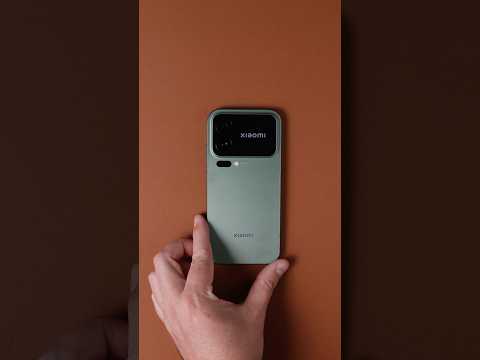
Unboxing Xiaomi’s 5,000 Yuan ($701) 17 Pro in Green 📲
CNET· 2025-09-26 00:00
Product Launch - Xiaomi launched the 17 Pro and Pro Max smartphones [1] - The Xiaomi 17 Pro features a design similar to the iPhone 17 Pro, with a 'plateau'-looking bar [1] - The Xiaomi 17 Pro includes a 2.66-inch back display [1] Marketing & Social Media - The launch is being promoted with the hashtags unboxing, xiaomi, xiaomi17pro, smartphone, and tech [1]