众信旅游

Search documents
人民币升值受益板块11月24日跌0.55%,凯撒旅业领跌,主力资金净流出8047.44万元
Sou Hu Cai Jing· 2025-11-24 09:25
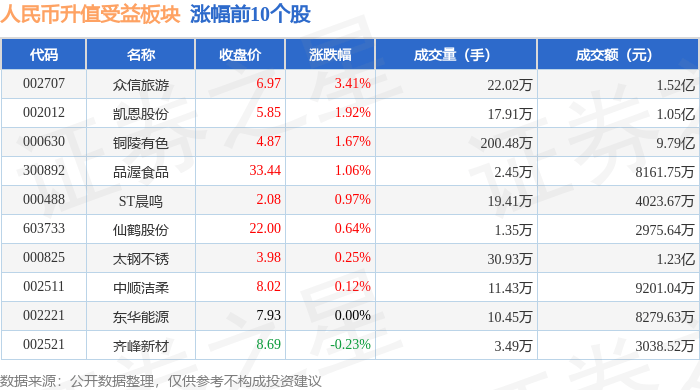
Core Insights - The Chinese yuan appreciated, leading to a decline of 0.55% in the benefiting sectors on the previous trading day, with Caesar Travel leading the losses [1][2] - The Shanghai Composite Index closed at 3836.77, up 0.05%, while the Shenzhen Component Index closed at 12585.08, up 0.37% [1] Sector Performance - The benefiting sector saw a mixed performance with notable gainers including: - Zhongxin Tourism (002707) with a closing price of 6.97, up 3.41% and a trading volume of 220,200 shares [1] - Kain Co. (002012) at 5.85, up 1.92% with a trading volume of 179,100 shares [1] - Tongling Nonferrous Metals (000630) at 4.87, up 1.67% with a trading volume of 2,004,800 shares [1] - Conversely, Caesar Travel (000796) experienced a significant drop of 6.69%, closing at 6.69 with a trading volume of 1,428,100 shares [2] Capital Flow Analysis - The benefiting sector experienced a net outflow of 80.47 million yuan from institutional investors, while retail investors saw a net inflow of 205 million yuan [2][3] - Notable capital flows included: - Tongling Nonferrous Metals (000630) with a net inflow of 114 million yuan from institutional investors [3] - Rongsheng Petrochemical (002493) with a net inflow of 42.31 million yuan from institutional investors [3] - Zhongxin Tourism (002707) with a net inflow of 13.34 million yuan from institutional investors [3]


旅游及景区板块11月24日涨1.32%,天府文旅领涨,主力资金净流出4004.92万元
Zheng Xing Xing Ye Ri Bao· 2025-11-24 09:13
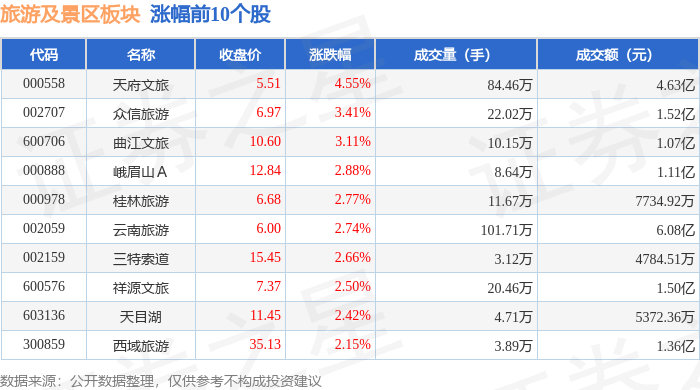
Core Viewpoint - The tourism and scenic spots sector experienced a rise of 1.32% on November 24, with Tianfu Culture and Tourism leading the gains [1] Group 1: Market Performance - The Shanghai Composite Index closed at 3836.77, up 0.05%, while the Shenzhen Component Index closed at 12585.08, up 0.37% [1] - Key stocks in the tourism sector showed significant increases, with Tianfu Culture and Tourism rising by 4.55% to a closing price of 5.51 [1] Group 2: Stock Performance - Notable performers included: - Tianfu Culture and Tourism (000558): 5.51, +4.55%, 844,600 shares traded, 463 million yuan turnover [1] - Zhongxin Tourism (002707): 6.97, +3.41%, 220,200 shares traded, 152 million yuan turnover [1] - Qujiang Culture and Tourism (600706): 10.60, +3.11%, 101,500 shares traded, 107 million yuan turnover [1] - Conversely, Caesar Travel (000796) saw a decline of 6.69% to 6.69, with a trading volume of 1,428,100 shares and a turnover of 973 million yuan [2] Group 3: Capital Flow - The tourism and scenic spots sector experienced a net outflow of 40.05 million yuan from institutional investors, while retail investors saw a net inflow of 105 million yuan [2] - Specific stock capital flows indicated: - Tianfu Culture and Tourism: -30.41 million yuan from institutional investors [3] - Zhongxin Tourism: +13.34 million yuan from institutional investors [3] - Yunnan Tourism (002059): +10.78 million yuan from institutional investors, but -33.39 million yuan from retail investors [3]


众信旅游:极地邮轮中心持续深耕南北极旅游市场
Zheng Quan Ri Bao· 2025-11-24 08:10
Core Viewpoint - Zhongxin Tourism has established itself as the largest operator of polar cruise products in China, holding the top market share in the polar tourism sector [2] Group 1: Company Positioning - The company is a dual-certified member of two authoritative organizations: the International Association of Antarctica Tour Operators and the Association of Arctic Expedition Cruise Operators, indicating its credibility in the polar tourism market [2] - Zhongxin Tourism is committed to maximizing tourist benefits in its product development, which has led to numerous positive market reviews [2]
众信旅游(002707.SZ):公司极地邮轮中心持续深耕南北极旅游市场
Ge Long Hui A P P· 2025-11-24 00:53
Core Viewpoint - The company has established itself as the largest operator of polar cruise products in China, holding the top market share in the polar tourism sector [1] Group 1: Company Positioning - The company is a dual-certified member of two authoritative polar tourism organizations: the International Association of Antarctica Tour Operators and the Association of Arctic Expedition Cruise Operators [1] - The company focuses on maximizing tourist benefits in its product development philosophy, which has led to numerous positive market reviews [1]
众信旅游:公司极地邮轮中心持续深耕南北极旅游市场
Ge Long Hui· 2025-11-24 00:52
Core Viewpoint - The company has established itself as the largest operator of polar cruise products in China, holding the top market share in the polar tourism sector [1] Group 1 - The company is continuously deepening its engagement in the polar tourism market, focusing on both the Arctic and Antarctic regions [1] - The company has become a dual-certified member of two authoritative organizations: the International Association of Antarctica Tour Operators and the Association of Arctic Expedition Cruise Operators [1] - The company's polar products are developed with a focus on maximizing tourist benefits, which has led to numerous positive market reviews [1]
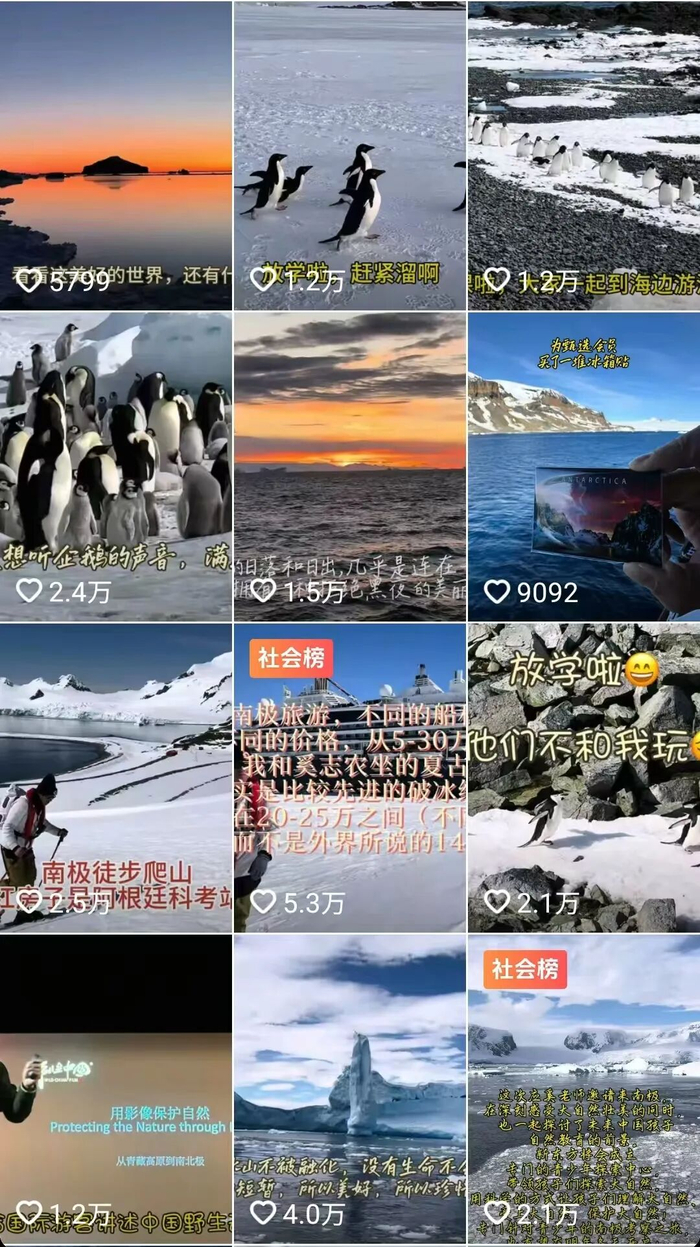
俞敏洪“凡尔赛”南极游背后:中国赴南极游客首超1万,年轻人正涌入
Zhong Guo Jing Ying Bao· 2025-11-21 11:21
Core Viewpoint - The recent trip of New Oriental's founder, Yu Minhong, to Antarctica has sparked mixed reactions among employees and the public, highlighting the growing interest and market potential in Antarctic tourism, particularly from Chinese tourists [1][4][5]. Group 1: Company Actions and Responses - Yu Minhong's internal communication allowed employees to express their opinions, indicating a traditional openness within New Oriental [1]. - The company plans to support outstanding employees in visiting Antarctica next year, promoting engagement and exploration [1]. - Yu Minhong's excitement about the trip is evident from his 25 posts on a single platform since November 13, showcasing his commitment to the initiative [1][4]. Group 2: Antarctic Tourism Market Growth - The Antarctic tourism market is experiencing rapid growth, with the number of Chinese tourists expected to exceed 10,000 for the first time in the 2024-2025 season, making China the second-largest source of tourists to Antarctica [4][5]. - Historical data shows a significant increase in Chinese tourists to Antarctica, from fewer than 100 in 2008 to over 8,000 in the 2017-2018 season [5][7]. - The overall number of tourists visiting Antarctica has surged from under 10,000 in the 1993-1994 season to approximately 120,000 in the 2024-2025 season [5][7]. Group 3: Pricing and Accessibility - The cost of traveling to Antarctica varies widely, with reports indicating that prices can range from 5,000 to 64,000 yuan, depending on the travel method and duration [9][11]. - Recent offerings from China National Geography for Antarctic scientific exploration trips have been popular, with prices starting at 9,980 yuan and quickly selling out [9][11]. - The demographic of Antarctic tourists is shifting, with an increasing number of younger travelers, now making up about 30% of group tours [16][17]. Group 4: Industry Dynamics and Environmental Considerations - The Antarctic tourism market, traditionally dominated by Western companies, is seeing increased participation from Chinese firms, with a reported 30% growth in suppliers [17]. - The establishment of China's first polar cruise brand, 66 Degrees Exploration, indicates a move towards more domestic offerings in the Antarctic tourism sector [17]. - The growing number of tourists raises concerns about the fragile Antarctic ecosystem, necessitating sustainable tourism practices and adherence to IAATO guidelines [17].
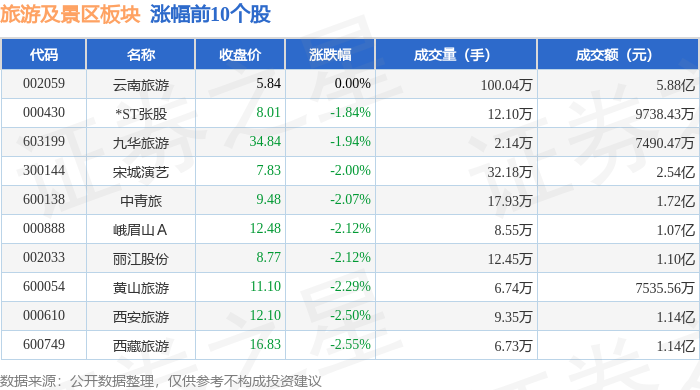
旅游及景区板块11月21日跌3.08%,大连圣亚领跌,主力资金净流出4.86亿元
Zheng Xing Xing Ye Ri Bao· 2025-11-21 09:33
Market Overview - The tourism and scenic spots sector experienced a decline of 3.08% on November 21, with Dalian Shengya leading the drop [1] - The Shanghai Composite Index closed at 3834.89, down 2.45%, while the Shenzhen Component Index closed at 12538.07, down 3.41% [1] Stock Performance - Dalian Shengya saw a significant drop of 10.00%, closing at 47.34, with a trading volume of 147,500 shares and a transaction value of 714 million [2] - Other notable declines included Tianfu Culture Tourism (-4.18%), Changzi Mountain (-4.08%), and Qujiang Culture Tourism (-3.93%) [2] Capital Flow - The tourism and scenic spots sector experienced a net outflow of 486 million from main funds, while retail investors saw a net inflow of 461 million [2] - The sector's overall capital flow indicates a mixed sentiment, with institutional investors pulling back while retail investors increased their positions [2] Individual Stock Capital Flow - Yunnan Tourism had a main fund net inflow of 10.99 million, while it faced a retail net outflow of 32.27 million [3] - Huangshan Tourism and Sanxia Tourism experienced significant net outflows from main funds, at 10.61 million and 11.62 million respectively, while both saw positive retail inflows [3]


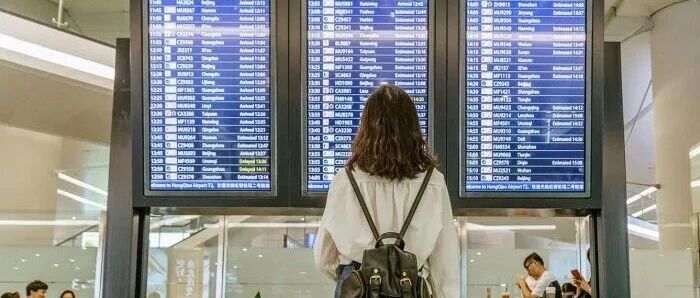
视频 | 54.3万人取消赴日机票,俄罗斯泰国争抢中国客源
2 1 Shi Ji Jing Ji Bao Dao· 2025-11-19 14:20
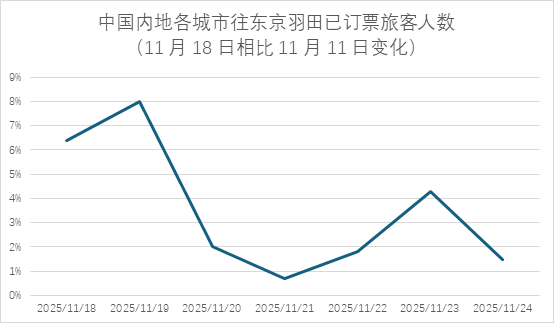
Core Insights - The number of untraveled tickets to Japan has significantly decreased from approximately 1.55 million on November 15 to about 900,000 by November 19, indicating a drop of 543,000 tickets in just four days [1] - The decline in Japan's tourism market has led other destinations to actively compete for Chinese tourists, with Southeast Asia seeing a 20% increase in inquiries for travel products [1] - Thailand has launched the "Thailand Safe Travel" initiative to alleviate safety concerns among Chinese tourists and is offering exclusive New Year promotions [1] - Russia is set to implement a visa-free policy for Chinese tourists, further enhancing its appeal as a travel destination [1]
四天超50万人取消赴日机票,多国争抢中国客源,韩国意外成黑马
21世纪经济报道· 2025-11-19 13:26
Core Viewpoint - The Japanese tourism market is experiencing a rapid decline due to travel warnings and the implementation of free ticket refund policies by airlines, leading to a significant number of cancellations by travelers [1][3][6]. Group 1: Ticket Cancellations and Market Impact - As of November 19, approximately 900,000 tickets for trips to Japan remain booked but unused, down from 1.55 million on November 15, indicating a reduction of 543,000 tickets in just four days [1][2]. - Major Chinese airlines, including Air China, China Eastern, and China Southern, have introduced free refund policies for flights to Japan, followed by other airlines, which has led to a sharp decline in passenger numbers [3][5]. - The number of travelers originally planned for Japan dropped from 1.55 million to 1.06 million, a decrease of 32%, with the cancellation rate on November 16 being 27 times the number of new bookings, highlighting safety concerns among travelers [6][8]. Group 2: Effects on Travel Agencies - Travel agencies have been forced to cancel all group tours to Japan for November and December, significantly impacting their business, especially in terms of fixed costs related to local services and accommodations [11][12]. - Despite the airlines' refund policies alleviating some financial pressure, travel agencies remain concerned about the potential impact on upcoming holiday travel during New Year and Spring Festival [11][12]. Group 3: Shifts in Tourist Preferences - With the decline in interest in Japan, other destinations such as Southeast Asia and Russia are actively competing for Chinese tourists, with a reported 20% increase in inquiries for Southeast Asian travel products [12][15]. - Following the announcement of a visa-free policy for Chinese tourists by Russia, there has been a significant surge in flight searches to Moscow, with some routes seeing increases of over 300% [14][15]. - Thailand has also launched the "Thailand Safe Travel" initiative to reassure Chinese tourists and is offering exclusive New Year promotions to attract visitors [15].
54.3万人取消赴日机票 俄罗斯泰国争抢中国客源
2 1 Shi Ji Jing Ji Bao Dao· 2025-11-19 12:52
Core Insights - The Japanese tourism market is experiencing a rapid decline due to travel warnings issued by Chinese authorities, leading to a significant number of cancellations and a shift in tourist preferences towards other destinations [1][2][4] Group 1: Ticket Cancellations and Market Impact - As of November 19, approximately 900,000 tickets for trips to Japan remain booked but unused, down from 1.55 million on November 15, indicating a cancellation of 543,000 tickets in just four days [1][2] - Major Chinese airlines, including Air China, China Eastern, and China Southern, have implemented free cancellation policies for flights to Japan, contributing to a 32% drop in planned travelers from 1.55 million to 1.06 million between November 15 and November 17 [2][4] - The cancellation rate reached 13.4% on November 18, the highest in five days, reflecting travelers' safety concerns dominating market trends [4] Group 2: Shift to Alternative Destinations - Other destinations are actively competing for the Chinese tourists who initially planned to visit Japan, with Southeast Asia seeing a 20% increase in inquiries for travel products [1][8] - Thailand has launched the "Thailand Safe Travel" initiative to alleviate safety concerns among Chinese tourists and is offering exclusive New Year discounts [8][11] - Russia is also attracting attention, with President Putin announcing a visa-free policy for Chinese tourists, leading to a surge in flight searches to Moscow [9][11] Group 3: Travel Agency Responses - Travel agencies have canceled all group tours to Japan for November and December, with 80% of travelers opting to cancel their trips following the travel warnings [7][8] - Despite the airlines' flexible cancellation policies, travel agencies face losses from non-recoverable costs related to ground services and hotel bookings [7][8] - Some agencies report that the impact is manageable due to the current off-peak travel season, but there are concerns about the potential effects on the upcoming New Year and Spring Festival travel [7][8]