
Volkswagen

Search documents
Leading Chinese Automaker Selects QNX's Software-Defined Audio Platform for Luxury EV Lineup
Accessnewswire· 2025-12-02 06:00
Core Insights - A leading Chinese automaker has selected QNX's software-defined audio platform for its upcoming luxury electric vehicle lineup, marking a significant milestone for QNX in the automotive sector [1][4] - The QNX Sound platform is designed to streamline audio functionalities in vehicles, enhancing development efficiency and reducing hardware requirements [2][3] Group 1: QNX Sound Platform - QNX Sound decouples audio software from hardware, integrating various vehicle functionalities into a single system, which helps automakers reduce development time and costs [2][3] - The platform has received recognition, winning a 'product of the year' award at the 2025 International Sound Awards, indicating its growing acceptance in the market [1] Group 2: Cost and Efficiency Benefits - A study by Munro & Associates indicates that automakers can save between $21 per mass-market vehicle and $98 per premium model by utilizing QNX Sound, which lowers production costs while maintaining high-quality audio experiences [3][5] - The platform allows for a reduction in printed circuit board (PCB) surface area by up to 44%, leading to simpler audio hardware and lower manufacturing costs [5] - Weight savings of up to 28% can be achieved, which enhances energy efficiency and extends the range of electric vehicles, critical factors in competitive vehicle design [5] Group 3: Strategic Positioning - QNX is positioned as a strategic enabler for automakers, helping them navigate the complexities of software-defined vehicles and accelerate innovation [4][6] - The company is trusted by numerous leading OEMs and Tier 1 suppliers globally, reinforcing its foundational role in the automotive industry's shift towards software-driven solutions [4][6]




‘The Chinese will not pause': Volvo and Polestar bosses urge EU to stick to 2035 petrol car ban
The Guardian· 2025-12-02 06:00
Core Viewpoint - The debate over the European Commission's 2035 ban on new petrol and diesel cars is intensifying, with Swedish companies Volvo and Polestar advocating for the ban to remain in place, arguing that any delay would hinder electric vehicle adoption and benefit Chinese manufacturers [1][2][10]. Group 1: Industry Perspectives - Polestar's CEO, Michael Lohscheller, strongly opposes pausing the 2035 ban, emphasizing that Europe must lead in the transition to electric vehicles or risk falling behind [2][12]. - Lohscheller highlights the urgency of the situation, stating that delaying the target could jeopardize hundreds of thousands of jobs in the automotive sector [10]. - Volvo's CEO, Håkan Samuelsson, argues that rolling back the ban lacks logic and compares the current resistance to past opposition against safety measures like catalytic converters and seatbelts [4][5][8]. Group 2: Competitive Landscape - Samuelsson warns that if traditional car manufacturers like Volkswagen and BMW slow down their electrification efforts, they will create a competitive advantage for Chinese companies, which are expanding their manufacturing presence in Europe [8][10]. - Both CEOs stress the importance of maintaining momentum in electrification to ensure that European manufacturers remain competitive against Chinese firms [8][17]. Group 3: Consumer Concerns - Samuelsson identifies three main consumer concerns regarding electric vehicles: range, charging time, and price, asserting that addressing these issues will accelerate EV adoption [18][19]. - He believes that the industry should focus on technological advancements rather than delaying regulatory timelines, as innovation is crucial for meeting consumer expectations and environmental goals [20].

Is XPEV Stock a Buy for 2026 as XPeng Targets Breakeven and Pivots to Physical AI?
Yahoo Finance· 2025-12-01 16:40
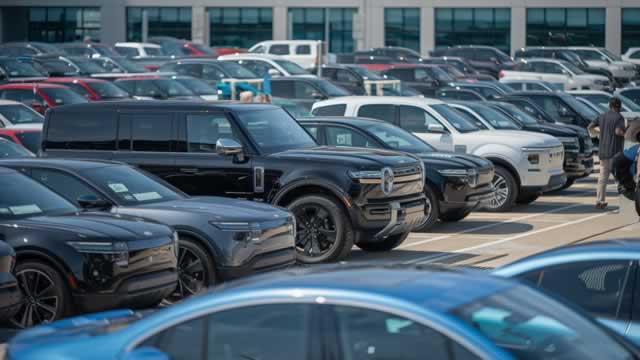
Core Viewpoint - XPeng Motors (XPEV) stock has increased by approximately 80% this year, outperforming many Chinese electric vehicle (EV) companies and U.S. rivals, but has recently declined over 25% from its highs, entering bear-market territory. The company aims for breakeven in Q4 and is shifting focus towards physical artificial intelligence (AI) [1]. Financial Performance - Achieving breakeven would be a significant milestone for XPeng Motors amidst intense competition and a price war in the Chinese EV industry [2]. - XPeng reported record gross margins of 20.1% in the September quarter, with the quarterly net loss at its lowest in five years [3]. - The company ended the quarter with cash and cash equivalents of $6.8 billion, indicating a strong balance sheet [4]. Capital and Revenue Generation - The last capital raise occurred in 2023 when Volkswagen invested in XPeng through private placement, contributing to improved cash flows [5]. Future Outlook - XPeng plans to launch its first extended-range electric vehicle (EREV), the X9, in November, with three additional EREV models expected in Q1 2026, which should boost deliveries [6]. - The company aims to introduce three robotaxi models next year, leveraging its advanced autonomous driving capabilities, with Volkswagen anticipated as the first external customer for the VLA 2.0 model [6]. - XPeng's global deliveries exceeded 5,000 units for the first time in September, with plans to introduce three new models in global markets next year and localize production in Austria [7]. Technological Advancements - XPeng has positioned itself as a key player in physical AI, unveiling the IRON humanoid, with mass production expected by the end of 2026 and projected annual global sales of one million units by 2030 [7]. - The development of Turing AI chips, with Volkswagen as an external customer, may create a new business line for XPeng [7].

Elon Musk Reacts To Viral Tesla Motorcycle Video: 'We Can't Make...' - Harley-Davidson (NYSE:HOG), QuantumScape (NYSE:QS)
Benzinga· 2025-12-01 11:09
Core Insights - Elon Musk has firmly stated that Tesla will never produce motorcycles due to safety concerns, citing a personal near-death experience on a road bike as a significant reason for this decision [2][3] - The electric motorcycle market is gaining traction, with companies like Volkswagen and Honda introducing new electric models, while Harley Davidson reported strong financial results in Q3 [3][4] Group 1: Tesla's Position on Motorcycles - Elon Musk reiterated that Tesla will not manufacture motorcycles, emphasizing safety issues [2] - Musk mentioned that while road bikes are dangerous, dirt bikes can be safe if ridden carefully [2] Group 2: Competitors in the Electric Motorcycle Market - Volkswagen is developing electric motorcycles, recently showcasing a Ducati motorcycle powered by a solid-state lithium-metal battery [2] - Honda announced the Honda WN7, an all-electric motorcycle with a range of 83 miles and performance comparable to traditional internal combustion engine models [3] Group 3: Harley Davidson's Financial Performance - Harley Davidson reported Q3 revenue of $1.074 billion, surpassing market expectations of $1.005 billion [3] - The company also exceeded EPS estimates, reporting $3.10 compared to the expected $1.46, but faced an operating loss of $72–$77 million in its LiveWire electric motorcycle subsidiary [4] Group 4: Tesla's Technological Advancements - Tesla has filed a patent for new battery technology that enhances safety and efficiency, maintaining nearly 99% capacity after 3,500 hours of use [5] - The company is recognized as a leader in AI and self-driving technology, with significant improvements in its Full Self-Driving system [6] Group 5: Market Performance - Tesla's stock has shown a favorable price trend in the medium and long term, although it has been rated poorly in terms of value [7]

China export controls push European firms to move supply chains
Yahoo Finance· 2025-12-01 07:17
By Joe Cash and Eduardo Baptista BEIJING, Dec 1 (Reuters) - China's tightening export controls are pushing European firms to explore new supply chain capacity outside of the world's second-largest economy, a European lobbying group said on Monday, seeking cover from the U.S.-China trade war. The European Union Chamber of Commerce in China said one in three member companies was looking to shift sourcing away from China due to Beijing's export control regime, with 40% of its flash survey's respondents re ...
经济学人-2025-11-29-PDF
经济学人· 2025-12-01 00:49
Investment Rating - The report does not provide a specific investment rating for the industry Core Insights - The report highlights China's rapid advancements in frontier technologies, particularly in autonomous vehicles and pharmaceuticals, indicating a shift in global innovation dynamics [49][51][52] - It emphasizes the importance of regulatory agility and a deep talent pool in driving China's technological progress, contrasting it with the slower pace of innovation in Western economies [53][59] - The report warns that the competition from Chinese innovations could undermine Western economies unless they adapt their regulatory and innovation strategies [58][60] Summary by Sections Economic and Financial Indicators - Japan's yen has depreciated by 9% against the dollar in the past six months, with long-term government bond yields rising significantly, indicating market concerns over fiscal policies [91][92] - The IMF projects Japan's budget deficit to rise to around 4.4% of GDP by 2030, driven by increased spending on defense and an aging population [98] Business Developments - The report notes that tech stocks, particularly in the U.S., have shown signs of recovery, with the NASDAQ 100 index rising by 5% after a previous decline [30] - It discusses the challenges faced by Nvidia, whose market value dropped by over $100 billion due to competition from Google [31] Industry Trends - The report outlines the growing interest in nuclear energy as a means to support artificial intelligence development, with companies like X-energy raising significant funds for small modular reactors [37] - It highlights the shift in the automotive industry, with Volkswagen planning to produce electric vehicles entirely in China, benefiting from lower production costs [36]
OpenAI partners shoulder nearly $100 billion debt to fund its AI ambitions
The Economic Times· 2025-11-30 15:37
Core Insights - OpenAI's rapid expansion is primarily financed through significant borrowing by its partners rather than direct borrowing by the company itself [3] - The total debt tied to OpenAI has reached approximately $100 billion, which is comparable to the combined net debt of major corporate borrowers like Volkswagen and Toyota [2][3] - OpenAI has committed to $1.4 trillion in procurement spending over eight years, contrasting sharply with its expected annualized revenue of $20 billion for this year [3] Debt Structure - Partners such as SoftBank, Oracle, and CoreWeave have collectively taken on at least $30 billion in debt to invest in OpenAI or build data centers for it [3] - An additional $28 billion in loans has been issued to firms like Blue Owl Capital and infrastructure companies that rely on OpenAI-related contracts for repayment [3] - Banks are negotiating to arrange another $38 billion for Oracle and Vantage Data Centers to support further OpenAI facilities [1][3] Financial Exposure - Oracle is facing the highest financial exposure, having lost $315 billion in market value since announcing a $300 billion deal with OpenAI [3] - Analysts expect Oracle to borrow $100 billion over the next four years to meet its commitments to OpenAI [3] - OpenAI maintains a $4 billion credit line established last year but has not utilized it, indicating a strategy of leveraging partners' balance sheets for growth [2][3]



每周观察 |3Q25DRAM产业营收;十大科技市场趋势预测;ASICs有望转向EMIB技术;3Q25新能源车销量;LEDoS技术
TrendForce集邦· 2025-11-28 10:05
Group 1: DRAM Industry Insights - The DRAM industry revenue for Q3 2025 increased by 30.9% quarter-over-quarter, reaching $41.4 billion, driven by rising contract prices and increased shipment volumes of conventional DRAM and HBM [2][3] Group 2: Company Performance - SK hynix led the market with a revenue of $13.75 billion in Q3 2025, marking a 12.4% increase from Q2 2025, capturing a market share of 33.2% [3] - Samsung followed closely with a revenue of $13.5 billion, a 30.4% increase from the previous quarter, holding a market share of 32.6% [3] - Micron experienced the highest growth rate of 53.2%, with revenue reaching $10.65 billion and a market share of 25.7% [3] - Nanya and Winbond also showed significant growth, with Nanya's revenue increasing by 84% and Winbond's by 21.4% [3] Group 3: Electric Vehicle Market - Global sales of new energy vehicles (NEVs) reached 5.39 million units in Q3 2025, representing a year-on-year increase of 31%, with battery electric vehicles (BEVs) accounting for 3.71 million units sold, up 48% [8] - BYD led the BEV market with a 15.4% market share, while Tesla held 13.4% [9] Group 4: AR Display Technology Trends - The competition in AR display technology is intensifying, with projections indicating that the penetration rate of LEDoS technology will reach 65% by 2030, up from 37% in 2025 [12]

Rheinmetall not currently negotiating with VW over Osnabrueck site, CEO says
Reuters· 2025-11-27 15:06
Core Viewpoint - Rheinmetall CEO Armin Papperger stated that the company is not currently in negotiations with Volkswagen regarding its factory in Osnabrueck [1] Company Summary - Rheinmetall is a German defense company [1] - The CEO's comments indicate a clear stance on the lack of ongoing discussions with Volkswagen [1] Industry Summary - The statement reflects the current state of negotiations within the defense and automotive sectors in Germany [1]


CATL starts work on €4.1bn battery plant in Spain
Yahoo Finance· 2025-11-27 13:02
Core Insights - CATL has initiated the construction of Spain's largest battery manufacturing facility in collaboration with Stellantis, with an investment of €4.1 billion ($4.8 billion) in Aragon, expected to start production by late 2026 [1][2] - The project is supported by over €300 million in funding from the European Union, highlighting the strategic importance of battery manufacturing in Europe [1] - The factory aims to contribute significantly to the re-industrialization of Europe, as stated by Spain's Industry Minister [2] Investment and Employment - The facility will involve approximately 2,000 Chinese workers during construction, with plans to employ and train around 3,000 Spanish workers as operations progress [2][4] - Local unions are collaborating with CATL to design training programs for Spanish workers, emphasizing the need for skill development in new technologies [4] Technological and Industrial Context - The Aragon region is positioning itself as a hub for battery manufacturing, benefiting from lower labor costs and industrial energy prices compared to other European regions [4] - The project is part of a broader trend, with three additional battery plants planned in Spain involving other companies like Envision AESC, Volkswagen's PowerCo, and InoBat [5] - There are concerns regarding technological capabilities, as the region has limited experience with the required components and technologies [3][5] Regulatory Environment - The project is occurring amid calls from European automotive industry bodies for stricter local content rules in vehicle and battery production to protect domestic manufacturers from Chinese competition [6]
