
ARM

Search documents
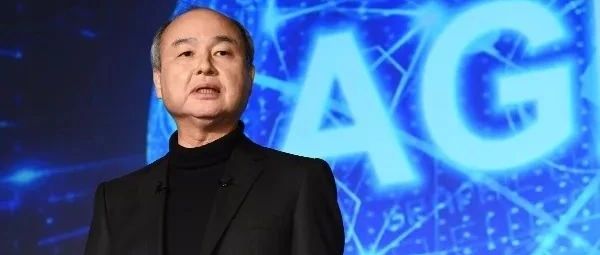
孙正义是容易“移情别恋”的企业家吗?
日经中文网· 2025-03-28 07:12
Core Viewpoint - The article discusses the evolving business strategies of Masayoshi Son, the founder and CEO of SoftBank, highlighting his focus on information industry infrastructure and the shift towards artificial intelligence (AI) as a key area of investment [1][3]. Group 1: Business Evolution - Masayoshi Son has been characterized as someone whose business focus frequently changes, moving from internet and mobile broadband to semiconductors and now back to real industries, particularly AI [1][3]. - Son's recent investments include a significant commitment to AI, with plans to invest approximately 1 trillion yen in acquiring Ampere Computing, a semiconductor design company [1][3]. Group 2: Strategic Vision - Since founding SoftBank in 1981, Son's strategy has been to become a "banker" in the information industry, similar to John D. Rockefeller's approach in the oil industry, by controlling software distribution and infrastructure [2][3]. - Son's vision includes leveraging ARM and Ampere's semiconductor capabilities to manage big data flow while simultaneously operating large funds to discover future AI leaders [3]. Group 3: Future Challenges - As Son approaches 68 years of age, there are questions about his ability to transition leadership and whether he can establish himself as a key player in the AI sector [3].


中国城市AI大战,北京才出一栋楼就赢了
创业邦· 2025-03-25 03:09
Core Viewpoint - The article emphasizes Beijing's pivotal role in China's AI development, highlighting its talent pool, research initiatives, and strategic investments that position it as a leader in the AI industry [6][10][28]. Group 1: Talent and Research - Beijing is recognized as the primary city for AI talent in China, housing 60% of the nation's AI professionals and over 90 prestigious universities and research institutions [27][28]. - The establishment of the Beijing Academy of Artificial Intelligence (BAAI) marked a significant step in uniting top researchers and resources to advance AI research, supported by the local government [19][22]. - The article notes that major AI projects, such as "Wudao," have emerged from BAAI, positioning it as a leading research hub comparable to OpenAI and Google [27][28]. Group 2: Competitive Landscape - The competition among cities for AI talent and companies has intensified, with Beijing offering subsidies and support to lower R&D costs for enterprises [30][40]. - Other cities like Shanghai and Shenzhen are also actively trying to attract AI firms, leading to a "talent war" where companies are concerned about losing key personnel to competitors [31][33]. - Beijing has established an AI industry investment fund of 10 billion yuan, specifically aimed at supporting local AI companies and ensuring they remain in the city [40]. Group 3: Strategic Initiatives - In response to the global AI landscape, Beijing has launched several initiatives to enhance its AI capabilities, including the "Implementation Plan for Accelerating the Construction of a Globally Influential AI Innovation Source" [57][59]. - The city is focusing on developing foundational technologies and innovative solutions to challenge existing models like Transformer, with local companies making significant advancements [57][58]. - Beijing's strategic vision includes becoming a global center for scientific innovation and AI development, aiming to elevate its status on the world stage [46][48]. Group 4: Future Outlook - The article suggests that Beijing's advantages in AI will continue to grow, with top international scholars and companies establishing a presence in the city, further enriching its talent and resource pool [61][63]. - The concentration of major tech firms and research institutions in Beijing is seen as a significant competitive edge, reinforcing its leadership in the AI sector [63].

GenAI 的存储解决方案 第 7 部分:解决方案梳理
Counterpoint Research· 2025-03-18 09:14
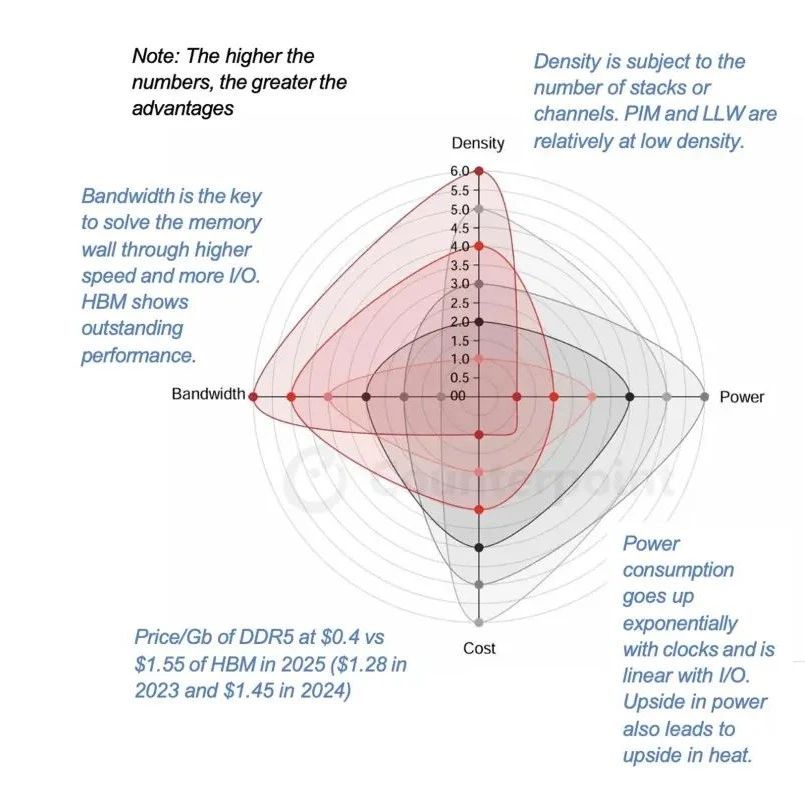
Group 1 - The importance of cost factors such as power consumption, footprint, and price in addition to advantages like bandwidth and capacity for GenAI solutions [1] - The configuration of memory, being a passive component reliant on the CPU, will change according to the processor [1] - ARM's recent strategic adjustments and potential changes in MoE-based large language models (LLMs) may lead to shifts in future architectures and solutions [1]
特朗普,重创芯片公司
半导体行业观察· 2025-03-18 01:36
Core Viewpoint - The article discusses the significant financial losses experienced by major tech companies since Donald Trump's presidency began, highlighting a total loss of $204 billion and the negative impact of his economic policies on the semiconductor industry [2]. Group 1: Financial Impact on Tech Companies - Since Trump's inauguration, major tech companies have collectively lost $204 billion, contrasting with the initial optimism surrounding AI and semiconductor stocks [2]. - The semiconductor sector, which had seen stock price increases post-Trump's election victory, is now facing declines due to rising trade tensions and economic recession fears [2]. - Morgan Stanley has raised the risk of economic recession from 30% to 40%, reflecting investor concerns about Trump's economic policies [2]. Group 2: Semiconductor Companies' Performance - Nvidia's stock has dropped 14% this year, reflecting investor anxiety over demand for high-end technology and the impact of tariffs [6][8]. - TSMC's stock has fallen nearly 15% due to concerns over trade wars and rising production costs, despite announcing a $100 billion investment plan in the U.S. [9]. - Broadcom's stock has decreased by 17% this year, despite strong earnings, as it struggles to keep pace with Nvidia in the AI semiconductor market [12][14]. Group 3: Legislative and Policy Challenges - Trump's criticism of the $52 billion CHIPS Act, which aims to support domestic semiconductor manufacturing, adds complexity to the industry's outlook [3][4]. - The U.S. Commerce Department's dismissal of 40 staff members responsible for the CHIPS program suggests potential cuts to key semiconductor initiatives [4]. - Intel's future recovery is jeopardized by the uncertain fate of the CHIPS Act, which could have provided up to $8.5 billion in funding [15]. Group 4: Long-term Outlook for AI Market - Despite current challenges, the long-term outlook for the AI market remains optimistic, with projections indicating growth from $233 billion in 2024 to $1.77 trillion by 2032 [18].

陆家嘴财经早餐2025年3月8日星期六
Wind万得· 2025-03-07 22:45
// 热点聚焦 // 1、 今年前两个月我国外贸开局总体平稳,出口规模创历史同期新高。据海关统计,2025年前2个月,我国货物贸易进出口总值6.54万亿 元,同比下降1.2%(与去年同期相比,今年前两个月少了2个工作日,剔除不可比因素影响,进出口增长1.7%)。其中,出口3.88万亿 元,规模创历史同期新高,同比增长3.4%;进口2.66万亿元,同比下降7.3%。 2、Manus回应官方X账号被冻结表示,正积极与X团队合作解决此事,初步观察表明,此次冻结可能与第三方提及加密货币诈骗有关。 Manus从未参与过加密货币项目、代币发行或区块链计划,任何声称与Manus有关联的类似名称的加密货币企业都是具有欺诈性的。公司 正在对这些冒名者采取法律行动,并鼓励用户举报可疑账户。 // 环球市场 // 1、 美国三大股指全线收涨,道指涨0.52%报42801.72点,标普500指数涨0.55%报5770.2点,纳指涨0.7%报18196.22点。IBM涨超5%,威 瑞森电信涨逾4%,领涨道指。 万得美国科技七巨头指数涨0.47%,英伟达涨近2%,苹果涨超1%。芯片股普遍上涨,博通涨超8%,ARM 涨逾6%。中概股多数上 ...



特朗普征收关税!美股大跌
证券时报· 2025-03-04 00:41
当地时间3月3日(周一),美股三大指数大幅震荡,跌幅一度均超过2%。截至收盘,道指跌1.48%,纳指跌2.64%,标普500指数跌1.76%。 美国总统特朗普表示,对等关税将于4月2日开始征收,美国对墨西哥和加拿大商品征收25%的关税将于3月4日生效。 经济数据表明,美国2月制造业活动增长几近停滞,原料支付价格指标创逾两年最高,未来预示通胀压力增大。 热门科技股多数下跌,超微电脑跌超13%,英伟达、ARM跌超8%,台积电、英特尔跌超4%,亚马逊、美光科技跌超3%,特斯拉、高通、微软跌超2%。 美股震荡下跌 当地时间3月3日(周一),美股三大指数大幅震荡,跌幅一度均超过2%。美国总统特朗普当地时间3月3日下午有关加征关税的表态刺激美股市场恐慌情绪升高。截 至收盘,道指跌649.67点,跌幅为1.48%,报43191.24点;纳指跌497.09点,跌幅为2.64%,报18350.19点;标普500指数跌104.78点,跌幅为1.76%,报5849.72点。 当地时间3月3日,美国总统特朗普表示,对等关税将于4月2日开始征收,美国对墨西哥和加拿大商品征收25%的关税将于3月4日生效。 特朗普表示,对墨西哥和加拿大的 ...


Synopsys(SNPS) - 2025 Q1 - Earnings Call Transcript
2025-02-27 02:14
Financial Data and Key Metrics Changes - The company reported Q1 revenue of $1.46 billion, down 4% year-over-year, and non-GAAP EPS of $3.03, down 10% due to one less work week compared to Q1 '24 [6][32] - Non-GAAP operating margin was 36.5%, with total GAAP costs and expenses at $1.2 billion [32] - For fiscal year 2025, the revenue guidance is set between $6.745 billion and $6.05 billion, with non-GAAP EPS guidance of $14.88 to $14.96 per share [33][36] Business Line Data and Key Metrics Changes - Design Automation revenue increased by 4% year-over-year, despite one less week of revenue [11] - The company launched new HAPS 200 prototyping systems and ZeBu 200 emulation systems, enhancing performance significantly [12] - Design IP revenue decreased by 17% year-over-year, but opportunities are expanding due to AI customer needs [23] Market Data and Key Metrics Changes - AI and HPC markets remained robust, while industrial, automotive, and consumer electronics faced challenges [7] - China sales showed a deceleration trend, with expectations of continued decline below corporate average due to restrictions and economic slowdown [50][76] Company Strategy and Development Direction - The company is focused on AI-driven design solutions and is progressing with the acquisition of ANSYS to enhance its offerings [9] - The strategy emphasizes addressing design complexity and energy demands through innovative solutions [8] - The company aims to leverage AI capabilities to transform engineering workflows and improve productivity [18][108] Management's Comments on Operating Environment and Future Outlook - Management expressed confidence in the company's resilient business model and strong momentum driven by AI growth [29] - The outlook for semiconductor R&D investment is positive, expected to grow from 6% to 9% of sales per year [41] - Management acknowledged challenges in the consumer electronics and automotive sectors but noted a recent acceleration in design activity [44][58] Other Important Information - The backlog exiting Q1 was reported at $7.7 billion [67] - Cash flow from operations was approximately $1.8 billion, with free cash flow around $1.6 billion [34] Q&A Session Summary Question: Growth trends in AI and non-AI segments - Management noted a bifurcation in the semiconductor market, with strong demand in AI and HPC, while consumer electronics and automotive are slower [39][41] Question: Sales performance in China - Management indicated that sales in China are expected to continue decelerating due to restrictions and economic factors [50][76] Question: Design activity for non-AI customers - Management observed a stabilization in design activity for non-AI customers, particularly in mobile and PC sectors [58] Question: Cost control and guidance for next quarter - Management highlighted that Q1 costs were lower than anticipated due to timing, but Q2 typically sees a step-up due to merit increases [112][115] Question: Backlog composition and customer engagement - Management confirmed no significant change in customer behavior regarding backlog duration, maintaining consistent contract durations [81][82]
