算力租赁

Search documents
智能体应用研究系列(一):AI应用元年,OpenClaw引领Agent发展
CMS· 2026-03-30 09:17
Investment Rating - The report maintains a positive investment rating for the AI application industry, particularly focusing on OpenClaw and related sectors [3]. Core Insights - The report emphasizes that the industry has entered a new phase of collaboration between major tech companies and local policies, with cloud computing services being the most certain direction for growth [1]. - OpenClaw is identified as the fastest-growing open-source AI agent application framework globally, with significant advancements in product positioning, technical architecture, and market dynamics [1][10]. - The report suggests actively monitoring key players in cloud computing, domestic computing chips, computing leasing, and AI infrastructure sectors [1]. Summary by Sections 1. Overview of OpenClaw - OpenClaw is an open-source, cross-platform AI agent application framework designed for local operation and message-driven interaction, significantly lowering user deployment barriers [10]. - The framework has rapidly gained popularity due to its user-friendly installation and configuration processes, allowing for quick deployment and usability [12][26]. 2. Development Trajectory - OpenClaw achieved remarkable growth, becoming one of the most popular open-source projects within four months of its launch, surpassing established frameworks like React in GitHub stars [15][17]. - The project has undergone significant milestones, including rebranding and community engagement, which have contributed to its rapid expansion [13][14]. 3. Industry Attention and Ecosystem Growth - The ecosystem surrounding OpenClaw has seen explosive growth, with over 39,802 skills available in the ClawHub skill store, driven by contributions from a large developer community [18][19]. - Major cloud service providers have responded quickly to OpenClaw's rise, offering one-click deployment solutions, which enhance accessibility for enterprise users [22][24]. 4. Technological Innovations - OpenClaw's unique features include a simplified skill extension mechanism through SKILL.md, which allows for natural language programming, significantly lowering the barrier for skill development [28]. - The framework employs a lane-aware FIFO queue for task scheduling and a layered memory architecture to optimize performance in complex task scenarios [30][32]. 5. Strategic Moves by Tech Giants - Major tech companies, including NVIDIA, Google, and AWS, are actively positioning themselves in the AI agent space, launching products and services that integrate with OpenClaw [42][44][46]. - Domestic tech giants like Tencent, Baidu, and Xiaomi have also quickly adapted to OpenClaw's capabilities, launching various applications and services that leverage its framework [47][49][52].
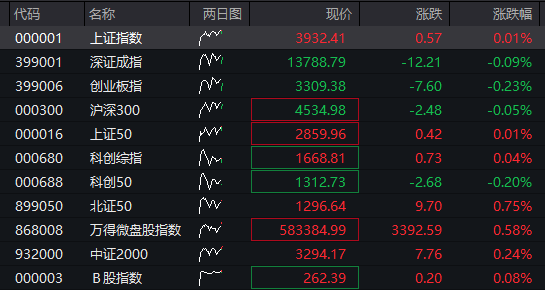
沪指失守3900点,恒生科技指数跌超3%
第一财经· 2026-03-26 05:36
Group 1 - The four major A-share indices accelerated their decline in the afternoon, with all indices dropping over 1%, and the Shanghai Composite Index falling below 3900 points again [1] - More than 4500 stocks in the entire market experienced a decline [1] - Sectors such as power grid equipment, BC batteries, and computing power leasing saw the largest declines [1] Group 2 - The Hong Kong stock market also declined, with the Hang Seng Technology Index dropping over 3% and the Hang Seng Index falling nearly 2% [1]


各地人均存款规模出炉,OpenAI关闭Sora相关服务 | 财经日日评
吴晓波频道· 2026-03-26 02:44
Group 1: Personal Savings Data - The average personal savings in China reached 118,900 yuan by the end of last year, with Beijing and Shanghai leading at 356,200 yuan and 290,200 yuan respectively [2] - Guangdong has the highest total savings balance at nearly 39 trillion yuan, while provinces like Jiangsu, Beijing, Zhejiang, and Shanghai form a "20 trillion" tier [2] - Despite Guangdong's high total savings, its per capita savings are around the national average, indicating a lower savings willingness among residents [2][3] Group 2: Food Delivery Industry - The State Administration for Market Regulation has called for an end to the "food delivery war," emphasizing healthy competition based on service quality rather than capital [4] - This regulatory stance has led to a significant rise in stock prices for major players like Meituan and Alibaba, indicating market optimism about reduced subsidy wars [5] - The cessation of price wars may lead to a more sustainable market environment, although the retention of users attracted by subsidies remains uncertain [5] Group 3: OpenAI and Sora - OpenAI announced the discontinuation of its video generation tool Sora, shifting focus to advanced robotics and AI models [6][7] - The decision reflects a strategic pivot as Sora struggled with user monetization and competition in the video generation space [6][7] - OpenAI's move indicates a transition from being a broad AI leader to a more commercially focused entity, seeking viable business models [7] Group 4: Xiaomi Financial Performance - Xiaomi reported a total revenue of 457.3 billion yuan for 2025, a 25% increase year-on-year, with adjusted net profit rising by 43.8% to 39.2 billion yuan [10] - The electric vehicle and AI sectors have turned profitable for the first time, contributing significantly to revenue growth [10][11] - However, Xiaomi faces challenges in its traditional business due to declining smartphone sales and rising storage chip prices, which may pressure net profits [11] Group 5: Pop Mart Financial Performance - Pop Mart's revenue surged to 37.12 billion yuan in 2025, a 184.7% increase, with net profit reaching 13.01 billion yuan, up 293.3% [12] - The LABUBU IP has become a significant revenue driver, but reliance on a single IP poses risks for future growth sustainability [12][13] - The company aims for at least 20% growth in 2026, but maintaining high growth rates may be challenging [13] Group 6: SpaceX IPO Plans - SpaceX plans to submit its IPO application soon, aiming to raise over 75 billion USD, which would set a record for the largest IPO [14][15] - The IPO is seen as a strategic move to fund its ambitious chip manufacturing project, which requires substantial capital [14][15] - The potential risks associated with the long manufacturing cycles in the chip industry could impact the company's financial stability [15] Group 7: Stock Market Overview - The stock market experienced a rebound, with the Shanghai Composite Index rising over 1% and trading volume increasing significantly [16][17] - Market sentiment remains cautious, with a lack of clear leading sectors and ongoing geopolitical uncertainties affecting investor confidence [17]

A股三大股指震荡走低,化工反弹,存储器齐跌,恒科指跌近1%,快手重挫超10%,泡泡玛特再跌超7%
Hua Er Jie Jian Wen· 2026-03-26 02:01
Market Overview - The A-share market opened lower on March 26, with all three major indices declining, particularly in the semiconductor and photovoltaic sectors [1] - The Hang Seng Index also opened lower, with the Hang Seng Technology Index dropping nearly 1% [2][3] Semiconductor and Storage Sector - The storage sector experienced a collective adjustment, with companies like Zhaoyi Innovation and Beijing Junzheng seeing significant declines of over 5% [12][13] - U.S. storage stocks fell sharply overnight, with SanDisk and Micron leading the declines [1] Bubble Mart Performance - Bubble Mart's stock fell over 7% for the second consecutive trading day, following target price downgrades from Morgan Stanley and Citigroup due to lower-than-expected earnings guidance and overseas growth slowdown [6][8] - The company's latest financial report indicated a revenue of RMB 37.12 billion for 2025, a year-on-year increase of 184.7%, but highlighted risks due to a high concentration of revenue from a single IP [8][9] - Analysts from various firms have adjusted their earnings forecasts for Bubble Mart downwards, citing concerns over growth sustainability and market performance [9][11] Debt and Commodity Markets - The bond market showed a slight upward trend, with government bond futures rising across various maturities [4] - In the commodity market, most domestic futures saw increases, particularly in chemical products and shipping indices, while energy prices showed mixed results [5][14] Consumer and Technology Stocks - Kuaishou's stock plummeted over 10%, marking its largest intraday drop since April of the previous year, following disappointing earnings guidance [9][19] - The technology sector, particularly AI computing and semiconductor stocks, faced significant declines, while some segments like photovoltaic and satellite navigation showed strength [17]




大位科技20260320
2026-03-22 14:35
Company and Industry Summary Company Overview - The company specializes in data center operations, specifically in IDC (Internet Data Center) and AIDC (Artificial Intelligence Data Center) services. The current operational capacity exceeds 200 MW, with significant contributions expected from ongoing projects in Zhangbei and Inner Mongolia [2][3]. Key Points Current Operations and Revenue - The company has fully operational data centers in Beijing, primarily serving vivo, which is expected to contribute approximately 65% of the revenue in 2024, translating to around 400 million RMB [3]. - The Zhangbei Phase I data center, with a total capacity of 60 MW, began delivery in October 2025, currently achieving a loading rate of 20-30%. Phase II, totaling 108 MW, is scheduled for delivery between July and September 2026, with a full ramp-up expected by early 2027 [3]. - Once the Zhangbei projects are fully operational, they are projected to generate an additional revenue of 500 to 600 million RMB, pushing total revenue beyond 1 billion RMB [2][3]. Future Projects and Expansion - The company plans to establish a 600 MW intelligent computing center in Inner Mongolia's Taipusi Banner, with a subsidiary already formed for this project [2][3]. - The company participated in a 1 GW data center tender from ByteDance in January 2026, with expectations of receiving energy consumption approvals by May or June 2026 [4]. Energy Consumption and Policy Environment - The energy consumption policy is expected to loosen in 2026, with the National Development and Reform Commission (NDRC) likely to release more energy consumption indicators if demand surges. Projects with over 3,000 cabinets will require NDRC guidance [4][6]. - The company has proactively engaged with the NDRC and local governments to facilitate the approval process for energy consumption indicators [4][6]. Pricing and Contractual Agreements - The Zhangbei project has a 10-year contract with a fixed price of nearly 300 RMB per kW/month, which is considered high within the industry. Future orders may see price increases due to rising demand for computing power [5]. - The company is implementing an integrated source-grid-load-storage model in the Inner Mongolia project to reduce costs and meet carbon neutrality goals, with local governments supporting green energy initiatives [5][6]. Financial Strategy and Funding - The company adheres to a "sales-driven production" principle, initiating construction only after securing orders. It expects to cover 80% of project funding through loans, with the remaining 20% potentially sourced from land sales, partnerships, or targeted equity offerings [8][9]. Client Diversification and Market Position - The company aims to avoid reliance on a single major client, having positioned itself to serve multiple internet giants, including Alibaba, Tencent, and others, in addition to ByteDance [9][10]. - The operational subsidiaries, Jin Yun Ya Chuang and Sheng Hua Yi Teng, will remain integrated within the company’s structure, focusing on traditional cabinet business without plans for divestiture [10]. Additional Insights - The approval process for green energy indicators is managed at the regional level, differing from energy consumption approvals, which require NDRC involvement [6]. - The focus of major internet clients in 2026 has shifted towards green energy capabilities and geographical alignment with project requirements [6]. This summary encapsulates the company's current status, future plans, and strategic positioning within the data center industry, highlighting key operational metrics and market dynamics.

转债市场周报:偏债型转债估值明显调整-20260322
Guoxin Securities· 2026-03-22 11:13
Report Industry Investment Rating No information about the report industry investment rating is provided in the given content. Core Viewpoints - Last week, the stock market continued to adjust, with major indices oscillating downward and daily trading volume shrinking to the 2 - 2.4 trillion range. Geopolitical conflicts and weakened Fed rate - cut expectations suppressed risk appetite. The bond market showed a weak and oscillating pattern, with the 10 - year Treasury yield rising. The convertible bond market mostly declined, with the CSI Convertible Bond Index down 3.15% for the week [1][6][7]. - Amid the escalating US - Iran conflict and rising oil prices, market risk - aversion persisted. The Shanghai Composite Index fell below 4000 points, and convertible bonds adjusted with the underlying stocks. The valuation of debt - biased convertible bonds was significantly compressed, while the premium rate of convertible bonds with a par value above 120 yuan rebounded. In the short term, convertible bonds present individual - bond opportunities. It is recommended to focus on sectors such as semiconductors, computing power leasing, energy storage, and defensive sectors [2][17]. Summary by Relevant Catalogs Market Trends (2026/3/16 - 2026/3/20) Stock Market - The overall market continued to adjust, with major indices oscillating downward and daily trading volume shrinking to 2 - 2.4 trillion. Geopolitical conflicts and weakened Fed rate - cut expectations suppressed risk appetite. The technology sector fluctuated more, and upstream resource products showed divergent trends. Defensive sectors were relatively resilient [1][6]. - By industry, most Shenwan primary industries declined. Communications (2.10%), banks (0.36%), and food and beverages (-0.48%) performed relatively well, while non - ferrous metals (-11.82%), basic chemicals (-10.53%), and steel (-10.29%) performed poorly [7]. Bond Market - Despite balanced and loose liquidity, bond yields generally rose due to factors such as improved economic data, inflation pushed up by geopolitical conflicts, and liquidity concerns. The bond market showed a weak and oscillating pattern, and the 10 - year Treasury yield closed at 1.83% on Friday, up 1.56bp from the previous week [1][7]. Convertible Bond Market - Most convertible bond issues declined. The CSI Convertible Bond Index fell 3.15% for the week, the median price dropped 3.31%, and the arithmetic average par value fell 5.54%. The overall conversion premium rate increased by 2.71% compared with the previous week. The arithmetic average conversion premium rates of convertible bonds in the par value ranges of [90,100), [100,110), and [110,120) changed by -3.51%, -4.74%, and -2.68% respectively, and were at the 95%, 91%, and 78% quantiles since 2023 [7]. - By industry, convertible bonds in most industries declined. Banks (-0.72%), commerce and retail (-1.21%), and beauty care (-1.71%) performed relatively well, while petroleum and petrochemicals (-10.05%), social services (-9.69%), and non - ferrous metals (-7.23%) performed poorly [10]. - In terms of individual bonds, Yubang (photovoltaic welding tape), Hongbai (organosilicon), Jinhong (helium), Haiyou (photovoltaic film), and Songlin (smart home) convertible bonds led the gains; Zhongchong Zhuan 2 (pet food), Jize (wind power), Baichuan Zhuan 2 (fine chemicals), Hengyi (chemical fiber), and Hongqiang (concrete admixture) convertible bonds led the losses [1][11]. - The total trading volume of the convertible bond market last week was 316.723 billion yuan, with an average daily trading volume of 6.3345 billion yuan, a decrease from the previous week [15]. Valuation - As of March 20, 2026, for equity - biased convertible bonds, the average conversion premium rates of convertible bonds in the par value ranges of 80 - 90 yuan, 90 - 100 yuan, 100 - 110 yuan, 110 - 120 yuan, 120 - 130 yuan, and above 130 yuan were 49.44%, 41.36%, 28.57%, 19.24%, 16.43%, and 14.53% respectively, at the 97%/96%, 97%/97%, 94%/93%, 87%/81%, 92%/93%, and 97%/95% quantiles since 2010/2021 [18]. - For debt - biased convertible bonds, the average YTM of convertible bonds with a par value below 70 yuan was -2.95%, at the 4%/11% quantiles since 2010/2021 [18]. - The average implied volatility of all convertible bonds was 46.08%, at the 92%/96% quantiles since 2010/2021. The difference between the implied volatility of convertible bonds and the long - term actual volatility of the underlying stocks was 4.55%, at the 88%/88% quantiles since 2010/2021 [18]. Primary Market Tracking Newly Announced Issuances and Listings - Last week (2026/3/16 - 2026/3/20), Shang 26 and Boshi convertible bonds announced issuances, and Tonglian convertible bonds were listed [25]. - As of the announcement on March 20, there were no announcements of convertible bond issuances or listings for the next week (2026/3/23 - 2026/3/27) [29]. Issuance Progress - Last week, Shenergy Co., Ltd. was approved for registration by the exchange. Shengde Xintai, Baotai Co., Ltd., Tonghe Technology, and Huaxiang Co., Ltd. passed the review of the listing committee. Runbei Hangke and Xianfeng Jinke passed the general meeting of shareholders. Shentong Express had a board of directors' plan. There were no newly accepted enterprises by the exchange [29]. - As of now, there are 100 convertible bonds to be issued, with a total scale of 167.22 billion yuan. Among them, 4 have been approved for registration, with a total scale of 6.43 billion yuan; 12 have passed the listing committee, with a total scale of 11.89 billion yuan [29].
【财闻联播】南向资金净卖出约210亿港元!美国油价连涨20天,累计涨幅达30%!
券商中国· 2026-03-20 11:22
Macro Dynamics - The Ministry of Commerce announced measures to promote travel service exports and expand inbound consumption, including optimizing visa policies and expanding the list of countries with unilateral visa exemptions [2] - In January-February 2026, China attracted foreign investment of 161.45 billion RMB, a decrease of 5.7% year-on-year, with the manufacturing sector receiving 47.52 billion RMB and the service sector 111.22 billion RMB [3] Healthcare Sector - The National Healthcare Security Administration plans to release version 3.0 of the disease-based payment grouping scheme in July 2026, with implementation set for January 2027 [4][5] Financial Institutions - Postal Savings Bank announced the approval for the establishment of China Post Financial Asset Investment Co., with a registered capital of 10 billion RMB [7] Market Data - On March 20, A-shares saw the Shanghai Composite Index drop by 1.24%, with significant declines in sectors like computing power leasing and cloud computing [8] - The Hang Seng Index fell by 0.88%, with technology stocks experiencing notable declines, while lithium battery stocks showed strength [9][10] Oil Prices - U.S. gasoline prices have risen for 20 consecutive days, with a cumulative increase of 30%, reaching an average of $3.88 per gallon [11] Company Dynamics - China Duty Free Group reported a net profit of 3.586 billion RMB for 2025, a year-on-year decrease of 15.97% [12] - ByteDance has agreed to sell Moonton Technology for over $6 billion, signaling a strategic focus on AI [12] - Li Tong Electronics denied rumors regarding the smuggling of NVIDIA AI servers, stating that all procurement and project deliveries are normal [13]





艾可蓝:船舶业务快速扩大,携手艾昆纬布局AI医疗-20260320
Shanghai Aijian Securities· 2026-03-20 09:45
Investment Rating - The report assigns a "Buy" rating for the company, marking its first coverage [2][5]. Core Insights - The company specializes in engine exhaust after-treatment products, including diesel and gasoline engine purification products, and is gradually expanding into AI medical services and smart computing [8][57]. - The company is expected to see significant growth in its net profit from 2025 to 2027, with projections of 89 million, 168 million, and 282 million yuan respectively, corresponding to PE ratios of 61, 33, and 20 times [5][61]. - The report highlights the company's strong market position in the light-duty diesel engine after-treatment sector and its efforts to penetrate the gasoline engine market, alongside a notable expansion in its marine business [5][32]. Summary by Sections Overview - The company focuses on engine exhaust after-treatment, with a gradual increase in gross margin [8]. Automotive Sector - Over 80% of global automotive sales require exhaust treatment devices, indicating a vast market potential. By 2025, global automotive sales are projected to reach 96.47 million units, with traditional fuel vehicles accounting for 84.36% [14][16]. - The company is actively expanding its overseas market presence, which is expected to contribute to profit growth [16][32]. Marine Sector - The global new shipbuilding market is thriving, with China leading in market share. By 2025, China is expected to complete 53.69 million deadweight tons of shipbuilding, accounting for 56.1% of the global total [40][46]. - A significant portion of the newly ordered ships will require exhaust treatment devices, as over 73% of these ships are expected to use traditional fuels [40][46]. Smart Business - The company is developing a smart computing ecosystem, focusing on AI medical services in collaboration with a leading life sciences solutions provider. This sector is anticipated to become a new profit growth point [57][58]. - The launch of a computing power leasing platform in 2024 is expected to contribute significantly to revenue growth [57]. Investment Recommendations - The report suggests that the company's PE is below the average of comparable companies, reinforcing the "Buy" rating [5][61].

艾可蓝(300816):首次覆盖报告:船舶业务快速扩大,携手艾昆纬布局AI医疗
Shanghai Aijian Securities· 2026-03-20 09:03
Investment Rating - The report assigns a "Buy" rating for the company, marking its first coverage [2][5]. Core Insights - The company specializes in engine exhaust after-treatment products, including diesel and gasoline engine purification products, and is gradually expanding into AI medical services and smart computing [8][57]. - The company is expected to see significant growth in its net profit from 2025 to 2027, with projections of 0.89 billion, 1.68 billion, and 2.82 billion respectively, corresponding to PE ratios of 61, 33, and 20 [5][61]. - The report highlights the company's strong market position in the light-duty diesel engine after-treatment sector and its efforts to penetrate the gasoline engine market, alongside a notable expansion in its marine business [5][32]. Summary by Sections Overview - The company focuses on engine exhaust after-treatment, with a gradual increase in gross margin [8]. Automotive Sector - Over 80% of global automotive sales require exhaust treatment devices, indicating a vast market potential. By 2025, global automotive sales are projected to reach 96.47 million units, with traditional fuel vehicles accounting for 84.36% [14][16]. - The company is actively expanding its overseas market presence, which is expected to contribute to profit growth [16] Marine Sector - The global new shipbuilding market is thriving, with China leading in market share. By 2025, China is expected to complete 53.69 million deadweight tons of shipbuilding, accounting for 56.1% of the global total [40][46]. - The demand for exhaust treatment devices remains robust, as over 73% of ordered ships are expected to use traditional fuels [40][46]. Smart Business - The company is focusing on smart computing and AI medical services, having launched a computing power leasing platform in collaboration with Shanghai Yizhi [57]. - The partnership with AI medical leader Aikangwei aims to enhance digital transformation in the healthcare sector, with the medical industry being a significant area for AI application [57][58]. Investment Recommendations - The report suggests that the company's PE is below the average of comparable companies, reinforcing the "Buy" rating [5][61].
沪指再度失守4000点,小米港股跌超6%
21世纪经济报道· 2026-03-20 02:45
Market Overview - The A-share market showed mixed performance with the Shanghai Composite Index falling below 4000 points, while the Shenzhen Component Index rose by 0.71% and the ChiNext Index increased by over 2% [1][2][5] Sector Performance - The optical module (CPO) index surged, with all constituent stocks performing well. Notably, Mingpu Optoelectronics hit the daily limit, while Changguang Huaxin rose by 18%, Tianfu Communication by 8.77%, and Xinyi Sheng by 6.27%. Source Technology's stock price soared by 20%, surpassing 1100 yuan, making it the eighth stock in A-share history to reach this milestone [4] - The space photovoltaic concept gained traction, with Laplace rising nearly 10% and other companies like Aotwei, Liancheng CNC, Maiwei, and Jing Sheng Machine Electric also showing significant gains [4] - The energy storage sector remained active, with Zhengti Power hitting the daily limit and other companies like Shouhang New Energy and Huabao New Energy rising over 10% [4] Market Sentiment - Market pressures include significant floating profits accumulated by both institutions and investors, leading to profit-taking behavior. The upcoming earnings disclosure period in March and April is raising expectations for performance confirmations [5] - The technology sector, particularly AI and semiconductors, is facing challenges in matching valuations with performance, leading to corrections in stocks that did not meet expectations. The market is experiencing low trading volume and diminished investor interest, indicating a lack of sustainability in recent rebounds [6]