Scale AI

Search documents
小扎砸了143亿的Scale AI,已与Meta“闹掰”?曝挖来的高管2个月就走人,数据质量也遭嫌弃
3 6 Ke· 2025-09-01 23:31
Core Insights - Meta's significant investment of $14.3 billion in Scale AI and the recruitment of Alexandr Wang to lead Meta Superintelligence Labs (MSL) was initially seen as a strategic move in the AI sector, but internal issues have emerged within two months of the investment [1][4] Group 1: Executive Departures - Ruben Mayer, a former executive at Scale AI, left Meta less than two months after joining, raising concerns about the integration between Meta and Scale AI [3] - Mayer claimed he was part of the core team at TBD Labs, but his departure signals potential challenges in the collaboration [3][5] Group 2: Data Quality Concerns - Despite the investment, Meta's trust in Scale AI appears to be waning, as MSL has opted to work with competitors Surge and Mercor for data labeling, indicating doubts about Scale AI's data quality [4][5] - Following Meta's investment, both OpenAI and Google ceased using Scale AI's services, leading to layoffs at Scale AI, which were attributed to "market demand changes" [4][5] Group 3: Internal Turmoil - MSL is experiencing internal friction, with new hires from OpenAI and Scale AI expressing dissatisfaction with Meta's processes, leading to further departures [5][6] - The original GenAI team at Meta has been marginalized, resulting in additional employee exits [5][6] Group 4: Strategic Uncertainty - Meta's leadership is reportedly considering collaborations with competitors like Google and OpenAI to integrate their models into Meta's applications, raising questions about the company's commitment to developing its own AI models [7][8] - Despite emphasizing the goal of building leading models, Meta's current strategy may involve leveraging external AI models, which has drawn criticism from observers [7][8]


Meta和Scale AI闹翻,砸143亿买的高管跑路,业务也合作不下去
3 6 Ke· 2025-09-01 07:18
Core Insights - The partnership between Meta and Scale AI is facing significant challenges, with reports of internal conflicts and operational issues emerging shortly after the collaboration began [3][7][14]. Group 1: Personnel Issues - Key executives from Scale AI, including Ruben Mayer, have left Meta, indicating potential fractures in team integration [7][9]. - There are complaints from Meta's internal researchers regarding the quality of data provided by Scale AI, which has led to dissatisfaction within the team [10][11]. Group 2: Business Conflicts - Meta's TBD lab is reportedly collaborating with third-party data labeling suppliers outside of Scale AI, including competitors Mercor and Surge, which raises concerns about the value of the partnership [10][11]. - Despite a significant investment in Scale AI, Meta has not achieved the expected synergies, leading to a chaotic situation within the company [11][12]. Group 3: Financial and Operational Impact - Scale AI has experienced a wave of layoffs, cutting 200 employees, approximately 14% of its workforce, and severing ties with 500 global contractors [12]. - Major clients, including OpenAI and Google, have ceased partnerships with Scale AI due to competitive tensions with Meta [12][14]. Group 4: Future Developments - Meta is reportedly considering using models from competitors like Google and OpenAI to support its social media applications, indicating a shift in strategy to recover from recent setbacks [15][16]. - The company has also been exploring collaborations with other firms, such as Midjourney, to enhance its AI capabilities [18][20].

143亿美金买来一场空,小扎向谷歌OpenAI低头,史上最大AI赌注失速
3 6 Ke· 2025-09-01 06:26
Core Insights - Meta is facing significant challenges in its AI initiatives, particularly following the Llama 4 performance evaluation scandal and the $14.3 billion acquisition of Scale AI, which has led to internal turmoil and talent exodus [1][3][35] Group 1: Acquisition and Talent Management - Meta's acquisition of Scale AI for $14.3 billion aimed to bolster its AI capabilities but has resulted in management chaos and a high turnover rate among newly hired talent [1][3] - Despite the investment, many top talents are leaving Meta even before starting their roles, indicating dissatisfaction with the company's management and culture [1][35] - The internal restructuring led by Alexandr Wang has not stabilized the situation; instead, it has exacerbated tensions within the AI team [15][35] Group 2: Data Quality and Partnerships - Meta's collaboration with Scale AI has come under scrutiny due to concerns over data quality, prompting the company to seek partnerships with competitors like Mercor and Surge for better data services [7][9] - Scale AI's reliance on a crowdsourced model for data labeling has proven inadequate for the complex requirements of advanced AI models, leading to a shift in Meta's strategy [7][9] - Following Meta's investment, Scale AI faced its own challenges, including layoffs and a loss of partnerships with major players like OpenAI and Google [9][11] Group 3: Internal Dynamics and Employee Sentiment - The restructuring of Meta's AI division has led to dissatisfaction among existing employees, who feel marginalized compared to new hires with significantly higher compensation packages [25][29] - Reports indicate that new employees are also unhappy with unmet expectations regarding resources and support, leading to further resignations [31][34] - The internal conflicts, particularly between Alexandr Wang and Mark Zuckerberg, have contributed to a toxic work environment, prompting many to reconsider their positions at Meta [35][35]
Meta和Scale AI闹翻!砸143亿买的高管跑路,业务也合作不下去
量子位· 2025-09-01 06:00
Core Viewpoint - The partnership between Meta and Scale AI, initiated with a significant investment of $14.3 billion for a 49% stake, is facing serious challenges just two months after the acquisition, leading to internal conflicts and operational issues [1][8][10]. Group 1: Partnership Issues - Reports indicate that both companies are experiencing friction in team integration and business collaboration, which contrasts sharply with the initial optimism surrounding their partnership [4][9]. - Scale AI, once a leading AI startup, has lost key personnel, including its CEO, and has undergone significant layoffs, losing 200 employees, approximately 14% of its workforce [10][28]. - Meta has faced multiple internal reorganizations of its AI department within six months, leading to employee dissatisfaction and departures, including high-profile hires [11][26]. Group 2: Personnel Conflicts - Key executives from Scale AI, such as Ruben Mayer, have left Meta, raising concerns about their integration into Meta's core teams [13][19]. - There are indications that the Scale AI team members have not been included in Meta's core departments, leading to perceptions of exclusion and discontent [16][18]. - Despite Mayer's claims of being part of the core team, skepticism remains regarding the actual integration of Scale AI personnel into Meta's operations [19]. Group 3: Business Collaboration Challenges - Meta's TBD lab is reportedly collaborating with third-party data labeling suppliers outside of Scale AI, including competitors Mercor and Surge, which raises questions about the value of the investment in Scale AI [20][21]. - Internal complaints from Meta's researchers about the quality of Scale AI's data have surfaced, further straining the partnership [22]. - The initial expectation of a strong collaboration to enhance AI capabilities has not materialized, with neither company benefiting as anticipated from the partnership [24][32]. Group 4: Future Directions - Meta is reportedly considering using models from competitors like Google or OpenAI to support its applications, indicating a shift in strategy to recover from recent setbacks [34][41]. - Alexandr Wang, now Meta's Chief AI Officer, has announced collaborations with Midjourney to integrate external technologies into Meta's future models, reflecting a pivot in approach [37][39].
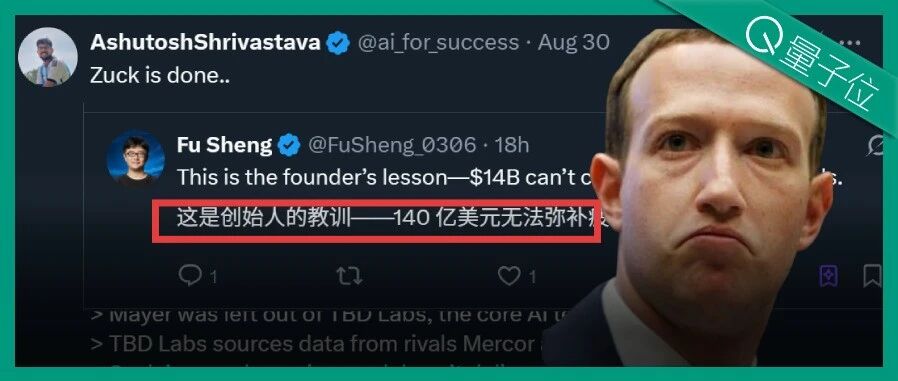
小扎AI被曝恶搞明星,霉霉/安妮·海瑟薇都遭殃,网友:难怪研究员都跑路
3 6 Ke· 2025-09-01 04:49
Core Points - Meta's AI has been reported to allow the creation of parody bots that impersonate celebrities without permission, leading to significant backlash and internal turmoil [1][3][4] - The company is experiencing a talent exodus, with key personnel leaving shortly after joining, indicating dissatisfaction and instability within the organization [2][7][9] - There are concerns regarding the ethical implications of AI-generated content, particularly involving minors and inappropriate material, which has raised questions about Meta's content moderation policies [3][4] Group 1: AI Misuse and Content Issues - Meta's AI enables the creation of bots that impersonate celebrities, including Taylor Swift and Anne Hathaway, generating misleading content and engaging with users [1][3] - The AI has also been reported to generate inappropriate content involving minors, raising serious ethical concerns [3][4] - Meta has removed approximately 12 bots but continues to face criticism for its perceived lack of control over AI-generated content [4] Group 2: Internal Turmoil and Talent Exodus - Meta is facing significant internal strife, with many researchers and executives leaving the company, including Ruben Mayer, a former executive from Scale AI [2][7][9] - The company has formed three factions: those from OpenAI, those from Scale AI, and original Meta employees, leading to confusion and a lack of cohesion [10] - Meta has paused hiring for non-core positions in its AI department and is undergoing internal restructuring to address these issues [10]

大厂90%员工在做无用功?
Hu Xiu· 2025-09-01 00:57
Group 1 - The company Surge AI, founded by Edwin Chen, has achieved over $1 billion in revenue within four years without external financing, while its competitor Scale AI has raised over $1.3 billion but only generated $850 million in revenue [1] - Edwin Chen emphasizes that 90% of employees in large tech companies are engaged in unproductive work, suggesting that smaller teams can achieve tenfold efficiency with only 10% of the resources [8][9] - Surge AI focuses on quality control in data annotation, contrasting with many competitors that operate as "body shops" without proper technology to measure or improve data quality [32][39] Group 2 - The prevailing culture in Silicon Valley prioritizes fundraising over genuine problem-solving, with many entrepreneurs chasing capital rather than building meaningful products [20][23] - Surge AI's business model is profitable from the first month, negating the need for a sales team, as the company relies on the inherent value of its high-quality data to attract clients [20][21] - Edwin Chen rejects the notion that having a PhD guarantees coding ability, noting that many computer science PhDs struggle with practical coding skills [48][41] Group 3 - The concept of "100x engineers" exists, with some individuals demonstrating productivity levels significantly higher than their peers, especially when combined with AI tools [46][47] - Edwin Chen advocates for eliminating unnecessary meetings and prioritizing quality, embedding this principle deeply within the company culture [56][57] - Surge AI has gained traction among clients seeking high-quality data, especially after the acquisition of Scale AI, as many clients have experienced difficulties with data quality from other providers [64][67] Group 4 - Edwin Chen has firmly rejected a $100 billion acquisition offer, stating that the company is already successful and has the resources to pursue its mission independently [5][72][74] - The company aims to contribute significantly to the development of Artificial General Intelligence (AGI), viewing its role as crucial in the broader AI landscape [78][80] - Edwin Chen believes that AGI could automate many engineering tasks by 2028, but emphasizes that current models are not yet capable of addressing the most meaningful problems [85][86] Group 5 - The industry faces challenges with synthetic data, which is often overestimated in its effectiveness compared to high-quality human-annotated data [93][96] - AI safety is a critical concern, with many underestimating the potential risks associated with misaligned AI objectives [97][99] - Edwin Chen foresees a future with multiple leading AI companies, each pursuing different paths and solutions, reflecting the diversity of human intelligence [100][104]
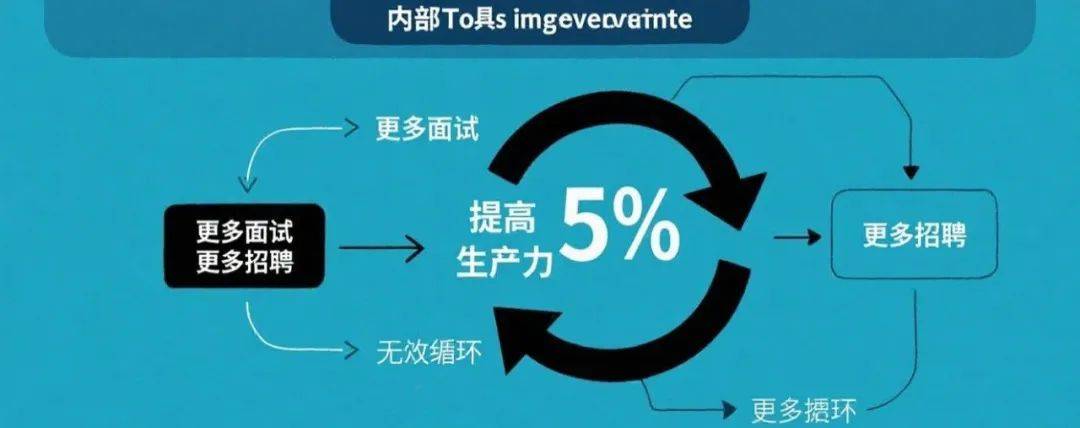
小扎AI被曝恶搞明星,霉霉/安妮·海瑟薇都遭殃,网友:难怪研究员都跑路
量子位· 2025-08-31 04:25
Core Viewpoint - Meta's AI has been reported to allow the creation of parody bots that impersonate celebrities without permission, leading to significant internal turmoil and backlash against the company [1][6][13]. Group 1: AI Misuse and Celebrity Impersonation - Meta's AI enables the creation of bots that use the likeness and names of celebrities, claiming to be the celebrities themselves and interacting with users [1][2]. - Celebrities affected include Taylor Swift, Anne Hathaway, and Selena Gomez, among others [3]. - The generated content includes fake photos and inappropriate interactions, raising concerns about the ethical implications of such AI capabilities [4][10]. Group 2: Internal Turmoil and Employee Exodus - Meta is experiencing significant internal strife, with high-profile talent leaving the company, including Ruben Mayer, a former executive from Scale AI [6][18]. - The company is facing challenges in retaining its AI talent, with reports of dissatisfaction among employees regarding the management and direction of AI projects [15][26]. - There are indications of a fragmented internal structure, with three factions emerging: those from OpenAI, those from Scale AI, and the original Meta team [25][27]. Group 3: Management and Strategic Challenges - Meta's CEO, Mark Zuckerberg, is under scrutiny for the company's handling of AI development and the resulting controversies, with calls for leadership changes [16][17]. - The relationship between Meta and Scale AI has become strained, with Meta seeking partnerships with other data labeling vendors due to concerns over data quality [23][24]. - Meta has paused hiring for non-core positions in its AI department as part of an internal reorganization effort [27].

速递|Meta的143亿美元豪赌生变:Scale AI数据质量遭质疑,两者蜜月期现裂痕
Z Potentials· 2025-08-31 03:54
Core Viewpoint - The partnership between Meta and Scale AI is showing signs of strain, despite Meta's significant investment of $14.3 billion in June and the hiring of Scale AI's CEO and executives to manage Meta's Super Intelligence Lab (MSL) [2][3]. Group 1: Personnel Changes - Ruben Meyer, a former executive from Scale AI, left Meta just two months after joining, raising questions about the integration of Scale AI's leadership into Meta's core AI team [3]. - There are indications of dissatisfaction among new hires from OpenAI and Scale AI regarding Meta's bureaucratic environment, leading to departures from the company [7][9]. Group 2: Shifts in Collaboration - Meta's TBD Labs is reportedly collaborating with third-party data labeling suppliers beyond Scale AI, including competitors Mercor and Surge, suggesting a diversification of data sources despite the initial heavy investment in Scale AI [4][5]. - Scale AI's data quality has been questioned by Meta's researchers, who prefer working with other suppliers, indicating potential issues with Scale AI's offerings [4][5]. Group 3: Market Dynamics - Following the loss of clients like OpenAI and Google, Scale AI laid off 200 employees from its data labeling department, attributing this to changes in market demand [6]. - Scale AI's business model, which initially relied on low-cost labor for data labeling, is being challenged as the complexity of AI models increases, necessitating expertise from specialized professionals [4][6]. Group 4: Meta's AI Strategy - Meta is aggressively pursuing top AI talent and has made several acquisitions, including AI voice startups, to bolster its capabilities in the competitive AI landscape [8][9]. - The company is investing heavily in infrastructure, with a $50 billion data center project in Louisiana to support its AI ambitions [9]. Group 5: Future Developments - MSL is reportedly working on the next generation of AI models, with a target launch by the end of the year [10].

X @TechCrunch
TechCrunch· 2025-08-30 01:35
Two months after making a $14.3B investment in Scale AI, Meta is relying heavily on its competitors to train next generation AI models. https://t.co/xDUmwgACoW ...
Cracks are forming in Meta's partnership with Scale AI
TechCrunch· 2025-08-30 01:34
Core Insights - Meta's $14.3 billion investment in Scale AI has shown early signs of strain, with key executives leaving and concerns about data quality emerging [1][2][5][10]. Company Dynamics - Ruben Mayer, a former executive from Scale AI, left Meta after two months, indicating potential issues with integration and alignment within Meta Superintelligence Labs (MSL) [2][3]. - MSL is reportedly working with competitors of Scale AI, such as Mercor and Surge, to train AI models, raising questions about the effectiveness of the partnership [4][5][10]. - Despite the significant investment, researchers at MSL have expressed a preference for data from competing vendors over Scale AI, suggesting dissatisfaction with the quality of Scale AI's offerings [5][9]. Market Position and Competition - Scale AI's business model, which initially relied on a low-cost workforce for data annotation, is struggling to adapt to the demand for high-quality data from skilled domain experts [6][8]. - Following the loss of major clients like OpenAI and Google, Scale AI laid off 200 employees and is shifting focus towards government contracts, including a $99 million deal with the U.S. Army [11]. Talent Acquisition and Retention - Meta's AI unit has faced internal chaos and talent turnover since the arrival of Alexandr Wang, with several new hires from OpenAI and Scale AI leaving the company [14][19]. - The departure of key personnel raises concerns about Meta's ability to stabilize its AI operations and retain necessary talent for future projects [21][22]. Future Prospects - MSL is reportedly working on its next-generation AI model, aiming for a launch by the end of the year, amidst ongoing challenges in talent retention and operational stability [22].